Keratin Treatment vs Olaplex for Damaged Hair: The Professional 2026 Guide
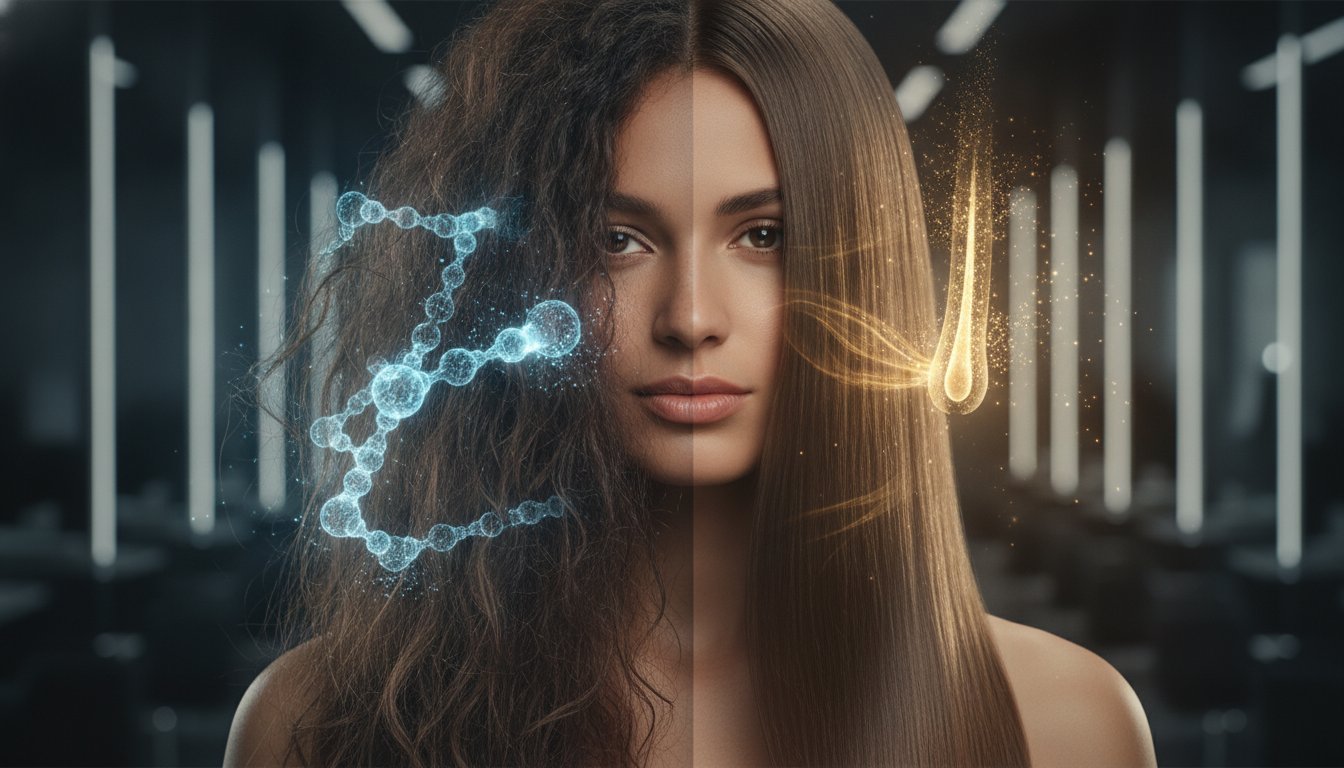
What if that gummy, “mushy” texture you feel when your hair is wet isn’t just a lack of moisture, but a total architectural collapse of your strands? You’ve likely reached for every hydrating mask on the shelf, only to find the breakage continues to travel upward. It’s a frustrating, high-stakes cycle that leaves your hair feeling more like fragile lace than the resilient, high-shine crown you deserve. When your hair reaches this level of chemical trauma, the choice between a keratin treatment vs olaplex for damaged hair becomes the most critical decision in your beauty routine.
We understand the urgency of stopping immediate breakage while striving for that signature metropolitan polish. This professional 2026 guide promises to demystify the scientific difference between bond-building and protein-reintegration so you can determine which protocol will actually save your over-processed strands. We’ll examine the technical precision of elite formulas like our Silk Touch and Diamond Keratin treatments, comparing them to molecular bond repair to give you a clear roadmap for restoring structural integrity and lasting brilliance.
Key Takeaways
- Master the “Wet-Stretch” test to accurately diagnose whether your strands are suffering from simple dryness or critical chemical mushiness.
- Decode the functional differences of a keratin treatment vs olaplex for damaged hair to ensure you are repairing internal disulfide bonds rather than just masking surface trauma.
- Discover why professional-grade protein reintegration is essential for rebuilding the architectural integrity of a hollowed-out hair cortex.
- Implement a strategic recovery roadmap that prioritizes the cessation of mechanical stress and the transition to high-performance, sulfate-free cleansing systems.
- Explore advanced, formaldehyde-free protocols like Silk Touch that offer deep cortical repair without compromising on safety or weightless shine.
Identifying the Warning Signs of Over-Processed Hair
True hair recovery begins with a clinical assessment of your current hair structure. Over-processed hair is far more complex than simple dryness; it’s a state of biological exhaustion where the strand’s internal scaffolding has been compromised. Recognizing these signs early prevents the total loss of your length. When you’re standing in front of the mirror weighing the benefits of a keratin treatment vs olaplex for damaged hair, your first task is to determine if your strands are merely thirsty or fundamentally broken.
The Elasticity Test for Structural Integrity
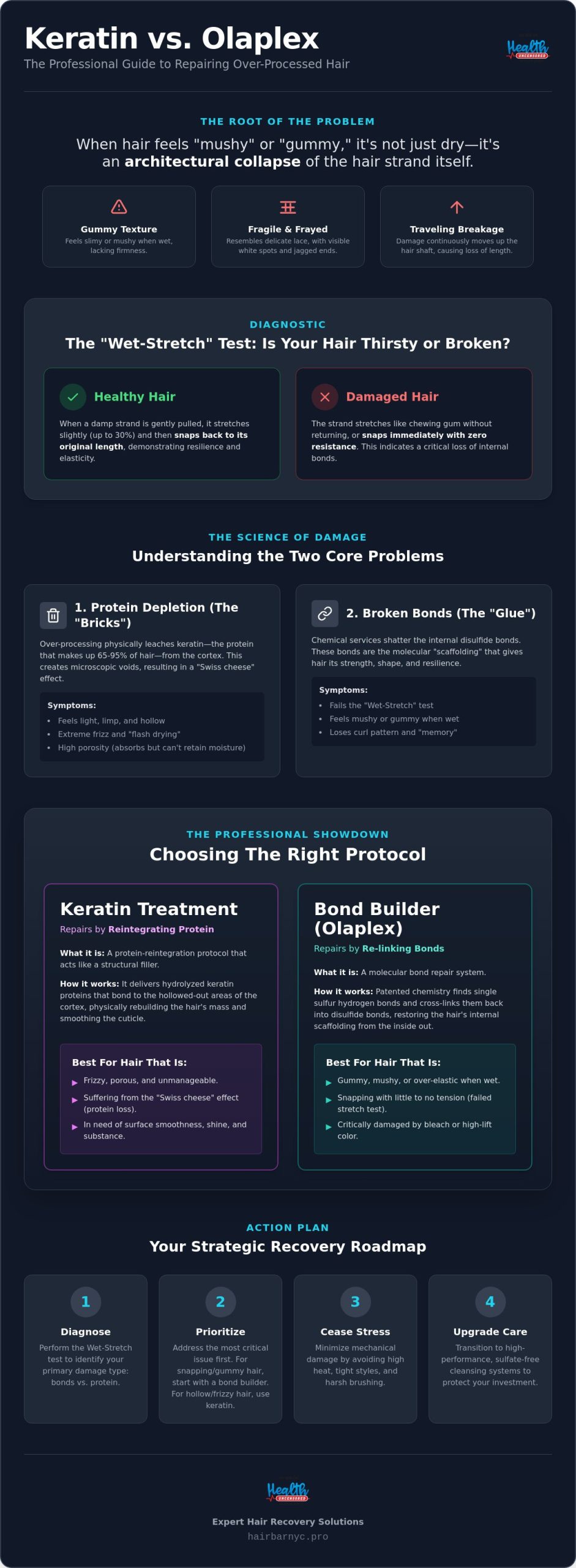
Professional stylists rely on the “Wet-Stretch” test to diagnose the health of the hair’s cortex. To perform this at home, isolate a single strand of damp hair and hold it firmly between your thumbs and forefingers. Gently pull the strand to see how it responds to tension. Healthy hair possesses a natural “snap-back” quality, stretching slightly and returning to its original shape. If your hair stretches like a piece of chewing gum and stays elongated, or if it snaps immediately with zero resistance, the structural bonds are gone. This lack of elasticity is the definitive hallmark of chemical over-processing.
High Porosity and the “Sponge” Effect
Damaged hair often exhibits a “sponge” effect due to extreme porosity. When the cuticle layer is blown open by high-volume lighteners or repeated chemical services, the hair absorbs water at an alarming rate but lacks the mechanism to hold onto it. You’ll notice specific behaviors that signal this crisis:
- Flash Drying: Your hair feels sodden and heavy when wet, yet it dries into a brittle, frizzy texture almost instantly when heat is applied.
- Mushy Texture: When saturated, the hair feels slimy or “mushy” rather than smooth and firm.
- Product Resistance: High-end masks seem to “disappear” into the hair without providing any tangible softness or shine.
This cycle of rapid absorption and evaporation is why choosing a keratin treatment vs olaplex for damaged hair is so nuanced. One focuses on the internal disulfide bridges, while the other addresses the hollowed-out spaces within the hair shaft that cause this porous, unmanageable texture.
Finally, look for the “white bulb” indicator. Natural shedding includes a tiny white bulb at the root, signifying a completed growth cycle. In contrast, chemical breakage occurs mid-shaft, leaving jagged, frayed ends or white spots where the strand is about to snap. Identifying these visual cues allows you to stop the “traveling” breakage before it reaches your roots, preserving the foundation of your style.
The Science of Damage: Bonds vs. Protein Depletion
Many clients mistake structural failure for a simple lack of moisture. They apply heavy oils to hair that is actually hollow, wondering why the strands remain brittle. This is a fundamental misunderstanding of the molecular level of hair damage. While moisture lives in the spaces between fibers, strength is dictated by the fibers themselves and the bonds that hold them together. When you’re navigating the choice of a keratin treatment vs olaplex for damaged hair, you’re deciding which part of this biological architecture to rebuild first.
Molecular Architecture: Disulfide Bonds Explained
Disulfide bonds are the internal “scaffolding” of your hair. They’re the covalent links that provide permanent shape, resilience, and strength. Chemical over-processing, particularly from high-volume bleach, shatters this scaffolding. At a molecular level, the cystine within the hair is oxidized, leaving the strand without its primary defense mechanism. When these bonds break, the hair loses its “memory” and structural integrity. It’s no longer a cohesive unit but a collection of frayed fibers. Olaplex was specifically engineered to find these broken disulfide bridges and link them back together, providing a temporary molecular bridge that mimics the hair’s natural strength.
The Role of Natural Keratin in the Cortex
Keratin is the fibrous structural protein that constitutes approximately 65% to 95% of the hair shaft by weight. While bonds provide the “glue,” keratin provides the “bricks.” Over-processing doesn’t just break bonds; it physically leaches protein from the hair, creating a “Swiss cheese” effect within the cortex. These microscopic voids make the hair feel light, limp, and frizzy. Replenishing this protein is non-negotiable for recovering hair density and weight. Without a solid protein core, even the most repaired bonds have nothing to hold onto. This is where professional protocols like our Keratin Intensive Treatment become essential, as they fill those cortical gaps with high-performance proteins.
The damage often extends to the cuticle, the outermost layer of the hair. Alkaline chemical treatments disrupt the hair’s natural pH balance, which should ideally sit between 4.5 and 5.5. When pH levels spike, the cuticle scales lift and stay open. These jagged scales act like tiny hooks, catching on one another and causing chronic tangling. This “Cuticle Trap” prevents light from reflecting off the hair, resulting in a matte, dull finish regardless of how many serums you apply. True recovery requires a dual approach: closing the cuticle while simultaneously reinforcing the internal cortex.
Keratin Treatment vs Olaplex: The Professional Showdown
Choosing between a keratin treatment vs olaplex for damaged hair isn’t about finding a single “miracle” product. It’s about identifying which layer of your hair’s architecture is in crisis. While retail marketing often blurs the lines between these two protocols, they serve entirely different functions within the hair shaft. Understanding this distinction is the difference between a temporary cosmetic fix and a total structural transformation that lasts for months.
Olaplex: The Internal Linker
Bond-builders like Olaplex function as a sophisticated “chemical glue.” They are engineered to seek out broken disulfide bridges and re-link them at a molecular level. This process is indispensable during high-lift bleaching or aggressive color changes to prevent the hair from disintegrating. However, bond repair has a specific limitation: it doesn’t add mass. If your hair is physically “hollowed out” from years of processing, Olaplex will repair the links, but it won’t fill the voids. It provides strength without the smoothing, weight, or shine that many over-processed clients crave. It’s a vital internal repair tool, but it doesn’t address the jagged, lifted cuticles that cause daily tangling and dullness.
Professional Keratin: The Architectural Filler
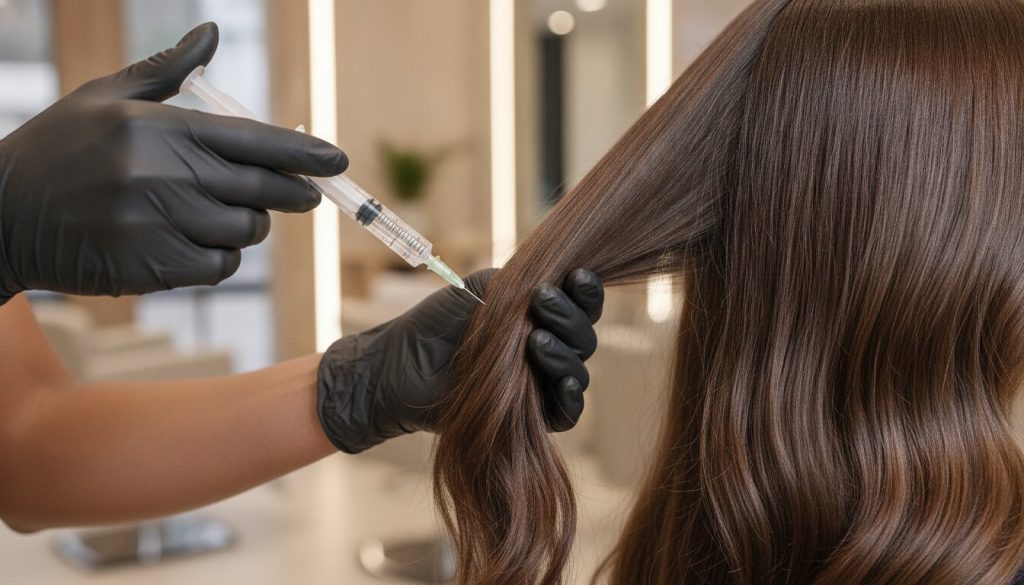
Unlike molecular linkers, professional keratin systems act as an architectural filler for the hair’s cortex. These treatments utilize high-performance proteins to occupy the “Swiss cheese” holes created by chemical trauma. By reintegrating these proteins, the hair regains its natural density and weight. Beyond internal repair, keratin treatments provide a semi-permanent seal over the cuticle. This creates a high-shine, humidity-resistant finish that lasts up to three months, rather than washing away with your next shampoo. For a deeper look at modern, safe options, explore The Ultimate Guide to Formaldehyde-Free Keratin Treatments in 2026.
The delivery systems also differ significantly. While bond-builders often work through simple saturation, professional keratin requires thermal activation to cross-link the proteins to the hair’s natural structure. This distinction is well-documented in any comprehensive hair cosmetics overview, which highlights how different straightening and repair agents interact with the hair’s physical properties. Many elite stylists now recommend a synergistic approach: use Olaplex to repair the internal “glue” first, then follow with a keratin treatment to provide the “bricks” and the protective sealant. This dual-action protocol ensures your hair isn’t just strong on the inside, but flawlessly polished on the outside.
The Recovery Roadmap: Professional Protocols for Fragile Hair
Once you’ve diagnosed the structural failure of your strands, the path to restoration requires a disciplined, professional-grade strategy. Recovery isn’t just about a single salon visit; it’s a comprehensive shift in how you handle your hair daily. When navigating the nuances of a keratin treatment vs olaplex for damaged hair, your immediate priority is to stop the cycle of trauma. This roadmap ensures that your investment in high-performance repair isn’t undermined by poor maintenance habits.
Step one is the immediate cessation of all high-heat styling and mechanical stress. If your hair is in a “mushy” state, even a standard flat iron session can cause irreversible snapping. Use a Professional Hair Dryer on the lowest heat setting only when absolutely necessary, focusing on “rough drying” with your fingers rather than a brush. This brings us to step two: transitioning your cleansing routine to prioritize structural support over simple lather.
Cleansing for Fragile, Over-Processed Hair
Sulfates are the primary enemy of compromised hair cuticles. These aggressive detergents strip away the few natural lipids remaining, leaving the cortex exposed and vulnerable. For those with textured or chemically treated strands, choosing the right formulas is essential. Consult our guide on Hair Care Products for Natural Hair: The Professional Stylist’s 2026 Guide to understand how to select pH-balanced, protein-enriched systems. Always finish your routine with a cool-water rinse. This simple metropolitan salon secret helps to contract the cuticle, sealing in the benefits of your Silk Touch Shampoo and Conditioner while enhancing natural light reflection.
Post-Treatment Maintenance
Step three involves scheduling a professional structural assessment with an expert stylist. A trained eye can determine if you need the internal “glue” of a bond-builder or the architectural “bricks” of a Silk Touch Keratin Treatment. Following this, step four requires implementing a low-tension styling routine. Avoid tight elastic bands or metal clips that create pressure points on fragile sections; instead, opt for silk scrunchies and loose, protective styles that prevent mechanical snapping.
Finally, step five focuses on daily structural maintenance. A professional-grade serum acts as a liquid bandage for split ends, providing a protective barrier that prevents the hair shaft from unravelling further. Our Keratin Infused Serum is designed for this exact purpose, offering a weightless, high-shine finish that reinforces the hair’s outer layer. To begin your own transformation, explore our professional recovery collection and give your hair the elite care it demands.
Silk Touch & Keratin Intensive: Elite Solutions for Hair Recovery
After diagnosing your hair’s structural needs, the focus shifts from theory to high-performance application. While the debate of a keratin treatment vs olaplex for damaged hair often centers on molecular repair, the ultimate goal is a visible, tactile transformation. For those whose strands have reached a state of chemical exhaustion, our Silk Touch and Keratin Intensive protocols offer a sophisticated path back to health. These aren’t just surface-level coatings; they’re professional-tier systems designed to integrate seamlessly with your hair’s natural biology.
The Silk Touch Difference for Damaged Hair
Sensitized, chemically damaged hair requires a gentle yet potent touch. Silk Touch Keratin Treatment stands as our premier vegan, formaldehyde-free repair system. Unlike traditional smoothing treatments that may rely on harsh chemicals, Silk Touch uses a plant-based approach to fortify the hair shaft without the risk of further chemical stress. This is particularly transformative for “fried” ends that have lost their ability to hold shape. By reintegrating essential proteins, you achieve a weightless, smooth finish that feels as healthy as it looks.
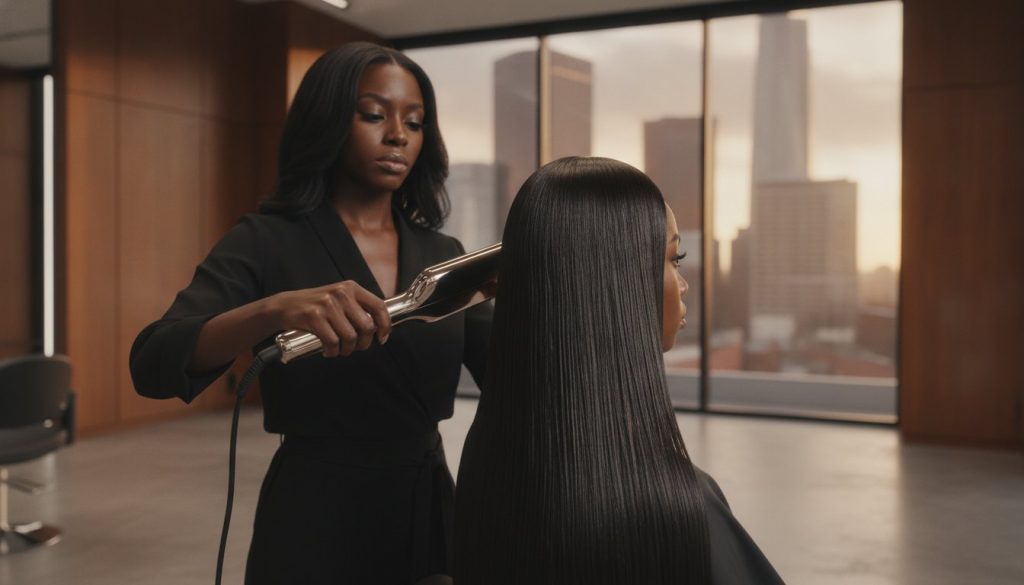
For hair that has been hollowed out by repeated bleaching, our Keratin Intensive Treatment targets the inner cortex for deep-seated repair. This protocol fills the “Swiss cheese” voids we identified earlier, restoring density and weight. If your primary concern is a lack of luminosity, the Diamond Keratin Treatment serves as the industry standard for restoring high-gloss shine to dull, light-damaged hair. To ensure these proteins are perfectly sealed into the cuticle, the use of a Professional Flat Iron is essential. This tool provides the precise thermal control needed to cross-link the treatment without causing additional heat trauma.
Complete Your Professional Regimen
Maintaining the integrity of your treatment requires more than just a standard wash. Protecting your investment starts with our Silk Touch Shampoo and Conditioner, the essential aftercare duo designed to maintain the hair’s optimal pH balance. These formulas are free from aggressive sulfates, ensuring your newly integrated proteins remain locked within the cortex. To shield your hair from daily environmental stressors and mechanical friction, our Keratin Infused Serum acts as a final protective layer.
- Silk Touch Shampoo: Gently cleanses while reinforcing the keratin bond.
- Silk Touch Conditioner: Provides weightless hydration and seals the cuticle.
- Keratin Infused Serum: Delivers a high-shine finish and prevents future split ends.
Your journey from “mushy,” broken strands to a resilient, metropolitan shine is a deliberate process. By choosing professional-grade solutions over retail compromises, you ensure your hair’s long-term health and brilliance. Experience the Professional Transformation with Silk Touch Keratin and reclaim the structural integrity of your hair.
Reclaim Your Strand’s Structural Brilliance
Navigating the choice between a keratin treatment vs olaplex for damaged hair requires a sophisticated understanding of your hair’s architectural needs. True recovery isn’t found in a single retail bottle; it’s achieved by diagnosing structural failure through the Wet-Stretch test and applying high-performance solutions that address both broken bonds and hollowed-out protein cores. By moving beyond temporary fixes, you ensure your hair maintains its resilience and metropolitan polish.
Our elite stylists rely on these formaldehyde-free and vegan professional formulas to deliver transformative results. You don’t have to compromise on safety to achieve high-gloss, weightless shine. These professional-grade protocols are now accessible for your own home maintenance, bridging the gap between expert salon care and daily luxury. It’s time to stop the breakage and start the restoration process with a regimen that actually performs.
Experience the Professional Transformation with Silk Touch Keratin and witness the immediate return of your hair’s natural elasticity. Your journey to flawless, high-shine strands starts with a single, expert decision. Embrace the excellence your hair deserves.
Frequently Asked Questions
Can over-processed hair be fixed without cutting it all off?
Yes, you can often save over-processed hair provided the strand hasn’t reached a point of total structural collapse. Professional protocols like the Keratin Intensive Treatment physically fill the “Swiss cheese” voids within the cortex, while bond-builders work to repair internal links. If you catch the breakage early, a disciplined recovery regimen can stabilize the hair shaft and preserve your length. Cutting is only mandatory when the hair has completely unraveled.
How often should I get a professional treatment for severely damaged hair?
Most severely damaged hair requires a professional structural assessment every four to six weeks during the initial recovery phase. While a Silk Touch Keratin Treatment typically provides results for up to three months, fragile hair may need more frequent molecular support to regain its natural density. Your stylist will monitor your strand’s elasticity to ensure you’re effectively rebuilding the hair’s architecture without causing additional mechanical stress.
Is keratin safe for hair that has been severely bleached or lightened?
Modern, formaldehyde-free formulas like Silk Touch are specifically engineered to be safe and transformative for sensitized, lightened strands. The key to safety lies in using a Professional Flat Iron with precise thermal control to prevent heat trauma on fragile, blonde hair. Deciding between a keratin treatment vs olaplex for damaged hair often depends on whether your priority is sealing the cuticle or repairing the internal disulfide bridges first.
What is the difference between a protein treatment and a moisture mask?
Protein treatments rebuild the hair’s internal architecture, while moisture masks simply lubricate the spaces between the fibers. If your hair feels gummy or “mushy,” you’re facing a protein deficiency that a moisture mask cannot resolve. Over-processed hair needs the structural reintegration provided by keratin to regain its strength and weight. Relying solely on moisture for hollowed-out hair often results in limp, heavy strands that continue to snap.
How long does a professional keratin treatment last on damaged hair?
A high-performance treatment like Silk Touch Keratin typically lasts between twelve to sixteen weeks when maintained with pH-balanced aftercare. On severely damaged hair, the longevity might be slightly reduced during the first application as the hair absorbs the protein deeply. Using the Diamond Shampoo and Conditioner duo is essential for extending the life of your treatment and protecting the newly reinforced cuticle layer from environmental stressors and daily friction.
Can I use a flat iron on over-processed hair if I use a heat protectant?
You should minimize high-heat styling on over-processed hair, even when using a professional-grade heat protectant. If styling is necessary, use a Professional Flat Iron on its lowest effective setting to prevent further disulfide bond destruction. Always apply a Keratin Infused Serum beforehand to act as a thermal buffer. Mechanical stress is a leading cause of snapping in fragile strands, so use heat sparingly during your recovery roadmap.
Is it possible to “over-protein” my hair during the recovery process?
Yes, excessive protein application without adequate lipid replacement can lead to “protein overload,” making the hair feel stiff or brittle. This is why a professional assessment is vital before starting a regimen involving a keratin treatment vs olaplex for damaged hair. A balanced protocol ensures your strands remain flexible while regaining their structural integrity. Your stylist will help you strike the perfect equilibrium between protein reintegration and essential moisture levels.
What ingredients should I avoid in hair products if my hair is over-processed?
Avoid aggressive sulfates, high-alcohol content, and heavy silicones that cause buildup without providing actual repair. Sulfates strip the few remaining natural oils from your compromised cuticle, leading to further dehydration and fragility. Look for pH-balanced, protein-enriched formulas like our Silk Touch Shampoo. Eliminating these harsh detergents is a non-negotiable step in your recovery roadmap to ensure your hair can absorb the high-performance ingredients it truly needs.