Transitioning Clients from Relaxers to Keratin: The Professional Stylist’s Protocol
The “big chop” is often a failure of strategy rather than a requirement of nature. Transitioning clients from relaxers to keratin requires a sophisticated moisture management protocol that protects the fragile line of demarcation where processed hair meets new growth. With California’s January 2025 ban on formaldehyde in personal care products already in effect, the industry is rapidly pivoting toward safer, high performance alternatives. You understand the anxiety your clients feel when they face inconsistent textures or the fear of losing their hard earned length. It’s a delicate process that demands professional grade expertise to keep the hair looking lustrous and healthy.
In this guide, we’ll show you how to master this strategic shift while protecting hair integrity and eliminating breakage. You’ll learn how to implement a professional protocol using revolutionary solutions like the Silk Touch Keratin Treatment to bridge the gap between chemical relaxers and vibrant movement. We’ll explore the science of smoothing and the exact steps needed to revitalize the hair from the inside out. Discover how to provide the elite Manhattan salon results your clients expect while ensuring their hair remains strong and manageable throughout the entire transition.
Key Takeaways
- Learn the technical difference between permanent structural changes from relaxers and the protective protein infusion of professional keratin treatments.
- Master the strategic protocol for transitioning clients from relaxers to keratin by performing essential stretch tests to assess hair strength and porosity.
- Discover professional sectioning and clarifying techniques designed to manage the delicate line of demarcation and prevent breakage during application.
- Ensure long-term hair health and treatment longevity by implementing a strict post-service regimen, including the critical 72-hour rule.
- Adopt elite, formaldehyde-free innovation to deliver the sophisticated, high-performance results synonymous with the Hair Bar NYC professional standard.
Understanding the Shift: Chemical Relaxers vs. Professional Keratin
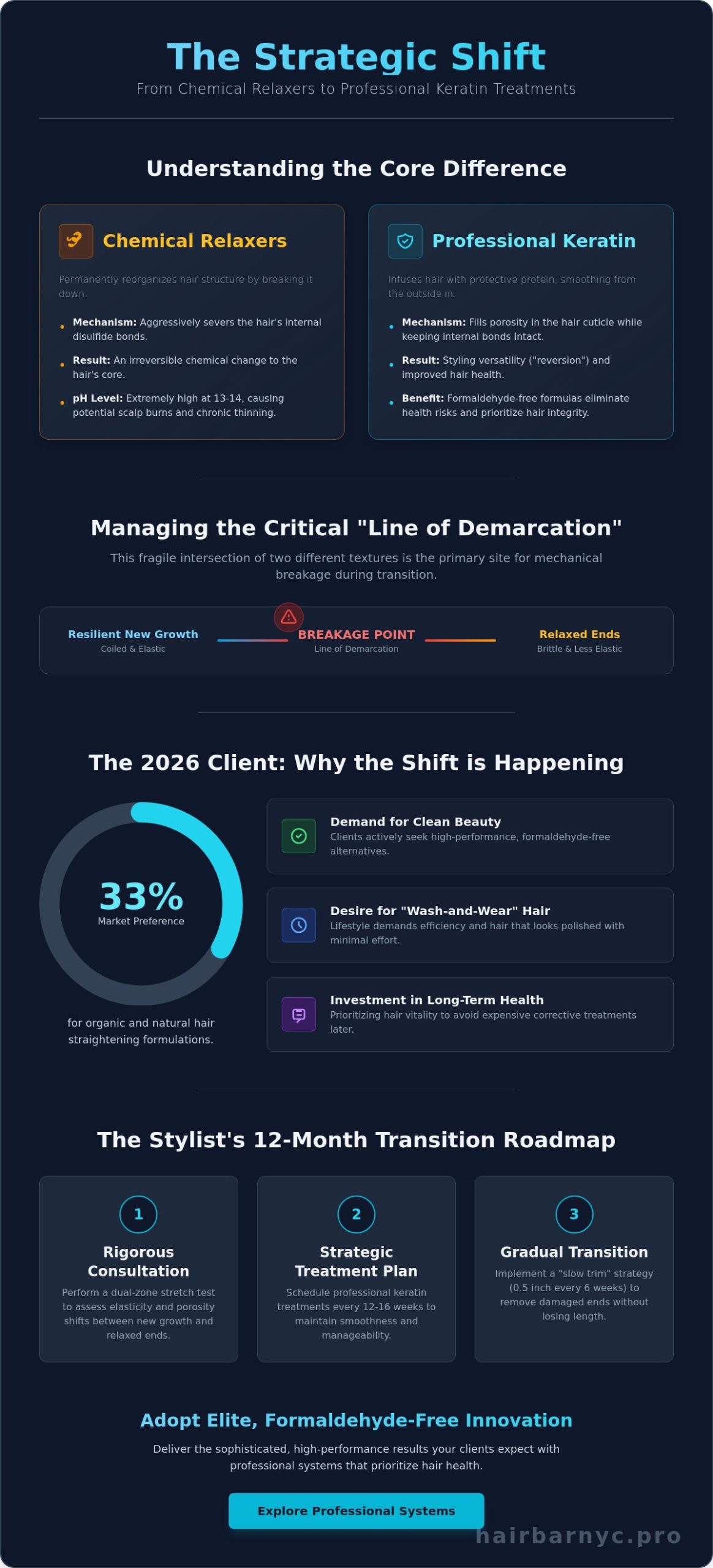
Sodium hydroxide relaxers operate through a process of permanent structural reorganization. These high-pH chemicals, often reaching a pH level of 13 or 14, aggressively break the hair’s disulfide bonds to force a straight pattern. Once these bonds are severed, the change is irreversible. Transitioning clients from relaxers to keratin represents a fundamental shift in hair philosophy. Instead of breaking the hair down, professional keratin treatments like our Silk Touch system infuse hydrolyzed proteins directly into the cuticle. This fills in the gaps of the hair shaft, creating a smooth, lustrous surface while keeping the internal disulfide bonds intact.
This structural difference provides a level of styling versatility that relaxers simply cannot match. Because the hair’s core remains healthy, clients can enjoy “reversion,” which is the ability to wear their hair curly or wavy between treatments. Moving away from harsh, high-pH straighteners also offers significant health benefits. It eliminates the risk of chemical scalp burns and stops the chronic thinning often associated with long-term relaxer use. By choosing modern hair straightening techniques, stylists can offer a sophisticated result that prioritizes the long-term vitality of the hair.
The Science of the Line of Demarcation
The line of demarcation is the exact point where the previously relaxed hair meets the natural new growth. This intersection is incredibly fragile because it acts as a hinge between two completely different textures. The relaxed portion is typically less elastic, while the new growth is resilient and coiled. When transitioning clients from relaxers to keratin, this point becomes the primary site for mechanical breakage. To manage this, stylists must recommend specific hair care products for natural hair. These professional formulas provide the necessary lubrication and slip to prevent snapping during detangling and styling.
Why Clients are Choosing the Transition in 2026
The demand for clean beauty has transformed from a trend into a salon standard. As of 2026, organic and natural formulations have captured 33% of the market preference in hair straightening. Clients are increasingly savvy about ingredients and are actively seeking formaldehyde-free alternatives that deliver high-end results without the health risks. There’s also a growing desire for “wash-and-wear” hair. Today’s Manhattan lifestyle demands efficiency; clients want hair that looks polished with minimal effort but still retains natural volume and movement. Investing in a professional keratin system is a commitment to hair health that pays off by reducing the need for expensive corrective treatments later.
The Professional Consultation: Assessing Transition Readiness
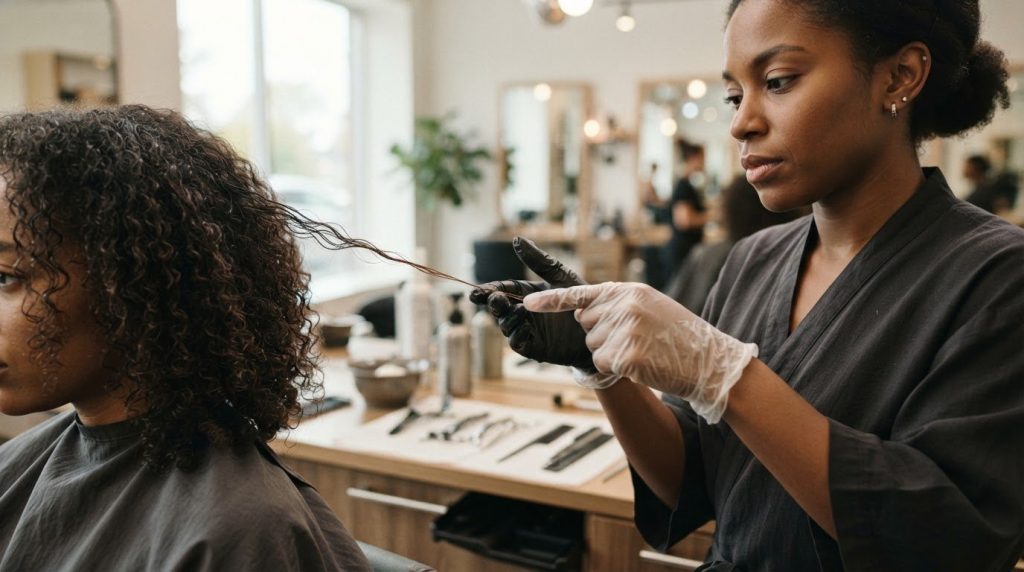
Success in transitioning clients from relaxers to keratin begins with a rigorous diagnostic session. You aren’t just looking at the hair; you’re mapping its history. Start by performing a dual-zone stretch test. Test a small section of the new growth and then a section of the relaxed ends. You’ll likely find that the new growth has high elasticity while the chemically processed ends are brittle and snap easily. Identifying these porosity shifts across the hair shaft is vital for a customized application. Relaxed hair often presents as high porosity, meaning it absorbs product rapidly but struggles to retain it. Conversely, natural new growth might have low porosity, requiring a precise application technique to ensure the keratin penetrates effectively.
Setting realistic expectations is the hallmark of an expert stylist. Keratin is a revolutionary smoothing system, not a permanent straightener. It won’t kill the natural curl pattern like a sodium hydroxide relaxer. Instead, it provides a “frizz-free canvas” that maintains natural movement. Develop a 12-month transition roadmap for your client. This schedule typically involves professional treatments every 12 to 16 weeks, paired with a “slow trim” strategy of half an inch every six weeks to gradually remove the relaxed hair without a drastic change in length. To ensure the highest standard of care, encourage your clients to explore professional-grade aftercare that supports this journey.
Texture Analysis and Goal Setting
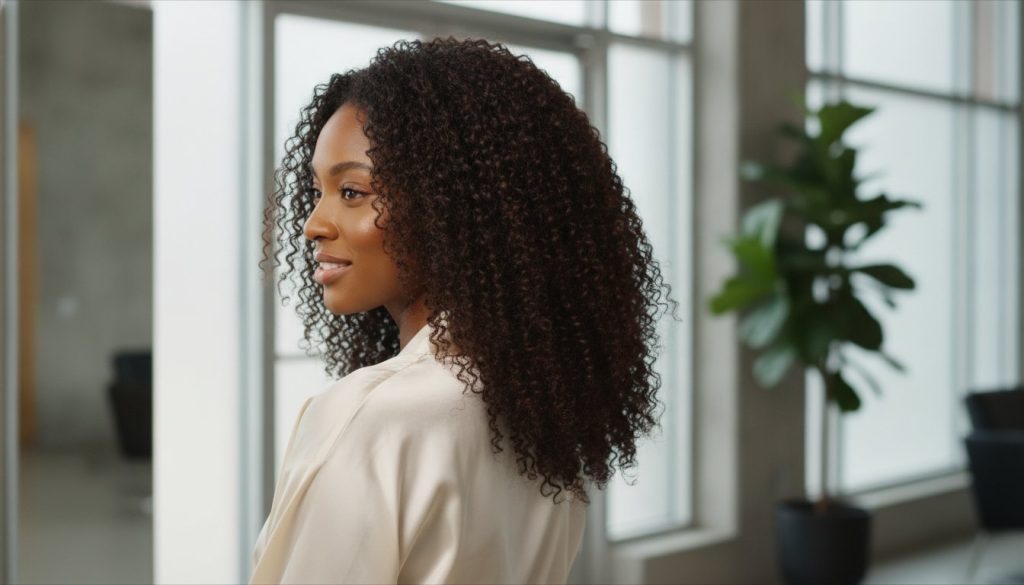
Categorize the new growth using the standard typing system. Type 3 curls may require our Silk Touch Keratin Treatment for a softer finish, while Type 4 coils often benefit from the more intensive Diamond Keratin Treatment. Discuss the emotional impact of the “Big Chop” versus the “Slow Trim.” Most Manhattan clients prefer the latter, maintaining their silhouette while the keratin manages the two competing textures. Your goal is to visualize the end result together, whether they desire maximum sleekness or simply want to enhance their natural curl retention while eliminating frizz.
Identifying Contraindications
Analyze previous chemical damage and scalp health before you pick up a brush. Review the FDA safety information on hair relaxers with your client to explain the cumulative risks of high-pH chemicals. For hair that is already compromised at the line of demarcation, a formaldehyde free keratin treatment is the only safe and ethical choice. Warn the client against “double-processing.” Applying a keratin treatment too soon after a fresh relaxer is a high-risk maneuver that can lead to catastrophic breakage. Wait at least 8 to 12 weeks after the last relaxer before starting the transition protocol.
The Transitioning Protocol: Step-by-Step Application Guide
Executing a flawless texture shift requires more than a standard application; it demands a surgical approach to product placement. The first step in the protocol is a deep clarifying wash. Relaxer maintenance often involves heavy silicones and oils that create a stubborn barrier on the hair shaft. You must strip these away to allow the keratin to bond effectively. Research into Chemicals in Hair Straightening Products shows that residue from previous chemical treatments can interfere with the cross-linking of new proteins, making this preparation stage vital for longevity.
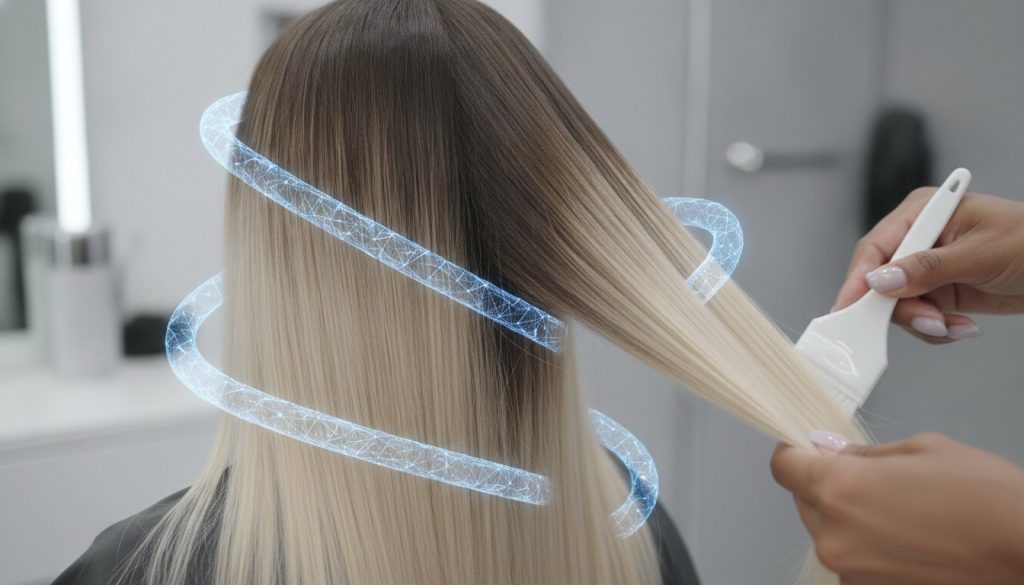
Once the hair is prepped, utilize a six-quadrant sectioning strategy. This provides superior control over the roots where the texture is most resistant. When transitioning clients from relaxers to keratin, you must employ zonal application. Apply your chosen formula to the virgin new growth first, allowing it to penetrate for 10 to 15 minutes before drawing the product through the porous, relaxed ends. This ensures the resistant coils receive maximum saturation while the over-processed ends aren’t overwhelmed. Managing the line of demarcation during this stage is the difference between a successful transition and unnecessary shedding.
Formula Selection: Silk Touch vs. Diamond Keratin
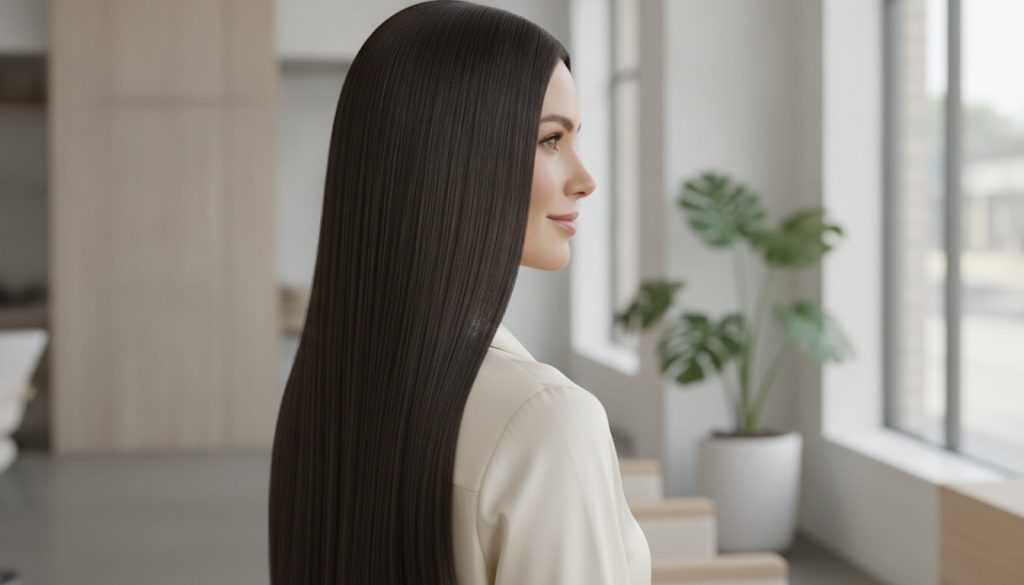
Selecting the right tool is essential for the Manhattan standard of excellence. Reach for the Silk Touch Keratin Treatment when dealing with exceptionally coarse or resistant new growth that requires maximum smoothing and deep repair. If your client’s hair is fine or lacks structural integrity, the Diamond Keratin Treatment is the elite choice. It provides intense shine and uses botanical-infused, vegan ingredients to reinforce the hair’s structure without adding weight. These professional-grade formulas act as a bridge, harmonizing the two distinct textures into one cohesive, silky finish.
Heat Management and Ironing Technique
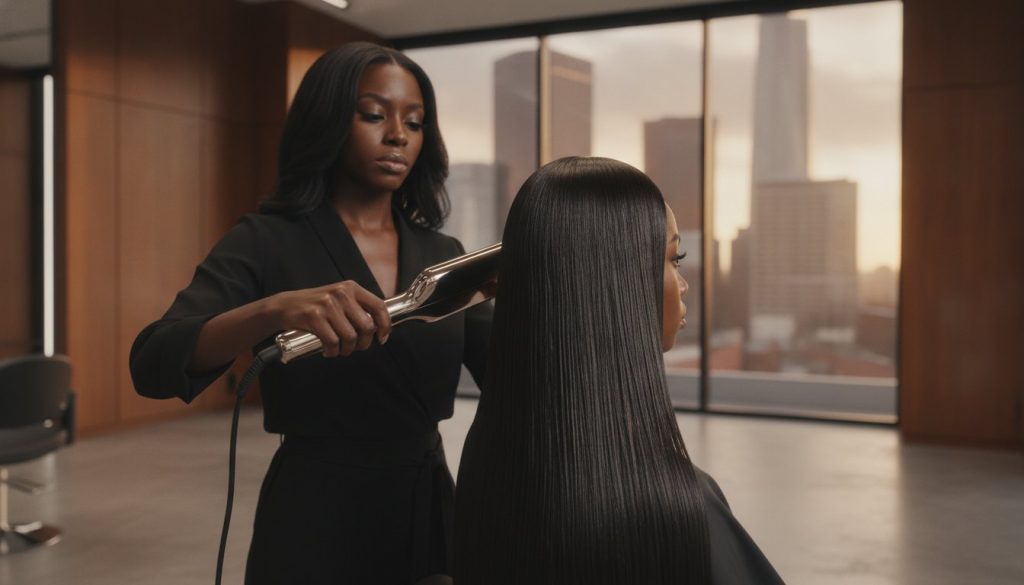
Precision heat management is the final, critical step in the protocol. You cannot use a “one size fits all” temperature setting. Set your iron higher for the resilient new growth, typically around 410°F to 430°F, but drop the temperature significantly to 350°F or lower when passing over the relaxed ends. Use the “NYC Glide” technique: a smooth, continuous motion that avoids pausing at the transition point. Using a Professional Flat Iron with consistent heat distribution is non-negotiable here. It prevents hot spots that could cause the hair to snap at its most vulnerable point, ensuring a seamless and vibrant result from root to tip.
Maintenance and Moisture: The Post-Treatment Regimen
The first 72 hours following a transition service are the most critical for the longevity of the treatment. During this window, the keratin is still settling into the hair’s architecture. Advise your clients to avoid all moisture, including steam from showers or perspiration from high-intensity workouts. They must also skip hair ties, clips, or tucking hair behind the ears, as these can create permanent kinks in the newly smoothed cuticle. Successfully transitioning clients from relaxers to keratin requires this initial discipline to ensure the protein bonds remain perfectly aligned and the finish stays glass-like.
Educate your clients on the chemistry of their aftercare products. Sodium chloride, essentially common salt, is the natural enemy of keratin because it can dissolve the treatment right off the hair shaft. Sulfates are equally damaging, as they strip away the essential moisture that transitioning hair desperately needs. Instead, recommend a professional moisture “insurance policy” by incorporating the Keratin Intensive Treatment into their bi-weekly routine. This deep-penetrating mask reinforces the hair’s structure and provides the hydration necessary to keep the two textures behaving as one. You can shop our professional-grade aftercare collection to provide your clients with the tools they need for success.
The Silk Touch Maintenance System
Our Silk Touch Shampoo and Silk Touch Conditioner are engineered to work in tandem, reinforcing the smoothing effect with every wash. When detangling, clients should only do so while the hair is saturated with conditioner, using a wide-tooth comb and starting from the ends to minimize tension. Our Keratin Infused Serum is essential for sealing the cuticle and preventing split ends at the transition point where processed hair meets new growth. This daily application provides a protective shield against environmental stressors and mechanical friction that can lead to premature snapping.
The 12-Month Transition Calendar
Consistency is the secret to a seamless texture shift. Schedule follow-up keratin sessions every 3 to 5 months, depending on the client’s natural growth rate and texture resistance. A strategic trimming schedule is non-negotiable; removing 1/2 inch of relaxed hair every 8 weeks helps maintain a healthy silhouette without the shock of a “big chop.” As the months progress, the virgin hair will become the dominant texture, and the “overlap” phase will require less daily manipulation. By the end of the first year, the client will have a full head of vibrant, keratin-supported hair that moves with natural elegance and Manhattan-inspired sophistication.
Why Hair Bar NYC Professional Systems are the Elite Choice
Choosing the right partner for transitioning clients from relaxers to keratin determines the ultimate success of your salon’s reputation. At Hair Bar NYC, we define the Manhattan standard by delivering high-end results that mirror the elite environment of a Fifth Avenue studio. Our systems aren’t merely products; they’re revolutionary tools designed to revitalize compromised hair from the inside out. By prioritizing clean beauty innovation, we offer a portfolio that is entirely cruelty-free, vegan, and formaldehyde-free. This commitment is vital in 2026, especially as consumer preference for natural formulations has reached a 33% market share. We provide the professional-grade solutions that today’s discerning clients demand without compromising on safety or performance.
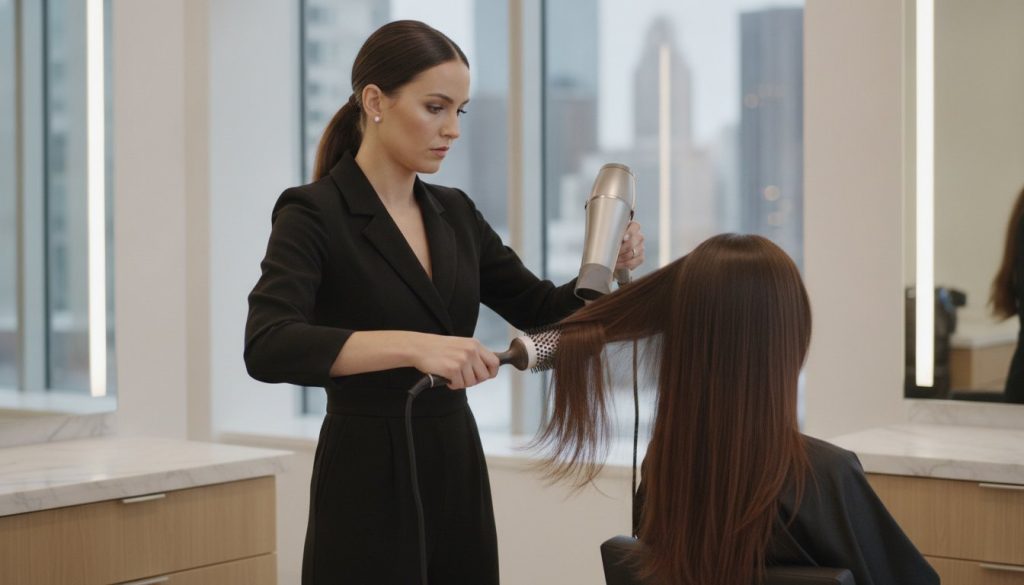
The Silk Touch system transforms the often-frustrating experience of transitioning clients from relaxers to keratin into a predictable, high-end service. Our formulas don’t just mask damage; they fundamentally change the hair’s sensory experience by infusing it with botanical extracts and high-performance proteins. By using our specialized Mixing Bowl and Brush Sets along with our Professional Hair Dryers, you ensure every step of the protocol is executed with absolute precision. This level of detail is what separates a standard service from a Manhattan-level transformation. You gain direct access to the same professional-grade tools used by top stylists across the country, ensuring that every transition you manage is a testament to your expertise.
Accessible Luxury for Every Stylist
We bridge the gap between the expert salon chair and the client’s home bathroom. Our proprietary formulas are engineered to outperform generic retail smoothing products by using higher concentrations of hydrolyzed proteins that specifically target the line of demarcation. We empower stylists with a sophisticated protocol that turns complex texture shifts into vibrant, manageable outcomes. This isn’t just about selling a bottle; it’s about providing a professional standard of excellence that keeps your clients loyal and their hair healthy.
The NYC Advantage
Sophistication and high performance are baked into every bottle we produce. We’ve captured the fast-paced energy and uncompromising quality of New York City and refined it for your styling station. Every application transforms the client’s hair journey into an insider experience in elite care, making the transition process feel like a reward rather than a chore. Elevate your craft and provide your clients with the lustrous, silky results they deserve. Discover the Silk Touch System and revolutionize your transition protocol.
Master the Future of Texture Transformation
The journey from chemical dependency to vibrant hair health requires a stylist who acts as an expert guide. You’ve learned how to navigate the vulnerable line of demarcation and implement a 12-month roadmap that preserves length while restoring structural integrity. Transitioning clients from relaxers to keratin is a strategic evolution that replaces aggressive bond-breaking with sophisticated protein infusion. This shift ensures your clients enjoy a frizz-free canvas without the risks associated with high-pH chemicals.
By adopting our proprietary systems, you’re choosing the same 100% Formaldehyde-free formulas trusted in elite Manhattan salons. These professional-grade solutions deliver lustrous results for all hair types, from the tightest coils to the finest strands. It’s time to revitalize your service menu and offer the accessible luxury your clients deserve. Shop the Silk Touch Keratin System for your salon and lead the movement toward healthier, more resilient hair. Your expertise combined with our revolutionary technology will transform every chair into a destination for elite care.
Frequently Asked Questions
Can I get a keratin treatment if I just had a relaxer last week?
No, you should wait at least 8 to 12 weeks after your last relaxer before starting a keratin service. Applying keratin too soon after a fresh relaxer is a high-risk maneuver that can lead to catastrophic breakage. Your hair needs time to recover its pH balance and internal strength before undergoing another professional-grade smoothing process.
Will a keratin treatment make my transitioning hair completely straight?
A keratin treatment provides a “frizz-free canvas” rather than a permanently straight look. Unlike sodium hydroxide relaxers that break bonds, keratin infuses protein to smooth the cuticle and reduce volume. You’ll retain your natural movement and curl pattern, but with significantly more manageability and a lustrous, silky finish.
How often should I get a keratin treatment while growing out a relaxer?
When transitioning clients from relaxers to keratin, we recommend a follow-up treatment every 12 to 16 weeks. This cadence ensures the new growth remains manageable while the line of demarcation stays reinforced. Regular treatments help bridge the gap between two competing textures, making your daily styling routine much faster and more efficient.
Is it safe to use a flat iron on my hair during the transition period?
Yes, it’s safe if you use a Professional Flat Iron with precise temperature controls. You must adjust settings based on the hair’s condition, using higher heat on resilient new growth and much lower heat on fragile, relaxed ends. Always apply a Keratin Infused Serum first to provide a protective barrier against thermal damage and mechanical friction.
What happens if I stop getting keratin treatments during my transition?
If you stop the treatments, your hair will return to its natural, frizz-prone state as the keratin gradually washes away over 3 to 6 months. The line of demarcation will become more apparent and difficult to detangle. Without the added protein support, the risk of snapping at the transition point increases significantly during daily maintenance.
Can I color my hair while transitioning from a relaxer to keratin?
You can absolutely color your hair using our Color Bar Professional Hair Color. We suggest waiting at least 2 weeks between your color service and your keratin treatment to ensure optimal results. This professional-grade approach allows the hair cuticle to settle, ensuring vibrant color and a silky, revolutionary finish that lasts.
Does keratin help prevent the breakage typically seen at the line of demarcation?
Keratin is essential for protecting the line of demarcation because it adds much-needed elasticity to the hair shaft. By coating the “hinge” point where textures meet, it prevents the mechanical snapping common during detangling. This protein infusion acts as a structural reinforcement, making the process of transitioning clients from relaxers to keratin much safer for your hair’s overall length.
Are Hair Bar NYC treatments truly formaldehyde-free?
Yes, all Hair Bar NYC specialized systems are 100% formaldehyde-free. We utilize revolutionary, vegan ingredients and botanical extracts to achieve professional-grade results without the health risks of traditional straighteners. This commitment to clean beauty innovation ensures you receive a high-performance Manhattan salon experience that prioritizes your long-term health and hair vitality.