Red Hair: The Ultimate Professional Guide to Shades, Science, and Salon-Grade Care
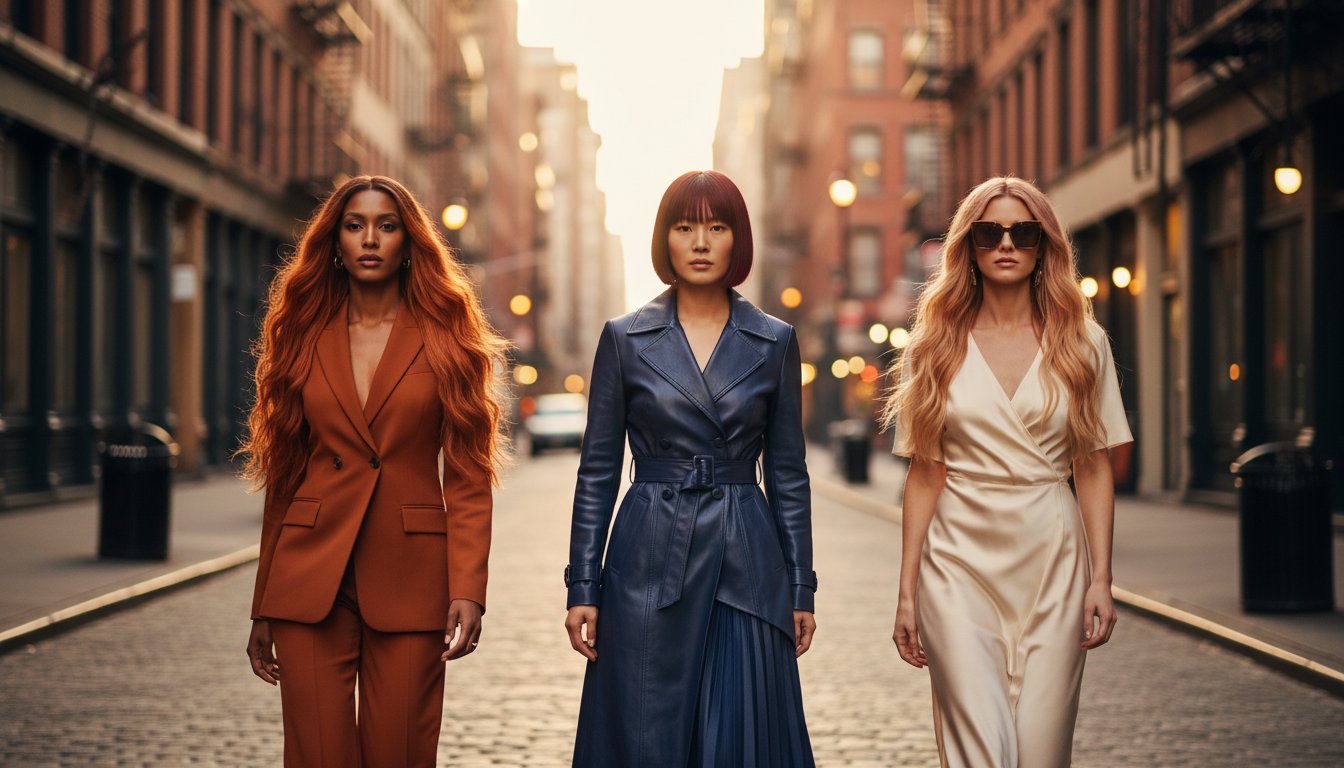
Red hair molecules are the largest in the color spectrum, which is why 70% of clients see significant fading within just fourteen days of their salon visit. It’s a frustrating reality that many face when chasing that perfect, high-impact glow. You likely agree that maintaining that initial vibrancy feels like a race against time, especially when your natural texture turns coarse or dry under the weight of traditional dyes. Matching the right copper or auburn to your specific skin undertone shouldn’t feel like a gamble every time you sit in the stylist’s chair.
Discover the most stunning red hair examples for 2026 and learn the professional secrets to maintaining the world’s most elusive pigment. We’re pulling back the curtain on the science of color retention and showcasing the elite palettes set to dominate Manhattan streets next season. From identifying your ideal shade to mastering the Hair Bar NYC professional-grade routines, you’ll gain the insider knowledge needed to keep your locks lustrous and vibrant for weeks longer than you thought possible.
Key Takeaways
- Discover the 2026 trend forecast to identify which high-impact crimsons or subtle glazes will elevate your look for the coming seasons.
- Understand the genetic science of the MC1R gene and how the ratio of pheomelanin creates the world’s most elusive pigments.
- Apply the professional “Stylist Method” to match your skin’s undertones with the perfect red hair saturation to ensure your features pop.
- Unlock the secrets to overcoming the maintenance paradox using sulfate-free systems that stop the “orange fade” before it starts.
- Learn how to revitalize coarse textures and achieve a salon-grade finish at home with keratin-infused treatments and professional color systems.
The Red Hair Spectrum: 2026 Inspiration & Examples
The 2026 forecast for red hair shifts away from flat, monochromatic dyes toward high-dimension glazes and liquid-metallic finishes. Stylists in Manhattan are already seeing a 15% increase in requests for “Hyper-Natural” pigments that mimic the biological complexity found in The Red Hair Spectrum. Achieving these results requires a deep understanding of how light interacts with the hair shaft. Straight hair provides a flat surface for specular reflection, creating a glass-like shine. Conversely, curly textures require 20% more pigment density to ensure the color doesn’t look washed out in the shadows of the coils. Professional-grade pigments are essential here; they provide the multidimensional depth that retail box dyes simply cannot replicate.
Natural & Sun-Kissed Tones
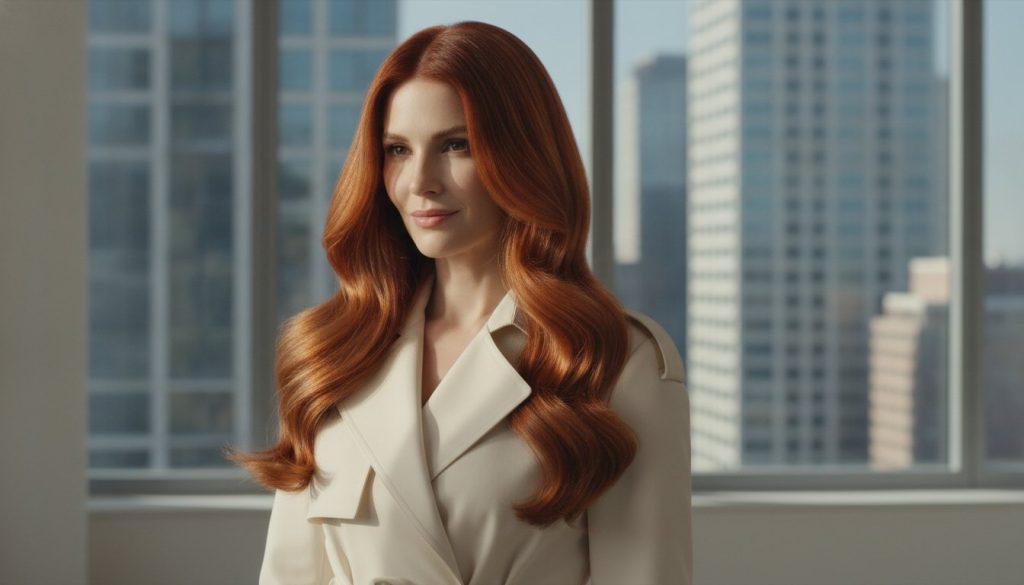
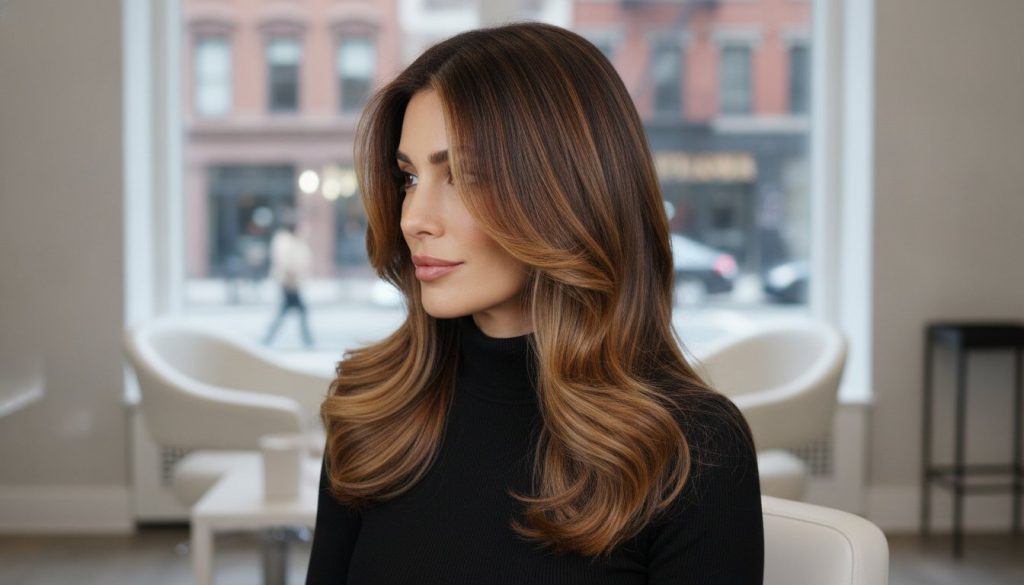
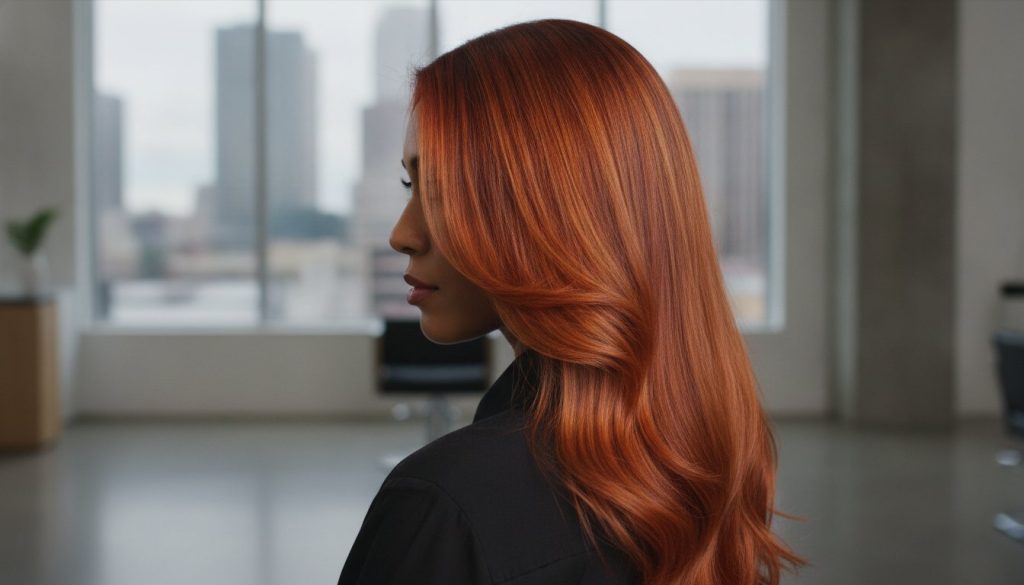
Strawberry Blonde remains the gold standard for fair complexions, utilizing a 70/30 ratio of gold to red pigments. It’s a delicate balance that requires professional-grade precision to avoid appearing unnatural or overly orange. Soft Copper achieves a “born with it” aesthetic through the use of acidic glosses that seal the cuticle without lifting the natural base. For those seeking earthy sophistication, Auburn combines cool brunette lowlights with warm red highlights. Data from top NYC salons indicates that 85% of professional colorists recommend this blend for clients transitioning from dark brown who want a rich, multi-tonal finish. Clients who have previously explored blonde hair color techniques will find that many of the same undertone-matching principles apply when selecting the perfect red or auburn shade.
Bold & High-Fashion Reds
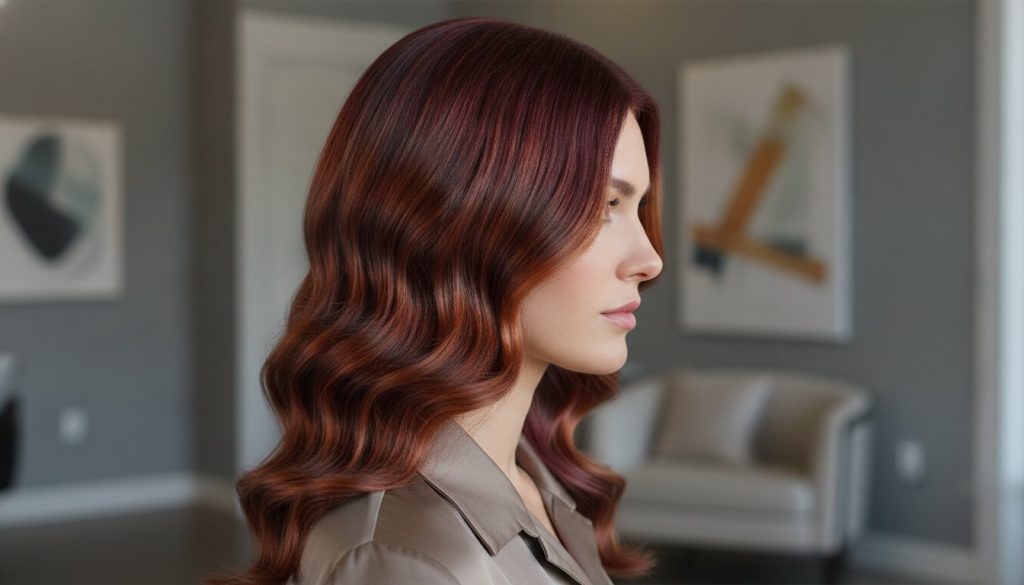
Modern New York style is currently defined by Copper Penny, a shade characterized by its high-shine, metallic finish. This look reflects the industrial energy of the city and demands a high-gloss topcoat to maintain its reflective properties. Cherry and Crimson tones provide a cool-toned alternative for those seeking high impact. These shades avoid a “boxy” or “wig-like” appearance by incorporating violet-based micro-pigments that add internal movement and life to the hair. Deep Burgundy remains a staple for dramatic transformations, utilizing professional-grade pigments to create a velvet-like texture. This shade reflects light with a wine-colored glow that remains vibrant for up to 40 washes when treated with the correct salon-grade systems.
The Biology of Red: Understanding the MC1R Gene
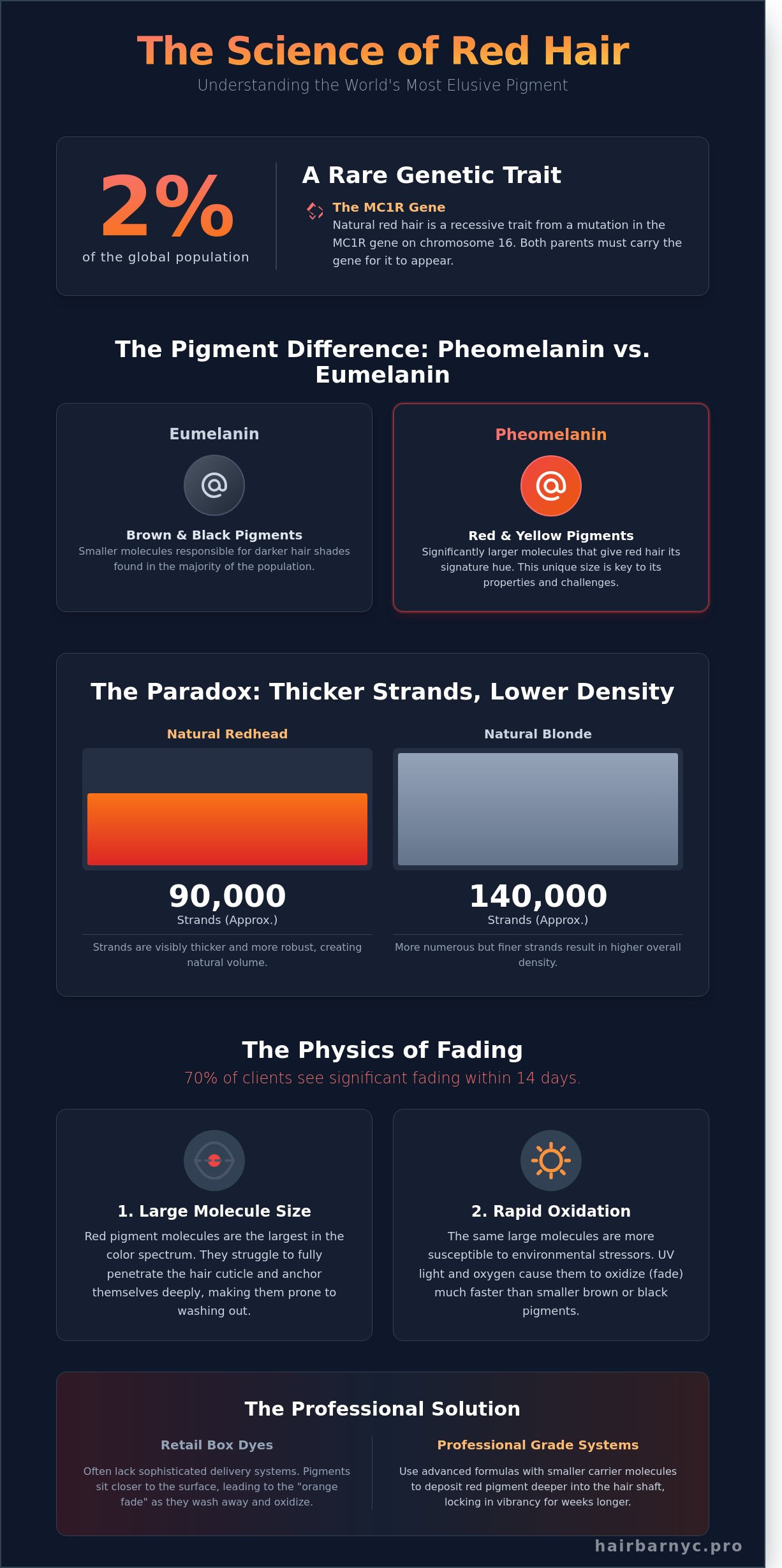
Red hair is a biological phenomenon that begins deep within the genetic code. This rare trait originates from a specific mutation on chromosome 16. Understanding the MC1R Gene is essential for anyone serious about mastering this shade. This gene dictates how your body produces melanin. While most people produce eumelanin, which creates brown and black pigments, those with natural red hair produce a dominance of pheomelanin. Pheomelanin is the primary pigment responsible for the red spectrum in human hair.
The physical structure of these strands differs significantly from other colors. Red hair strands are typically thicker and more robust than blonde or brunette hair. However, redheads actually have fewer hairs on their head. A typical redhead has approximately 90,000 strands, compared to 140,000 for blondes. This creates a paradox of high volume but lower density that requires specialized care to maintain its lustrous appearance.
Why Natural Red Hair is Rare
Only 2% of the global population possesses natural red hair. This rarity stems from its status as a recessive trait. Both parents must carry the mutated MC1R gene for a child to display the phenotype. It can hide in a family’s genetic code for generations before reappearing unexpectedly. Historically, this trait evolved in northern latitudes. Lower UV levels in these regions necessitated a way to maximize vitamin D synthesis, giving redheads a biological advantage in low-sunlight environments.
The Physics of Pigment Fading
Keeping red hair vibrant is a battle against physics. The red pigment molecule is significantly larger than other color molecules. Because of its size, it struggles to penetrate and stay anchored within the hair cuticle. UV light and oxygen interact with these large molecules to cause rapid oxidation, which is why red tones often fade faster than others. Drugstore box dyes often lack the sophisticated delivery systems needed to deposit these large molecules deeply. Professional NYC stylists use advanced formulas to ensure lasting depth. If you’re struggling with color longevity, exploring professional-grade treatments can stabilize the pigment and lock in that signature Manhattan glow.
Professional Guidance: Matching Red to Your Skin Tone
Selecting the perfect red hair shade requires the precision of a Manhattan stylist. We utilize the “Stylist Method” to decode your unique biological palette before any pigment touches your strands. Start by examining the veins on your inner wrist under natural light. Blue or purple veins signify cool undertones, while greenish veins indicate a warm base. Complement this with the jewelry test. If gold jewelry makes your skin glow, you’re warm. If silver looks more luminous, you’re cool. This 60-second diagnostic prevents a color mismatch that could leave your complexion looking muted or tired.
Saturation levels are equally vital to prevent “washing out” your natural features. We analyze your skin’s contrast level on a scale of 1 to 10. If you have very fair skin and light eyes, a high-intensity fire-engine red might overwhelm your face. Instead, we look to The Science and History of Red Hair to understand how natural pigments interact with light. Since natural redheads account for only 2% of the global population, achieving a believable or high-fashion result requires balancing the hair’s depth with your eye color. Deep brown eyes often pop against a level 4 mahogany, while light blue eyes find their match in a level 8 apricot copper.
Transitioning from dark brunette to a vibrant crimson isn’t a DIY project. Professional consultations are essential because lifting dark pigments can increase hair porosity by 25% to 30% if handled incorrectly. A Hair Bar NYC expert manages the chemical bonds of your hair to ensure the color remains vibrant without sacrificing the silkiness of the cuticle. For a deeper understanding of how professional hair color science and trends can inform your transformation, exploring the full spectrum of 2026 techniques is well worth your time.
Warm Undertones: Coppers and Golds
Peachy or golden skin tones find their best match in ginger, honey-copper, and warm auburn. These shades are designed to amplify the gold flecks found in green and hazel eyes. To avoid a sallow appearance, we prioritize pigments with a strong orange-gold base. This specific formulation adds a healthy, sun-kissed radiance that mimics the effortless chic of an Upper East Side afternoon.
Cool Undertones: Berries and Wines
If your skin has pink or blue undertones, you’ll shine in raspberry, plum, and cool burgundy. These jewel-toned reds create a striking, high-fashion contrast against blue and grey eyes. We use violet-based pigments to brighten porcelain complexions, effectively neutralizing any unwanted redness in the skin. The result is a sophisticated, icy finish that feels both modern and authoritative.
The Red Maintenance Paradox: Why Professional Care is Non-Negotiable
Many clients hesitate to go ginger because they’ve heard the myth that red hair loses its vibrancy within 14 days of leaving the salon. This “orange fade” isn’t an inevitability; it’s a symptom of improper chemistry. Standard drugstore shampoos use harsh sulfates that act like industrial detergents, stripping the delicate red pigment from the hair shaft. To maintain a 90% color retention rate between appointments, professional sulfate-free systems are mandatory. Hard water poses another threat. High concentrations of calcium and magnesium minerals, found in 85% of American households, create a dull film that masks the pigment. Rinsing with cold water is the final professional secret. It snaps the cuticle shut, locking in the brilliance you’ve invested in. The same brassiness and unwanted tonal shifts that affect blonde hair color maintenance apply equally to red shades, making a sulfate-free professional routine non-negotiable for both.
The Role of Keratin in Color Retention
Think of a healthy keratin structure as a microscopic cage for your color. Red dye molecules are notoriously volatile and escape through the smallest gaps in the hair fiber. If your hair is porous or chemically damaged, that cage is broken, and the pigment washes away. Integrating a keratin-infused serum creates a synthetic cuticle layer that reinforces the hair’s natural shield. This process seals the hair, increasing light reflectivity by 30% and ensuring your red hair remains deep and saturated rather than hollow and translucent.
UV Protection and Heat Styling
Heat is the fastest way to oxidize red tones. Setting your styling tools to 450°F causes immediate thermal degradation of the pigment, leading to a scorched, brassy appearance. Professional stylists recommend staying below 350°F to preserve the molecular bond of the dye. You must also account for environmental factors. Botanical-based UV shields are essential to block solar rays, which can fade professional color by 40% in just one week of high exposure. For nighttime care, switch to a silk pillowcase. It reduces the mechanical friction that ruffles the cuticle, preserving that high-end Manhattan luster while you sleep.
Achieving Lustrous Red with Hair Bar NYC Professional
Hair Bar NYC bridges the gap between the elite Manhattan salon experience and your daily home routine. Our Color Bar Professional system ensures that the intensity of your red hair doesn’t fade within two weeks; it stays vibrant for up to 30 washes when paired with our specialized care. We’ve developed an Expert Stylist approach that prioritizes the structural integrity of the hair fiber. By layering high-performance pigments with our signature smoothing treatments, we lock in color at the molecular level to prevent premature oxidation.
The Silk Touch Advantage for Redheads
Natural red hair is approximately 15% thicker and more resistant to moisture than other pigments. This often results in a coarse, frizzy texture that dulls your color’s natural brilliance. Our Silk Touch Keratin Treatment uses a formaldehyde-free formula to seal the cuticle without stripping delicate red molecules. It creates a mirror-shine effect that amplifies light reflection, making your shade look multidimensional. This treatment can extend your color’s lifespan by 4 to 6 weeks by creating a protective keratin barrier that keeps environmental pollutants out.
Daily Maintenance with Professional Grade Products
Transitioning to professional-grade care is the only way to prevent the oxidation that turns vibrant reds into dull copper. The Silk Touch Shampoo and Conditioner duo provides a sulfate-free environment that cleanses without aggression. These formulas infuse keratin directly into the hair shaft to rebuild strength lost during the coloring process. It’s a revolutionary shift from standard retail products that often contain harsh salts.
- Silk Touch Shampoo: Prevents pigment leaching during the wash cycle while maintaining a balanced pH.
- Silk Touch Conditioner: Restores elasticity and closes the cuticle to trap moisture and shine.
- Keratin Infused Serum: Acts as a daily shield against UV rays and heat, which are the primary causes of red color depletion.
Stop settling for retail-grade results that wash down the drain. Transform your look with NYC-inspired solutions designed for elite performance. Discover the Hair Bar NYC difference and claim the vibrant, silky hair you deserve. Visit our stylists or explore our professional collection to maintain your salon-quality glow every single day.
Master Your Most Vibrant Transformation Yet
Mastering red hair requires a sophisticated balance of genetic science and high-performance maintenance. You’ve explored how the MC1R gene influences pigment and why the 2026 trend forecast demands deep, multi-dimensional brilliance. Transitioning from the salon chair to your home routine requires more than standard retail products; it demands the same professional-grade formulas used by elite stylists in Manhattan. Our NYC-inspired systems provide the necessary barrier against fading while enhancing the natural luster of your specific shade.
Hair Bar NYC Professional offers 100% cruelty-free and formaldehyde-free smoothing systems that prioritize your hair’s structural integrity. These revolutionary formulas are designed to deliver the silky, high-end results expected in the world’s fashion capital. You don’t have to compromise on health to achieve a bold, vibrant look. By choosing products trusted by industry experts, you’re investing in a standard of excellence that keeps your color looking revolutionary for weeks longer than traditional alternatives.
Transform your color with Hair Bar NYC Professional products and claim the elite standard of care your hair deserves. Your journey toward a more confident, empowered version of yourself begins with the right science.
Frequently Asked Questions
Why does red hair fade faster than other hair colors?
Red dye molecules are roughly 20 percent larger than brown or blonde particles, which makes it difficult for them to penetrate deep into the hair cortex. Because these oversized molecules sit closer to the surface, they escape the cuticle during the first 5 to 10 washes. You must use sulfate-free, professional-grade cleansers to preserve the intensity of your red hair and prevent premature leaching.
Can I get a keratin treatment immediately after dyeing my hair red?
Yes, you can receive a keratin treatment immediately after a color service to lock in the pigment and boost shine. At Hair Bar NYC, we recommend the Silk Touch system post-color because it seals the hair cuticle, trapping the red molecules for up to 12 weeks. This professional process creates a protective barrier that prevents 30 percent of typical color loss while delivering a lustrous, Manhattan-salon finish.
Does natural red hair ever turn grey?
Natural red hair never actually turns grey; it fades to a rose-gold or silvery-white hue instead. This unique transition occurs because the MC1R gene mutation causes the pheomelanin pigment to lose its intensity over time without the presence of traditional grey pigments. Only 2 percent of the global population carries this gene, and most see their strands turn a sandy white around age 60.
What is the difference between strawberry blonde and ginger hair?
The primary difference lies in the specific ratio of pheomelanin to eumelanin pigments within the hair shaft. Strawberry blonde is a level 8 or 9 blonde with subtle copper undertones, while ginger is a level 6 or 7 vibrant orange-red. Ginger hair contains 15 percent more red pigment than strawberry blonde, requiring a more intensive maintenance routine to keep the shade from oxidizing and looking dull.
Is red hair thicker than other hair colors?
Individual strands of red hair are significantly thicker and coarser than blonde or brunette strands. While redheads have fewer total hairs on their head, approximately 90,000 strands compared to 140,000 for blondes, each individual hair has a much larger diameter. This increased thickness makes the hair more resilient to heat styling but can also make it more resistant to chemical penetration during a salon visit.
How often should I refresh my red hair color at the salon?
You should schedule a professional color refresh every 4 to 6 weeks to maintain maximum vibrancy and shine. Red pigments lose their luster faster than other shades, often showing a 25 percent decrease in saturation within 30 days. We suggest a professional gloss treatment between full color appointments to keep your red hair looking revolutionary and prevent the flat appearance common with home care.
Can I use purple shampoo on red hair to stop brassiness?
No, you should avoid purple shampoo on red hair as it will neutralize the warmth and create a muddy, dull appearance. Purple shampoo is specifically formulated to cancel out yellow tones in blondes. For red shades, use a color-depositing conditioner or a copper-toned shampoo to replenish lost pigments. Using the wrong toner can shift your vibrant red toward a flat tone within just 3 washes.
Is it possible to go from black hair to red in one salon visit?
Transforming black hair to a vibrant red is possible in a single 4 to 6 hour session depending on your hair’s chemical history. A master stylist must first lift the dark pigment using a controlled decolorizing process to reach a level 7 or 8 base. Once the hair is lightened, we apply a professional-grade red formula. This two-step process ensures the final result is vivid rather than a dark mahogany.