Japanese Hair Straightening vs. Vegan Keratin: The Professional Guide to Sleek Hair in 2026
The permanent promise of bone-straight hair might actually be the very thing standing between you and the healthy, versatile glow you crave. If you’ve spent years battling humidity-induced frizz or scorching your strands with daily heat styling, the allure of a forever fix is understandable. However, the choice between japanese hair straightening vs vegan keratin is no longer just about texture; it’s about the future integrity of your hair. You want a sophisticated, glass-like finish without the regret of permanent chemical bonds or the fear of formaldehyde exposure that continues to plague the industry in 2026.
You deserve a routine that feels like a luxury, not a chore. We understand the need for a high-performance solution that reduces styling time while maintaining the ability to switch from sleek to voluminous. This guide explores the critical distinctions between aggressive thermal reconditioning and the latest plant-based innovations. You’ll discover how professional-tier options like our Silk Touch Keratin Treatment and Diamond Keratin Treatment provide a health-first path to impeccable shine. We’re breaking down the science of 2026 smoothing technology to help you claim the chic, metropolitan aesthetic you desire without compromising on safety or hair health.
Key Takeaways
- Contrast the permanent structural change of thermal reconditioning with the protective, external protein infusion of vegan smoothing systems to protect your hair’s integrity.
- Navigate the longevity and maintenance cycle of japanese hair straightening vs vegan keratin to perfectly align your salon schedule with your lifestyle.
- Identify why compromised or color-treated hair should prioritize protein-rich formulas like our Diamond Keratin Treatment over permanent chemical alternatives.
- Discover why plant-based, formaldehyde-free formulas have become the modern gold standard for achieving high-shine, metropolitan sleekness without toxic exposure.
- Master the professional criteria for selecting your ideal treatment based on current hair health, curl pattern, and your desire for daily styling versatility.
Understanding the Fundamentals: Japanese Straightening and Vegan Keratin
The quest for glass-like hair often leads to a crossroads where chemistry meets health. In 2026, the elite salon standard has shifted away from purely aggressive transformations toward sustainable, high-performance results. Deciding on japanese hair straightening vs vegan keratin requires an understanding of how these formulas interact with your hair’s internal architecture. While one process demands a permanent commitment to a specific texture, the other offers a sophisticated bridge between intense repair and effortless styling versatility. You’re no longer forced to choose between sleekness and safety; you just need to choose the right technology for your lifestyle.
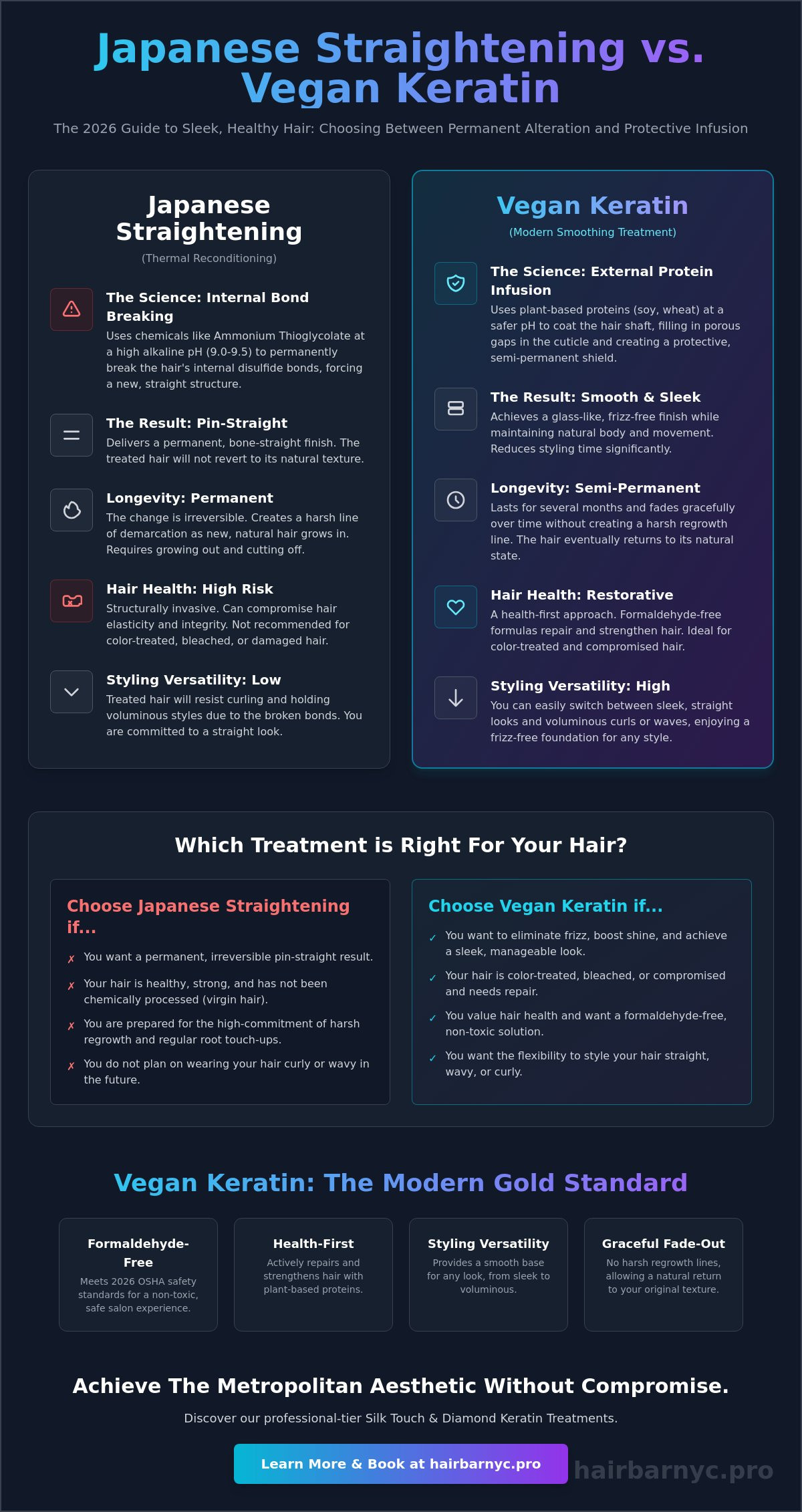
Japanese hair straightening, often called thermal reconditioning, is a permanent structural overhaul. It doesn’t just smooth the hair; it fundamentally alters its DNA. Conversely, vegan keratin treatments serve as a semi-permanent shield. They utilize plant-derived proteins to fill the porous gaps in your cuticle, delivering a frizz-free finish that fades gracefully over time rather than creating a harsh line of regrowth. This distinction is the foundation of modern hair care, where the focus has moved toward maintaining the hair’s natural vitality while achieving a metropolitan, polished aesthetic.
What is Japanese Thermal Reconditioning?
Developed in Japan and popularized by the Yuko system, this method relies on ammonium thioglycolate to break the hair’s disulfide bonds. These bonds are the skeleton of your hair. Once broken, the hair is saturated with intense heat and tension to reset it into a pin-straight configuration. It’s a point of no return procedure. Various hair straightening techniques exist, but none are as structurally invasive as this. If you choose this path, the treated hair will never return to its natural state. You’re committed until the hair eventually grows out and is cut off. This makes the debate of japanese hair straightening vs vegan keratin particularly vital for those who enjoy changing their look frequently.
The Evolution of Vegan Keratin Treatments
Modern science has moved beyond animal-derived proteins to embrace sophisticated plant-based alternatives. Our Silk Touch Keratin Treatment utilizes proteins from soy, wheat, and corn to mimic the natural keratin found in human hair. These formulas are entirely free from formaldehyde and harsh aldehydes, meeting the rigorous safety expectations and OSHA standards of 2026. Unlike the rigid results of chemical straightening, vegan keratin provides a dual benefit. It intensively repairs the hair fiber while sealing the cuticle against humidity. It’s an expert-level solution for those who want the chic finish of sleek hair without sacrificing the natural movement or long-term health of their strands.
The Science of Transformation: Internal Bond Breaking vs. External Protein Infusion
Understanding the molecular reality of japanese hair straightening vs vegan keratin reveals why one is a permanent alteration and the other a restorative therapy. Japanese straightening operates at a high alkaline pH, usually between 9.0 and 9.5, to swell the hair shaft and reach the disulfide bonds. These bonds act as the internal skeleton of your hair. By chemically dismantling this structure, the treatment allows the hair to be physically repositioned. In contrast, vegan keratin smoothing typically stays within a more acidic or neutral pH range. It focuses on the cuticle, the hair’s outer armor, rather than destroying the core. This scientific distinction explains why keratin treatments often leave hair feeling stronger, while chemical straightening can compromise elasticity if not managed by an expert.
How Japanese Straightening Reshapes Hair
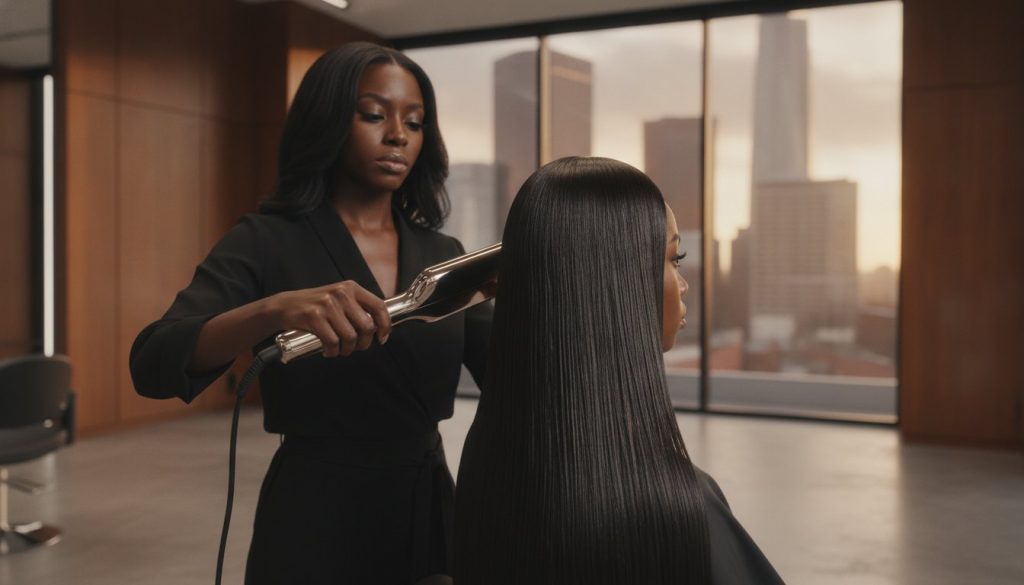
The process begins with a softening agent, typically ammonium thioglycolate, which severs the disulfide bonds. This renders the hair completely malleable. Once the hair is softened, a technician uses a Professional Flat Iron to press the hair into a perfectly straight alignment. The final, most critical step is the neutralizer. This acidic solution halts the chemical reaction and locks the bonds into their new, linear shape. It’s a high-stakes balancing act. If the bonds are broken too far or the heat is applied unevenly, the hair loses its structural integrity, leading to irreversible brittleness. This technical intensity is a primary factor when weighing japanese hair straightening vs vegan keratin for compromised hair types.
The Smoothing Mechanism of Vegan Keratin
Vegan keratin doesn’t break bonds; it builds a bridge. During the application of a formula like our Silk Touch Keratin Treatment, refined plant proteins from soy and wheat penetrate the microscopic gaps in a damaged cuticle. When heat is applied, these proteins undergo a process called cross-linking. They create a smooth, hydrophobic shield that mimics the hair’s natural luster. This protective barrier is what prevents environmental humidity from swelling the hair shaft and causing frizz. Because these formulas are enriched with botanicals, they maintain essential moisture levels throughout the smoothing process, resulting in a finish that feels like silk rather than straw.
Safety is the non-negotiable standard in elite urban salons today. While the industry has seen repeated delays in federal regulations, including the most recent missed deadline for a formaldehyde ban in late 2025, professional standards have already evolved. Discerning clients now demand transparency. You should always review FDA information on formaldehyde in hair products to understand the risks associated with older, toxic smoothing methods. By choosing a sophisticated vegan alternative, you achieve a flawless, high-shine finish without the health compromises of the past.
Japanese Straightening vs. Vegan Keratin: Comparison of Results and Maintenance
Choosing between these two elite treatments isn’t just a matter of preference; it’s a strategic decision for your lifestyle. The time you spend in the salon chair reflects the intensity of the transformation. A professional Japanese straightening session typically requires a 6 to 8-hour commitment, a significant investment for any urban professional. Conversely, a high-end vegan keratin treatment is completed in a swift 2 to 3 hours. This efficiency makes it the preferred choice for those who demand excellence without sacrificing their entire day. When evaluating japanese hair straightening vs vegan keratin, you must weigh this initial time investment against the long-term visual results and daily effort required to maintain them.
Longevity and the Grow-Out Phase
The most striking difference lies in how these treatments age. Japanese straightening is a permanent commitment. The treated hair remains pin-straight for 6 months or longer, but this creates the notorious “line of demarcation.” As your natural texture grows in at the roots, the contrast can be jarring, necessitating frequent and precise touch-ups. When comparing the growth cycle of japanese hair straightening vs vegan keratin, the permanent option requires a higher level of dedication. Vegan keratin offers a more graceful exit strategy. Because it is semi-permanent, the protein shield gradually washes away over 3 to 5 months. This ensures a seamless transition that avoids harsh texture lines. To extend these results, we recommend a regimen of Silk Touch Shampoo and Silk Touch Conditioner, which are specifically formulated to preserve the protein bond without the stripping effects of sulfates.
Styling Versatility and Daily Life
Styling flexibility is another critical factor for the modern client. Japanese thermal reconditioning provides a permanent, “wash and wear” straightness that resists almost all attempts at curling. If you crave a bouncy blowout or occasional waves, you’ll find this method restrictive. Vegan keratin treatments, such as our Diamond Keratin Treatment, prioritize versatility. They eliminate frizz and reduce blow-dry time by up to 50%, yet the hair retains enough internal elasticity to hold a curl when desired. This adaptability is essential for those who transition from a sleek boardroom look to evening glamour. Additionally, safety remains a paramount concern. You should consult FDA information on formaldehyde in hair smoothing products to ensure your chosen path aligns with 2026 health standards. Our plant-based systems provide that sought-after metropolitan polish without the toxic trade-offs of traditional chemical straighteners.
Decision Guide: Which Treatment is Right for Your Hair Type?
Your hair’s current condition is the ultimate gatekeeper in the debate of japanese hair straightening vs vegan keratin. It’s about your history. While the dream of permanent sleekness is tempting, the chemical reality is unforgiving. If your strands have been compromised by bleach, high-lift blondes, or previous chemical services, the aggressive nature of thermal reconditioning can lead to catastrophic breakage. Vegan keratin, however, acts as a restorative therapy. It’s the safer, more sophisticated choice for the modern urbanite who refuses to compromise on hair health. You shouldn’t have to choose between a straight look and hair that actually feels like hair.
A common concern for those with extremely coarse or resistant hair is whether a plant-based system can truly deliver. The answer lies in the application. Our Silk Touch Keratin Treatment is designed to be layered and sealed with precision, providing significant smoothing and volume reduction even for the most stubborn textures. It doesn’t just mask frizz; it re-engineers the hair’s surface for a polished, manageable finish. For those seeking the pinnacle of hair health, our Keratin Intensive Treatment offers the deep-fiber repair necessary to prepare your hair for any professional smoothing service.
The Safety Profile for Color-Treated Hair
Combining permanent chemical straightening with highlights is a high-risk gamble that most elite stylists refuse to take. The double-processing of breaking internal bonds after stripping pigment often results in a gummy texture and eventual snapping. In contrast, vegan keratin smoothing actually complements hair color. By sealing the cuticle, it locks in pigment and prevents the premature fading caused by environmental stressors. For the best results, we recommend a 14-day window between your professional hair color service and your smoothing treatment to allow the hair’s pH to stabilize and the color to fully set.
Matching Texture to Technique
Identifying your ideal candidate profile is essential. Japanese straightening is best suited for virgin, healthy hair with extremely resistant, tight curls where pin-straight is the only acceptable outcome. If you have wavy, frizzy, or damaged hair and seek a lustrous, manageable glow, vegan keratin is your gold standard. Before any service, an expert professional will perform a stress test. This involves stretching a single wet strand to check for elasticity. If the hair doesn’t bounce back, permanent chemical straightening is off the table. This professional assessment ensures you choose the most effective path in the japanese hair straightening vs vegan keratin comparison without risking the integrity of your strands.
Why Vegan Keratin is the Modern Gold Standard for Professional Smoothing
The evolution of professional hair care has reached a definitive turning point. As we move through 2026, the elite salon environment has largely moved away from the aggressive, bond-breaking chemistry of the past. When deciding between japanese hair straightening vs vegan keratin, the modern choice rests on a foundation of long-term integrity. While thermal reconditioning offers a permanent fix, it often leaves the hair structurally hollow and susceptible to environmental stress over time. Vegan keratin, specifically our Silk Touch system, represents the pinnacle of hair technology. It bridges the gap between high-performance smoothing and uncompromising health standards. You’re no longer choosing between a sleek look and hair that feels alive.
Choosing a plant-based path isn’t just an ethical decision; it’s a commitment to your hair’s future. The industry-wide shift toward formaldehyde-free keratin treatments has proven that you don’t need toxic fumes to achieve a glass-like finish. By prioritizing a health-first approach, you ensure your hair remains vibrant, elastic, and versatile. It’s about your legacy of care. By investing in formulas that respect your biology, you achieve a high-shine finish that traditional chemicals simply cannot replicate without damage.
The Clean Beauty Advantage
The sensory experience of a modern smoothing service should be as luxurious as the result. Traditional chemical straighteners often come with harsh odors and eye irritation that detract from the salon experience. Our vegan formulas eliminate these risks entirely. By utilizing proteins derived from soy, wheat, and corn, we mimic the hair’s natural composition without the need for carcinogenic stabilizers. This clean beauty standard protects both the client and the professional stylist. It’s a sophisticated, urban approach to care that values sustainability and safety as much as aesthetic perfection. You’ll leave the chair feeling empowered, not exhausted by chemical exposure.
Achieving the Silk Touch Result
The hallmark of a superior treatment is the “liquid hair” effect. Our Silk Touch Keratin Treatment delivers a transformative shine that reflects light with unmatched clarity. This isn’t just a surface coating; it’s a deep infusion of nourishment that seals the cuticle and eliminates porosity. To preserve this metropolitan glow, maintenance is essential. Integrating natural hair care products into your daily routine, such as our Silk Touch Shampoo and Conditioner, prevents the protein shield from eroding prematurely.
The debate of japanese hair straightening vs vegan keratin ultimately favors the treatment that leaves your hair better than it found it. Prioritize your hair’s long-term integrity over the allure of permanent chemical changes. We invite you to experience the future of professional smoothing today. Shop the Silk Touch collection or book a consultation with a professional to claim your path to flawless, high-performance hair.
Claim Your Path to Flawless Hair
Deciding between japanese hair straightening vs vegan keratin comes down to a fundamental question of long-term hair health. While thermal reconditioning offers a permanent, rigid structure, modern vegan smoothing provides the flexibility and restorative power that today’s metropolitan lifestyle demands. You’ve learned that preserving your hair’s internal elasticity is the key to achieving that coveted liquid shine without the risk of irreversible chemical damage. By choosing a sophisticated, protein-rich alternative, you prioritize a vibrant future for your strands while enjoying effortless, frizz-free mornings.
Our professional systems are the standard in high-end urban salons. We provide 100% formaldehyde-free formulas that are trusted by elite stylists nationally. Every product in our range is cruelty-free and vegan certified, ensuring your beauty routine aligns with your values. It’s time to invest in a standard of excellence that transforms your hair from the inside out. Experience the Silk Touch: Shop Our Professional Vegan Keratin Collection to begin your journey toward healthier, more luminous hair. You deserve the confidence that comes with expert-level care and uncompromising quality.
Frequently Asked Questions
Is vegan keratin as effective as Japanese hair straightening for very curly hair?
Effectiveness depends entirely on your desired aesthetic outcome. While Japanese hair straightening delivers a permanent, pin-straight result, vegan keratin is designed to eliminate frizz and soften the curl pattern into manageable, lustrous waves. It provides a sophisticated, natural-looking finish that retains the hair’s bounce and styling versatility rather than creating a rigid, linear state.
Can I get Japanese hair straightening if my hair is bleached or highlighted?
Professional stylists strongly advise against Japanese straightening for bleached or highlighted hair. The high-alkaline chemicals used to break internal bonds can cause catastrophic breakage on compromised strands. For those with high-lift color, a restorative Diamond Keratin Treatment is the safer path to achieving a polished, high-shine aesthetic without risking structural failure.
How long does a vegan keratin treatment like Silk Touch actually last?
A professional Silk Touch Keratin Treatment typically lasts between 3 and 5 months. Its longevity is directly tied to your home care regimen and how often you cleanse your hair. By using our Silk Touch Shampoo and Conditioner, you can extend the smoothing effects and maintain the protective protein shield against daily humidity and environmental stressors.
Does Japanese hair straightening cause more damage than keratin?
Yes, Japanese straightening is more invasive because it permanently dismantles the hair’s disulfide bonds to reshape the internal skeleton. When evaluating japanese hair straightening vs vegan keratin, it’s clear that keratin acts as a restorative therapy. It fills the gaps in your hair’s cuticle with plant proteins, whereas chemical straightening can leave hair brittle if the bonds aren’t perfectly neutralized.
Can I wash my hair immediately after a vegan keratin treatment?
You should wait at least 48 to 72 hours before your first wash to ensure the treatment sets correctly. This window allows the plant-based proteins to fully cross-link and seal the hair shaft. During this period, keep your hair down and avoid using pins or elastic bands that could create permanent creases in the newly smoothed cuticle.
What happens to my hair when the Japanese straightening grows out?
You’ll experience a visible line of demarcation where your natural texture meets the permanently straightened hair. This often creates a challenging dual-texture look that can be difficult to style without professional intervention. Unlike vegan keratin, which fades evenly over several months, Japanese straightening requires consistent root touch-ups to maintain a uniform appearance from roots to ends.
Are there any toxic chemicals in vegan keratin treatments?
Elite vegan keratin treatments are formulated without formaldehyde, sulfates, or harsh aldehydes. They utilize sophisticated plant proteins from soy, wheat, and corn to mimic natural keratin. This clean beauty approach ensures a luxury salon experience without the eye irritation or respiratory risks associated with older, chemical-heavy smoothing methods that have faced increased scrutiny in 2026.
How much do these professional treatments typically cost in 2026?
Industry reports for 2026 indicate that Japanese hair straightening typically ranges from $300 to $800, depending on hair length and salon location. Professional keratin treatments generally range from $82 to $500. While some high-end urban salons may charge higher fees for specialized services, these averages reflect the current market standard for expert-level smoothing and repair.