Ingredients to Avoid in Professional Smoothing Systems: A 2026 Stylist’s Guide
What if the very products promised to transform your clients’ hair are silently compromising your salon’s air quality and your team’s long-term health? As we move through 2026, the era of “performance at any cost” has officially ended. Understanding the specific ingredients to avoid in professional smoothing systems is now the hallmark of an elite, chic stylist who refuses to compromise on safety. You’ve likely felt the sting in your eyes or the confusion of a “formaldehyde-free” label that still produces heavy fumes once the flat iron hits the hair. It’s frustrating to balance the desire for high-end, metropolitan results with the reality of hidden chemical risks.
You deserve to work in an environment that is as healthy as it is luxurious. This guide empowers you to master the science of clean beauty by identifying the performance-stripping and toxic additives that have no place in a modern, upscale salon. We’ll examine the latest 2026 regulatory shifts, including the FDA’s targeted bans and the expanded EU fragrance allergen mandates. You’ll learn how to audit product labels with expert precision, ensuring every treatment delivers breathtaking, long-lasting results that position your salon as a premier destination for elite care.
Key Takeaways
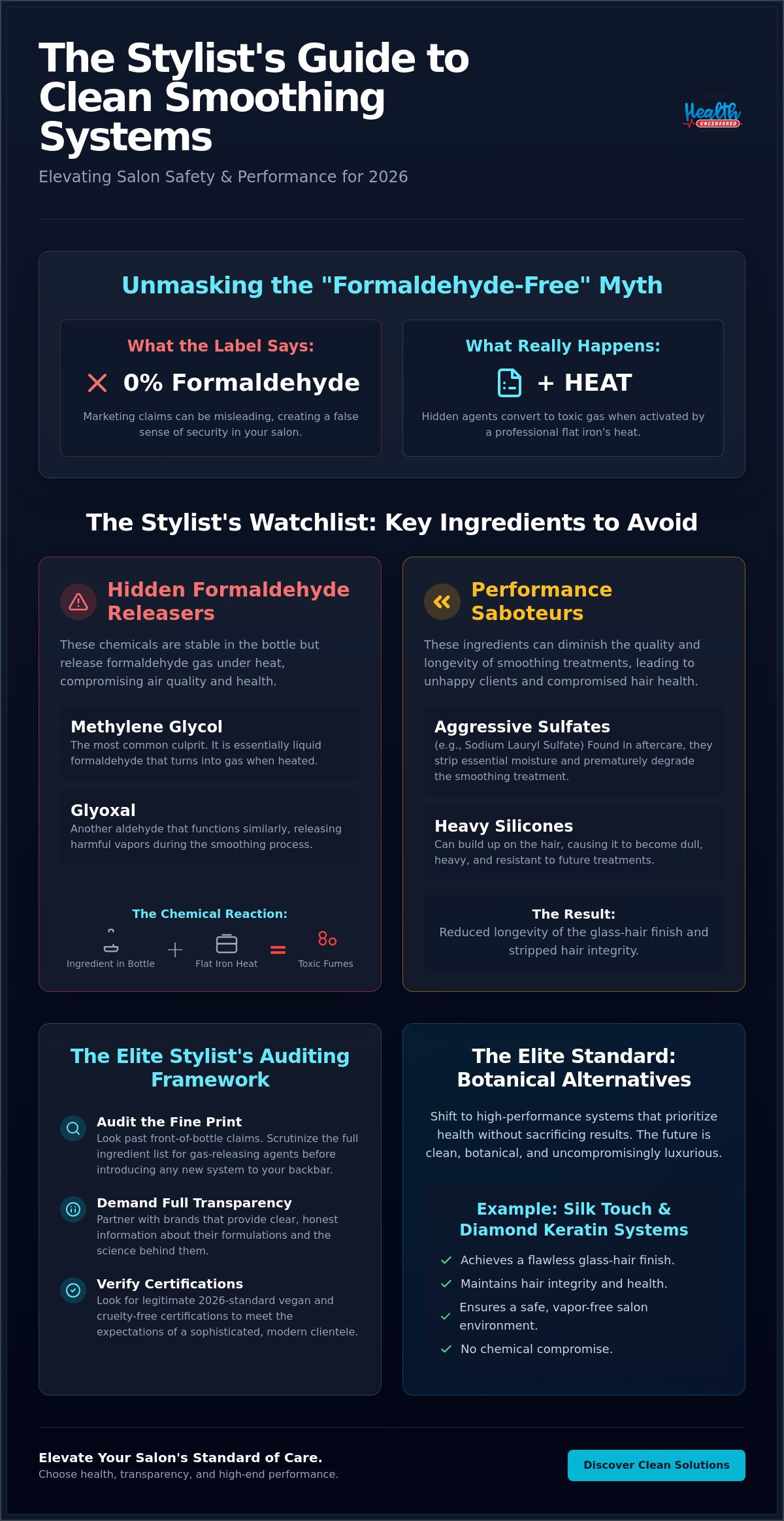
- Unmask the marketing myths surrounding formaldehyde-free labels by identifying hidden gas-releasing agents that activate only under the heat of a professional flat iron.
- Master the science of clean beauty by learning which specific ingredients to avoid in professional smoothing systems to ensure a safe, vapor-free environment for your elite clientele.
- Identify the performance saboteurs, such as aggressive sulfates, that compromise the longevity of your smoothing results and strip the hair of its essential moisture.
- Implement a professional auditing framework to confidently verify ingredient transparency and 2026 vegan certifications before introducing any new system to your backbar.
- Elevate your salon’s standard by shifting to high-performance, botanical alternatives like the Silk Touch Keratin Treatment that prioritize health without sacrificing a glass-hair finish.
The Toxic Truth: Why Traditional Smoothing Systems are Evolving
The evolution of professional hair care isn’t just a trend. It’s a necessary revolution. For decades, the industry accepted a difficult trade-off: stunningly sleek hair in exchange for exposure to aggressive chemicals. The traditional Brazilian hair straightening process relied on a mechanism that essentially forced chemical bonds into a new, rigid shape using high heat and aldehydes. This was the era where “salon-grade” performance was unfortunately synonymous with acrid, throat-stinging vapors. Today, the 2026 stylist understands that true luxury shouldn’t come with a warning label.
Clients now walk into high-end urban salons with a different set of expectations. They demand transparency. They want to know that their sleek finish doesn’t involve animal testing or toxic runoff. This shift toward cruelty-free and vegan formulations has forced a re-evaluation of the ingredients to avoid in professional smoothing systems. We’re moving away from permanent chemical altering, which often leaves the hair structurally compromised, and toward sophisticated, temporary smoothing that preserves the hair’s integrity while delivering that coveted glass-like shine. It’s about achieving high performance without the chemical compromise.
The Health Implications for the Modern Stylist
Protect your craft by protecting your health. Inhaling salon fumes isn’t just an occupational hazard; it’s a cumulative risk that can lead to chronic respiratory issues and heightened skin sensitivities over a long career. Aggressive preservatives, often found in older smoothing formulas, release gases that linger in the air long after the service is complete. Research has linked these formaldehyde-releasing chemicals to serious health concerns, including an increased risk of uterine fibroids and other long-term illnesses. In an elite salon environment, air quality is a non-negotiable standard of care. Your workspace should feel like a sanctuary of wellness, not a laboratory of chemical exposure.
Aspirational Beauty vs. Chemical Compromise
Luxury is no longer just about the final look. It’s about the entire sensory experience. Aspirational beauty in 2026 is defined by clean, ethically sourced ingredients that perform at the highest level. Clients are increasingly knowledgeable about the ingredients to avoid in professional smoothing systems, often auditing labels before they even book an appointment. By choosing systems that prioritize botanical integrity over chemical aggression, you position your salon as an industry leader. You’re not just selling a service; you’re offering a professional standard of excellence that aligns with a sophisticated, metropolitan lifestyle. This commitment to health-conscious beauty is what separates a standard salon from an elite destination.
Identifying Hidden Formaldehyde and Gas-Releasing Agents
The label reads “0% Formaldehyde,” yet the air in your salon tells a different story the moment the flat iron touches the hair. This marketing sleight of hand is exactly why you must scrutinize the ingredients to avoid in professional smoothing systems. Many manufacturers exploit labeling loopholes by using chemicals that remain stable in the bottle but transform into hazardous vapors under high temperatures. It’s a chemical bait-and-switch that puts your health and your reputation at risk. As an expert professional, you know that true luxury doesn’t require a mask.
When you glide a professional flat iron over the hair, you aren’t just sealing the cuticle. You’re potentially initiating a chemical reaction. This transition from liquid treatment to toxic vapor happens in seconds, filling your workspace with invisible irritants. This FDA warning on formaldehyde highlights how these emissions can exceed safe exposure limits, even when the word “formaldehyde” is absent from the primary ingredient list. To protect your team, you must look past the front of the bottle and audit the fine print for gas-releasing agents.
The Methylene Glycol and Glyoxal Connection
Methylene glycol is effectively liquid formaldehyde in a bottle. It’s the most common “hidden” culprit in traditional systems. While it stays liquid at room temperature, it’s chemically predisposed to revert to gas when pushed. Glyoxal is another aldehyde frequently used as a substitute; it carries similar respiratory risks and can cause significant skin sensitivity. Heat triggers the release of formaldehyde gas. Once this gas is airborne, it’s easily inhaled by everyone in the vicinity, making it one of the most critical ingredients to audit during your product selection process.
Secondary Releasers to Audit
Don’t overlook the preservatives. Ingredients like DMDM Hydantoin and Quaternium-15 are known formaldehyde releasers. While they’re often found in cheaper, non-professional systems, they can sneak into professional-grade formulas to extend shelf life at a lower cost. A sophisticated stylist doesn’t rely on luck. Always demand the Safety Data Sheet (SDS) from your distributor to verify the true chemical profile of a product line. For those who refuse to compromise on air quality, choosing a clean alternative like the Silk Touch Keratin Treatment ensures you deliver elite results without the hidden chemical baggage. High-performance smoothing should never come at the expense of your salon’s atmosphere.
Performance Saboteurs: Ingredients That Strip Your Results
A flawless finish should last months. It shouldn’t fade after the first wash. While we’ve discussed the health risks of aldehydes, you must also recognize the “performance saboteurs” that compromise the longevity of your work. Identifying these ingredients to avoid in professional smoothing systems and their accompanying post-care lines is the difference between a satisfied regular and a one-time client. Even the most advanced formulas, like the Silk Touch Keratin Treatment, require an environment free from aggressive stripping agents to maintain that signature glass-hair sheen. When these saboteurs are present, they physically and chemically dismantle the smoothing matrix you’ve worked so hard to build.
Harsh alcohols and abrasive minerals act as microscopic chisels on the hair shaft. Isopropyl alcohol, often used as a cheap solvent in lower-tier systems, evaporates quickly but leaves the cuticle brittle and porous. This dehydration causes the hair to swell at the first sign of humidity, effectively reversing the smoothing effect. To deliver elite, metropolitan results, you must ensure every product in your protocol supports the treatment’s structural integrity rather than undermining it.
The Science of Sodium Chloride (Salt)
Sodium Chloride is more than just a physical abrasive; it’s a chemical disruptor. In the world of professional smoothing, salt is the ultimate enemy. It functions by disrupting the delicate cross-linking of keratin proteins that give the hair its new, sleek shape. This ionic interaction essentially pulls the treatment out of the hair fiber, leading to premature frizz and a loss of shine. Educate your clients on the dangers of ocean water and texturizing “sea salt” sprays. These products are designed to roughen the cuticle, which is the exact opposite of the smooth, polished aesthetic your salon represents. If they want their investment to last, salt-heavy products must be strictly off-limits.
Sulfates vs. Gentle Surfactants
Sulfates like Sodium Lauryl Sulfate (SLS) are aggressive detergents that have no place in a high-end maintenance routine. They work by forcefully opening the hair cuticle to remove oils, but in doing so, they allow the smoothing treatment to leach out. While “Sulfate-Free” has become a common marketing buzzword, it is truly the bare minimum for professional-tier care. Transition your clients toward sophisticated, gentle surfactants that cleanse without compromise. For a deeper look at maintaining hair health across all textures, consult our guide on natural hair care products. By curating a backbar free from these performance-stripping chemicals, you guarantee the long-lasting, transformative results that define your professional standard of excellence.
The Stylist’s Checklist for Ingredient Transparency
Audit your backbar with the same precision you use for a precision cut. In 2026, being an elite stylist means being a cosmetic detective. You’ve already identified the gas-releasing agents and performance-stripping salts that define the ingredients to avoid in professional smoothing systems. Now, you need a rigorous framework to ensure any new product line meets your uncompromising standards. Before a single drop of a new system touches a client’s hair, you must verify the science behind the “smooth.” If the formula isn’t using aldehydes, you must identify exactly what is performing the structural work. High-end metropolitan salons now favor advanced amino acid complexes and glyoxylic acid derivatives over the aggressive generic fillers of the past.
Proprietary technology is the hallmark of a premium brand. While budget lines rely on basic chemical reactions, elite systems use sophisticated delivery methods to infuse the hair with nutrients. When you audit a label, look for a clearly defined active agent. If the manufacturer is vague about their smoothing mechanism, it’s a red flag. A transparent brand will proudly detail their “no-list” of prohibited chemicals, giving you the confidence to position your salon as a clean-beauty destination. This level of scrutiny isn’t just about safety; it’s about delivering a professional standard of excellence that keeps your chair full.
Verifying Botanical and Vegan Alternatives
Demand more from your vegan labels. True 2026 vegan certifications require more than just a lack of animal testing; they demand high-performance plant-based proteins. Look for hydrolyzed soy, wheat, or corn proteins that have been engineered to mimic the molecular weight of human keratin. These botanical actives are often paired with nourishing oils like Argan or Jojoba to provide a protective lipid barrier during the heat-styling phase. Vegan keratin provides a safer, high-shine finish that rivals traditional formulas without the ethical or chemical baggage. This shift ensures your salon remains trend-conscious and chic while prioritizing the health of the hair fiber.
Reading the “Fine Print” on Professional Labels
The smallest print often carries the biggest risks. Beyond the primary actives, scan for endocrine disruptors like parabens and phthalates that can linger in the salon environment. You must also stay ahead of the latest 2026 regulatory shifts regarding synthetic fragrances. New mandates now require the labeling of 82 distinct fragrance allergens, up from the previous 26. These hidden additives are frequent triggers for salon-specific allergies and respiratory irritation. By choosing brands that avoid these “fine print” toxins, you protect your team’s long-term wellness. Upgrade your salon’s standards today by exploring our professional-tier clean beauty offerings designed for the discerning stylist.
The Elite Standard: Silk Touch and Diamond Keratin Systems
The journey to a clean backbar concludes with a choice. You’ve identified the ingredients to avoid in professional smoothing systems, and you’ve seen how hidden gases and aggressive salts can undermine your craft. Now, it’s time to align your salon with a standard that refuses to choose between safety and sophistication. Hair Bar NYC Professional leads this evolution, offering systems engineered for the high-end metropolitan stylist who demands uncompromising quality. Our Silk Touch and Diamond Keratin treatments aren’t just alternatives; they’re the new benchmark for professional excellence.
Integrating these systems into your luxury service menu does more than protect your health. It elevates your brand. Clients in upscale urban settings are more informed than ever, often seeking out salons that prioritize botanical integrity. By transitioning to a truly clean protocol, you position yourself as an Expert Professional who understands the chemistry of beauty. You’re offering a transformative experience that feels as good as it looks, ensuring your salon remains a premier destination for those who value both style and substance.
Silk Touch: The Ultimate Vegan Smoothing Experience
Silk Touch represents the pinnacle of our clean-beauty philosophy. This system is entirely formaldehyde-free, sulfate-free, and paraben-free, eliminating the toxic trade-offs of the past. The sensory experience is immediate. There are no stinging fumes, no lingering chemical odors, and no scalp irritation; just a luxurious, efficient application process. Because we’ve removed the ingredients to avoid in professional smoothing systems, the air in your salon remains fresh and inviting. This creates a sanctuary for your clients and a healthier workspace for your team, fostering a long-term professional environment where your talent can thrive without physical compromise. The result is hair that feels naturally weighted, incredibly soft, and brilliantly reflective.
The Professional Edge: Performance Meets Integrity
Transitioning your clientele from traditional “Brazilian” blowouts to clean keratin is a mark of professional leadership. Many clients fear that “clean” means “less effective,” but the Diamond Keratin Treatment proves otherwise. It delivers the same intense smoothing and frizz-control results using a sophisticated blend of amino acids and protective lipids. To provide a holistic hair health strategy, consider the synergy between your smoothing services and your choice of professional hair color brands. A clean smoothing foundation ensures that color remains vibrant and the hair fiber stays resilient, allowing you to deliver a total transformation with every visit. Don’t settle for the chemical aggression of the past. Shop the Silk Touch Keratin collection for your salon and redefine what it means to be an elite, health-conscious stylist in 2026.
Define the Future of Your Salon
You’ve mastered the science of the label. By identifying the specific ingredients to avoid in professional smoothing systems, you’ve moved beyond the marketing myths of the past. You now recognize that high-performance results don’t require the compromise of harsh fumes or toxic gas-releasing agents. This knowledge empowers you to protect your team and deliver the breathtaking, glass-hair finish your clients expect in a luxury urban setting.
It’s time to lead the industry with a commitment to botanical integrity and advanced bond-building. Our vegan and cruelty-free formulas are the choice of elite stylists in NYC and Florida who refuse to settle for anything less than excellence. With zero formaldehyde and no harsh vapors, you can finally create a sanctuary of wellness and style. Upgrade your salon to clean beauty with our Professional Smoothing Systems and set a new standard for professional care. Your expertise deserves products that match your ambition.
Frequently Asked Questions
Is “Formaldehyde-Free” always safe for my clients?
“Formaldehyde-free” is a marketing claim, not a safety guarantee. Many manufacturers swap pure formaldehyde for methylene glycol or glyoxal. These chemicals remain stable as liquids but release toxic gases the moment you apply high heat with a professional flat iron. Always verify the full chemical profile to ensure you aren’t unknowingly exposing your salon to hazardous vapors.
Can I use a smoothing treatment on color-treated hair without stripping the dye?
You can absolutely treat color-treated hair if you select a system designed for structural integrity. High-performance treatments like the Silk Touch Keratin Treatment work in harmony with professional pigments by sealing the cuticle rather than stripping it. Avoid aggressive high-pH formulas that can cause color shift or premature fading of your elite color work.
What happens if a client uses a shampoo with Sodium Chloride after a keratin treatment?
Sodium Chloride acts as an ionic disruptor that physically and chemically dismantles the keratin bond. Using salt-heavy shampoos after a service is the fastest way to wash your hard work down the drain. It roughens the cuticle and leaches out the smoothing agents, leading to a loss of shine and the immediate return of frizz.
How do I identify “hidden” formaldehyde on a professional ingredient list?
Scan the label for technical synonyms like Methylene Glycol, Formic Aldehyde, or Methanal. These are among the most critical ingredients to avoid in professional smoothing systems because they are functionally identical to formaldehyde once heat-activated. Also, audit your preservatives for DMDM Hydantoin, which acts as a slow-release gas agent during the styling process.
Are vegan keratin treatments as effective as traditional ones?
Modern vegan keratin treatments often outperform traditional animal-derived formulas in both shine and safety. By using hydrolyzed proteins from soy, wheat, and corn, systems like Diamond Keratin mimic the hair’s natural structure without the need for harsh chemical catalysts. They provide a metropolitan-ready finish that is both ethical and high-performance for the discerning client.
What are the most dangerous fumes to watch for during a blowout?
Toxic aldehyde vapors are the most dangerous fumes to monitor during the blowout and flat iron stages. If you or your client experience stinging eyes, a scratchy throat, or a metallic taste, the product is releasing gas. These are clear indicators that the formula contains the very ingredients to avoid in professional smoothing systems that compromise salon air quality.
Can professional smoothing systems be used on pregnant or nursing clients?
Professional stylists must always recommend that pregnant or nursing clients consult their physician before any chemical service. While clean-beauty systems like our Silk Touch range are formulated without known toxins or harsh fumes, a doctor’s clearance is the only way to ensure total safety. It is a standard of professional excellence to prioritize medical advice in these scenarios.
How often can a client safely receive a professional smoothing treatment?
Most clients should wait 12 to 20 weeks between treatments to allow for sufficient new growth and to maintain hair health. Repeatedly treating the same hair fibers too frequently can lead to protein overload, making the hair feel brittle rather than soft. A strategic maintenance routine using Silk Touch Shampoo will extend the life of each service and keep the hair resilient.