Stylist’s Guide: High-Impact Before & After Salon Posts
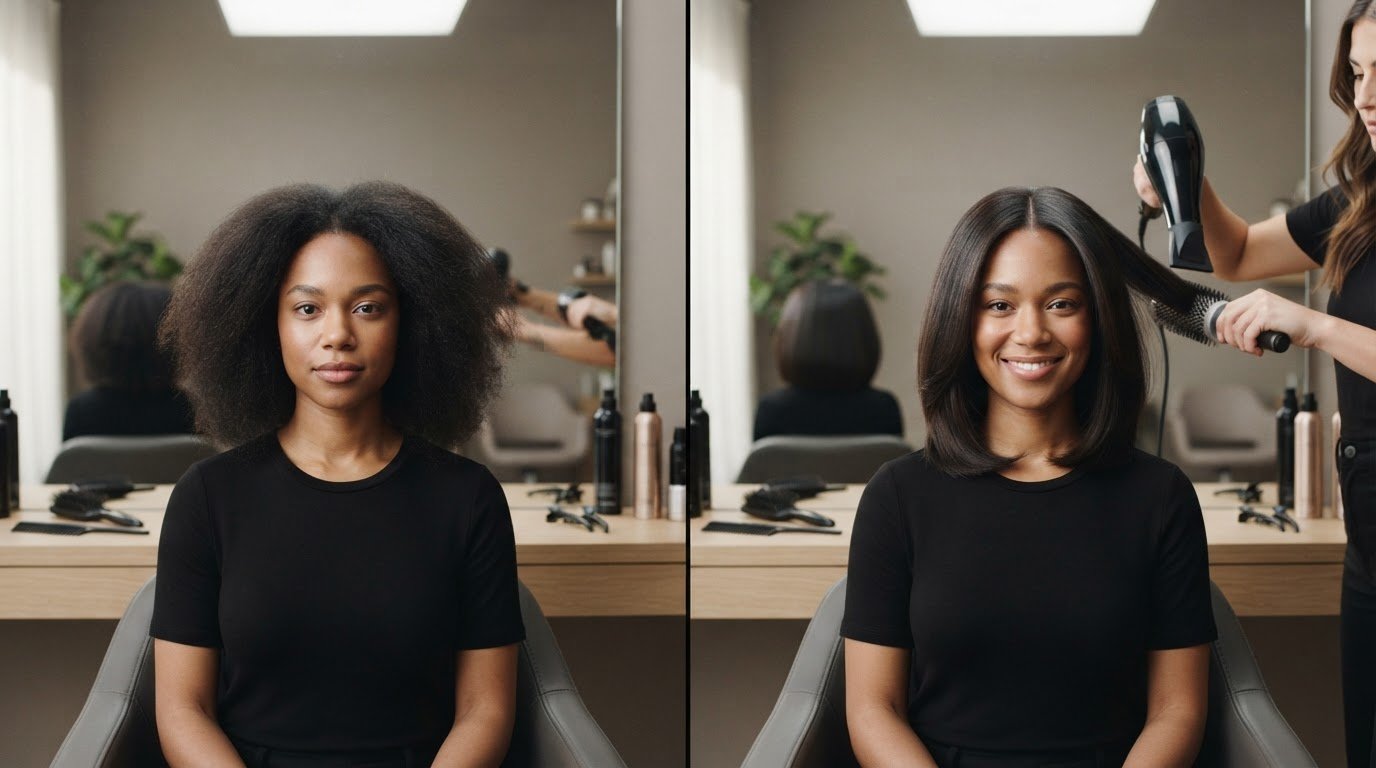
Creating before and after posts for salon services takes more than pairing two attractive photos. Inconsistent lighting, camera angles, or styling can change how hair looks and make a comparison less convincing. A repeatable process helps you capture the client’s actual result and present your work clearly.
Build that process around consistent framing, even lighting, thoughtful styling, and a caption that explains the client’s goal and your professional approach. For smoothing services, show the finish honestly and identify the service or products used. A brief clip of the final styling process, perhaps featuring a professional ionic hair dryer, can add useful context without distracting from the result.
This guide covers a practical workflow for photographing texture and shine, keeping comparisons credible, and writing captions that inform prospective clients. It also explains how to organize your portfolio and ask for permission before sharing a client’s image.
Key Takeaways
- Use consistent lighting, framing, and background so viewers can compare the images fairly.
- Plan a repeatable workflow that shows the starting point, relevant process moments, and finished style without overstating results.
- Make creating before and after posts for salon services more useful with captions that explain the stylist’s approach in clear, client-friendly language.
- Feature relevant professional products naturally, such as a professional ionic hair dryer in a finishing sequence.
- Organize your portfolio by service or client goal, and get the client’s permission before posting.
Why Visual Storytelling is Essential for High-Ticket Salon Services
A well-planned transformation post gives prospective clients more than an appealing final look. It shows the starting point, the service selected, and the finished style. This kind of visual narrative helps viewers understand the work behind the result instead of seeing an unexplained reveal.
Consistency helps make the comparison credible. When the before and after use similar lighting and angles, viewers can focus on the hair rather than wonder whether a different setup changed its appearance. A thoughtfully organized portfolio can also help prospective clients find examples relevant to their hair goals.
For premium services, clear visual context can support a more informed conversation about value. Instead of relying on dramatic language or broad promises, show the finish and explain the professional approach. Creating before and after posts for salon services is more persuasive when the images, service details, and client expectations align.
Show What the Service Is Designed to Do
Choose examples that make the purpose of a service easy to understand. For a smoothing service, the images might show how the finished style looks and falls. Describe only what can be seen or what is supported by the service information. Avoid suggesting that one client’s photos prove the same result will happen for everyone.
Keep your wording specific to the treatment used. If a client came in concerned about frizz, for example, explain that concern and describe the finish shown in the photos. Don’t add claims about ingredients, safety, longevity, or performance unless you have accurate information for that particular product or service.
Use Portfolio Images to Support Consultations
Your portfolio can serve as a practical lookbook during consultations. Select examples with a similar starting texture or concern, then discuss the client’s desired finish and the service’s suitability. Explain what the photos show and what they cannot predict. This keeps the conversation grounded in the client’s own hair and goals.
Give each example enough context to be useful. Note the starting concern and the service performed, and distinguish the result in the photo from any general information about a treatment. Avoid presenting a potential duration or outcome as a guarantee for every client.
Organize images by service, starting condition, or client goal so they are easy to find at the chair. Concise notes about the approach can make the portfolio a useful consultation resource, rather than simply a feed of finished styles.
Setting the Stage: Preparation and Professional Tools
A consistent photo setup helps viewers focus on the hair rather than the room. Choose a simple background and enough space to position the client comfortably. Use the same setup across appointments where practical, so each before-and-after pair feels like part of a cohesive portfolio.
Light the hair evenly. Window light can reveal texture and shine naturally, but the light may change during the day. If daylight is not practical, use a consistent artificial light source and check for harsh shadows or color shifts. Keep the light and camera positions as similar as possible between the before and after shots.
Choose Finishing Tools with the Final Image in Mind
Style the hair for the after photo in a way that reflects the actual service result. A professional ionic hair dryer can appear naturally in the finishing sequence. Hair Bar NYC Professional offers professional salon tools, including an ionic hair dryer, alongside salon-grade hair care products and smoothing systems.
A professional flat iron may also be appropriate for finishing, depending on the service. Use tools according to the relevant product instructions, and don’t suggest that a particular tool guarantees an outcome. Keep the focus on the client’s finished style rather than treating a product or tool as proof of a claim. Explore Hair Bar NYC Professional’s professional ionic hair dryer as you plan a consistent after-shot workflow.
Keep the Frame Clean and Consistent
Move distracting items out of the background and make the hair the clear subject. Match the client’s position, camera distance, and angle for the before and after. Composition techniques can help create an attractive post, but a fair comparison matters more than applying a rule rigidly.
- Keep the camera position and client stance consistent.
- Use the same background, lighting, and crop for both images.
- Check that the hair’s texture and color appear natural before sharing.
Before documenting a service, explain what you would like to capture and ask whether the client is comfortable. Get written permission before posting the image. Keep the content honest: the FTC’s guidance on truth in advertising is a useful reference for avoiding presentations that could mislead viewers. A polished setup should support an accurate comparison, not exaggerate it.
The Step-by-Step Workflow for Capturing Hair Transformations
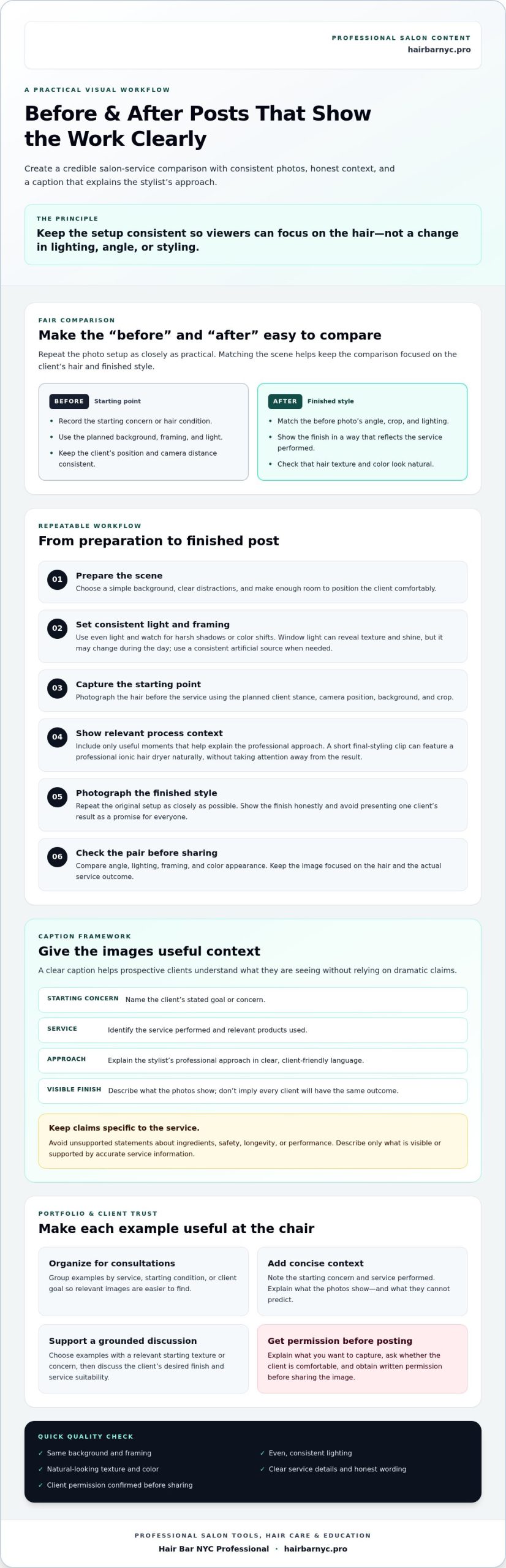
Strong transformation content documents the visible result and gives enough context to understand the service. Keep the camera setup consistent, capture only what accurately reflects the appointment, and follow the product’s instructions rather than adding steps for the sake of a post. This workflow makes creating before and after posts for salon services more credible and helpful to prospective clients.
Capture the Starting Point and the Service
- Record the before. When practical, photograph the hair dry and in its natural, unstyled state. Capture the overall shape and texture, and make a note of the client’s main concern so your caption can describe the starting point accurately.
- Show relevant preparation. Film a short clip of the product or tools being prepared only if it reflects what happened during the service. Make sure any product shown is identified correctly.
- Document the application selectively. A brief process clip can show professional care without turning the post into a tutorial. Don’t include technical directions, timings, or product claims unless they are confirmed for the specific service and product.
Capture the Finish from More Than One Angle
After styling, match the original camera position for the primary after photo. Then take a few supporting views that show different aspects of the finished look:
- Back view: shows the overall shape, length, and finish.
- Side or profile view: gives context for the silhouette and how the style sits around the head.
- Movement clip: invite the client to turn gently or move their hair to show how the finished style falls. Describe what is visible rather than making an unsupported performance claim.
- Detail view: a close-up can show visible texture and ends, but it cannot prove that the cuticle is sealed or that split ends have been eliminated.
A professional ionic hair dryer can appear naturally in a short styling sequence. Keep the reveal focused on the client and the result, rather than presenting a tool or product as evidence for an outcome it has not been shown to deliver.
Keep Documentation Accurate and Client-Centered
Choose clips that add useful context. A concise sequence can move from the starting point to a representative process moment and then to the finished style. Don’t publish product-specific temperatures, processing times, ingredient claims, or technical directions unless they are confirmed for that exact product. If you discuss performance, distinguish the product’s stated information from what the images show for one client.
Editing and Storytelling: Captions That Educate and Convert
A useful caption explains what viewers are seeing and why the service suited the client. Name the starting concern, describe the stylist’s approach in plain language, and set realistic expectations. This makes creating before and after posts for salon services more informative than sharing a polished reveal alone.
Use product details only when they are relevant and accurate. For instance, you can identify the treatment or professional product used, but avoid turning a product attribute into an unsupported promise about safety, suitability, or results for every client. Keep descriptions of different treatments separate and check the information for the specific product before including technical claims.
Write Captions That Connect the Result to the Service
A simple structure can keep your caption clear: the client’s goal, the service performed, and an invitation to learn more. For example: “The goal was a smoother-looking finish with less visible frizz. We used a professional smoothing treatment selected for this client’s service. Ask your stylist whether a similar approach may suit your hair goals.” Adapt the wording to the actual consultation and result. Don’t promise the same outcome for every client.
Answer common concerns with confirmed information. Don’t claim a particular rinse schedule, an absence of fumes or irritation, or a waiting period unless the product’s verified directions support it. When discussing home care, identify the products accurately and avoid implying that a routine guarantees a particular result.
Make Discovery and the Next Step Easy
Hashtags can help categorize a post, but they cannot replace a clear caption or an organized portfolio. Use a small, relevant selection that describes the service, your professional focus, and your salon brand. Broad tags such as #hairstylist can sit alongside more specific service tags. Keep location tags relevant to the audience you serve, and review your own post performance instead of relying on a generic hashtag list.
Close with one direct, low-pressure next step. Invite viewers to ask about service suitability, save the post for a consultation, or use your booking channel to request an appointment. A useful call to action starts a conversation without promising a result.
For professional smoothing options to reference in service education, explore Hair Bar NYC Professional treatments.
Building a Professional Portfolio with Hair Bar NYC Professional
A strong portfolio should feel cohesive while showing a range of transformations. Use consistent framing, lighting, and caption structure, then organize posts by service or client goal. This gives prospective clients a clearer view of your work and provides a practical resource during consultations. Creating before and after posts for salon services becomes easier to sustain when each appointment contributes to an organized portfolio.
Build variety by documenting different starting textures and concerns while keeping the presentation consistent. If you feature products, show only those actually used and identify them correctly. Don’t imply that separate products are a bundle or that a tool is included with a treatment unless that is accurate. Hair Bar NYC Professional’s catalog includes professional smoothing systems, salon-grade hair care products, styling tools, and salon accessories for stylists and salon owners.
Connect the Transformation to At-Home Care
Use the finished look to start a practical conversation about maintenance. When relevant, explain which products are part of the client’s routine and how they fit into the service conversation. Hair Bar NYC Professional offers the Silk Touch System, which includes shampoo, conditioner, mask, and serum. The Ultimate Repair System is a separate product line. Identify each product accurately and avoid promising a specific outcome for every client.
For more background to support professional education and client conversations, refer readers to the professional guide to formaldehyde-free keratin treatments.
Build a Repeatable Content Rhythm
A recurring feature, such as “Transformation Tuesday,” can make portfolio planning easier. Rotate the focus across hair types, starting concerns, and relevant services so your feed demonstrates range. Keep every caption grounded in the consultation and the result shown. If you share a follow-up, present it as that client’s experience, not a prediction for others.
Client-generated content can extend the story beyond the salon by showing how a client chooses to share their style in everyday settings. Ask for written permission before reposting, credit the client as agreed, and make sharing optional. Respecting the client’s choice is part of building a trustworthy portfolio.
Over time, these habits create a polished digital presence: consistent visuals, honest service context, and useful care education. When appropriate, include relevant professional products in the conversation without letting the post become a hard sell.
Creating Before and After Posts for Salon Services That Build Trust
High-impact salon posts come from a dependable process: capture the starting point and finished look consistently, document only relevant parts of the service, and explain the professional choices behind the result. With the client’s permission and realistic language, each post can build trust while contributing to a cohesive portfolio.
Use the post to continue the conversation after the appointment, too. Where it fits, explain which professional products are relevant to the client’s care routine. Creating before and after posts for salon services can support your professional visibility and give clients a clearer basis for asking questions about products and maintenance.
Explore Hair Bar NYC Professional’s salon-grade products and smoothing systems.
Keep refining your workflow with each appointment. A consistent, honest portfolio grows one well-documented transformation at a time.
Frequently Asked Questions
What is the best lighting for salon before and after photos?
Soft, even light from a window can show hair texture and shine naturally. Position the client facing the light, and watch for shadows or color shifts from overhead lighting and a phone’s built-in flash. If natural light is not available, use a consistent light source in front of the client. Keep the lighting and camera position similar for both images so the comparison feels fair.
How do I take hair photos without a professional camera?
A smartphone can capture polished salon content. Clean the lens, use the rear camera, and keep the phone steady at a suitable height for the shot. Use the same distance, angle, background, and lighting for the before and after photos. Take a few frames, check focus and exposure, and avoid digital zoom when possible. A short movement clip can add context to your portfolio.
Should I edit my salon before and after photos?
Light edits for cropping, exposure, or straightening can help create a consistent feed, but keep them subtle and apply similar adjustments to both images. Don’t smooth away texture, change hair color, add artificial shine, or use filters that make the result look different from what the client achieved. Keep the original files so you can compare the edited images with the unaltered captures before posting.
How often should I post hair transformations on social media?
Choose a posting rhythm you can maintain without compromising service quality or accuracy. A salon with limited time can post less often and focus on clear, well-documented transformations. Review how your audience responds and adjust your schedule based on your own goals and capacity rather than following a generic posting target.
What are the best hashtags for hair smoothing services?
Use a focused mix of service-specific, professional-niche, and salon-branded hashtags. Tags such as #keratintreatment can identify the service, while a branded tag helps group your own portfolio. Broad tags such as #hairstylist may reach a wide audience, but are less specific. Prioritize relevance over adding a long list of generic tags.
How do I get my clients to agree to be in before and after posts?
Ask privately and explain how you would use the photos or video, including where you plan to post them. Make participation optional, and don’t let the request affect the service or client experience. Obtain written permission before sharing images for marketing, and respect any limits the client sets. If a client declines, thank them and keep the appointment focused on their hair goals.
Can I use before and after posts to sell retail hair care?
Yes. Use the transformation to introduce relevant maintenance products through helpful education rather than pressure. Explain how the products relate to the client’s routine, and identify only products you actually used or recommend. For keratin maintenance, Hair Bar NYC Professional offers the Silk Touch System, which includes shampoo, conditioner, mask, and serum. Creating before and after posts for salon services can connect visible results with an informed product conversation while keeping expectations realistic.