Time Management for Busy Salon Professionals: A Guide

A full appointment book doesn’t guarantee a manageable day. Services can run over, administrative work can get pushed aside, and interruptions can pull your attention in several directions. Time management for busy salon professionals starts with a schedule that accounts for client care, preparation, transitions, and the work that keeps a salon running.
The goal isn’t to rush consultations or cut corners. It’s to build a repeatable workflow that gives each service the attention it needs while making room for essential tasks. A realistic plan can help you stay focused with clients and respond calmly when the day changes.
This guide covers practical ways to prioritize appointments, group administrative tasks, organize your station, and protect focused time. You’ll also learn how to respond when a service runs long without letting one delay throw off the rest of the day.
Key Takeaways
- Anchor the day around client appointments, then schedule preparation, transitions, and flexible tasks where they can realistically fit.
- Use time-blocking for focused work, task batching for similar duties, and appointment buffers for flexibility.
- When a service runs long, prioritize the client in your chair, move tasks that can wait, and communicate changes clearly.
- A repeatable workflow can protect focus without making the day feel rigid.
- Review recurring bottlenecks regularly and adjust one workflow habit at a time.
Why Time Management for Busy Salon Professionals Starts With the Client Day
Salon time management means planning client services, transitions, and essential business tasks around the way work actually unfolds. A calendar may show when an appointment starts and ends, but the workday also includes consultations, setup, cleanup, notes, and requests that need attention. Effective time management for busy salon professionals accounts for those demands instead of treating every appointment as a perfectly predictable block.
Clients deserve attentive service, and the next appointment deserves a timely start. Rushing a consultation to recover minutes can undermine the experience, while overlooking a delay can put pressure on the rest of the day. A realistic schedule makes room for service needs and transitions instead of filling every available minute with appointments. General time management principles and techniques offer a useful starting point, but salon workflows also need to account for hands-on service and client care.
Where a salon day loses time
Small disruptions can accumulate. A late start leaves less time to prepare. Missing tools can interrupt a service. Cleanup takes attention between clients, and switching repeatedly between client care and administrative work makes it harder to regain focus. An unexpected question or request adds another demand to an already active schedule.
One interruption is different from a recurring pattern. If the same preparation step is often unfinished or a transition routinely feels rushed, look for a workflow issue you can address. Review a typical day and identify one bottleneck. Treat it as useful information about the process, not a personal failing or a problem caused by a client.
What good time management should protect
A schedule shouldn’t maximize appointment volume at the expense of the service experience. It should support attentive consultations, considered work, and clear communication when plans change. Clients benefit when their stylist is present, prepared, and able to explain what happens next.
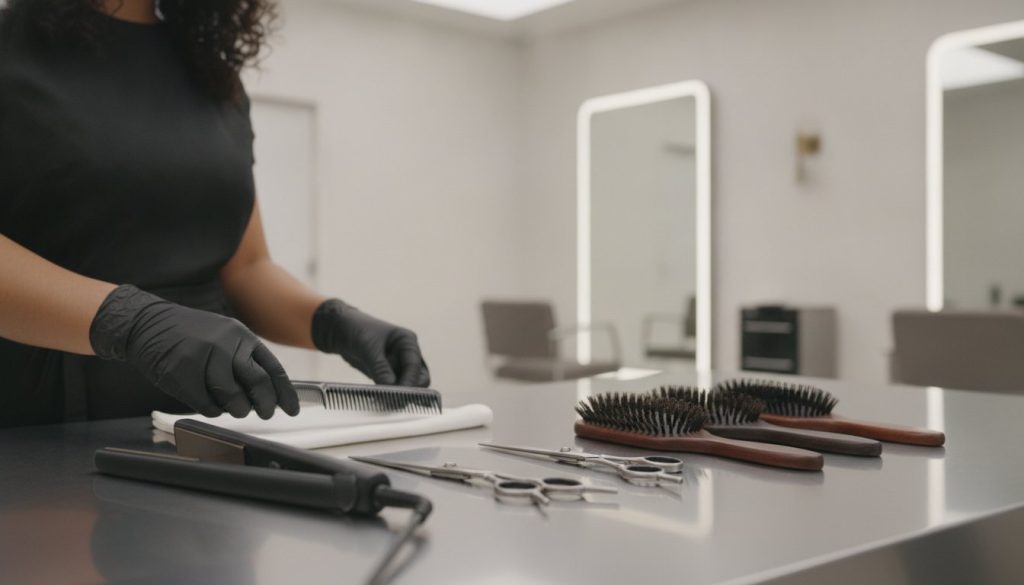
Transitions belong in the plan, too. Resetting the station, organizing tools for the next service, and completing essential notes are part of the workday, not spare-time extras. When these tasks are consistently squeezed out, the next appointment can begin under avoidable pressure.
Start by identifying when the day feels least dependable. Is the main friction before the first client, between services, or during administrative work? Naming the pattern gives you a practical starting point. Build a steadier rhythm that supports each visit and leaves room to respond professionally when the day changes.
Build a Salon-Day Workflow Around Appointments, Preparation, and Transitions
A dependable salon day follows a clear sequence: review commitments, prepare for each service, focus on the client, reset the workspace, and complete essential follow-up. This structure creates a steady rhythm without assuming every appointment will go exactly to plan. For time management for busy salon professionals, the key is to distinguish what must stay fixed from what can move when a client needs more attention.
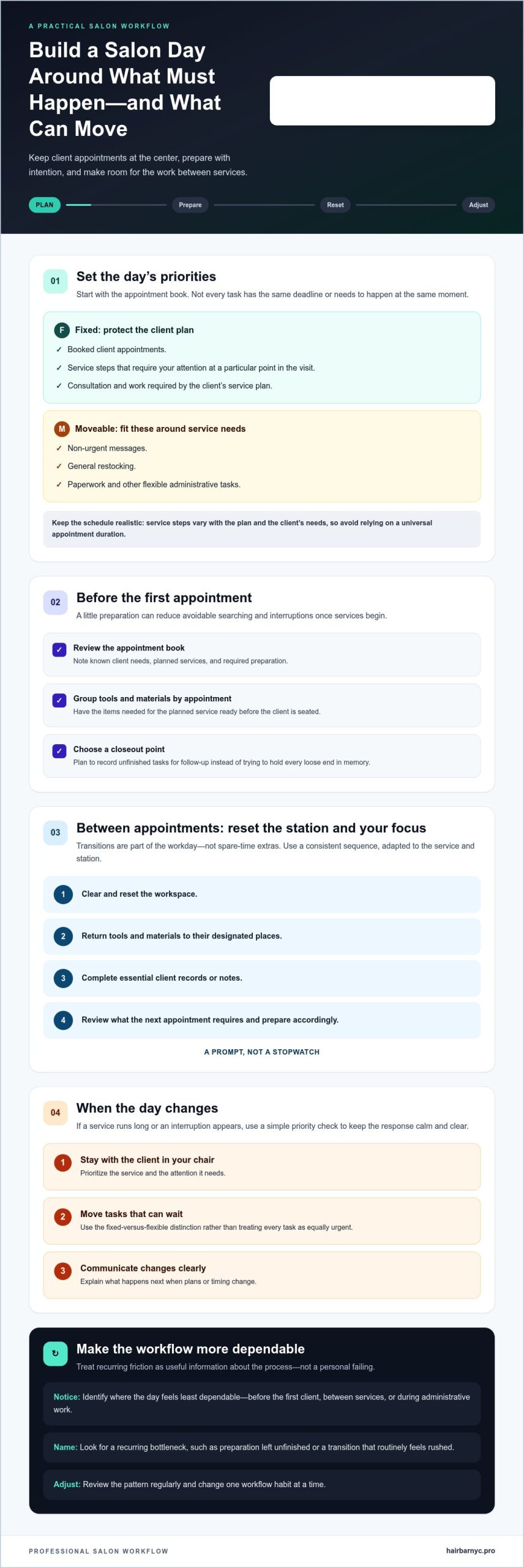
Appointments anchor the schedule. Administrative work, restocking, and other non-urgent tasks are usually more flexible. Plan service timing around the appointment and the client’s service plan, including the consultation and work required. Avoid relying on a universal duration because service steps can vary with the plan and the client’s needs.
Plan the day before the first appointment
Before services begin, review the appointment book and note known client needs, planned services, and required preparation. Group the tools and materials for each appointment so you can start with fewer interruptions. For example, if a client’s plan involves color, have the items needed for that appointment ready before the client is seated.
Separate the day’s commitments into two categories:
- Fixed: booked client appointments and service steps that require your attention at a particular point in the visit.
- Flexible: tasks such as non-urgent messages, general restocking, or paperwork that can move to a quieter interval.
This distinction helps you respond when an appointment needs extra attention. You can move a flexible task rather than treating every item on the schedule as equally urgent. Set a simple closeout point, too: record unfinished tasks that need follow-up and prepare for the next workday instead of trying to keep every loose end in your memory.
Use transitions to reset the station and attention
Transition time belongs in a salon schedule because each appointment involves work beyond the service itself. A station reset helps you finish one visit, prepare for the next, and welcome the next client without a rushed handoff. Adapt the reset to the service and the state of the station rather than assuming every transition needs the same amount of time.
Use a short checklist as a prompt, not a stopwatch:
- Clear and reset the workspace.
- Return tools and materials to their designated places.
- Complete essential client records or notes.
- Review what the next appointment requires and prepare accordingly.
A consistent sequence makes it easier to notice what remains undone before the next service begins. It also reduces avoidable searching and helps you shift your attention from one client to the next. For professional product and education resources that support an organized service practice, explore Hair Bar NYC Professional education and hair-care resources.
Choose Between Time-Blocking, Task Batching, and a Flexible Appointment Buffer
Different parts of a salon day benefit from different kinds of structure. Time-blocking reserves time for a defined task, task batching groups similar work, and an appointment buffer leaves adaptable space around booked services. Used selectively, these methods give time management for busy salon professionals a framework without making the schedule too rigid to accommodate client needs.
When time-blocking or task batching helps
Use time-blocking when a task needs focused attention, such as reviewing client notes, preparing for services, or completing follow-up. Task batching suits repeatable duties, such as returning messages or handling records, that might otherwise interrupt client-focused work throughout the day. Neither method needs to control the entire schedule. If client care requires your attention, move the block or pause the batch and return to it when practical.
Time-blocking
Purpose: Reserve focused time for a specific task.
Advantages: Makes preparation or administrative work visible in the schedule.
Limitations: A block may need to shift if a service requires more attention.
Best fit: Planned preparation, follow-up, or business tasks.
Task batching
Purpose: Complete similar tasks together.
Advantages: Reduces repeated starts and stops between unrelated duties.
Limitations: A batch can wait when client care takes priority.
Best fit: Messages, records, or other recurring administrative tasks.
Appointment buffer
Purpose: Leave flexible space around booked services.
Advantages: Creates room for transitions or unexpected needs.
Limitations: It can’t prevent every delay or guarantee appointments start on time.
Best fit: Schedules that need adaptable space between or around services.
How to make appointment buffers useful
A buffer is planning space, not a promise that a service will take a fixed amount of time. Place it according to your booking pattern and service mix. A stylist with varied appointments might leave flexibility where the day is less predictable. Another may find a buffer more useful around a cluster of closely scheduled services. Base the plan on your actual service mix rather than an assumed standard duration.
Combine the approaches where they make sense. Keep appointment commitments in view, group routine messages into a movable batch, and leave flexible space where transitions tend to need it. If the day changes, move flexible work first instead of trying to keep every block intact. Then review whether the approach supports focus and client care, and adjust it to better fit your appointments.
Handle Salon-Day Interruptions Without Losing the Schedule
A salon schedule can shift because a service needs more attention, a client arrives late, or a colleague needs support. Rather than trying to solve the whole day at once, quickly identify what needs your attention and what can wait.
- Keep the current service on track: Focus on the client in your chair and complete the necessary work with care.
- Check upcoming commitments: Consider arrival times, preparation requirements, and any team responsibilities affected by a delay.
- Update people affected: Once you understand what has changed, share a concise and respectful update.
This sequence helps you respond calmly without treating every interruption as an emergency. It also separates an immediate client need from tasks that can be handled later.
Recover when an appointment runs over
Pause before changing the whole appointment book. Clarify what remains in the service and whether the client’s request or hair needs have changed the original plan. Then consider the next appointment: has the client arrived, does the service require preparation, and does a colleague depend on the same space or support? These details help you make a considered adjustment rather than reacting to the clock alone.
Communicate what you know, not what you hope will happen. A brief update can acknowledge the delay and explain the next step without promising a revised finish time before you have assessed the situation. Don’t compress essential service work to recover lost minutes. If the delay affects later appointments, notify those clients or colleagues promptly and explain practical options clearly.
Reduce avoidable interruptions during services
Before a client arrives, make sure the tools and materials you’re likely to need are accessible. Keep frequently used items in predictable places, and review relevant client notes before beginning. These habits reduce the chance that you’ll need to step away for information or supplies.
Non-urgent messages and routine administrative work can wait for a suitable pause. If you work with a team, agree on a simple way to route routine requests while a stylist is with a client, while keeping urgent needs easy to flag. The aim isn’t to eliminate every interruption. It’s to protect concentration where possible and make necessary interruptions easier to handle.
After a disruption, confirm the next service step and any follow-up needed. Returning attention to the work in front of you helps prevent one interruption from creating avoidable confusion elsewhere in the day.
Make Time Management a Sustainable Salon Habit
A salon workflow should be dependable, not fixed. A brief weekly review can show where the plan matched the day and where recurring friction made it harder to stay focused. Treat time management for busy salon professionals as an ongoing practice: notice a pattern, choose a manageable adjustment, and see whether it helps during the next work cycle.
Review what worked and what repeatedly caused friction
Compare the planned schedule with how appointments and transitions actually unfolded. Note recurring preparation gaps, interruptions that broke concentration, and tasks that regularly carried over. Look for patterns rather than judging yourself by one difficult day. Then choose one adjustment to test, such as preparing a frequently used tool before the first appointment or moving routine administrative work to a less interrupted part of the week.
Keep the review practical. A simple note can capture:
- Which parts of the schedule felt realistic and which repeatedly felt compressed.
- Where preparation or transitions needed more attention than expected.
- Which tasks were deferred and whether they could be planned differently.
- One change to try during the next work cycle.
Resist the urge to redesign every routine at once. If several bottlenecks appear, start with the one that most often affects client care or leaves essential work unfinished. Keep the adjustment small enough to follow consistently, then review whether it fits the way your appointments actually run. If it doesn’t, revise it instead of treating the experiment as a failure.
Keep professional routines consistent as the salon evolves
Revisit your workflow when your schedule, service mix, or team responsibilities change. A preparation routine that worked for one pattern of appointments may need to change when the day’s demands shift. Keep the core sequence clear, while adapting the details to the services and people involved. Consistent preparation supports a considered client experience, from a ready workspace to clear communication about the visit.
Professional standards are built through details repeated each day: preparing deliberately, keeping tools and materials organized, and completing essential records with care. These routines help create a composed experience for clients without making every day identical. They also provide a steady foundation when appointments or responsibilities change.
Choose one recurring bottleneck and make one adjustment before your next work cycle. Observe how it affects your focus and the flow of client care. Hair Bar NYC Professional offers salon-grade hair-care products and online education for beauty professionals. Explore its professional resources to support the hair-care work and service standards you’re building.
Make Your Next Workday More Intentional
Let your schedule reflect the professional experience you want clients to remember. A well-run day is about more than completed appointments. It also includes the quality of attention, consultation, and follow-through clients receive. Use that standard to guide decisions about your workload, so time management for busy salon professionals supports both the craft and the relationships behind the work.
Hair Bar NYC Professional serves hairstylists, salon owners, and beauty professionals with professional hair-care solutions and online education. Explore resources that complement your services and help you continue building your expertise.
Explore professional hair-care solutions from Hair Bar NYC Professional. Bring a clear sense of purpose to your next workday and keep creating an attentive experience from start to finish.
Frequently Asked Questions
How can a hairstylist manage a fully booked day without feeling rushed?
Set clear expectations about the service before the appointment begins. If a client requests an additional service or a significant change, explain what it involves and decide together whether it fits the visit or should be booked separately. Keeping the service plan aligned with the time reserved helps prevent unplanned add-ons from taking over a full day and supports a more considered client experience.
What is the best way to schedule breaks in a busy salon?
Look for a workable place in the appointment pattern, such as a planned opening between bookings or a quieter part of the day. If you work with a team, coordinate coverage for client needs while you step away. Check the day’s commitments before treating a gap as free time. If the schedule changes, reschedule the break deliberately rather than letting it disappear unnoticed.
How should salon professionals handle clients who arrive late?
Apply the salon’s late-arrival policy consistently, and make sure clients can understand it before appointment day. When a client arrives late, assess whether the original service can still be completed as planned or whether a revised service plan is more appropriate. Explain the options without assigning blame. A consistent approach helps you make fair decisions across appointments instead of improvising each time.
Can time-blocking work for hairstylists with changing appointment schedules?
Yes. Give each block a defined outcome, such as completing a set of client records, rather than requiring it to begin at an exact minute. Keep a short checklist of what belongs in the block so you can pick up where you left off if the day interrupts it. This makes time-blocking useful even when appointment times shift.
How can salon professionals reduce time spent on administrative tasks?
Use templates for routine client messages and consistent formats for notes so you aren’t composing the same information from scratch each time. Keep records concise but useful, with details that support future consultations and service planning. Consider which tasks require your judgment and which follow a repeatable process. This can make routine paperwork easier to handle while preserving attention for decisions that need a stylist’s expertise.
What should a salon professional do when a service runs longer than planned?
Identify why the service needs more time before deciding how to proceed. A client-requested change, an unexpected technical need, and a slower-than-anticipated step may call for different responses. Clarify the client’s priorities and agree on the next step, including whether additional work should be scheduled separately. After the appointment, note the reason for the overrun so future service planning can reflect what happened.