Troubleshooting Common Keratin Treatment Problems: The Professional Stylist’s Diagnostic Guide
A failed keratin treatment is rarely a reflection of the client’s hair type; it’s a technical breakdown of the protein-heat-pH triad. When a service results in unintended brassiness or hair that feels heavy and gummy, the issue usually lies in the precision of the application rather than the chemistry itself. You understand the frustration of a high-end service losing its luster too soon or failing to deliver that signature metropolitan glow.
This diagnostic guide focuses on troubleshooting common keratin treatment problems with the surgical precision of an elite stylist. You’ll learn to identify why certain treatments wash out prematurely and how to fix specific application errors that compromise the cuticle. We’ll explore the scientific protocols for using the Silk Touch Keratin Treatment and Diamond Keratin Treatment to restore impeccable shine and manageability. By refining your technique with the Professional Flat Iron and specialized maintenance like Silk Touch Shampoo, you can guarantee the high-performance results your discerning clientele expects. We’re diving into the technical mechanics of protein bonding and the exact steps to reverse a service failure and restore a professional standard of excellence.
Key Takeaways
- Analyze the protein-heat-pH triad to accurately diagnose why a treatment failed to seal the cuticle or provide lasting manageability.
- Gain specific technical solutions for troubleshooting common keratin treatment problems, including how to resolve heavy, gummy hair and persistent mid-length frizz.
- Identify the hidden aftercare enemies, like sodium chloride and mechanical tension, that can ruin a fresh treatment within the first forty-eight hours.
- Elevate your salon standard by integrating the Silk Touch and Diamond Keratin systems, which offer clean-beauty results without the traditional “heavy smoke” or chemical irritation.
- Refine your saturation and heat techniques to ensure every strand achieves maximum light-reflecting shine while maintaining its internal structural integrity.
The Diagnostic Matrix: Why Keratin Treatments Fail to Deliver
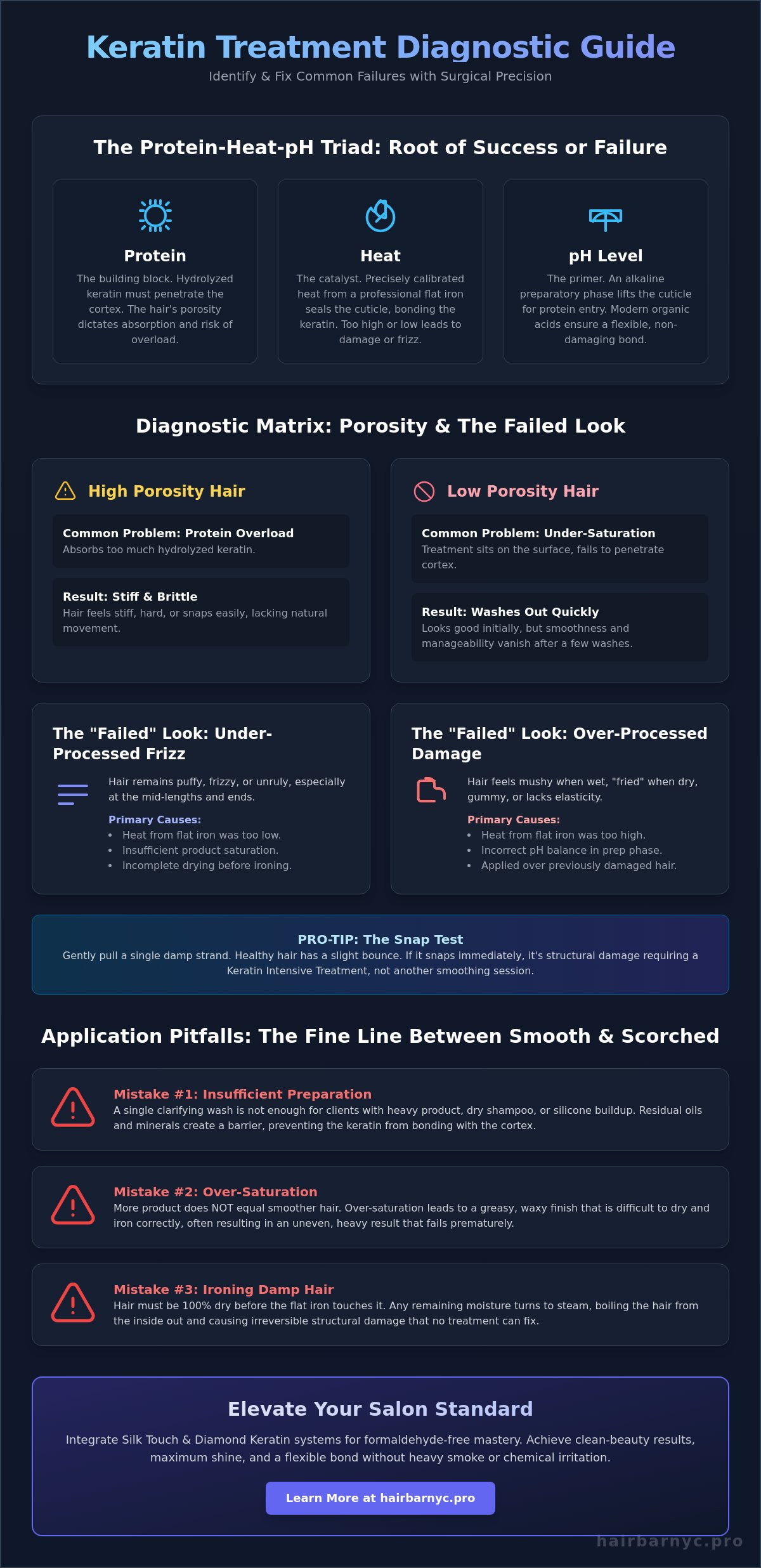
A flawless keratin service is the hallmark of a high-end salon. It is a state of hair perfection where the cuticles are surgically sealed to create a light-reflecting shine that radiates health. This result isn’t just about aesthetics; it’s about restoring internal structural integrity to every strand. When results fall short, troubleshooting common keratin treatment problems requires a deep dive into the three pillars of failure: chemical incompatibility, mechanical error, and biological resistance.
Every client brings a unique porosity profile that dictates how their hair interacts with professional formulas. High-porosity hair often experiences protein overload, where the hair feels stiff or brittle because it absorbed an excessive amount of hydrolyzed keratin. Conversely, low-porosity hair frequently suffers from under-saturation. In these cases, the treatment sits on the surface rather than penetrating the cortex. This results in a service that appears successful initially but washes away within days because the bond never truly formed.
The Science of the Cuticle-Cortex Bond
For a treatment to be effective, keratin molecules must be hydrolyzed. This means they are broken down into sizes small enough to enter the hair’s cortex. The pH level of the preparatory phase is critical. It must be alkaline enough to lift the cuticle slightly without causing irreversible blowout damage. While many Brazilian hair straightening treatments historically used formaldehyde to cross-link proteins, elite formaldehyde-free systems like Silk Touch use sophisticated organic acids. These modern alternatives create a smoother, more flexible bond that mirrors the hair’s natural movement rather than creating a rigid, plastic-like coating that can lead to breakage.
Identifying the “Failed” Look: Frizz vs. Damage
Distinguishing between under-processed frizz and over-processed damage is the first step in a professional rescue. If the hair remains frizzy, the heat from your Professional Flat Iron was likely too low or the product saturation was insufficient. If the hair feels “fried” or mushy, the pH was too high or the iron was too hot for the hair’s current state. Stylists must perform a snap test to check elasticity. Take a single damp strand and gently pull. Healthy, treated hair should have a slight bounce. If it snaps immediately, you’re dealing with structural damage that requires a Keratin Intensive Treatment rather than another smoothing session. Understanding why hair rejects a coating, often due to mineral buildup or previous silicone-heavy products, allows you to pivot your strategy before the client leaves the chair.
Application Pitfalls: The Fine Line Between Smooth and Scorched
Mastering the application phase is where elite stylists separate themselves from the amateurs. When troubleshooting common keratin treatment problems, the root cause often traces back to the initial preparation. A single wash with a clarifying agent is rarely sufficient for clients who use heavy styling products, dry shampoos, or silicones. You must ensure the cuticle is completely stripped of residue to allow the Silk Touch Keratin Treatment to bond effectively. Residual oils act as a barrier, preventing the hydrolyzed protein from entering the cortex and leading to a treatment that slides off within weeks.
Saturation management is equally vital to a high-performance result. Many stylists mistakenly believe more product equals smoother hair. In reality, over-saturation leads to a greasy, waxy finish that is incredibly difficult to dry and iron. Use your Mixing Bowl and Brush Set to apply the formula sparingly, combing through each section to ensure even distribution. Before your Professional Flat Iron touches a single strand, the hair must be 100% dry. Any remaining moisture will turn to steam under high heat, effectively boiling the hair from the inside out and causing irreversible structural damage.
The health of both the stylist and client is paramount during the high-heat phase of the service. Professional-grade ventilation and choosing safer, modern formulas are essential. This is especially true given research like the Hair Straightener Cancer Risk Study, which highlights the long-term dangers of frequent exposure to certain straightening chemicals. Selecting clean-beauty alternatives like our Diamond Keratin Treatment mitigates these risks while delivering superior, light-reflecting results.
Flat Iron Temperature Calibration
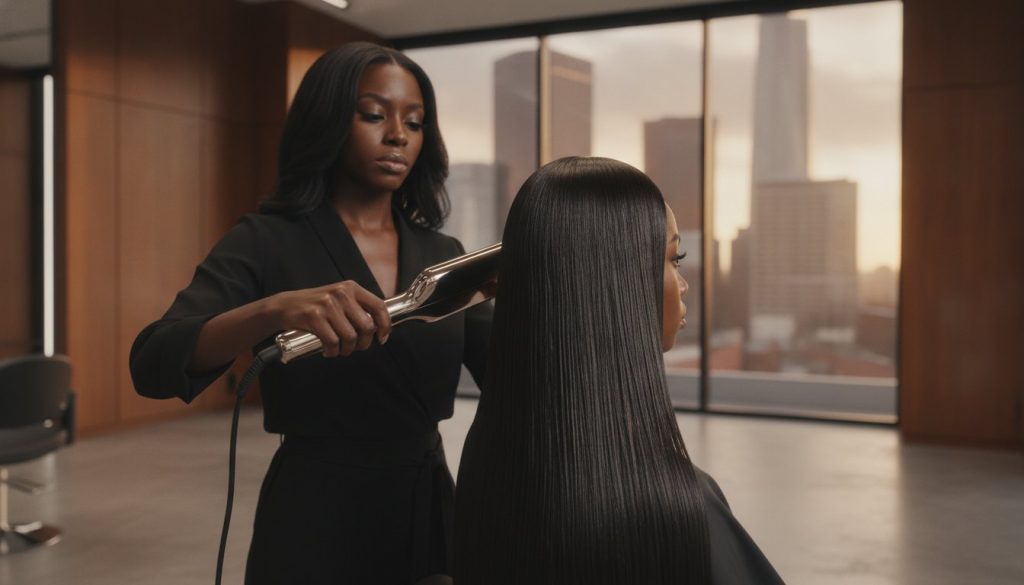
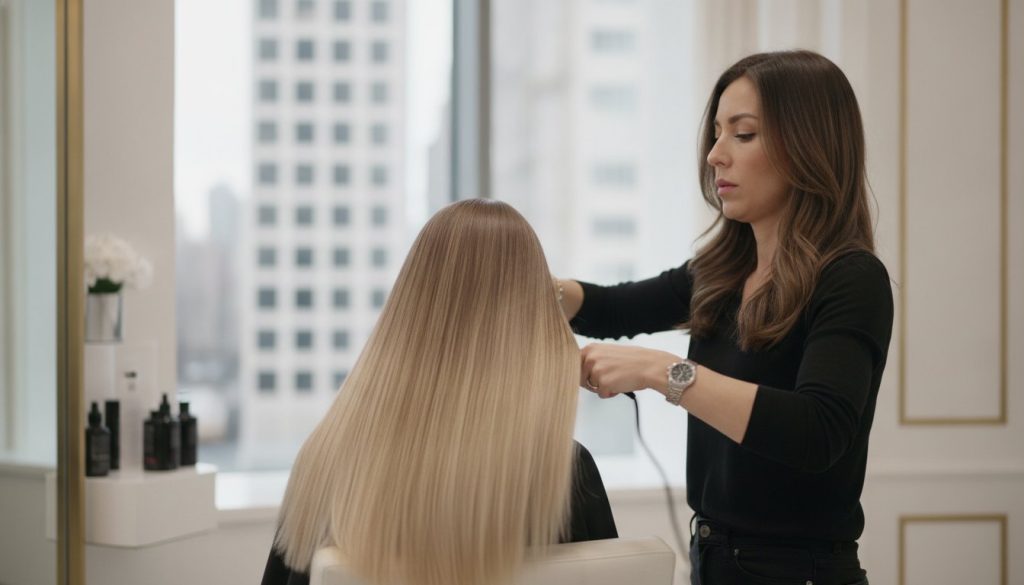
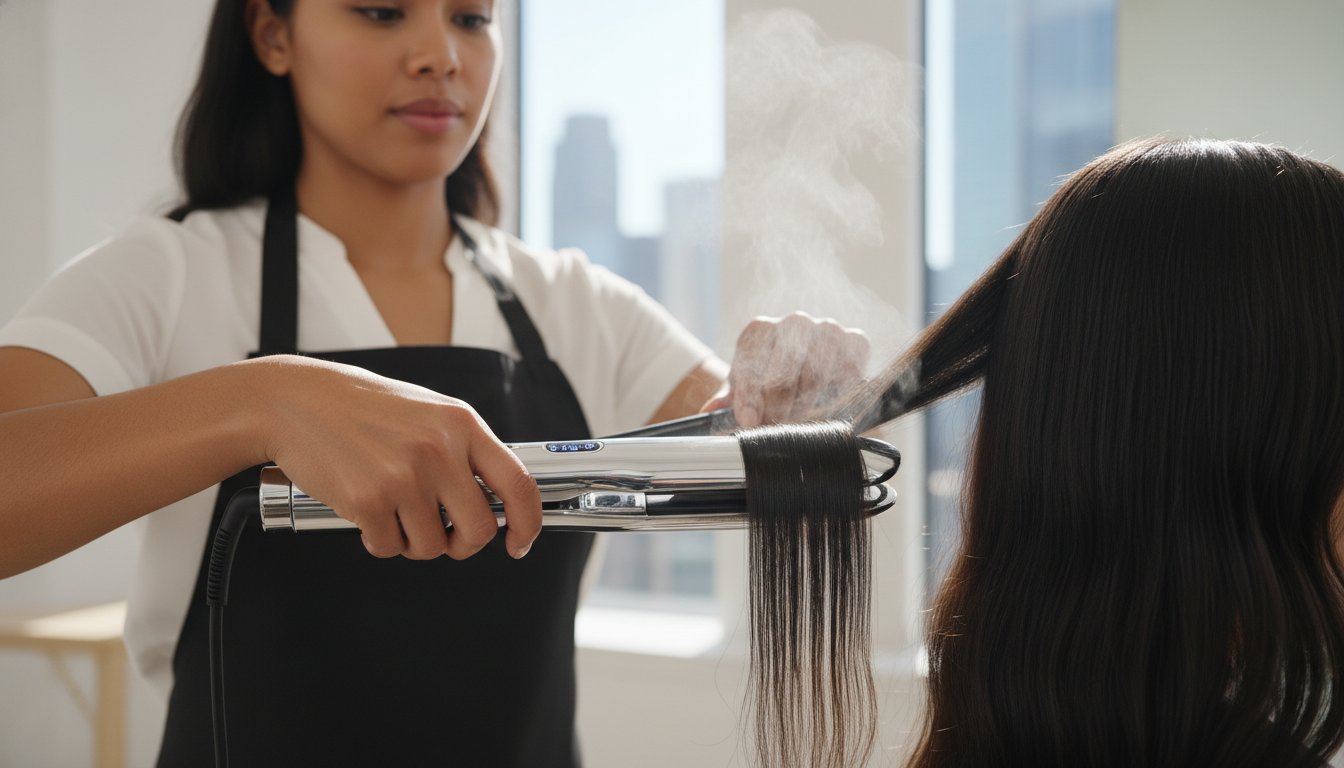
Precision heating is the only way to avoid the “scorched” look. Fine or blonde hair requires a conservative range of 350-380°F to maintain color integrity and prevent melting delicate fibers. Coarse or resistant textures need 410-430°F to properly seal the cuticle. Cheap irons often have “hot spots” that fluctuate wildly, leading to uneven smoothing. Investing in a Professional Flat Iron ensures consistent heat across the entire plate, eliminating the guesswork. Watch for the “steam vs. smoke” diagnostic; a light mist of steam is normal evaporation, but heavy, acrid smoke indicates the iron is too hot or the hair is over-saturated.
Sectioning and Tension Techniques
Speed is the enemy of quality. Use 1/8-inch sections to ensure the heat penetrates every fiber uniformly. Consistent tension “locks” the keratin into the hair shaft, creating that signature metropolitan glow. Pay close attention to the nape and hairline; these areas are prone to sweat and friction, often being the first places where frizz returns. For those looking to upgrade their toolkit, you can explore professional-tier smoothing essentials to refine your technique and deliver uncompromising excellence.
Post-Treatment Crisis Management: Solving Frizz and Greasiness
Troubleshooting common keratin treatment problems often requires a surgical response to the “waxy” or “gummy” sensation some clients report after their first home wash. This heavy, coated feeling usually stems from over-saturation during the service or a failure to properly emulsify the product before the blow-dry. If the hair feels like it has a film, it’s likely that the protein didn’t fully bond with the cortex, leaving excess residue on the cuticle. It’s a frustrating result for a client expecting weightless silkiness.
When frizz returns within just two weeks, it signals a breakdown in the mechanical seal. This is frequently caused by inconsistent iron passes or the client inadvertently using products containing sodium chloride. Conversely, unintended color shifts, particularly yellowing in blondes, occur when high heat oxidizes hair color molecules. Managing these crises effectively preserves your professional reputation. A “Mini-Correction” is often the best path forward. Instead of subjecting the entire head to another full chemical process, identify the specific zones where the seal failed. Re-apply a minimal amount of Diamond Keratin Treatment to those sections, blow-dry completely, and perform three to four precise passes with your Professional Flat Iron to bridge the gap.
Eliminating the Waxy Buildup
To resolve product overload without stripping the entire service, utilize the “Warm Rinse” technique. Focus a gentle, steady stream of warm water on the scalp to emulsify excess oils and unbonded keratin. Avoid aggressive scrubbing on the mid-lengths. Using Silk Touch Shampoo is essential here; its pH-balanced formula removes the waxy residue while reinforcing the treatment’s structural integrity. This ensures the hair remains light, bouncy, and manageable rather than weighed down. It’s the professional way to clarify the scalp while preserving the ends.
Correcting Color Shifts and Brassiness
Heat is a powerful catalyst for oxidation. If a client’s cool-toned blonde shifts toward brassiness, it’s often a result of using a flat iron exceeding 380°F on color-treated strands. You can introduce a purple-toning regimen to neutralize these tones, but timing is everything. Observe the 48-hour rule. Never apply a gloss, toner, or pigment-depositing product until the keratin has had two full days to cure and solidify. After this window, a professional gloss from our Color Bar Professional Hair Color range can safely restore the desired hue without compromising the smoothing results. This patient approach maintains the high-performance standard your elite clientele expects.
Aftercare Sabotage: The Hidden Reasons Results Disappear
Even a technically perfect service can fail if the client’s bathroom routine works against the science of the bond. When troubleshooting common keratin treatment problems, you must investigate the environment the hair inhabits once it leaves your chair. Results that should last months often vanish in weeks because of specific, avoidable stressors. It’s not enough to deliver a flawless application; you must also provide the diagnostic knowledge to prevent aftercare sabotage.
Many clients focus solely on finding a sulfate-free cleanser, yet they ignore the more aggressive culprit: sodium chloride. Salt is a powerful desiccant that effectively scours the keratin from the hair shaft. Whether it’s found in sea salt sprays or standard drugstore conditioners, salt dissolves the protein coating and leaves the cuticle exposed. Educate your clients on the difference between being sulfate-free and being salt-free to preserve that metropolitan shine. This distinction is the secret to extending the life of a high-end service.
Mechanical stress is another silent saboteur that ruins a professional set. During the critical curing phase, the hair is highly malleable. Using tight ponytails, metal clips, or even tucking hair behind the ears can “dent” the treatment, creating permanent kinks in the smoothing. Similarly, environmental factors like UV exposure and hard water minerals can degrade the protein-moisture balance. If a client over-uses keratin-rich products without alternating with a hydrating mask, the hair becomes brittle rather than soft. It’s a delicate equilibrium that requires professional-grade guidance.
The Essential Maintenance Protocol
Maintaining the structural integrity of the Silk Touch system requires discipline. Clients must wait the full 48 to 72 hours before introducing any moisture to the hair. This period allows the organic acids to solidify the bond within the cortex. Recommending a Sulfate-Free, Natural Shampoo is the baseline for success, as these formulas cleanse without stripping the expensive protein seal. To prevent friction damage during sleep, advise the use of silk or satin pillowcases, which allow the hair to glide rather than snag and break.
Gym and Swim Troubleshooting
Active lifestyles don’t have to be the enemy of smooth hair. Before swimming, clients should saturate their hair with fresh water and apply a protective layer of Diamond Conditioner to block salt or chlorine absorption. After a workout, sweat must be addressed immediately; a quick blast with a Professional Hair Dryer on the hairline prevents moisture from reactivating the hair’s natural texture. A high-performance Keratin Infused Serum creates a lightweight, protective barrier against environmental pollutants and humidity. To ensure your clients have the right tools for long-lasting results, shop our professional-tier maintenance collection for uncompromising quality.
The Professional Standard: Formaldehyde-Free Mastery with Silk Touch
The ultimate step in troubleshooting common keratin treatment problems is upgrading to a system designed to eliminate technical failure at the molecular level. While traditional treatments often rely on harsh chemicals that create a “heavy smoke” environment and risk scalp irritation, the Silk Touch and Diamond Keratin systems represent a new professional standard. These vegan, clean-beauty formulas are engineered to deliver high-performance smoothing without the acrid fumes or the “chemical burn” sensation that plagues older technologies. By choosing a sophisticated, formaldehyde-free approach, you provide a safer environment for both the stylist and the client while achieving a more natural, breathable result.
The Silk Touch Keratin Treatment is specifically formulated for versatility, making it the ideal choice for any hair texture, from fine European strands to coarse, resistant coils. It doesn’t just mask the hair with a plastic-like coating; it integrates with the fiber to restore health from the inside out. Hair Bar NYC Professional acts as the bridge between elite salon performance and ethical, safe ingredients, ensuring that your results are as sustainable as they are striking.
Why Clean Beauty is the Future of Smoothing
Modern clients demand transparency and health-conscious offerings. The absence of harsh fumes allows for a sensory salon experience that feels like a luxury ritual rather than a chemical procedure. The Diamond Keratin system is the pinnacle of this movement, providing a superior “Glass Hair” finish that reflects light with unmatched brilliance without the heavy weight of traditional coatings. Cruelty-free, salon-grade ingredients ensure long-term hair health, preventing the cycle of damage often seen with repetitive, aggressive straightening services.
Join the Elite: Professional Tools for Perfect Execution
Precision is impossible without the right equipment. A Professional Flat Iron with digital temperature control is a non-negotiable tool for any stylist serious about troubleshooting common keratin treatment problems. As discussed in our earlier application protocols, the ability to lock in a specific temperature prevents the scorching of fine hair and the under-processing of resistant textures. Pair this with our Mixing Bowl and Brush Set to ensure every milliliter of product is used efficiently, preventing the over-saturation that leads to waxy buildup. Elevate your salon results by integrating the Hair Bar NYC Professional product line into your daily routine, where uncompromising quality meets metropolitan sophistication.
Master the Art of High-Performance Smoothing
Elevate your craft by moving beyond basic application to a deeper understanding of hair chemistry. Mastering the protein-heat-pH triad ensures you can handle troubleshooting common keratin treatment problems with surgical precision. From calibrating iron temperatures to educating clients on salt-free maintenance, every detail reinforces your reputation for excellence. You aren’t just performing a service; you’re delivering a professional standard of beauty that lasts.
Used by elite stylists across NYC and Florida, our systems are designed to deliver light-reflecting shine without compromising health. Our 100% Formaldehyde-free and Vegan formulas provide professional-grade results for all hair types, from the finest textures to the most resistant coils. It’s time to bridge the gap between aspirational beauty and practical hair health. Shop the Professional Silk Touch Collection and transform your service standard today. Your expertise is the foundation of every stunning result, and we provide the tools to make it happen.
Frequently Asked Questions
Why does my hair feel sticky or gummy after a keratin treatment?
Sticky hair indicates product over-saturation or an incomplete blow-dry before the ironing phase. This residue prevents the hair from feeling weightless and chic. Use a gentle rinse with Silk Touch Shampoo to emulsify excess keratin while preserving the internal structural integrity of the service. It’s a common sign that too much formula was applied during the initial brush-on stage.
Can I fix a keratin treatment that made my hair too flat?
Excessive flatness often diminishes after the first two washes as the hair’s natural volume returns. If the hair remains too limp, avoid using heavy serums and switch to a lightweight Diamond Shampoo. This helps remove excess surface coating while maintaining the light-reflecting shine you desire. Don’t worry; the hair usually regains its bounce once the initial curing phase is complete.
Why is my hair still frizzy after a professional keratin service?
Troubleshooting common keratin treatment problems often reveals that frizz persists because the iron passes weren’t consistent or the temperature was insufficient for the hair’s density. Ensure you use 1/8-inch sections and a Professional Flat Iron to create a flawless, hermetic seal on the cuticle. If the frizz is localized, a mini-correction on those specific strands can restore the metropolitan glow you expect.
How do I get rid of the yellow tint keratin left on my blonde hair?
Heat oxidation is the primary cause of yellowing in blonde or color-treated hair. Wait the full 48-hour curing period before applying a professional purple-toning regimen or a gloss from the Color Bar Professional Hair Color line. This ensures the toner neutralizes brassiness without disrupting the freshly sealed keratin bond. Always use a lower heat setting on blonde strands to prevent this shift.
Is it possible to wash my hair early if I don’t like the keratin results?
You can wash your hair early, but it will significantly reduce the longevity and smoothing efficacy of the treatment. If you must wash it, use lukewarm water and Silk Touch Shampoo to minimize the loss of unbonded protein. Be aware that the frizz control and shine will likely fade faster than the standard three-month window if the curing process is interrupted.
What should I do if my scalp is itchy after a smoothing treatment?
Scalp irritation often occurs if the formula makes direct contact with the skin during application. Rinse the scalp thoroughly with cool water and avoid aggressive scratching to prevent further sensitivity. For future services, ensure the product is applied a quarter-inch away from the root using a precise Mixing Bowl and Brush Set to maintain a professional standard of comfort and safety.
How can I tell if my hair has heat damage or just too much protein?
When troubleshooting common keratin treatment problems, you can distinguish between damage types by testing the hair’s elasticity when wet. Heat-damaged hair feels mushy and over-stretches, whereas protein overload makes the hair feel stiff and brittle. If it’s the latter, alternate your routine with a hydrating Diamond Conditioner to restore the essential protein-moisture balance and improve manageability.
Can I use dry shampoo immediately after a keratin treatment?
Avoid using dry shampoo or any styling products during the initial 48-72 hour curing window. These powders can create “dents” or uneven textures in the malleable keratin coating before it has fully solidified. Keep the hair straight and free of all accessories until the first full wash to ensure a high-performance, uniform finish that lasts for months.