Vegan Keratin Treatment vs. Glycolic Acid Treatment: The Professional’s Smoothing Guide
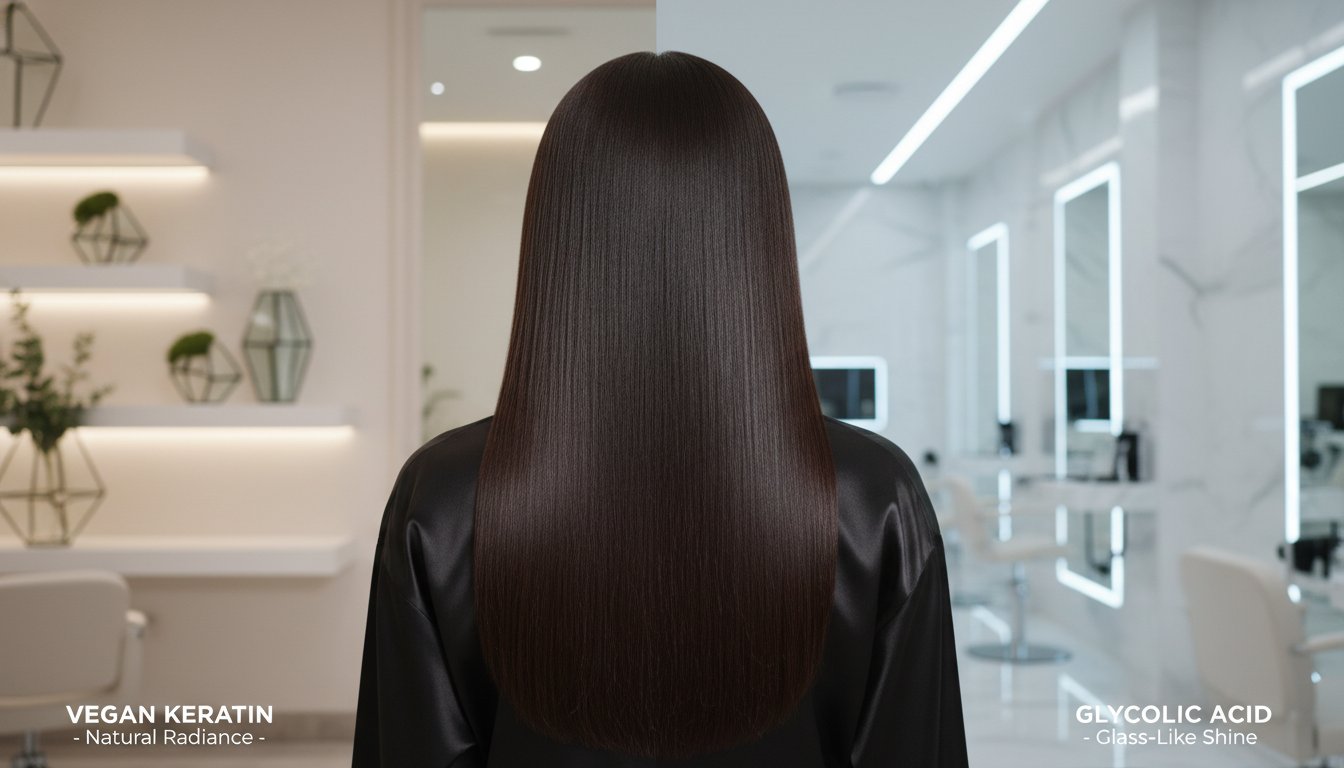
You might think the path to glass-like hair always starts with a heavy protein coating, but the most sophisticated results often come from a completely different chemical philosophy. We understand the frustration of staring at a salon menu, feeling caught between acid and protein marketing while fearing the hidden cost of heat damage or toxic fumes. You deserve the sleekness of a high-end finish without compromising your long-term hair density or scalp health.
Discover the definitive breakdown of a vegan keratin treatment vs glycolic acid treatment to finally choose the perfect match for your hair type. We will explore how professional systems like our Silk Touch Keratin Treatment reinforce the hair internal structure using plant-derived proteins, compared to the surface-smoothing realignment of acid-based technologies. This guide provides the clarity you need to achieve manageable, mirror-like shine while maintaining total hair integrity.
Key Takeaways
- Understand why elite urban salons are moving away from formaldehyde toward plant-based, bio-compatible smoothing technologies.
- Learn how biomimetic proteins reinforce the hair’s cortical fibers to rebuild structural integrity from the inside out.
- Explore the chemical mechanism of alpha-hydroxy acids and how they realign disulfide bonds for a sleek, semi-permanent straight effect.
- Master the performance differences when comparing a vegan keratin treatment vs glycolic acid treatment, specifically regarding longevity and sensory experience.
- Identify the essential professional-grade maintenance routines required to preserve your results and maximize multidimensional shine.
The Modern Smoothing Standard: Beyond Traditional Keratin
Elite urban salons have officially entered a new era where health and high-performance beauty no longer exist in opposition. The days of enduring harsh chemical odors for the sake of a sleek finish are fading, replaced by a sophisticated demand for bio-compatible solutions. This shift is driven by a discerning clientele that refuses to compromise on hair integrity or personal wellness. In the most prestigious metropolitan environments, the standard has moved toward plant-based smoothing technologies that deliver the same mirror-like shine as their predecessors without the toxic trade-offs.
The Problem with Traditional Formaldehyde Systems
Historically, the evolution of Hair straightening techniques relied heavily on formaldehyde or formaldehyde-releasing chemicals. These systems worked by using toxic vapors to seal synthetic proteins onto the hair shaft under extreme heat. While the initial results were undeniably sleek, the long-term structural risks became impossible to ignore. Frequent exposure often led to hair becoming brittle, dry, and prone to breakage as the synthetic coating eventually wore away. Modern professionals now prioritize pH-balanced and protein-rich alternatives that respect the hair’s natural biology rather than overwhelming it with harsh synthetic resins. The goal is no longer just to coat the hair, but to transform it from within.
Defining the New Elite Alternatives
Choosing the right technology requires an insider’s understanding of how different active ingredients interact with your specific hair texture. The industry’s leading contenders have emerged as two distinct paths: protein-based reinforcement and acid-based realignment. Understanding the nuances of a vegan keratin treatment vs glycolic acid treatment is essential for anyone seeking a bespoke smoothing experience. Both systems offer a path to manageable hair, but their chemical philosophies differ significantly.
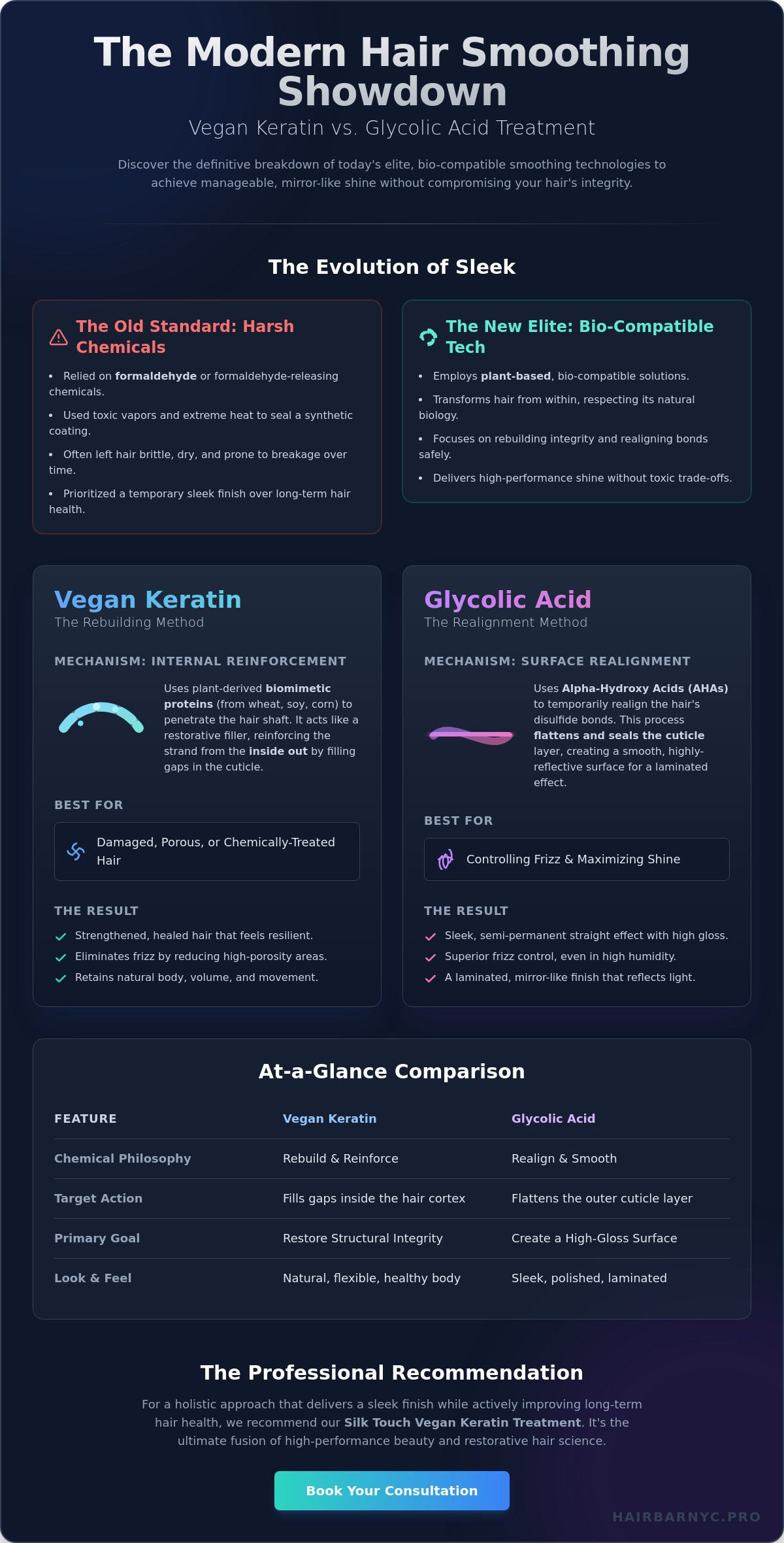
- Vegan Keratin: This technology, utilized in our Silk Touch Keratin Treatment, employs biomimetic, plant-derived amino acids. These proteins fill the gaps in the hair cuticle to strengthen and rebuild the hair’s internal structure, making it ideal for damaged or porous strands.
- Acid-Based Smoothing: These systems use alpha-hydroxy acids (AHAs) like glycolic or glyoxylic acid to temporarily realign the hair’s disulfide bonds. This method focuses on flattening the cuticle to create a high-gloss, laminated effect that excels at frizz control.
The decision depends entirely on your hair’s porosity and current health. While both offer transformative results, they achieve them through very different scientific mechanisms. Whether you need the structural repair of a protein-rich system or the sleek realignment of an acid-based gloss, the modern smoothing standard ensures your hair remains as healthy as it is beautiful. This is the new benchmark for professional excellence in the city.
The Science of Vegan Keratin: Rebuilding Structural Integrity
True luxury in haircare is found at the intersection of biology and innovation. While many dismiss “vegan keratin” as a simple marketing label, the reality is a sophisticated biomimetic achievement. Unlike traditional animal-derived proteins, these plant-based alternatives utilize hydrolyzed wheat, soy, and corn proteins to mirror the hair’s natural amino acid profile. This precise matching allows the treatment to integrate into the hair’s architecture rather than just sitting on the surface. It’s a scientific approach that prioritizes long-term health over a temporary, synthetic mask.
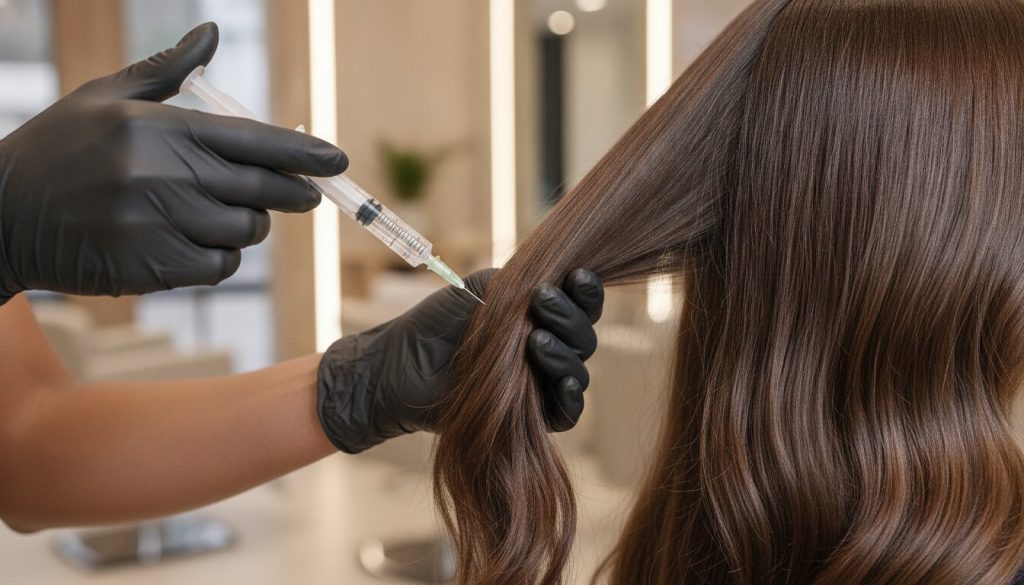
When evaluating a vegan keratin treatment vs glycolic acid treatment, the primary distinction lies in structural reinforcement versus chemical realignment. Our Silk Touch Keratin Treatment focuses on the former, acting as a restorative filler for the hair’s internal structure. It identifies microscopic gaps in the cuticle and cortical fibers, reinforcing the strand from the inside out. This “filling” mechanism ensures that the hair retains its natural body and movement while eliminating the high-porosity areas that trap moisture and cause frizz. It’s a transformative process that heals the hair as it smooths.
How Vegan Keratin Bonds to the Hair
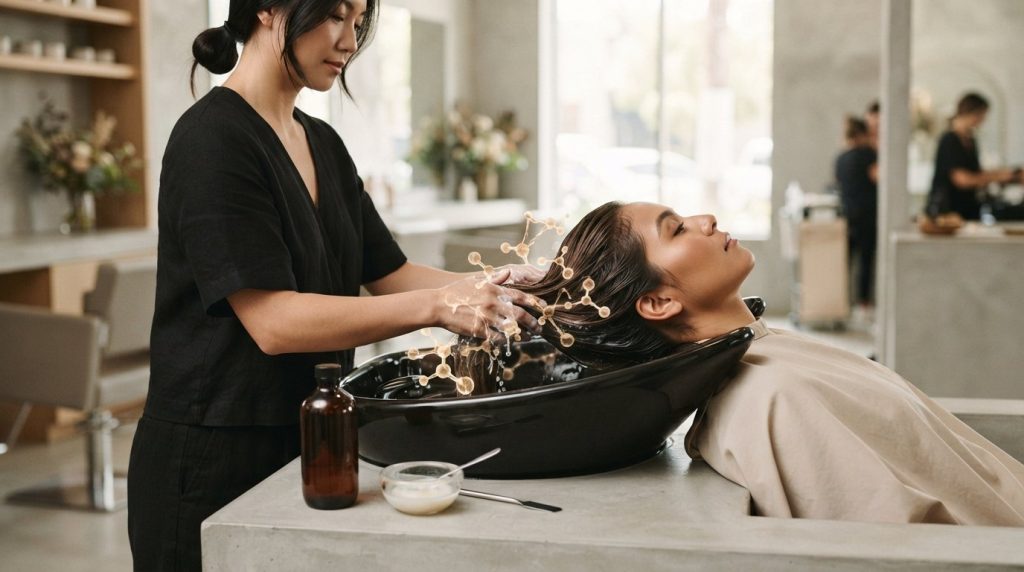
The bonding process is an intricate infusion of amino acids into the hair’s damaged zones. These plant proteins are small enough to penetrate the cuticle, where they anchor themselves to the existing keratin structure. Unlike older systems that often left hair feeling stiff or “plasticky,” these bio-compatible proteins provide a flexible, natural finish. We often pair this infusion with botanical oils to seal the results, creating a high-gloss shine that feels soft to the touch. It’s about achieving that elite, salon-fresh texture that lasts for months, not just until your next wash.
Best Candidates for Vegan Keratin Treatments
This technology is the gold standard for anyone with damaged, over-processed, or naturally high-porosity hair. If your strands feel “thirsty” or have been compromised by frequent coloring, a protein-based system provides the necessary repair that acid-based glosses cannot. It’s also the preferred choice for clients who are conscious of the health risks of formaldehyde found in traditional formulas. For a deeper look at your options, explore our comprehensive guide on formaldehyde free keratin treatment technology to see why plant-based smoothing is the future of elite care. If you’re ready for a change, our Silk Touch Keratin Treatment offers the perfect balance of strength and sophistication.
Understanding Glycolic and Glyoxylic Acid: The Realignment Method
The “skinification” of haircare has brought alpha-hydroxy acids (AHAs) from the world of elite facial peels directly into the salon chair. While our previous discussion focused on the restorative power of protein, acid-based systems operate on a completely different chemical philosophy. These treatments utilize the specific roles of glyoxylic and glycolic acid to temporarily reshape the hair’s internal landscape. Instead of filling gaps, these acids use a low pH environment to soften the hair’s bonds, allowing them to be pressed into a smoother, flatter configuration. It is a sophisticated method of realignment that appeals to those seeking a high-gloss, laminated aesthetic.
This crossover between dermatology and hair science highlights the importance of professional precision; just as you would visit a cosmetic dermatologist beverly hills for a medical-grade chemical peel, selecting the right acid-based hair treatment requires an understanding of how these active ingredients interact with your biology.
When comparing a vegan keratin treatment vs glycolic acid treatment, it’s vital to recognize that the latter acts more as a shape-shifter than a structural builder. Acid systems rely on a process called cross-linking, where the acid molecules create new, temporary bridges between keratin fibers. This doesn’t involve the permanent breaking of disulfide bonds found in traditional relaxers, making it a much gentler alternative for those who want to reduce volume without losing their hair’s natural elasticity. However, because this method doesn’t infuse the hair with new protein, its effects are strictly focused on the surface and shape rather than internal repair.
The Chemical Mechanism of Acid Smoothing
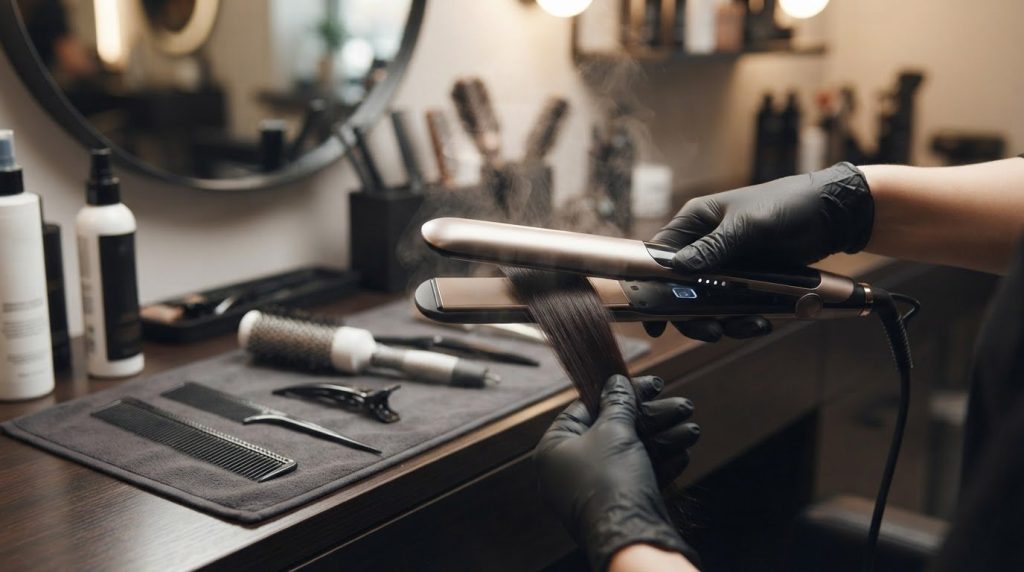
The magic happens when the acid is sealed into the hair using a high-performance tool like our Professional Flat Iron. The intense heat triggers a reaction where the glyoxylic acid forms a semi-permanent mesh around the hair fibers. This mesh holds the hair in a straighter position, resisting the urge to revert to its natural frizz pattern. It’s a temporary alteration. Over time, as you wash your hair, these acid-based cross-links gradually dissolve, allowing your natural texture to return without a harsh line of regrowth. This makes it an excellent choice for a seasonal refresh.
Pros and Cons of Glycolic/Glyoxylic Systems
For clients with very thick, resistant, or “bulky” hair, acid-based treatments are often favored for their superior volume reduction. They create an incredibly sleek, compact finish that makes styling effortless. There is, however, a professional caveat: the low pH of these acids can occasionally cause “color lifting.” If you’ve recently used our Color Bar Professional Hair Color, an acid treatment might shift your tint by a half-shade or more. This is why we always recommend a thorough consultation to ensure your smoothing choice aligns with your color goals. While acids provide unmatched frizz control, they require a precise application to maintain the vibrancy of your shade.
Vegan Keratin vs. Glycolic Acid: A Professional Performance Breakdown
Achieving a professional-tier result depends on more than just the initial application; it requires a strategic understanding of longevity and maintenance. When analyzing a vegan keratin treatment vs glycolic acid treatment, the most striking difference for a client is the duration of the effect. A high-quality vegan protein system typically offers a window of three to five months of manageable, frizz-free hair. In contrast, acid-based realignment systems generally provide a shorter lifespan of two to three months. This discrepancy exists because protein infusion fundamentally reinforces the strand from within, whereas acid cross-linking relies on a more temporary surface-level bond that naturally dissipates through regular cleansing.
The sensory experience within the salon also varies significantly between these two technologies. Acid treatments often involve a more distinct, sharper aroma during the heat-activation phase and can require a longer application time due to the precision needed for bond realignment. Our protein-based systems, such as the Silk Touch Keratin Treatment, are formulated for a more pleasant, efficient, and luxurious atmosphere. We believe the transformation process should be as sophisticated and comfortable as the final result itself.
Texture and Finish Comparison
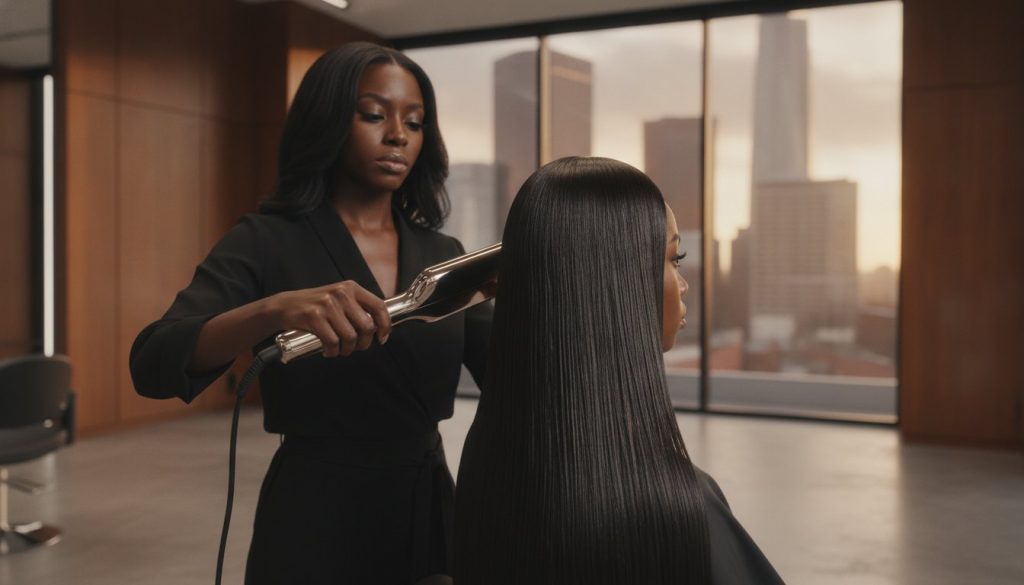
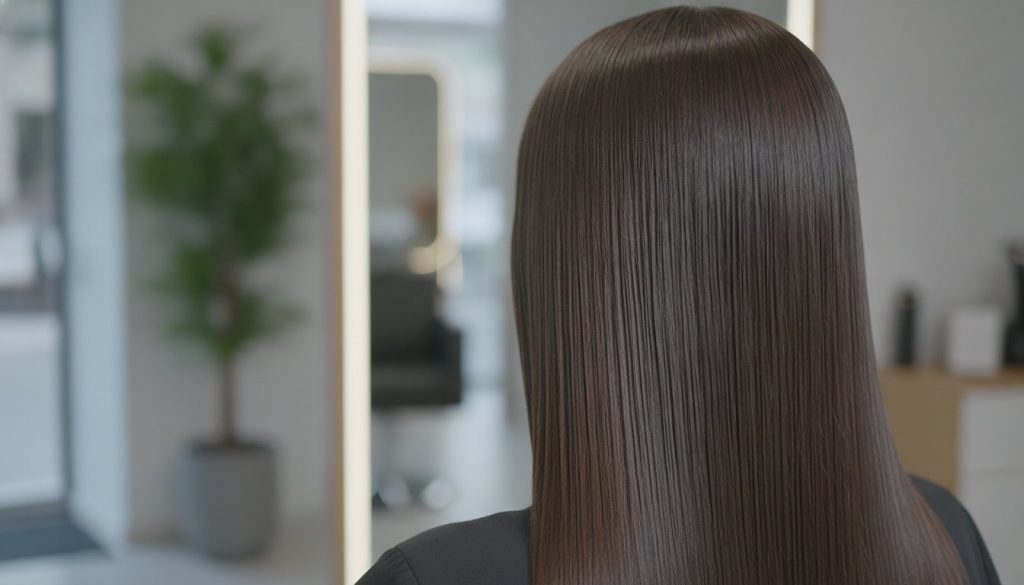
The aesthetic outcome is where your personal style dictates the choice. Vegan keratin creates a finish that is soft, touchable, and full of natural movement. It enhances your hair’s existing character while removing the chaos of frizz. Acid-based treatments deliver a high-compression, ultra-sleek look that significantly reduces volume. This “laminated” effect is perfect for those seeking the streamlined, glass-like silhouette often associated with the world’s most prestigious professional hair color brands. The choice between a natural flow and a compressed, high-fashion finish is yours to make.
Color Compatibility and Timing
Color compatibility is the final, critical piece of the smoothing puzzle. Because acid-based systems operate at a very low pH, they can cause a “color lift” or a slight shift in your existing tint. This is particularly relevant if you have recently visited our Color Bar Professional Hair Color for a signature shade. Vegan keratin is widely regarded as the safer option for maintaining the vibrancy and depth of your color. Regardless of your choice, the “waiting period” myth is largely over. To preserve your professional result and prevent premature fading, explore our curated range of maintenance essentials at Hair Bar NYC Professional. High-performance hair requires high-performance care.
The Hair Bar NYC Recommendation: Elevating the Smoothing Experience
Selecting between a vegan keratin treatment vs glycolic acid treatment isn’t just about the science; it’s about the lifestyle you want to lead. While acid systems offer a sleek, laminated finish, our experts at Hair Bar NYC Professional prioritize the structural integrity and long-term vitality that only a protein-rich system can provide. Our recommendation is rooted in a commitment to high-performance, cruelty-free beauty that mirrors the elite standards of an upscale urban setting. We don’t just aim for a temporary fix; we strive for a total hair transformation that respects the natural biology of your strands.
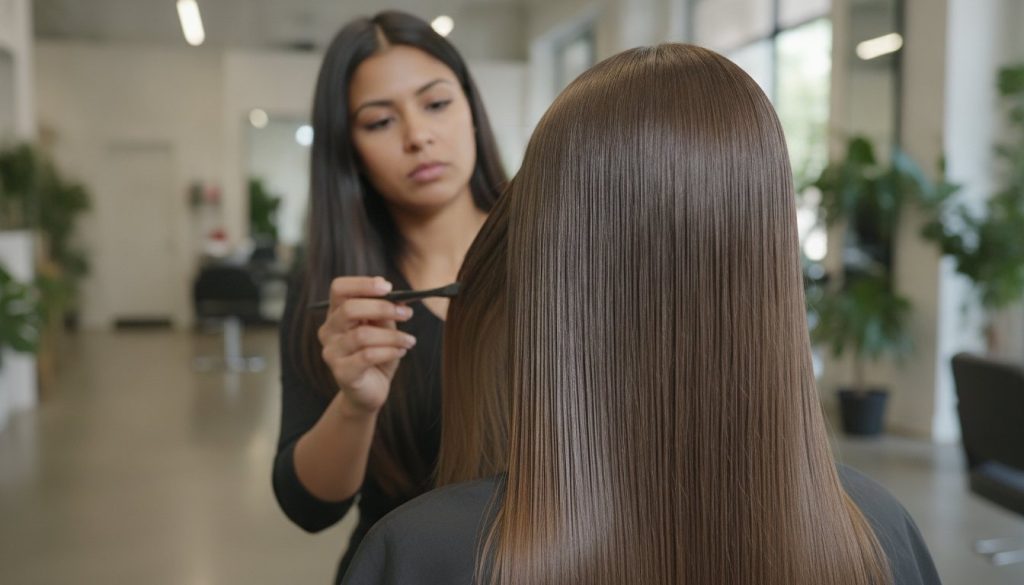
Our stylists begin every session with a meticulous health assessment. We don’t believe in a one-size-fits-all approach. By evaluating your hair’s porosity, elasticity, and color history, we determine if your strands require the intensive repair of our Silk Touch Keratin Treatment or the multidimensional shine of our Diamond Keratin Treatment. This professional discernment ensures you receive a bespoke result that enhances your natural texture rather than suppressing it. It’s about giving you the tools to look your best every single day with minimal effort.
Why Silk Touch Leads the Industry
The Silk Touch system represents the pinnacle of smoothing technology because it moves beyond the surface. It utilizes a proprietary blend of organic ingredients and biomimetic proteins that outperform standard retail options. This isn’t just about removing frizz. It’s about achieving that signature metropolitan look: hair that is sleek, healthy, and effortlessly manageable. For those maintaining a specific texture, our system integrates seamlessly with hair care products for natural hair, providing a holistic routine that preserves the hair’s internal moisture balance.
Next Steps for Your Hair Transformation
Longevity is maintained through professional-grade maintenance. We recommend our sulfate-free Silk Touch Shampoo and Silk Touch Conditioner to protect the protein bonds we’ve established. Using high-end tools like our Professional Flat Iron during the initial application ensures the treatment is perfectly sealed, but the home care routine is what preserves that salon-fresh energy for months. Adding a few drops of our Keratin Infused Serum can further elevate the shine and protect against the daily urban environment. Consistent, professional-tier smoothing doesn’t just make styling easier; it improves the overall quality of your hair over time, ensuring you always present the best version of yourself.
Master Your Signature Style with Professional Precision
Navigating the choice between a vegan keratin treatment vs glycolic acid treatment is finally a decision made with absolute clarity. You’ve gained the professional framework to distinguish between structural protein reinforcement and acid-based realignment. This insider knowledge ensures that your hair doesn’t just look sleek, but remains fundamentally healthy and resilient. It’s the difference between a standard retail fix and a high-end transformation that honors your hair’s unique biology.
Elite stylists across New York and Florida rely on our 100% formaldehyde-free and cruelty-free formulas to achieve the sophisticated results our clients expect. Our proprietary Silk Touch technology provides superior shine and strength, proving that high-performance beauty can be both safe and ethical. We invite you to experience the standard of excellence that defines our urban salon culture and elevates your daily routine.
Experience the Silk Touch: Discover Hair Bar NYC Professional Vegan Keratin Systems. Step into a new era of manageable, mirror-like hair and enjoy the confidence that comes with a professional-tier finish every single day.
Frequently Asked Questions
Is vegan keratin as effective as traditional Brazilian keratin?
Vegan keratin is equally effective and often superior for those prioritizing long-term hair health. By utilizing biomimetic plant proteins, it delivers the same sleek, frizz-free results without the toxic fumes or structural degradation associated with traditional animal-derived formulas. It’s a sophisticated upgrade for the modern, health-conscious client who demands high performance without compromise.
Can glycolic acid treatments damage my hair over time?
Acid-based treatments are safe when applied by experts, but they require careful monitoring of hair porosity. Because they realign bonds rather than filling them, over-application on high-porosity hair can lead to temporary dryness. We always assess your hair’s current integrity before proceeding with any acid realignment system to ensure the results remain luxurious and healthy.
Will an acid-based smoothing treatment change my hair color?
Yes, acid treatments can cause a slight shift or “lift” in your hair’s tint due to their low pH levels. When comparing a vegan keratin treatment vs glycolic acid treatment, the protein-based option is generally safer for preserving the vibrancy of our Color Bar Professional Hair Color shades. We recommend timing your color service strategically around your smoothing session for the best results.
How long do I have to wait to wash my hair after a vegan keratin treatment?
Modern professional systems like our Silk Touch Keratin Treatment typically require a waiting period of only 24 to 48 hours. This is a significant improvement over the old industry standard of three full days. Using our sulfate-free Silk Touch Shampoo during your first wash is essential to lock in the results and maintain the protein bonds successfully.
Can I get a smoothing treatment if I have highlights or bleached hair?
Smoothing is highly beneficial for highlighted hair, provided you choose a restorative technology. We recommend vegan keratin for bleached strands because it fills the high-porosity gaps created during the lightening process. It reinforces the hair’s structural integrity, making it feel stronger and look significantly glossier than it did before the treatment was applied.
What is the difference between glyoxylic acid and formaldehyde?
Glyoxylic acid is a safe, non-toxic organic compound that uses heat-activated cross-linking to realign hair fibers without releasing harmful vapors. Formaldehyde is a hazardous gas that creates a synthetic, plastic-like seal on the hair surface. The industry shift toward glyoxylic and glycolic acids represents a move toward safer, more breathable salon environments for everyone involved.
Which treatment is better for fine, thinning hair that needs volume?
Vegan keratin is the ideal choice for fine or thinning hair because it increases the hair’s diameter by infusing it with plant proteins. Acid-based systems tend to provide high compression, which can make fine hair look flat or limp. A protein-based approach removes frizz while maintaining the natural body and movement that fine hair needs to look its best.
How often should I repeat a professional smoothing treatment?
Most clients find that repeating the treatment every 3 to 5 months is the perfect cadence for maintaining a sleek, manageable look. Repeating the process too frequently can lead to protein overload, which makes the hair feel stiff or brittle. We monitor your hair’s elasticity at every visit to ensure your smoothing routine supports long-term health and vitality.