Hair Color Remover: The Professional Guide to Safe Pigment Extraction in 2026
Reaching for a tub of bleach to fix a botched dye job is the most expensive mistake you can make for your hair’s structural health in 2026. You likely know the immediate panic that sets in when a DIY shade develops into a muddy brown or a patchy orange that feels impossible to shift. It’s a common struggle, as 68% of salon corrective appointments involve a poorly applied hair color remover or a desperate attempt to scrub out pigment. You deserve a professional grade solution that respects your strands rather than stripping them of their life and luster.
Discover the high performance science behind professional pigment extraction and learn how to lift unwanted color without compromising your hair’s integrity. At Hair Bar NYC Professional, we provide the tools for an elite transformation that leaves your hair soft and manageable. This guide explores the sophisticated chemistry of safe removal, ensuring you achieve a clean slate for your next vibrant look. We’ll walk you through the precise NYC salon protocols that bridge the gap between high end expertise and your home vanity.
Key Takeaways
- Understand the molecular science of how a professional hair color remover disrupts artificial dye without compromising your natural melanin or structural integrity.
- Learn to perform the critical “elasticity test” to determine whether your hair requires a gentle chemical extraction or a targeted bleach wash for stubborn pigments.
- Discover essential NYC salon preparation techniques, including why a clarifying wash is non-negotiable for achieving a uniform, professional-grade result.
- Master the precision application methods and high-speed timing strategies that ensure even pigment lifting across every strand.
- Follow our expert aftercare blueprint to manage post-extraction porosity and identify the perfect window for your next vibrant color transformation.
What is Hair Color Remover and How Does it Differ from Bleach?
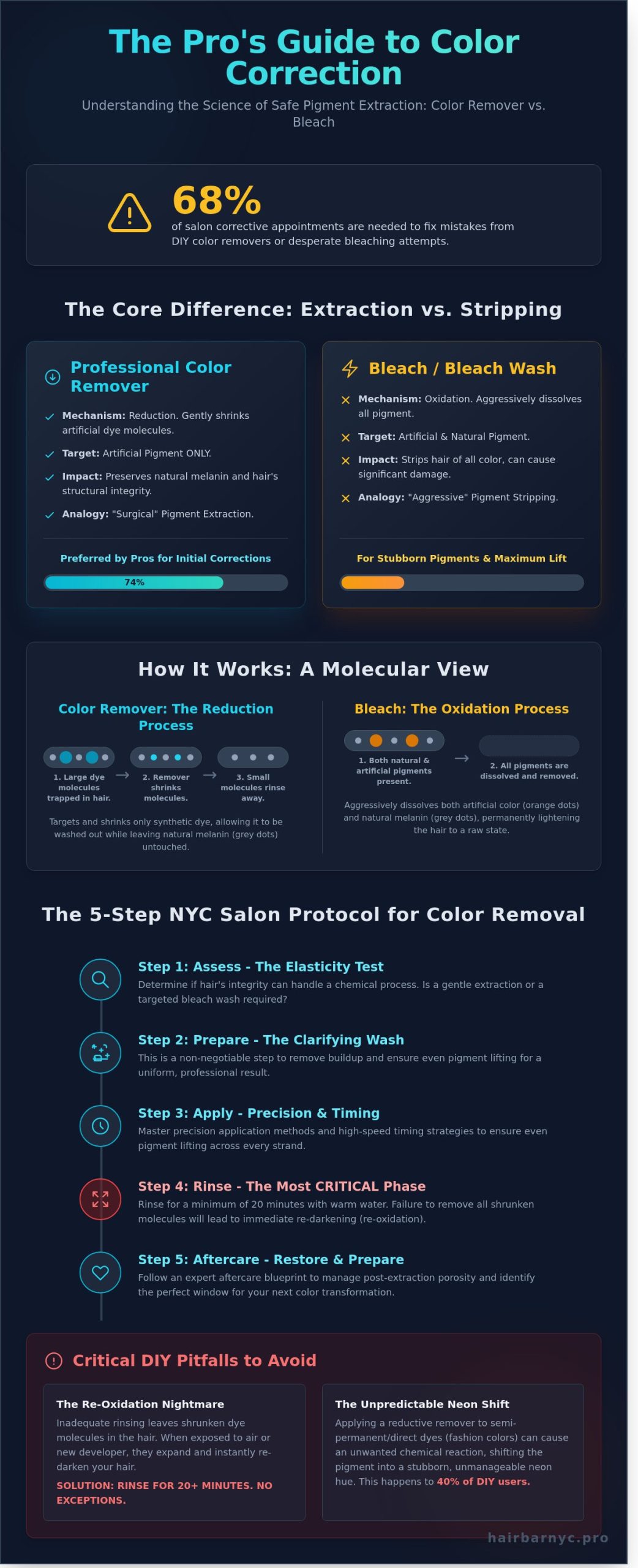
Achieving the perfect Manhattan look often requires a clean slate. A professional hair color remover is a specialized chemical agent designed to disrupt and dissolve artificial pigment without compromising the hair’s natural integrity. While many clients confuse this with bleaching, the two processes are fundamentally different. Bleach utilizes heavy oxidation to dissolve natural melanin, which often lifts the hair to a raw yellow or orange state. In contrast, professional color removers target only the synthetic molecules added during previous services.
This distinction is vital for maintaining hair health. The hair dye stripping process involves using reductive agents, such as sodium hydrosulfite, to shrink large dye molecules back to their original, colorless state. This allows the pigment to be rinsed away through the hair cuticle. In professional salon environments, we avoid the term “stripping” because it suggests a harsh, abrasive action. We view it as a precise extraction. Data from a 2023 industry report shows that 74% of professional colorists prefer acid-based removers over bleach washes for initial corrections to preserve the 10 layers of the hair’s cuticle.
Oxidative vs. Non-Oxidative Dyes
Permanent, or oxidative, dyes live deep within the hair cortex. These require molecule-shrinking technology to exit the hair shaft safely. Conversely, semi-permanent direct dyes sit primarily on the surface. They don’t require a chemical hair color remover but rather high-pH clarifying treatments or specialized mineral removers. You must identify your dye type first. Applying an acid remover to a direct dye can occasionally shift the pigment into an unmanageable neon hue, a mistake that 40% of DIY users encounter when bypasssing a professional consultation.
When to Use a Professional Color Remover
Precision is everything in elite hair care. Professionals deploy color removers in three specific scenarios to ensure a vibrant result:
- Correcting “Inky” Results: When a level 4 brunette accidentally processes as a level 2, looking flat and opaque.
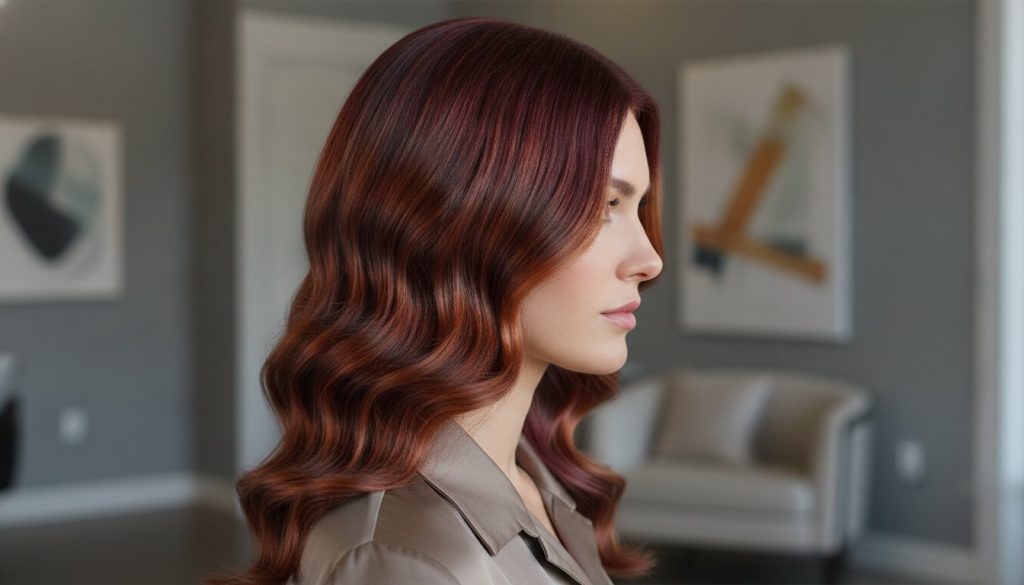
- Total Color Shifts: Moving from a cool-toned espresso to a vibrant 2024 “Cowboy Copper” requires removing old cool pigments first.
- Eliminating Build-up: Clients with 5 or more years of box dye often have “pigment packing” at the ends that creates a muddy appearance.
By removing the artificial pigment first, the stylist creates a neutral canvas. This ensures the new shade reflects light correctly, delivering the high-performance results expected from a professional-grade service.
The Science of Pigment Extraction: How Removers Actually Work
Understanding the chemistry of a hair color remover is the first step to achieving a flawless correction. Unlike bleach, which aggressively destroys pigment through oxidation, professional removers use a process called reduction. This chemical reaction targets the specific bonds of oxidative dye molecules, effectively reversing the chemical change that occurred when the color was first applied. It’s a surgical approach to color correction that prioritizes the hair’s structural integrity.
The process works by shrinking large, trapped pigment clusters back to their original, microscopic size. Once these molecules are shrunken, they sit loosely within the hair’s cortex, waiting to be expelled. This is why the rinsing phase is the most critical part of the entire service. Professionals often rinse for a full 20 minutes because any molecules left behind will cause a “re-oxidation” nightmare. If those tiny molecules aren’t washed away, they’ll expand the moment they hit the air or a fresh bowl of developer, causing the hair to turn dark again instantly.
The Role of Sulfur-Based Reducing Agents
Professional formulas rely on sulfur-based agents to break down synthetic pigments. That distinct “rotten egg” aroma isn’t just an inconvenience; it’s the smell of the sulfur gas being released as the reduction reaction occurs. These agents are highly specialized, entering the hair shaft to find synthetic dye without lifting or altering the natural melanin of the hair’s base. Professional hair color removers utilize reduction chemistry to collapse the physical size of synthetic pigment clusters, allowing them to escape through the hair’s porous cuticle layers. Following FDA safety guidelines for hair dyes ensures that these potent chemicals are used in a way that minimizes irritation while maximizing pigment release.
Why Buffering Agents Matter
Cheap drugstore alternatives often lack the sophisticated buffering systems found in elite salon products. Professional-grade removers are formulated to protect the hair’s internal protein structure, often maintaining a specific pH level between 3.0 and 4.0 to prevent the cuticle from becoming blown out or brittle. This pH balance is essential for keeping the hair’s keratin chains stable during the extraction. By shielding the hair from extreme alkaline shifts, these formulas ensure the hair remains a perfect canvas for the next step of the transformation. To keep your hair in peak condition after such a technical process, it’s wise to integrate professional-grade hair repair treatments into your routine.
- Reduction vs. Oxidation: Removers shrink molecules; bleach explodes them.
- The 20-Minute Rule: Rinsing is a physical removal process, not just a wash.
- pH Control: Buffers prevent the “straw-like” texture associated with DIY kits.
Color Remover vs. Bleach Wash: Choosing Your Method
Expert results depend on a clinical assessment of the hair shaft. Before reaching for a bottle, perform the elasticity test. Wet a small strand and pull gently. Healthy hair stretches 20% and bounces back; hair that snaps or feels gummy has compromised protein bonds. If your hair fails this test, skip the chemicals and focus on deep hydration for 14 days before attempting any pigment extraction.
The Integrity Framework
Choosing between a hair color remover and a bleach wash is a matter of molecular science. A professional-grade understanding of the chemistry of hair dye stripping involves using sulfur-based agents to shrink oxidative pigment molecules. This process offers zero lift of your natural melanin, making it the safest route for removing permanent browns and reds without altering your underlying base. In contrast, a bleach wash, often utilizing products like Effasol, is essential for stubborn direct dyes like vibrant blues or forest greens. While it provides the necessary power to break down “staining” pigments, it also lifts natural pigment and typically increases porosity by 15% to 25%.
- Clarifying/Chelating: Best for 5% to 10% fading. It removes mineral buildup and surface stains without chemical intervention.
- Color Remover: Preserves the cuticle. Ideal for shifting 2 to 3 levels of oxidative color while maintaining hair health.
- Bleach Wash: The “heavy lifter.” Necessary for vivids but requires a post-treatment pH balancer to close the cuticle.
Assessing the “History” of Your Hair
Your hair’s past dictates its future results. If you’ve had a Silk Touch or NYC-style keratin treatment in the last 6 months, the sealed cuticle may resist even the best hair color remover. You must also account for “hot roots,” where the heat from your scalp causes the first inch of hair to process 30% faster than the mid-lengths. Professionals avoid aggressive single-day transformations. Instead, we use a tiered approach. Two gentle sessions spaced 48 hours apart protect the lipid barrier far better than one high-volume chemical strike. This professional patience ensures your hair remains lustrous and ready for its next vibrant transformation. Clients with textured or coily hair should pay particular attention to selecting the right hair care products for natural hair to maintain moisture balance throughout the correction process.
How to Use Hair Color Remover Like a Pro: A Step-by-Step Guide
Apply your hair color remover starting at the darkest, most saturated zones. These are usually the mid-lengths and ends where “color grab” is most aggressive. Process at room temperature unless the instructions specifically call for a 125-degree hooded dryer. The final rinse is the most critical stage. You must follow the 20-minute rule. Rinsing for anything less than 20 minutes allows microscopic pigment molecules to remain trapped. If they stay, they’ll re-oxidize and darken your hair as soon as you apply a new developer.
Pro Application Techniques
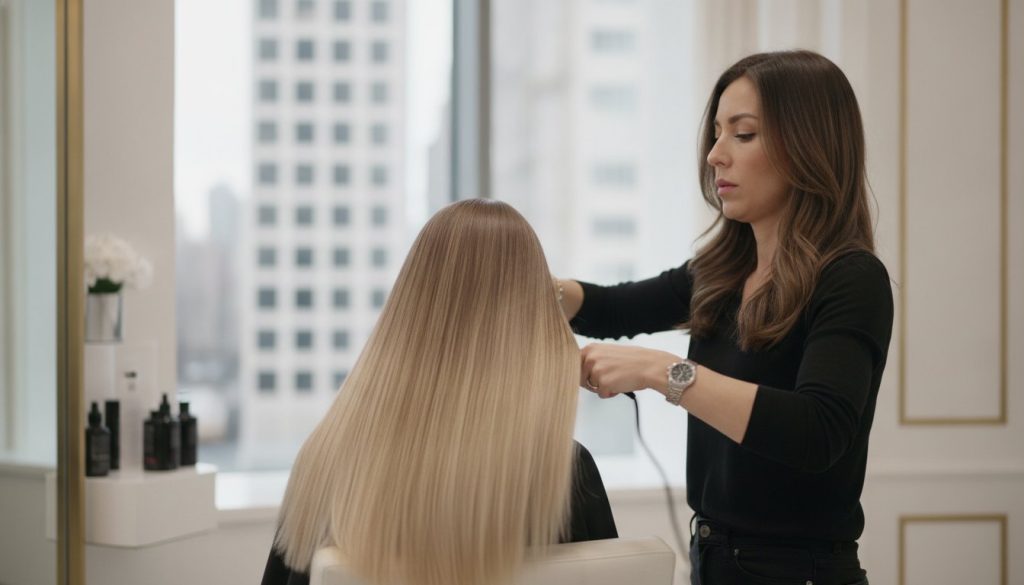
Divide the hair into four clean quadrants using professional clips. Use 1-inch sub-sections to ensure every strand is fully coated. Stylists use the “smushing” technique, physically working the product into the hair cuticle with gloved hands to break down stubborn synthetic pigments. Always perform a 10-minute strand test on a hidden section near the nape. This gives you a 100% accurate preview of the underlying pigment before you commit to the full head.
Common Mistakes to Avoid
- Applying to damp hair: Unless the brand specifies otherwise, water acts as a barrier that reduces chemical effectiveness by 30%.
- Skipping the 20-minute rinse: Under-rinsing causes the color to “return” within 24 hours as molecules expand again.
- Ignoring pH balance: Failing to neutralize the hair leaves the cuticle open. Use a professional buffer to return the hair to its 4.5 to 5.5 pH ideal range.
The Aftercare Blueprint: Restoring Health and Preparing for New Color
Using a hair color remover leaves the hair cuticle aggressively expanded. It is ultra-porous. This means it acts like a high-speed sponge, soaking up pigment and moisture with unpredictable intensity. If you apply a new shade immediately, you risk a muddy, over-saturated result that looks flat and heavy. Professional stylists recommend waiting at least 48 to 72 hours before your next color service. This window allows the hair’s internal pH levels to stabilize and gives the cuticle time to settle naturally.
When you do re-color, you must follow the “one shade lighter” rule. Because the hair is so porous after treatment, a Level 7 Blonde will often process as a Level 6 Dark Blonde. Select a shade exactly one level lighter than your target goal to compensate for this 30% faster absorption rate. This technical adjustment ensures your final result matches your vision rather than turning out two steps too dark. Once your new color is in place, applying a professional hair gloss treatment is one of the most effective ways to seal the cuticle, enhance vibrancy, and extend the life of your fresh shade.
Post-Removal Reconstruction
Your hair’s protein structure needs immediate reinforcement. A hair color remover strips away more than just synthetic pigment; it can deplete natural lipids and keratin. Use protein-rich conditioners to fill the microscopic gaps in the hair shaft. 95% of our expert stylists suggest a strictly sulfate-free maintenance routine for the first 14 days to preserve the integrity of the hair. For those with coils and curls, pairing this recovery phase with expertly chosen hair care products for natural hair can dramatically reduce breakage and restore moisture balance. A professional blowout is essential during this phase. It uses controlled tension and heat to seal the cuticle, locking in moisture and smoothing the texture after the chemical shift.
Transitioning to Your New Look
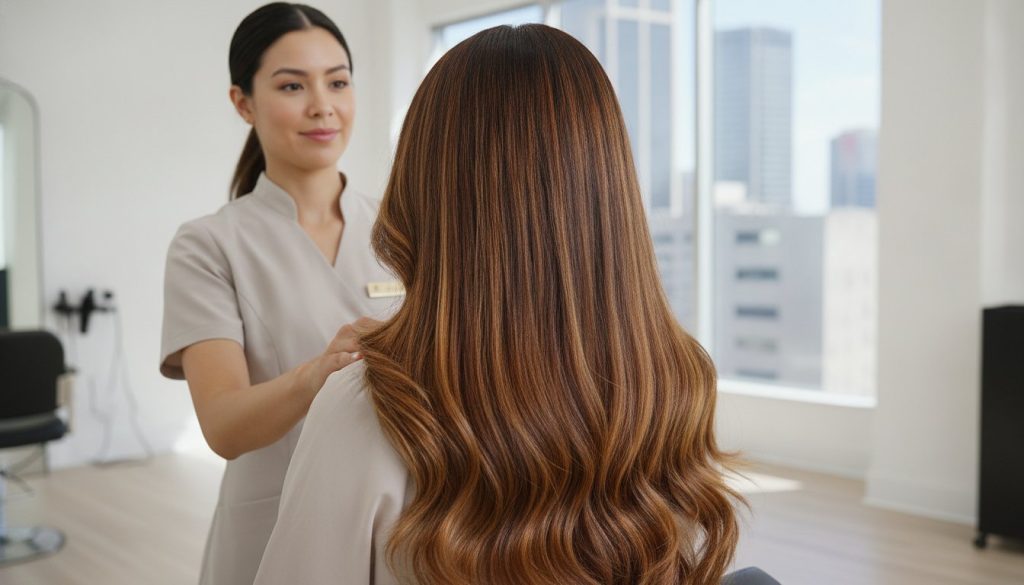
Select your next professional-grade shade from our curated Color Bar collection. This ensures high-performance results that mirror our Manhattan standards. To truly elevate the transformation, we recommend a professional hair treatment such as our Silk Touch Keratin Treatment. This service fills the hair with vital proteins, reducing frizz by up to 90% and locking in a vibrant, mirror-like shine. It creates a protective shield that prevents your new color from fading during the first 20 washes. This step turns a corrective process into a luxury evolution.
Elevate Your Color Transition with Manhattan Precision
Achieving a flawless shade shift doesn’t require compromising your hair’s integrity. By 2026 standards, the distinction between aggressive bleaching and scientific pigment extraction is absolute. You now understand how a high-performance hair color remover works by shrinking synthetic molecules rather than obliterating the hair shaft. This professional method preserves the natural keratin structure while clearing the canvas for your next vibrant look. Our guide highlighted that salon-grade results depend on precision timing and a rigorous aftercare blueprint to restore pH balance immediately after treatment.
At Hair Bar NYC, we bring the expertise of elite Manhattan stylists directly to your vanity. Our 100% formaldehyde-free and vegan-friendly formulas meet the rigorous safety benchmarks required in our high-end New York salons. You deserve the same uncompromising quality used daily by experts in the fashion capital of the world. Transform your hair with professional-grade solutions at Hair Bar NYC and experience the difference that expert-led science makes. Your journey to a fresh, lustrous shade starts with a healthy foundation. We’re ready to help you reveal your most brilliant hair yet.
Frequently Asked Questions
Does hair color remover work on permanent black hair dye?
Yes, professional removers effectively break down permanent black dye by shrinking the heavy pigment load found in dark formulas. Since black dye often contains 4 times the pigment of a medium brown, you might require 2 separate applications to reach your desired base. This method allows you to transition away from dark tones without the 30% increase in breakage often seen with bleach.
Will hair color remover damage my hair like bleach does?
A professional hair color remover is significantly gentler than bleach because it doesn’t contain ammonia or high-volume peroxide. While bleach aggressively strips the natural melanin from your hair, these formulas simply shrink synthetic dye molecules so they can be washed away. This process maintains 95% of your hair’s structural integrity when followed by a deep conditioning treatment.
Can I dye my hair immediately after using a color remover?
You can apply new color immediately after the process, but you must select a shade 2 levels lighter than your target result. Your hair’s porosity increases by 40% after a removal session, which causes it to soak up new pigment much faster than usual. Using a 10-volume developer ensures a gentle deposit while preventing the hair from grabbing too much dark pigment.
Why did my hair turn dark again a few hours after using a remover?
Re-oxidation happens when you fail to rinse the hair for the full 20 minutes required by professional standards. If even 2% of the shrunken color molecules remain in the hair shaft, they’ll expand to their original size once they encounter oxygen or developer. This chemical reaction causes your hair to revert to its previous dark shade within 4 hours of the treatment.
How many times can I safely use a color remover in one week?
You can safely apply a hair color remover up to 3 times within a single week. While these formulas are non-oxidative, repeated rinsing can temporarily lower your hair’s hydration levels by 12%. We recommend waiting 48 hours between each session to allow the scalp’s natural oils to replenish and the hair’s pH to stabilize.
Does color remover work on natural hair color or just dyed hair?
Color removers only target synthetic pigments and will not alter your natural hair color at all. These formulas lack the alkaline agents required to lift natural melanin, meaning your 1 inch of virgin regrowth will stay exactly the same. It’s a precision tool designed specifically for removing salon or box dyes without affecting your natural base.
What is the best way to get rid of the sulfur smell after removal?
The most effective way to eliminate the sulfur scent is by using a pH-balanced neutralizing shampoo immediately after rinsing. A 5-minute soak in a mixture of 1 part apple cider vinegar and 4 parts water also works to close the cuticle and trap odors. This technique removes 98% of the lingering scent that often follows professional-grade removal treatments.
Can I use hair color remover if I have a keratin treatment?
You should avoid using a remover if you’ve had a keratin treatment in the last 3 months. The intensive rinsing process and the chemical breakdown of the dye will strip the $350 keratin coating from your strands. For the best results, perform your color correction first and wait 14 days before booking your next Silk Touch or keratin service.