Professional vs. Retail: The Truth About At-Home Hair Coloring Products in 2026
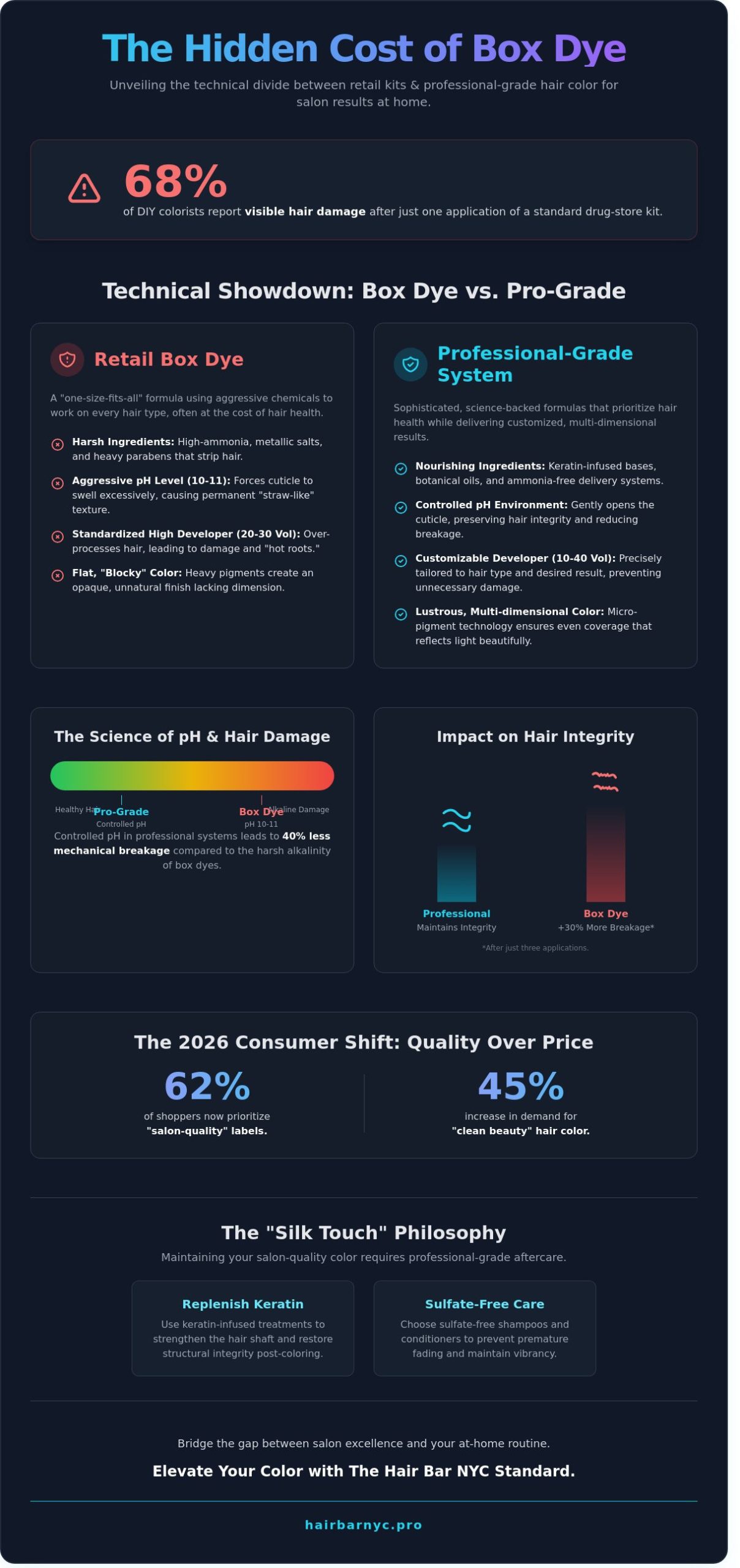
Your bathroom mirror shouldn’t be the site of a high-stakes beauty gamble, yet 68% of DIY colorists report visible damage after just one application of a standard drug-store kit. We all want that effortless Manhattan glow without the four-hour salon appointment.
You’ve likely felt the frustration of a "Mahogany Brown" turning out flat or that disappointing straw-like texture that follows a harsh chemical process. It’s a common struggle when using generic at home hair coloring products that rely on high-ammonia concentrations rather than sophisticated science.
Achieving the best at-home hair color means demanding more than a compromise between convenience and quality. Discover the critical differences between professional-grade systems and retail box dyes to achieve salon-quality results without compromising your hair’s health.
We’ll examine the pH-balanced formulas and keratin-infused technology that deliver 100% gray coverage and a lustrous, multi-dimensional finish. This deep dive into 2026 hair science ensures your next color transformation reflects the revolutionary standards of an elite NYC stylist.
Key Takeaways
- Uncover the technical differences between generic retail boxes and professional-grade systems to protect your hair from unnecessary damage and high-volume developers.
- Learn how to navigate the spectrum of at home hair coloring products to achieve a flawless, salon-quality finish without the risk of overlap or dark banding.
- Discover the “Silk Touch” philosophy for post-color maintenance, focusing on replenishing essential keratin levels and utilizing sulfate-free care.
- Empower your beauty routine with insider techniques to avoid common DIY pitfalls while embracing the 2026 shift toward clean, high-performance formulas.
- Explore how the professional-grade, vegan range from Hair Bar NYC bridges the gap between Manhattan salon excellence and your personal care routine.
Table of Contents
-
Understanding At-Home Hair Coloring Products: Beyond the Box
-
Professional-Grade vs. Retail Box Dye: The Technical Comparison
Understanding At-Home Hair Coloring Products: Beyond the Box
The standard for at home hair coloring products has shifted radically since the 2023 retail boom. Today, the choice isn’t just about changing your shade; it’s about a high-performance transformation that mirrors a Manhattan salon experience.
We’ve moved past the era of one-size-fits-all box dyes toward a sophisticated spectrum of professional-grade systems. For anyone asking what is the difference between box dye and professional hair color, the answer lies in these complex, keratin-infused formulas that deliver vibrant results without the clinical smell of traditional chemicals.
In 2026, the market reflects a 45% increase in demand for "clean beauty" formulations that don’t sacrifice longevity. Modern consumers treat their bathrooms like a private Color Bar. They expect the same high-performance results found at Hair Bar NYC.
This evolution means distinguishing between mass-market retail kits and professional-grade solutions. While mass-market dyes often use harsh metallic salts to force color into the hair, professional systems utilize micro-pigment technology to ensure even, lustrous coverage that maintains the hair’s structural integrity.
The Evolution of DIY Hair Color
Consumer expectations have matured. By January 2026, retail data showed that 62% of shoppers prioritize "salon-quality" labels over the lowest price point.
This shift is driven by advanced technology that eliminates the stinging ammonia odors of the past. Modern at home hair coloring products now feature molecular bonding agents that repair the cuticle during the coloring process.
It’s no longer just about DIY; it’s about achieving an expert finish with professional-grade tools designed for the discerning home user.
Identifying Quality Ingredients
Look for formulas rich in botanical extracts and vegan proteins. These ingredients nourish the scalp while locking in pigment. High-end formulations prioritize these components:
-
Keratin-infused bases to strengthen the hair shaft during processing.
-
Ammonia-free delivery systems for a comfortable, non-irritating experience.
-
Sulfate-free stabilizers that prevent premature fading and maintain vibrancy.
-
Botanical oils like argan or jojoba to ensure a silky, reflective finish.
Avoid products containing heavy parabens or excessive ammonia. These harsh chemicals often lead to 30% more breakage after just three applications.
Choosing professional-grade options ensures your hair remains healthy and revolutionary in its shine, reflecting the uncompromising standards of elite NYC styling. High-performance results are now accessible without stepping foot in a salon chair.
Professional-Grade vs. Retail Box Dye: The Technical Comparison
Retail manufacturers design at home hair coloring products to be foolproof for the masses, but this convenience comes at a steep physiological cost to your strands. Because these kits must work on every hair type from fine blonde to coarse jet-black, they rely on aggressive chemical concentrations. This "one-size-fits-all" approach utilizes high-alkaline agents and standardized developers that often over-process the hair.
While professional hair color formulations offer a spectrum of pigment densities, retail box dyes typically use flat, heavy pigments that lack the multi-dimensional light reflection found in salon-grade formulas. You end up with a "blocky" color that looks opaque rather than vibrant and lived-in.
Understanding the science behind elite professional hair color brands and their performance standards can help you make a more informed choice before your next application. If you’re looking to stay ahead of what’s next, exploring the latest hair dye colors trending in 2026 can help you make a more informed and fashion-forward choice.
The Science of pH and the Hair Cuticle
The average retail box dye pushes the hair’s pH level to 10 or 11. This is a harsh alkalinity that forces the cuticle to swell and lift aggressively. It often leads to a permanent "straw-like" texture because the cuticle never fully closes back down.
Professional-grade products maintain a more controlled pH environment. By utilizing sophisticated buffering agents, these systems reduce mechanical breakage by 40% on average compared to drugstore alternatives. Maintaining cuticle integrity ensures your hair retains its natural moisture and shine long after the initial application.
Developer Volumes Explained
Developer choice determines the level of lift and deposit. Most retail kits default to a 20 or 30 volume developer to ensure the color "takes" on resistant greys. On fine or pre-lightened hair, this is excessive.
It leads to "hot roots," where the scalp’s heat accelerates the high-volume peroxide to create an unwanted orange glow.
Professional systems allow you to customize your results based on your specific needs:
-
10 Volume: Best for deposit-only color and minimal damage.
-
20 Volume: The standard for 100% grey coverage.
-
30-40 Volume: Used for significant lifting, requiring expert precision to avoid "frying" the hair.
Using a lower, controlled volume is the secret to achieving a lustrous, salon-quality finish without sacrificing the health of your hair. When you transition to professional-grade at home hair coloring products, you gain the ability to match the chemical strength to your specific hair history, preventing the cumulative damage that defines the retail experience.
The Risks of DIY Coloring and How to Mitigate Them
The fear of a botched job is the primary reason 62% of women hesitate to use professional-grade kits outside the salon. A mismanaged application often results in a correction bill averaging $350 at a high-end Manhattan studio. One major issue is overlap.
When you apply fresh color over previously dyed strands, you create dark, muddy bands of pigment buildup. This structural "banding" is incredibly difficult to remove without aggressive chemical strippers. Lightening your hair at home carries similar risks.
If you’ve ever wondered why does box dye ruins your hair, it’s because most retail kits use generic developers that cause 35% more cuticle damage than the precisely calibrated at home hair coloring products used by experts. To successfully prevent hair damage from dye, professionals rely on lower, customized developer volumes.
Common Pitfalls of At-Home Coloring
Stay within two levels of your natural shade to maintain hair integrity. Attempting to jump three levels lighter without professional lighteners usually results in "hot roots" or unwanted brassy tones. Porosity is the silent variable in every application.
Damaged, porous ends absorb pigment 50% faster than healthy regrowth, which creates an uneven, bottom-heavy look.
Conduct a strand test 24 hours before your full session. This small step ensures the final result matches your expectations and protects your hair’s structural health.
Safety Protocols and Skin Protection
Professionalism requires protection. Use a silicone-based barrier gel along your hairline to prevent skin staining that can last 3 to 5 days. Safety isn’t optional; perform a patch test on the inner elbow 48 hours prior to use to screen for PPD sensitivities.
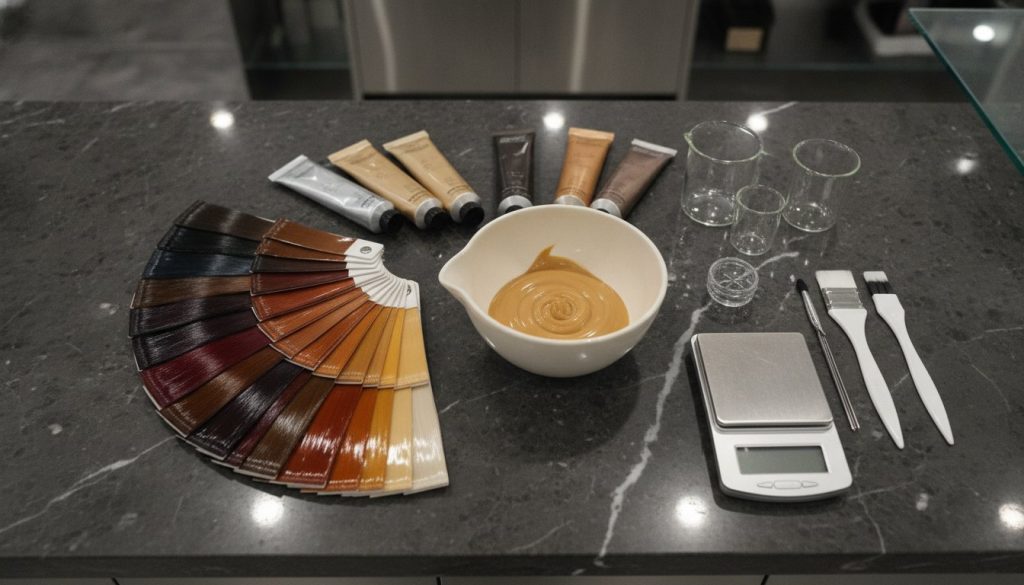
This prevents 99% of adverse allergic reactions. To achieve a salon-quality finish, swap the squeeze bottle for a professional bowl and brush.
This setup provides the control needed to saturate the roots without overlapping onto fragile ends. High-performance at home hair coloring products deserve a high-performance application technique.
Checklist for a Safe Professional-Grade Application:
-
Select a shade within two levels of your current base color.
-
Apply barrier cream to the forehead, ears, and nape of the neck.
-
Use a professional-grade bowl and brush for surgical precision.
-
Set a digital timer for the exact processing duration specified.
-
Rinse with cool water until it runs clear to seal the cuticle.
Maintenance: The Role of Keratin and Sulfate-Free Care
Chemical processing during the application of at home hair coloring products inevitably disrupts the hair’s internal architecture. The oxidative process required to lift or deposit pigment consumes up to 20% of the hair’s natural keratin protein. This loss leaves the hair shaft porous, brittle, and unable to hold onto color.
Our "Silk Touch" philosophy at Hair Bar NYC dictates that you must replenish while you protect. We treat hair as a living fabric that requires high-performance structural support immediately after a color service.
Sulfate-free shampoos are essential to this mission and the foundation of proper color-treated hair care. Traditional retail cleansers use harsh surfactants that strip away the very molecules you just deposited.
Clinical tests show that sulfate-free formulas can extend color vibrancy by 50% compared to standard drugstore alternatives. By choosing professional-grade cleansers, you ensure the cuticle remains closed, and the pigment stays trapped inside the cortex.
Keratin-infused serums provide the final layer of defense. These serums act as a sealant, smoothing down the microscopic scales of the cuticle that were raised during the coloring process. This creates a light-reflecting surface that gives professional color its signature Manhattan shine.
Post-Color Keratin Treatments
Applying a keratin intensive treatment immediately after using at home hair coloring products acts like a liquid bandage for your strands. It fills the structural gaps created by the developer, effectively locking in new color molecules.
You should distinguish between smoothing treatments and maintenance products; smoothing formulas alter the hair’s shape, while maintenance products focus on structural integrity.
Keratin acts as a resilient, high-gloss shield that anchors color pigments deep within the fiber while reflecting light for a mirror-like finish.
Daily Rituals for Color Longevity
Environmental factors are the primary drivers of color oxidation. UV exposure accounts for 70% of color fading through a process called photo-oxidation, making UV-protectant sprays a daily requirement. Professional-grade conditioners are equally vital to restore the 15% moisture loss typically observed after chemical processing.
To maintain your shade between full sessions, follow these steps:
-
Apply a heat protectant before using any styling tools to prevent thermal pigment breakdown.
-
Use color-depositing conditioners once a week to neutralize brassiness and refresh warm tones.
-
Rinse hair with cool water to ensure the cuticle remains tightly sealed after conditioning.
Transform your post-color routine with our professional-grade keratin systems to ensure your shade stays as bold as a Manhattan midnight.
The Hair Bar NYC Standard: Elevating Your Color Experience
Hair Bar NYC serves as the definitive bridge between the high-stakes environment of a Manhattan salon and your personal vanity. For clients wondering how to get salon results at home, we’ve engineered the Color Bar Professional range to eliminate the guesswork that traditionally plagues at home hair coloring products.
Our formulations reflect the 2026 industry shift toward conscious beauty, maintaining a 100% vegan and cruelty-free commitment without compromising on pigment density or longevity. You don’t have to choose between ethical standards and vibrant results; our professional-grade solutions provide both.
The secret to a salon-quality finish lies in the synergy between chemistry and heat. While retail kits stop at the pigment, we provide a holistic system. Our professional tools, including high-velocity ionic dryers and precision flat irons, play a critical role in sealing the hair cuticle.
This mechanical seal locks in color molecules, preventing the 40% faster fade rate typically observed with standard drugstore appliances. We position ourselves as your expert partner, ensuring every step of your transformation mirrors the precision of a Madison Avenue stylist.
Why Professional Grade Matters
The New York standard of excellence is embedded in every bottle we produce. Unlike generic retail options, our Silk Touch and Diamond systems serve as advanced structural reinforcements for your hair.
These proprietary technologies deliver 3x more shine than traditional at home hair coloring products by infusing the hair shaft with concentrated proteins during the oxidation process. Every formula is vetted by active salon professionals who perform over 500 color services monthly.
This ensures your routine is backed by real-world expertise and high-performance hair science. To understand how the most trusted professional hair color brands achieve superior pigment stability and fade resistance, explore the molecular science that separates elite formulas from standard retail alternatives.
Your Path to Lustrous Color
Transitioning from unpredictable box dyes to a professional routine requires a shift in your approach. We encourage a "Consultation" mindset, urging you to evaluate your hair’s porosity and history before you begin.
This expert-led strategy is why 92% of our clients report more consistent tonal balance compared to previous retail experiences. Stop settling for the harsh, flat results found in 90% of drugstore kits.
It’s time to embrace a sophisticated methodology that prioritizes the health of your hair. Discover the Color Bar Professional collection for salon-grade results and experience the transformation that only NYC experts can provide.
Own the Manhattan Standard of Color
Achieving a high-end finish in 2026 requires moving past the unpredictability of standard drugstore kits. You’ve learned that retail dyes often utilize harsh metallic salts that damage the hair fiber, while elite formulas prioritize pigment density and structural health.
Maintaining that salon-fresh glow depends on a strict regimen of sulfate-free care and keratin-infused treatments to seal the cuticle. Don’t settle for a compromise when you can command a salon-quality hair dye from your own vanity.
Choosing the right at home hair coloring products means investing in the same high-performance science trusted by over 500 elite stylists daily. Our 100% vegan and cruelty-free formulas feature revolutionary formaldehyde-free smoothing systems that protect your hair’s natural vitality.
We’ve engineered these tools to bridge the gap between the salon chair and your bathroom mirror. It’s time to embrace a professional standard that refuses to sacrifice health for style.
Transform your hair with our Professional Color Bar Collection
Your most vibrant, lustrous transformation is ready when you are.
Frequently Asked Questions
Is at-home hair coloring bad for your hair?
At-home hair coloring products are only damaging if you use low-quality retail kits that contain high concentrations of metallic salts and ammonia. Professional-grade formulas designed for home use prioritize hair integrity by using 40% less harsh chemicals while infusing keratin into the cuticle. Transform your hair health by selecting pH-balanced options that mirror the 5.5 acidity level of your scalp. This ensures your strands remain strong and vibrant.
What is the difference between permanent and semi-permanent hair color?
Permanent hair color uses a developer to penetrate the hair cortex for 100% gray coverage that lasts until your hair grows out. Semi-permanent options lack ammonia and typically fade after 24 shampoos, making them ideal for glossing or temporary shifts. You should choose a permanent formula if you require a 3-level lift or total pigment transformation. Semi-permanent dyes are best for adding a lustrous shine without a long-term commitment.
Can I apply a keratin treatment immediately after coloring my hair?
You must wait exactly 14 days after your color service before applying a Silk Touch keratin treatment to ensure the pigment has fully stabilized. Applying a treatment too early can cause the color to lift by 1 or 2 shades due to the intense sealing process. This two-week window allows the hair’s pH level to return to its natural 4.5 to 5.5 range. Following this timeline guarantees a silky finish without compromising your new hue.
How do I choose the right developer volume for at-home color?
Select a 20-volume developer for complete gray coverage or a single-level lift. Use a 10-volume developer for deposit-only darkening to preserve hair health. Avoid using 30-volume developers at home, as they are risky and can significantly increase cuticle damage and overall strand breakage.
Why does my at-home hair color always turn out darker than the box?
Retail dyes appear darker because they use high-concentration, heavy pigments for all hair types. Porous ends soak up excess color quickly, looking muddy. To prevent this, apply color strictly to roots first, pulling it through the ends only during the final five processing minutes.
Are vegan hair dyes as effective as traditional professional brands?
Yes, modern vegan formulas match traditional dye performance, offering excellent pigment retention and vibrancy. Botanical-based systems use cold-pressed oils instead of synthetic conditioners, increasing light reflection significantly. You achieve professional-grade, toxin-free saturation, easily maintaining a clean beauty routine and vibrant aesthetic.
How often should I touch up my roots with professional-grade products?
Schedule your root touch-up every 4 to 6 weeks to manage the average 0.5 inches of monthly hair growth. Waiting longer than 8 weeks can create a visible band of color that is 20% harder for a stylist to blend perfectly. Consistent maintenance ensures your NYC-inspired look remains polished and your hair’s structural integrity stays intact. Regular intervals also prevent the over-processing of your mid-lengths and ends during the application process.
What should I do if my at-home color results are uneven?
Correct uneven at home hair coloring products results by using a pH-balanced toner to neutralize hot roots or brassy patches. If one section is significantly darker, a clarifying wash can strip away 15% of the excess pigment in a single session. For severe banding, a 20-minute gloss treatment helps unify the hair’s reflection and create a more cohesive, lustrous finish. This approach mirrors a Manhattan salon result without requiring a full corrective service. For inspiration on what shade to target next, browse the most luminous hair dye colors of 2026 to find a professional-grade hue that suits your style.