Reducing Chemical Exposure in the Salon: The Expert Stylist’s Guide to Clean Performance
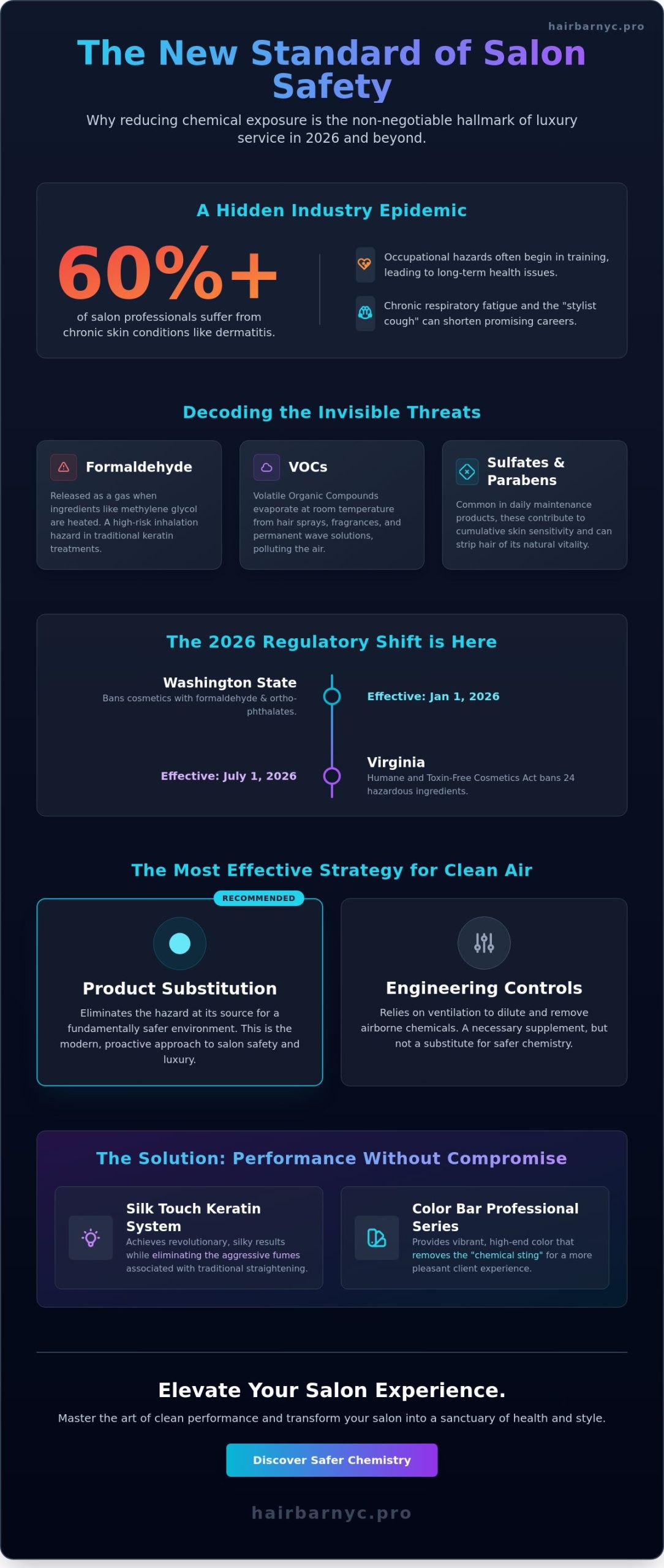
Over 60% of salon professionals suffer from chronic skin conditions like dermatitis, often starting as early as their first days in training. While the industry has long accepted these health risks as the price of high-performance beauty, the modern elite stylist knows that compromise is no longer an option. Reducing chemical exposure in the salon isn’t just a health necessity; it’s a strategic move to preserve the sophisticated, luxury atmosphere your high-end clientele demands. You shouldn’t have to choose between a revolutionary Silk Touch Keratin result and the air quality of your workspace.
We understand the frustration of respiratory irritation and the lingering chemical scents that can instantly shatter an aspirational salon experience. You want to provide vibrant, silky hair while maintaining a safe, professional-grade environment for your staff and guests. This guide will show you exactly how to master the art of clean performance without losing the technical edge of professional treatments. We’ll detail the latest 2026 regulatory shifts from Washington to Virginia and introduce the safer chemistry that will transform your salon into a sanctuary of health and style.
Key Takeaways
- Understand why reducing chemical exposure in the salon has become the new hallmark of luxury service and a non-negotiable professional standard in 2026.
- Discover why high-performance product substitution is a more effective strategy for air quality than relying solely on salon ventilation systems.
- Master the “Lid-On” protocol and dermal protection techniques to significantly lower the risk of respiratory irritation and skin sensitivity.
- Learn how the Silk Touch Keratin System achieves revolutionary, silky results while eliminating the aggressive fumes associated with traditional straightening.
- Explore the Color Bar Professional series to provide vibrant, high-end color that removes the “chemical sting” for a more pleasant client experience.
The Reality of Salon Air Quality: Why Exposure Reduction is a 2026 Priority
In the high-stakes world of Manhattan hair care, the atmosphere of your salon is as much a part of your brand as the results you deliver. Chemical exposure in this environment refers to the inhalation or skin contact with Volatile Organic Compounds (VOCs) and synthetic fumes that permeate the air during intensive treatments. Volatile Organic Compounds (VOCs) in salons are carbon-based chemicals that easily evaporate at room temperature, originating primarily from hair sprays, permanent wave solutions, and synthetic fragrances found in professional-grade styling products. For the elite stylist, reducing chemical exposure in the salon has moved from a background concern to a 2026 priority. It’s about protecting the talent behind the chair and the discerning clients who sit in it.
A clean-smelling salon is now a hallmark of high-end service. Clients no longer tolerate the sharp, stinging odor of traditional ammonia or formaldehyde. They expect a luxury sanctuary, not a chemical laboratory. This shift toward transparency and clean beauty means your salon’s scent profile directly impacts your perceived brand quality. If a client leaves with a headache from fumes rather than just a vibrant new look, the luxury experience has failed. High-performance chemistry must now be invisible to the nose while remaining visible in the mirror.
The Sensory Impact of Salon Chemicals
Strong chemical odors instantly signal a lack of modern sophistication. As we move through 2026, client expectations have evolved toward wellness-centric luxury. They want to know that their Silk Touch Keratin treatment is as safe as it is transformative. Transforming your workspace into a luxury sanctuary requires a proactive approach to air quality. When you eliminate the “chemical sting,” you elevate the sensory experience, making your salon a place where clients can truly relax and revitalize.
Stylist Health and Career Longevity
Long-term career longevity depends on managing the cumulative effect of daily exposure. Research shows that over 60% of salon workers report suffering from skin conditions like dermatitis, often beginning during their initial training. These occupational hazards in cosmetology can lead to respiratory fatigue and the dreaded “stylist cough,” driving top-tier talent away from traditional environments. Top-tier stylists are migrating toward salons that prioritize their physical health. Reducing sick days and lowering staff turnover are the direct economic benefits of a cleaner, safer workspace. By choosing professional-grade solutions that respect the body, you ensure your team stays vibrant and productive for years to come.
Decoding the ‘Big Offenders’: Ingredients to Re-evaluate
To achieve the high-performance results of a Manhattan salon, stylists have historically relied on aggressive chemistry. However, the path to reducing chemical exposure in the salon begins with a technical audit of your backbar. Truly formaldehyde-free formulas contain no traces of the chemical, whereas formaldehyde-releasing agents rely on preservatives that decompose into formaldehyde gas when exposed to water or heat. While these ingredients offer temporary smoothing, the health trade-off is no longer acceptable in a modern, luxury environment. As of January 1, 2026, Washington State has already enforced the removal of cosmetic products containing formaldehyde and ortho-phthalates, signaling a permanent shift in the industry.
Beyond smoothing agents, we must look at the daily chemical load. Sulfates and parabens in daily maintenance products contribute significantly to the total exposure for both the stylist and the client. These ingredients can lead to cumulative skin sensitivity and strip the hair of its natural vitality. If you’re ready to elevate your inventory, explore the professional-grade systems designed for the modern expert who refuses to compromise on safety or style.
The Formaldehyde Debate in Smoothing Systems
Traditional keratin treatments often rely on methylene glycol or formalin to cross-link hair proteins. When you apply a professional flat iron at high temperatures, these liquids transform into formaldehyde gas, creating a high-risk inhalation zone. Identifying “hidden” formaldehyde is crucial; look for terms like methanal or oxymethylene on labels. Virginia’s Humane and Toxin-Free Cosmetics Act, effective July 1, 2026, bans 24 hazardous ingredients, making it essential to transition to safer, high-performance smoothing technology now.
Ammonia and the Scalp Microbiome
Ammonia has long been the industry standard for opening the hair cuticle to deposit color, but its high pH often comes with a sharp, aggressive sting. This chemical can disrupt the scalp microbiome, leading to chronic itching or sensitization over time. Modern professional hair color brands now achieve vibrant, long-lasting results using alkaline alternatives that don’t produce the same toxic fumes. By switching to ammonia-free or low-ammonia formulas, you protect the client’s scalp health while maintaining the revolutionary color depth your brand is known for. Supporting the scalp after a service with botanical extracts ensures the hair remains lustrous and the skin stays resilient.
Engineering Control vs. Product Substitution: A Modern Comparison
Managing a luxury salon in 2026 requires a shift from reactive safety measures to proactive chemical management. Traditionally, salons have relied on “Engineering Controls” like advanced ventilation to mitigate risks. While these systems are essential, they focus on managing the hazard after it has already entered your workspace. In contrast, “Product Substitution” focuses on eliminating the hazard at the source. For the elite stylist, reducing chemical exposure in the salon is most effectively achieved by choosing products that don’t produce toxic fumes in the first place. It’s the difference between trying to vacuum up smoke and never lighting the fire.
Even the most sophisticated HVAC systems struggle to capture 100% of fumes during a high-heat blowout. When a flat iron hits hair treated with traditional chemicals, the resulting gas is released directly into the breathing zone of both the stylist and the client. A 2025 systematic review found that 71% of salons had inadequate ventilation, with many exceeding OSHA limits for volatile organic compounds. Upgrading a full-scale HVAC system to industrial standards is a massive capital investment with high maintenance costs. Conversely, switching to cleaner, professional-grade formulas provides an immediate, cost-effective health upgrade without the need for a construction crew.
Ventilation Best Practices
Source capture systems, which use flexible ducts to pull air away from the styling chair, are a step in the right direction. However, they can be cumbersome and often fall short during active styling. To maintain a premium environment, combine these with HEPA-grade air filtration and intentional cross-ventilation. Ensure your maintenance schedule includes monthly filter checks; clogged filters don’t just waste energy, they allow VOC concentrations to build to unacceptable levels. A clean-smelling salon is your first indicator of technical excellence.
The Power of Professional Grade Substitution
The most revolutionary move you can make is implementing a formaldehyde free keratin treatment as your primary smoothing service. Modern vegan smoothing systems now rival traditional formulas in longevity and shine, offering a lustrous finish without the “chemical sting.” By substituting aggressive chemistry with botanical extracts and advanced protein cross-linking, you simplify OSHA compliance and safety protocols instantly. This strategy protects your team’s respiratory health while ensuring your clients enjoy a truly high-end, vibrant experience that feels as good as it looks.
The Professional Protocol for a Low-Toxic Salon
Elevating your salon’s safety standards requires more than just better products; it demands a rigorous operational protocol. Implementing these daily habits is the most practical path toward reducing chemical exposure in the salon while maintaining the high-performance results your clients expect. A sophisticated salon environment is defined by its attention to detail, and that includes the invisible air quality surrounding your team. By standardizing how chemicals are handled from the moment they’re opened to the moment they’re disposed of, you create a culture of excellence and wellness.
Adopt a strict “Lid-On” policy for every color bowl and chemical container. VOCs evaporate rapidly when exposed to air, turning your mixing station into a concentrated source of fumes that can lead to respiratory fatigue. Beyond immediate handling, establish a digital database for Safety Data Sheets (SDS) accessible to every stylist via tablet or smartphone. This ensures your team understands the technical profile of every product, from the Silk Touch Keratin system to the developer in their bowl. Knowledge is the foundation of a safe, high-end workspace.
PPE for the Modern Stylist
Nitrile gloves are the gold standard for the modern expert. Unlike latex, which can be porous and prone to tearing, nitrile provides a superior barrier against the complex chemistries found in elite professional hair color brands. This prevents dermal absorption, protecting your hands from the long-term sensitivity issues that often plague the industry. During high-heat smoothing services, specialized masks with carbon filters offer an extra layer of respiratory defense. Always utilize high-quality salon capes to ensure no residue reaches the client’s skin or the stylist’s clothing, maintaining the pristine standards of a Manhattan studio.
Smart Mixing and Disposal
Precision is your best ally against toxicity. Use a professional mixing bowl and brush set to measure products accurately, which reduces both waste and the release of airborne particles. When you minimize excess product, you minimize the volume of fumes released during the service. Organize your “Color Bar” to maximize airflow, ensuring that concentrated fumes don’t linger in high-traffic areas. Dispose of chemical-soaked towels and foils in sealed bins immediately. This simple step prevents the secondary release of fumes back into the salon atmosphere, keeping the air fresh and the experience luxurious.
Ready to lead the industry in clean performance? Upgrade your backbar with professional-grade tools designed for the precision-focused stylist.
The Hair Bar NYC Standard: Performance Without Compromise
At Hair Bar NYC, we believe that the pinnacle of Manhattan style should never come at the expense of your health. While many industry discussions focus on managing fumes through complex ventilation, our philosophy centers on eliminating the hazard at the source. Reducing chemical exposure in the salon is a core pillar of our professional standard. We’ve engineered a proprietary suite of treatments that bridge the gap between rigorous hair science and botanical purity. This is the new era of elite hair care: where revolutionary results and a clean, luxury atmosphere coexist seamlessly.
Our Color Bar Professional series is a testament to this commitment. We’ve formulated our colors to eliminate the aggressive “chemical sting” and overwhelming ammonia scents that often define the coloring experience. Instead, your clients enjoy a vibrant, high-shine transformation in a workspace that feels like a sanctuary. By prioritizing safer chemistry, you aren’t just following 2026 regulations; you’re positioning your salon as a premier destination for health-conscious luxury. It’s time to join the elite network of stylists who refuse to compromise on performance or safety.
Silk Touch: The Evolution of Smoothing
The Silk Touch Keratin System represents a masterclass in clean performance. This 100% vegan, formaldehyde-free formula is designed to deliver the lustrous, silky results expected of a New York studio without the toxic trade-offs. The sensory experience is immediate: there are no stinging fumes, no watery eyes, and no respiratory irritation during the blowout. Because the air remains clear, stylists can perform multiple services in a single day without the physical fatigue associated with traditional chemical treatments. It’s a professional-grade solution that empowers you to work at your highest level while protecting your long-term career longevity.
Curating a Clean Professional Kit
Maintaining a low-toxic environment extends beyond the treatment itself. A truly clean professional kit includes daily maintenance tools like Silk Touch Shampoo and Silk Touch Conditioner, which are sulfate-free and paraben-free to preserve the hair’s vibrant health. Precision also matters in your hardware. Using a professional flat iron with exact temperature control ensures that you’re sealing the cuticle without unnecessary heat-induced off-gassing. When you combine our Keratin Infused Serum with high-performance styling tools, you create a proprietary routine that clients simply can’t find elsewhere.
- Transform your backbar with our Diamond and Silk Touch systems.
- Revitalize your salon air quality to attract top-tier talent and discerning clients.
- Discover the power of botanical extracts paired with professional-grade science.
Join the movement toward a healthier, more sophisticated salon culture. By adopting the Hair Bar NYC standard, you’re not just reducing chemical exposure in the salon; you’re setting a new benchmark for excellence in the world of elite hair care.
Elevating the New Standard of Salon Excellence
Mastering the balance between technical results and air quality is the hallmark of the modern elite stylist. By moving from reactive engineering controls to proactive product substitution, you secure a future where luxury and wellness coexist. We’ve seen how the “Lid-On” protocol and a shift toward ammonia-free chemistry can protect your team’s longevity. Ultimately, reducing chemical exposure in the salon is about more than just compliance; it’s about curating a sophisticated sanctuary that respects both the artist and the client.
Hair Bar NYC is proud to support the expert community with professional-grade solutions used by elite stylists throughout New York and Florida. Our cruelty-free and vegan-certified formulas leverage advanced formaldehyde-free technology to deliver the lustrous, vibrant hair your brand is known for. Discover the Silk Touch System and elevate your salon’s safety standard today.
You have the opportunity to redefine what it means to be a high-performance studio. By embracing clean chemistry, you don’t just follow the industry’s evolution; you lead it. Transform your chair into a destination for health-conscious luxury and let your technical talent shine in an environment that’s as fresh as the styles you create.
Frequently Asked Questions
Is it possible to have a 100% chemical-free professional salon?
No, because every substance, including water and botanical extracts, is technically a chemical compound. Instead of chasing an impossible “chemical-free” label, elite salons focus on “clean performance” by eliminating hazardous synthetic fumes and known carcinogens. This transition involves substituting aggressive traditional formulas with professional-grade alternatives that deliver revolutionary results without compromising the air quality of your workspace.
How do I know if a keratin treatment is truly formaldehyde-free?
You must audit the Safety Data Sheet (SDS) and ingredient list for hidden donors such as methylene glycol, formalin, or methanal. Truly formaldehyde-free formulas, like the Silk Touch Keratin Treatment, use advanced protein cross-linking technology that doesn’t release toxic gas when heated. If a treatment doesn’t cause a “chemical sting” in your eyes or throat during the flat iron stage, it’s a strong indicator of safer chemistry.
What are the most common signs of chemical overexposure for stylists?
Stylists typically experience respiratory fatigue, a persistent “stylist cough,” or skin conditions like contact dermatitis. These symptoms often start during cosmetology school and can escalate into chronic health issues if daily exposure to Volatile Organic Compounds (VOCs) isn’t managed. Reducing chemical exposure in the salon is essential to prevent these occupational hazards and ensure long-term career longevity for the talent behind the chair.
Do vegan hair products perform as well as traditional professional brands?
Modern vegan formulas often outperform traditional brands by utilizing highly concentrated botanical extracts and advanced protein science. The Silk Touch system proves that you can achieve lustrous, silky results without relying on aggressive animal-derived ingredients or harsh synthetic preservatives. These revolutionary products offer the high-end performance Manhattan clients expect while maintaining a safer, more ethical workspace for the modern expert.
How can I improve ventilation in my salon without a major renovation?
You can instantly improve air quality by implementing source capture systems and placing portable HEPA-grade air purifiers at each styling station. Reducing chemical exposure in the salon is also achieved through simple behavioral shifts, such as keeping lids on color bowls and ensuring consistent cross-ventilation. Regular monthly maintenance of your existing HVAC filters is a cost-effective way to prevent the buildup of concentrated synthetic fumes.
What should I look for on a Safety Data Sheet (SDS) for hair color?
Focus on Section 3 to identify ammonia or p-phenylenediamine (PPD) concentrations and Section 8 for specific personal protective equipment requirements. Understanding the vapor pressure of a product helps you predict how quickly it will evaporate into the salon’s breathing zone. A thorough SDS review allows you to curate a backbar that prioritizes technical excellence while minimizing the chemical load on your staff and guests.
Can reducing chemical exposure help me attract more high-end clients?
Yes, because a clean-smelling, fume-free environment is now a hallmark of a luxury salon experience. High-end clients in 2026 prioritize wellness and transparency, often seeking out “clean performance” destinations that offer vibrant results without the detracting “chemical smell.” Positioning your salon as a sanctuary of health and style creates a competitive advantage that appeals to a discerning, health-conscious demographic.
What is the best type of glove for protecting against hair dye chemicals?
Nitrile gloves are the gold standard for protecting against the complex chemistries found in professional hair color and developers. They offer superior chemical resistance and durability compared to latex or vinyl, which can be porous and prone to microscopic tears. Using powder-free nitrile prevents dermal absorption of irritants, ensuring your hands remain resilient and healthy throughout a demanding day of intensive services.