Training Staff on New Smoothing Treatments: The Professional Salon Owner’s Guide
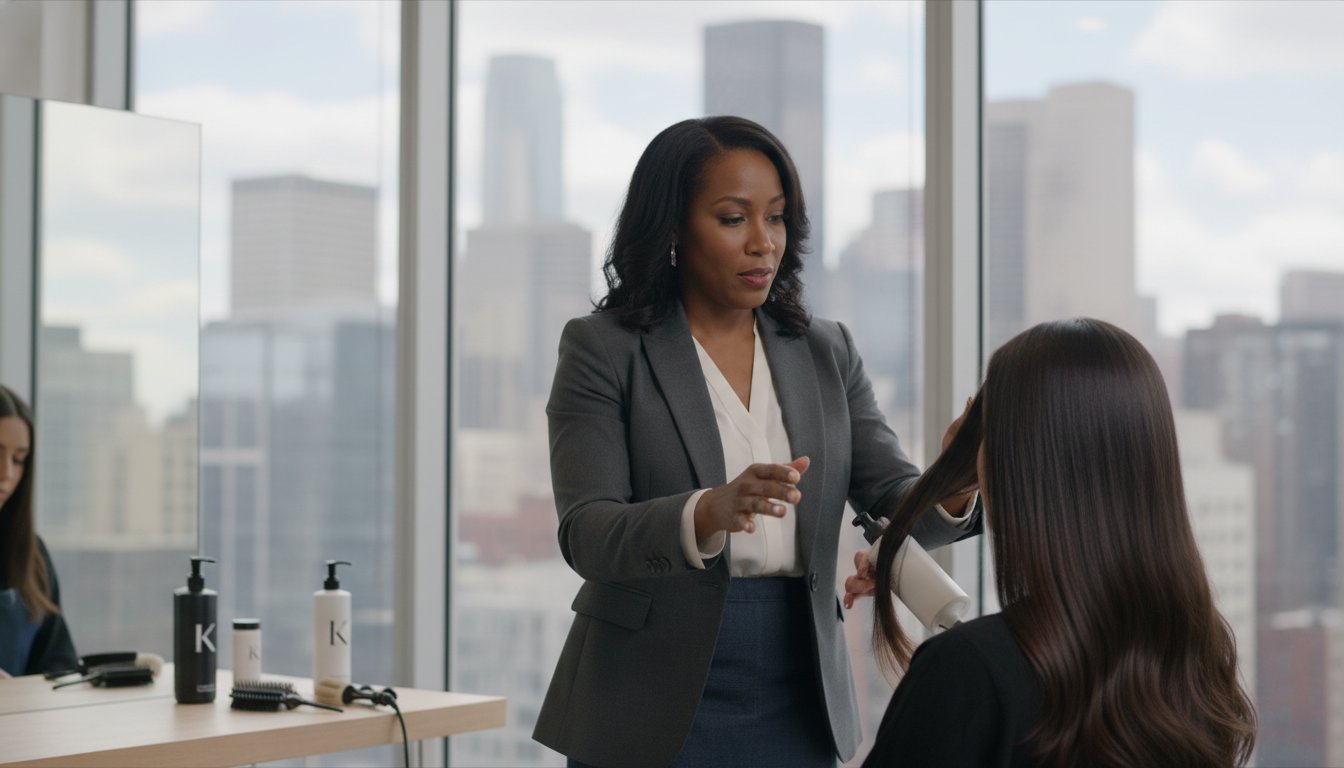
The era of compromising health for high-gloss results has officially ended. With California’s formaldehyde ban in full effect and over 11,300 lawsuits pending against traditional manufacturers as of April 2026, the shift to clean technology is the new standard for elite urban salons. Success in this landscape requires more than just stocking the Diamond Keratin Treatment; it demands a rigorous approach to training staff on new smoothing treatments to eliminate the fear of damage and those frustrating, inconsistent results across your team.
You’ve likely felt the tension when a stylist hesitates to learn a new chemical process or worries about a potential client complaint. We’ll show you how to implement a professional onboarding system for modern, formaldehyde-free formulas that ensures technical excellence and drives salon profitability. This guide provides a strategic roadmap for technical mastery, safety protocols, and the expert consultation techniques needed to turn every service into a signature, high-end experience.
Key Takeaways
- Transition from outdated, toxic formulas to sophisticated, clean beauty systems that prioritize both hair health and high-end results.
- Build a phased curriculum for training staff on new smoothing treatments that bridges the gap between scientific theory and expert-led application.
- Empower your stylists to lead elite consultations, using hair history assessments to identify the perfect candidates for systems like the Silk Touch Keratin Treatment.
- Refine technical execution through precision sectioning and strategic heat management to guarantee a flawless, frizz-free canvas for every client.
- Scale your salon’s profitability by implementing quality control checklists and teaching your team to seamlessly integrate retail recommendations into the service flow.
The Evolution of Smoothing: Why Your Team Needs Modern Training
The landscape of professional hair care has shifted permanently. For years, the smoothing category was defined by aggressive chemicals and the distinct, pungent odor of formaldehyde. Today, that legacy is being dismantled. The History of Hair Straightening Techniques shows a clear progression from primitive, often damaging methods to the sophisticated molecular science we use now. As a salon owner, you know that the “old way” of applying treatments; characterized by heavy fumes and excessive saturation; simply doesn’t translate to the vegan, high-performance formulas of today. Training staff on new smoothing treatments is the only way to bridge this gap between legacy habits and modern luxury results.
Legacy training methods often fail because they don’t account for the delicate chemistry of modern, plant-based proteins. If a stylist treats a sophisticated formula like a traditional relaxer, the results will be inconsistent at best. Your team needs to understand that modern smoothing is an art of precision rather than brute force. By establishing a rigorous education standard, you ensure that every stylist on your floor can deliver the same elite experience, regardless of the client’s hair texture or history.
The Shift to Formaldehyde-Free Standards
Health is the new wealth in the metropolitan salon environment. Stylists are increasingly aware of the long-term risks associated with traditional aldehydes, and clients are demanding transparency. There is a massive surge in market demand for a formaldehyde free keratin treatment, reflecting a consumer base that prioritizes wellness alongside aesthetics. Modern systems, such as our Silk Touch Keratin Treatment, utilize advanced cross-linking technology rather than harsh preservatives. These “intelligent actives” work with the hair’s natural structure to provide a frizz-free canvas without the respiratory hazards. If your team relies on old-school techniques, they’ll likely see product waste or underwhelming performance. Proper training ensures they understand the chemistry behind these cleaner, high-performance alternatives.
Defining the Professional Standard of Excellence
Elite hair care is never just about a blowout. It’s a transformative therapy that requires an Expert Professional’s touch. In an upscale urban setting, clients aren’t just paying for a service; they’re investing in your salon’s reputation for safety and sophistication. Technical precision is the only way to justify premium pricing. When you focus on training staff on new smoothing treatments, you’re teaching them how to deliver flawless execution every time. This involves mastering heat management with a Professional Flat Iron and understanding how to apply the Diamond Keratin Treatment for maximal luminosity. Consistency across your team builds a brand that is chic, trend-conscious, and deeply knowledgeable. By setting these high standards, you position your salon as a leader in the evolution of safe, sophisticated hair care.
Designing a Comprehensive Staff Training Curriculum
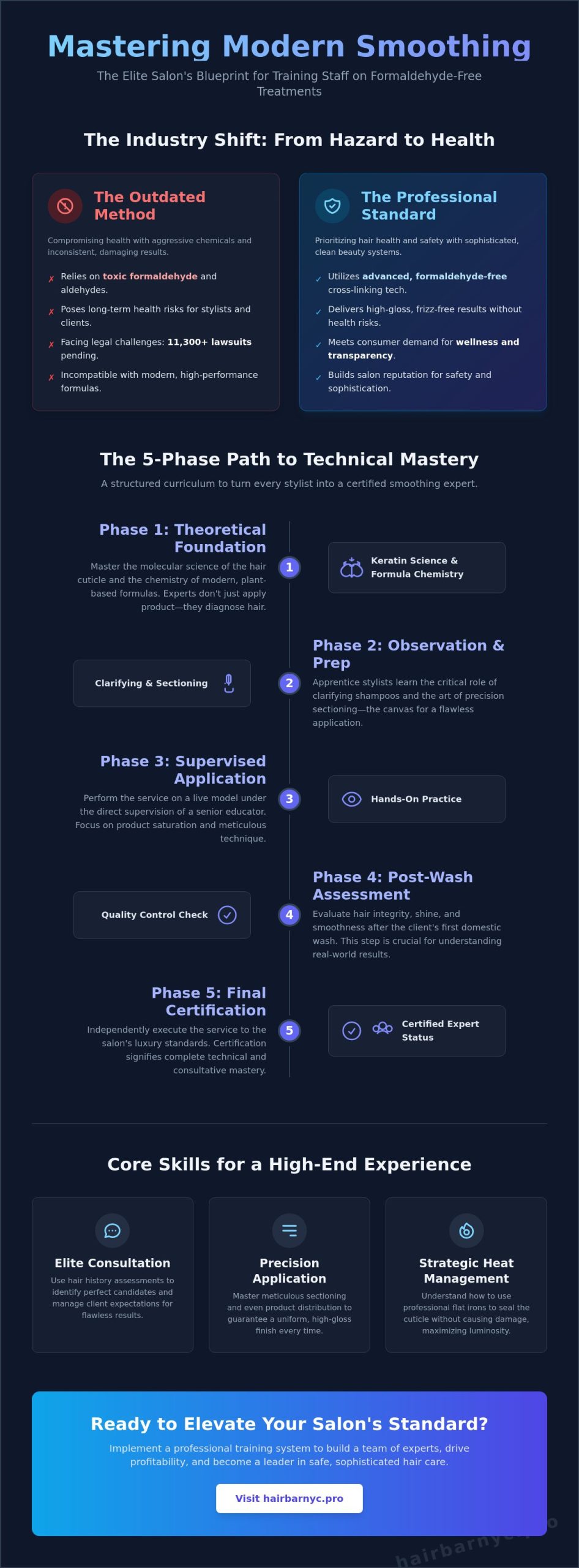
Creating a world-class service menu requires more than just high-end products. It demands a structured pedagogical approach. When training staff on new smoothing treatments, you can’t rely on casual observation or a single video tutorial. You need a rigorous five-phase curriculum that ensures every stylist understands the science behind the shine. This journey begins in the classroom and ends with a confident, certified expert on your salon floor. Mastery isn’t accidental; it’s the result of intentional repetition and deep scientific understanding.
- Phase 1: Theoretical foundation. Focus on the molecular science of the hair cuticle and the chemistry of modern formulas.
- Phase 2: Observation and preparation. Assistants learn the critical role of clarifying shampoos and sectioning.
- Phase 3: Supervised application. Stylists perform the service on a model under the watchful eye of a senior lead.
- Phase 4: Post-wash assessment. Evaluating the hair’s integrity and finish after the first domestic wash.
- Phase 5: Final certification. Independent execution of the service to your salon’s specific luxury standards.
The Theoretical Foundation: Keratin Science
True experts don’t just apply product; they diagnose hair. Your team must distinguish between smoothing for frizz control, straightening for texture change, and intensive repair for structural integrity. For instance, the Silk Touch Keratin Treatment focuses on high-performance organic acids, while the Diamond Keratin Treatment provides a more intensive, glass-like finish for resistant textures. Understanding hair porosity is vital here. High-porosity hair absorbs product rapidly, requiring a lighter touch to avoid over-saturation. This scientific grounding is also a safety requirement. Referencing the FDA Safety Guidelines for Smoothing Treatments helps staff explain to discerning clients why your salon chooses safer, sophisticated alternatives over outdated toxins.
Hands-On Workshops and Model Selection
Transitioning from theory to practice requires dedicated “demo days.” Watch your master stylists perform a full service while explaining their specific sectioning and product distribution. When it’s time for the team to practice, model selection is critical. Don’t just use “easy” hair. Choose a mix of coarse textures, fragile blondes, and chemically damaged strands to simulate real-world challenges. This is where troubleshooting happens. If a stylist uses too much heat on a blonde model, they learn the immediate visual cues of thermal stress in a controlled environment. If you’re looking to upgrade your salon’s technical toolkit, you might consider starting with a professional-grade kit to establish your new standard. Final certification should only be granted when a stylist can independently execute the service with zero oversight, ensuring your brand’s reputation remains uncompromising.
Mastering the Consultation: Training Staff to Manage Client Expectations
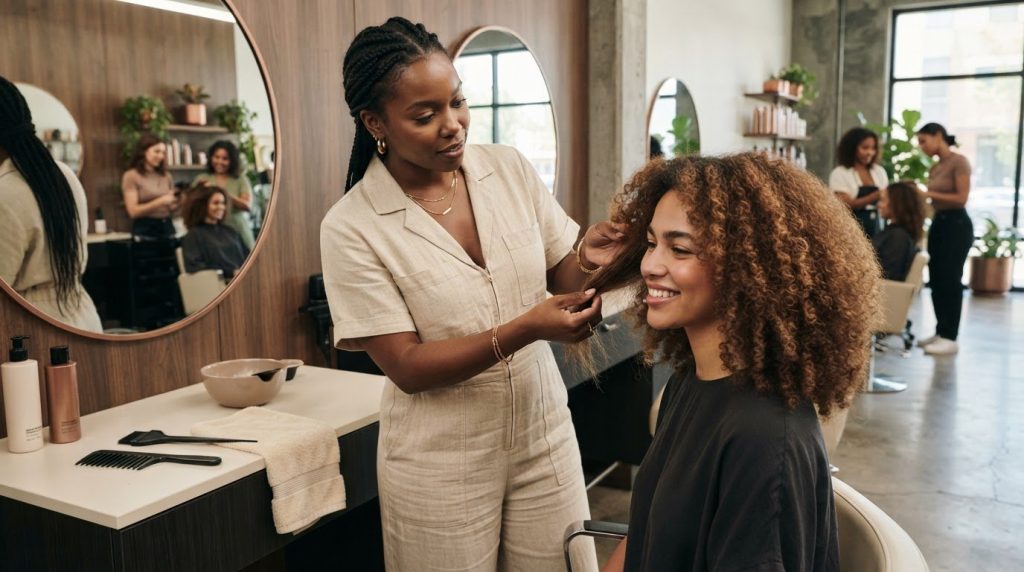
The consultation isn’t a formality; it’s a diagnostic ritual. While previous sections focused on the evolution of chemistry and the training curriculum, this phase is where the Expert Professional establishes authority. When training staff on new smoothing treatments, you must emphasize that a successful service begins long before the first wash. A stylist must act as a detective, uncovering the chemical layers of a client’s past to predict their hair’s future. This “Hair History” interview is the only way to ensure safety and satisfaction in a high-end urban environment.
Your team should lead with confidence, moving beyond surface-level questions. They need to understand the client’s daily habits, from their workout frequency to their preferred styling tools. This depth of knowledge allows the stylist to position the service as a bespoke solution rather than a generic add-on. It’s about making the client feel like an insider in the world of elite care, where their specific needs are met with scientific precision.
Matching the Treatment to the Client
Every head of hair is a unique canvas requiring a specific palette. Your team needs to know exactly when to recommend the Silk Touch Keratin Treatment over the Keratin Intensive Treatment. Silk Touch is the go-to for clients seeking a frizz-free canvas with natural movement, while the Intensive formula is a powerhouse for structural repair. For your blonde clientele, precision is non-negotiable. Training should include how to adjust iron temperatures and product volume to prevent any unwanted brassiness or yellowing. Additionally, stylists must be prepared for the growing demographic of natural hair care products users. These clients value purity and performance, so your team must explain how our clean systems enhance natural textures without compromising hair integrity.
Overcoming Common Client Objections
Elite service requires elite communication. Clients in 2026 are highly informed but often misled by marketing jargon. Your training staff on new smoothing treatments must include scripted responses to the most common concerns. When a client asks, “Is this safe?” the answer should focus on our formaldehyde-free technology and our commitment to Professional Salon Training Standards. It’s about building a bridge of trust through transparency.
Contrast our professional systems with the unpredictable results of at-home kits. Explain that the difference lies in the molecular weight of the ingredients and the technical mastery of the application. Managing expectations is equally vital. Ensure your stylists can clearly explain the difference between texture reduction and pin-straight results. A client expecting a flat-iron look from a smoothing treatment will leave unhappy, even if the hair is technically perfect. By mastering this dialogue, your team transforms from service providers into trusted beauty advisors, reinforcing the sophisticated standards of your brand.
The Technical Deep Dive: Precision Application and Heat Management
Technical mastery is what separates a standard service from a signature transformation. Once the consultation is complete, the physical execution must be flawless. Training staff on new smoothing treatments involves a meticulous focus on the prep and apply phase. It starts at the backbar. Using a high-alkaline clarifying shampoo is non-negotiable; it’s the only way to lift the cuticle and strip away environmental pollutants or silicone buildup. Without this, the keratin cannot penetrate the hair shaft effectively. Your team must understand that a clean canvas is the foundation of long-lasting results.
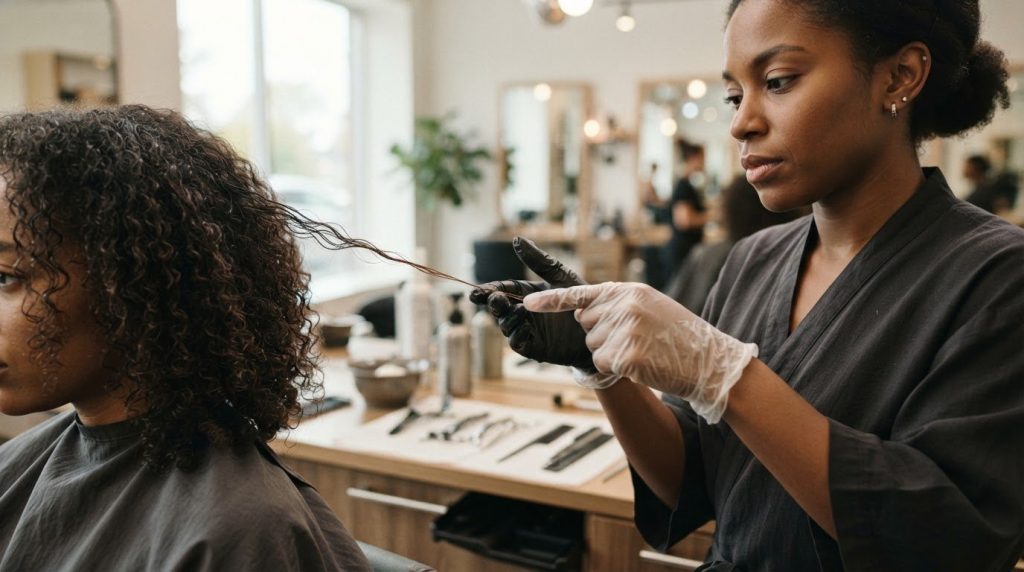
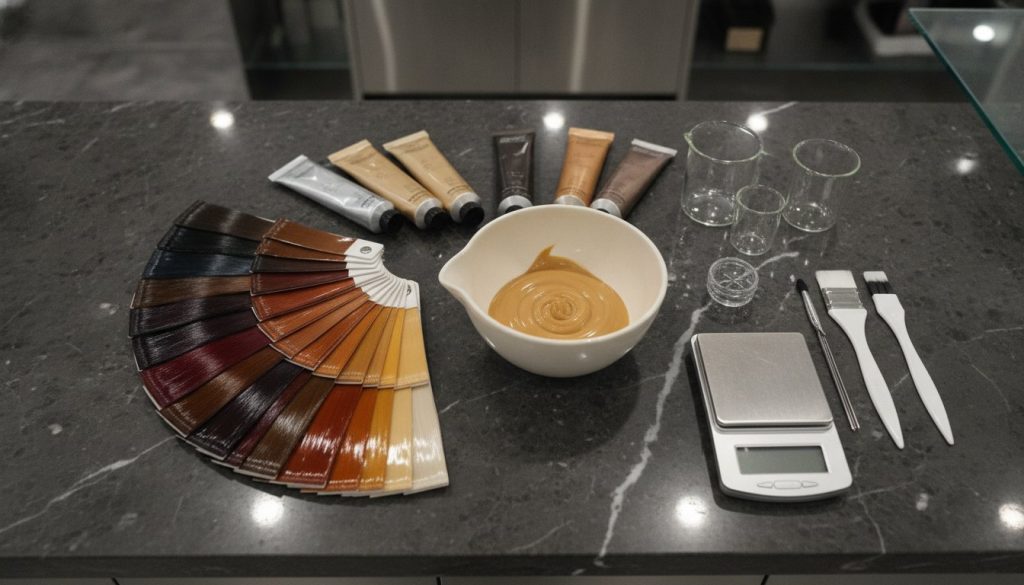
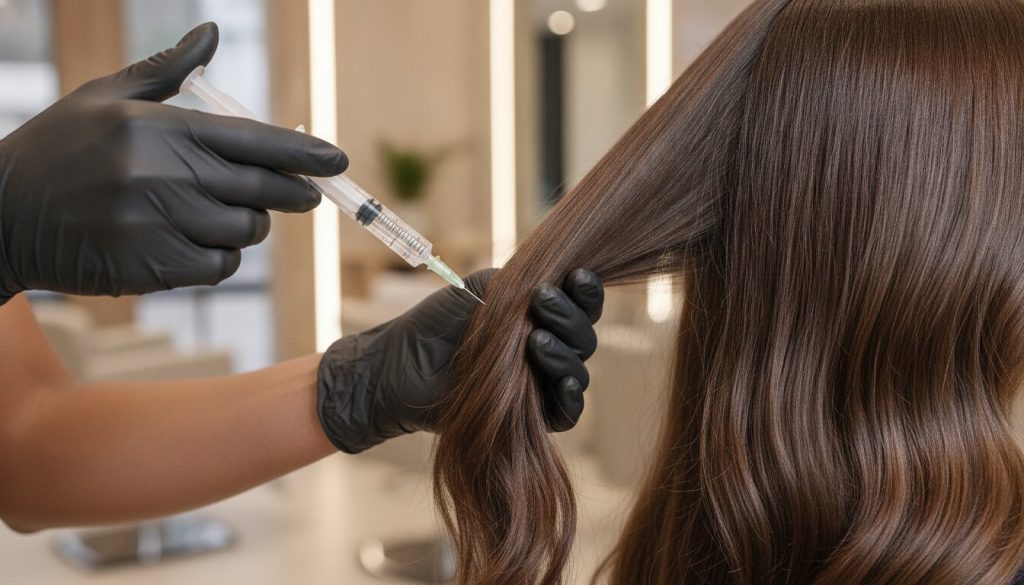
Precision application requires a “less is more” philosophy. Stylists should use a Mixing Bowl and Brush Set to apply the Silk Touch Keratin Treatment in thin, transparent sections. The goal is total saturation without drowning the hair. If a stylist over-saturates the scalp, they risk irritation and product waste. They should apply the formula one-quarter inch away from the root, combing it through to the ends to ensure an even coat. This disciplined approach preserves the product and guarantees a lightweight, voluminous finish that won’t feel greasy or weighed down.
The Science of the Flat Iron Pass
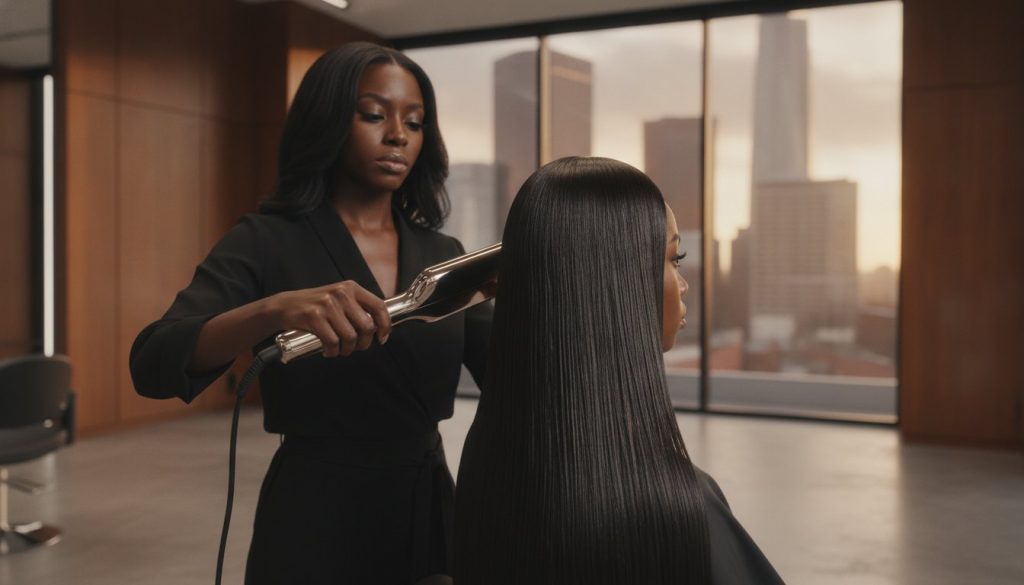
The flat iron is the most powerful tool in the smoothing process, but it’s also the most dangerous if misused. Your team must understand that heat is a variable, not a constant. Using a Professional Flat Iron with consistent, digital heat control is essential for sealing the treatment without causing thermal damage. Stylists must adjust the temperature based on the hair diameter and chemical history. For instance, a coarse, resistant texture might require 450 degrees, while sensitized, blonde ends should never exceed 380 degrees. The Seal and Shine technique involves slow, steady passes that allow the heat to bond the keratin to the hair structure, creating that coveted glass-like finish. To equip your team with the precision tools required for these results, invest in our professional-grade flat irons to ensure technical excellence across every station.
Rinsing and Post-Treatment Protocols
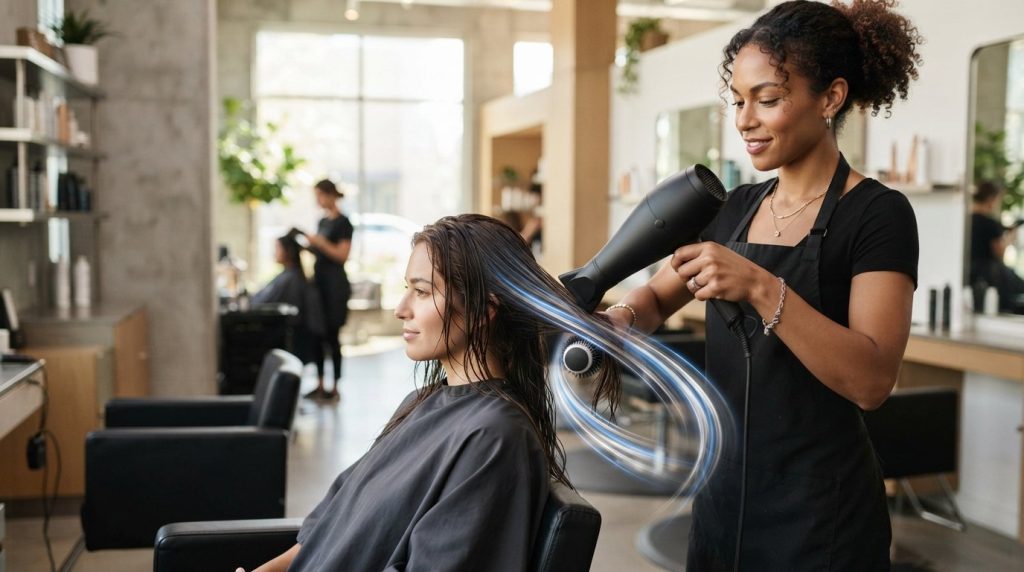
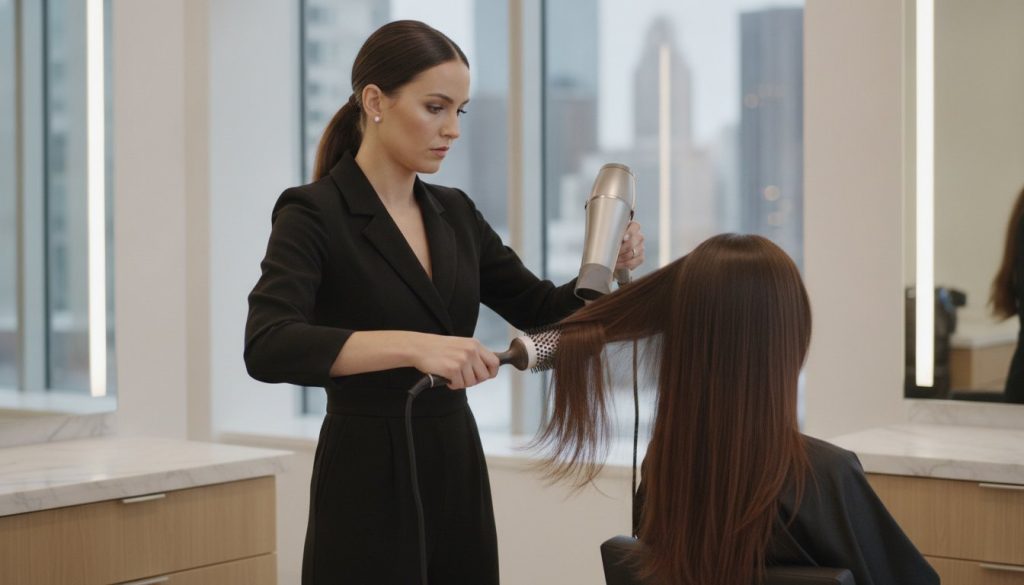
The final steps are where the client sees the immediate value of the service. Determining the correct wait time before the final rinse depends on the specific formula used. Once the processing is complete, the Wash and Go test is a powerful tool for building trust. By washing and rough-drying the hair with a Professional Hair Dryer right in the salon, you prove the treatment’s efficacy immediately. This is the moment to showcase the new manageability. Finish the look with a drop of Keratin Infused Serum to enhance the luminosity and provide a final layer of protection. This immediate reveal reinforces the salon’s expert status and justifies the investment in a premium smoothing service.
Post-Training Execution: Ensuring Consistency and Driving Retail Growth
The final phase of leadership isn’t the certification; it’s the sustained excellence that follows. Once your team has mastered the technical deep dive, the focus must shift to salon-wide consistency and business scaling. To protect your brand’s reputation, implement a quality control checklist for every smoothing service performed. This document acts as a safeguard, ensuring that the precision taught during earlier phases remains uncompromising. Effective training staff on new smoothing treatments doesn’t end when the model leaves the chair; it continues through the tracking of Key Performance Indicators (KPIs) and client retention rates.
Consistency in results is the foundation of elite client trust. By setting specific KPIs for smoothing service frequency and retail attachment, you transform a technical skill into a powerful revenue driver. Your stylists should view themselves as Expert Professionals who provide a complete solution, not just a temporary fix. This mindset shift is essential for maintaining the sophisticated standards of a high-end metropolitan salon.
The Aftercare Script: Protecting the Investment
Longevity is the ultimate metric of a successful smoothing service. Your team must be trained to communicate that sulfate-free maintenance is the only option for keratin durability. Use the Prescription Card method to formalize this process. Stylists should write down a personalized routine featuring the Silk Touch Shampoo and Silk Touch Conditioner, explaining the scientific necessity of these formulas in preserving the treatment’s molecular bond. Upselling the Keratin Infused Serum as a daily styling essential adds a layer of protection against environmental stressors while enhancing luminosity. Finally, ensure every stylist knows how to schedule the follow-up. Booking the next session before the client leaves the salon maintains the “frizz-free canvas” and secures long-term loyalty.
Tracking Team Performance and Feedback
Growth requires a culture of accountability. Conduct regular Post-Mortem reviews on any treatments that fall short of your salon’s luxury standards. These sessions should be constructive, focusing on troubleshooting application or heat management errors in a professional environment. Rewarding stylists who achieve high client retention in the smoothing category reinforces the value of technical mastery. Continuous education is also vital for staying ahead of trends. Encourage your team to explore how our systems interact with various professional hair color brands to ensure vibrant, healthy results after every chemical service. By integrating these business strategies into your training staff on new smoothing treatments, you create a team of experts who can confidently perform, sell, and sustain elite-tier results.
Leading the Future of Professional Smoothing
Technical excellence is the only currency that matters in a high-end salon environment. By moving beyond legacy application methods and embracing a structured, science-based curriculum, you empower your team to deliver the glass-like results today’s informed clients demand. Consistency across your staff isn’t just about aesthetics; it’s about building a brand that stands for safety and sophistication in an increasingly discerning market. When your stylists transition from service providers to expert advisors, your salon becomes a destination for elite care.
Prioritizing training staff on new smoothing treatments ensures that every stylist on your floor can confidently navigate the nuances of modern, formaldehyde-free chemistry. This expertise allows your team to justify premium pricing while driving significant retail growth through prescribed aftercare routines. Our cruelty-free formulas and professional-tier tools are already trusted in elite salons across New York and Florida, providing the foundation for a thriving, high-performance business. It’s time to set a new standard of excellence and transform your salon into a sanctuary of safe, accessible luxury.
Upgrade your salon with Hair Bar NYC Professional smoothing systems and education.
Frequently Asked Questions
How long should I spend training a new stylist on keratin treatments?
A comprehensive training program typically spans two to four weeks depending on the stylist’s prior experience level. This timeframe allows for a deep dive into keratin science followed by multiple supervised applications. For training staff on new smoothing treatments, you must ensure they’ve mastered the specific Seal and Shine technique before they perform services independently on your salon floor.
Do stylists need a special certification to perform formaldehyde-free treatments?
Regulatory requirements vary by state, so you should always check your local licensing board’s standards for current compliance. From a professional standpoint, brand-specific certification is essential even if not legally mandated. It ensures your team understands the unique molecular behavior of formulas like the Silk Touch Keratin Treatment, which differs significantly from older, chemical-heavy systems.
What is the most common mistake stylists make when learning new smoothing systems?
Over-saturation of the hair is the most frequent error encountered during technical workshops. Stylists often believe more product leads to better results, but with high-performance formulas, excess product causes a heavy finish and unnecessary waste. Precision application using a Mixing Bowl and Brush Set is the only way to achieve that signature glass-like luminosity without weighing the hair down.
Can I train my staff to perform keratin treatments on color-treated hair?
Yes, training your team to work with color-treated hair is a vital skill for any high-end metropolitan salon. The key is teaching them to adjust the temperature on their Professional Flat Iron to prevent color lifting or tonal shifts. When combined with Color Bar Professional Hair Color, these treatments can actually enhance the vibrancy and structural integrity of the client’s shade.
How do I handle a stylist who is resistant to changing their smoothing technique?
Focus the conversation on health, safety, and technical evolution. Remind the stylist that modern, formaldehyde-free systems protect their long-term respiratory health while meeting the growing client demand for clean beauty. Demonstrating the superior results of the Diamond Keratin Treatment usually overcomes resistance by proving that safer chemistry doesn’t mean sacrificing the elite performance they expect.
What tools are essential for a staff training workshop on hair smoothing?
You’ll need a Professional Flat Iron with adjustable digital heat settings, a Professional Hair Dryer, and a complete Mixing Bowl and Brush Set. High-quality tools are non-negotiable for technical precision. Providing your team with the same elite equipment they’ll use on clients ensures their training staff on new smoothing treatments translates perfectly to real-world service execution.
How does training on vegan keratin differ from traditional Brazilian treatments?
Vegan systems rely on organic acids and plant-based proteins rather than harsh aldehydes. Training for these systems requires a focus on heat activation rather than aggressive chemical bonds. Stylists must learn that the hair needs specific tension and precise iron passes to seal the botanical actives into the cuticle effectively without the need for toxic fumes.
Is it necessary to use a model for every staff training session?
While theoretical workshops are valuable for understanding chemistry, a live model is essential for the final phases of mastery. Stylists need to feel the hair’s texture change during the ironing process to truly understand the bonding phase. Using models with diverse hair types allows your team to practice troubleshooting in a controlled, professional environment before working on a paying client.