What to Do When a Client’s Color Turns Brassy: The Professional Stylist’s Guide for 2026
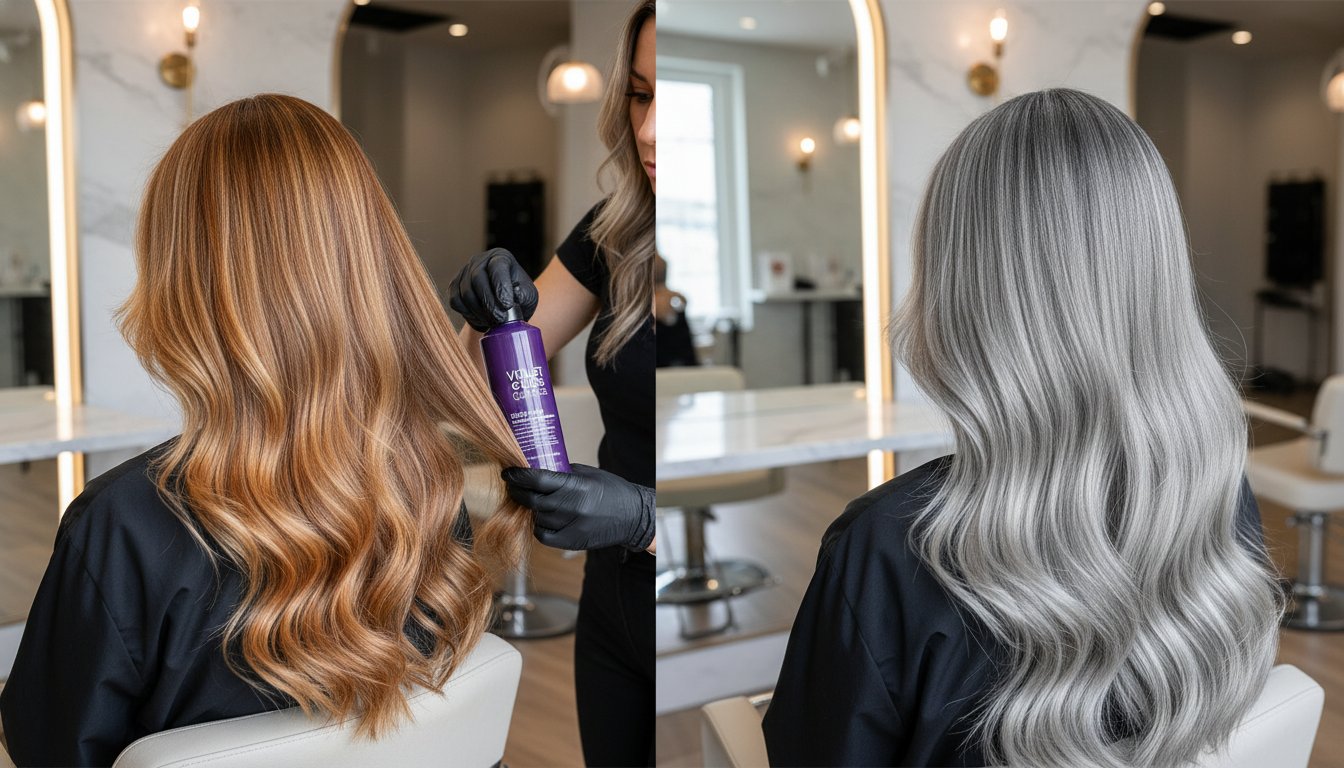
That expensive bottle of retail-grade purple shampoo is often the very thing sabotaging your client’s sophisticated cool-toned balayage. It’s incredibly frustrating when a meticulously crafted ash blonde returns to your chair three weeks later looking like a copper penny, especially when the client blames your technique rather than their hard water or heat styling habits. Knowing exactly what to do when a client’s color turns brassy is the hallmark of an elite stylist who refuses to settle for inconsistent, dull results.
You’re about to master the definitive science of neutralization and discover professional-grade strategies that ensure high-end, salon-perfect results that actually last. We’ll dive into the chemical reality of underlying pigments and how to leverage the latest 2026 FDA ingredient transparency standards to elevate your expert status. This guide provides a clear roadmap for building a sophisticated maintenance plan using the Silk Touch and Color Bar systems, ensuring you protect your professional credibility while keeping your clients in a state of permanent, chic perfection.
Key Takeaways
- Decode the chemical process of oxidation and the hierarchy of underlying pigments to predict and prevent unwanted warmth before it emerges.
- Master the professional protocol for what to do when a client’s color turns brassy, focusing on demineralizing treatments and precise color wheel neutralization.
- Protect delicate blonde tones during high-heat keratin services by understanding how to mitigate the yellow shift for a seamless finish.
- Establish an elite maintenance plan using sulfate-free and sodium chloride-free formulas to preserve the integrity of your salon-grade artistry.
- Elevate your results with the Color Bar Professional line and the Silk Touch system, designed for stylists who demand uncompromising quality and performance.
The Science of Warmth: Why Hair Color Turns Brassy
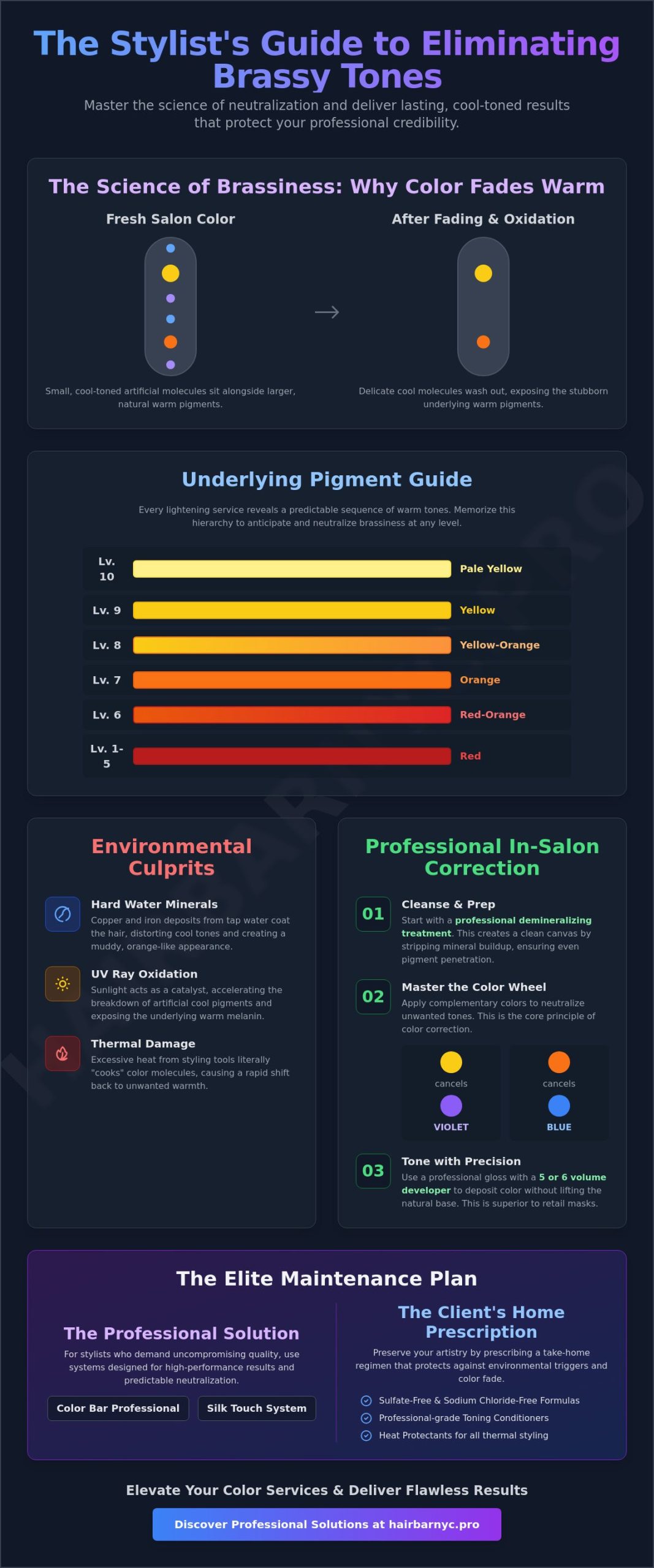
Brassiness is the inevitable chemical exposure of underlying warm pigments during the oxidation process. It’s not a mistake; it’s physics. When professional color is applied, cool-toned artificial molecules sit alongside natural pigments. Over time, those smaller, more delicate cool molecules are the first to vacate the hair shaft. This leaves behind the larger, stubborn warm pigments that were always there, just hidden. Knowing what to do when a client’s color turns brassy requires moving beyond surface-level fixes and addressing the molecular reality of the hair.
You must distinguish between simple color fading and the chemical “lifting” caused by environmental stressors. Fading occurs when artificial pigment washes away, whereas lifting happens when the hair’s natural melanin is altered by chemicals or light. The result is always the same: the loss of cool-toned artificial molecules leaves warm natural pigments exposed. This shift follows a predictable hierarchy of underlying pigments that every stylist must memorize:
- Level 10: Pale Yellow
- Level 9: Yellow
- Level 8: Yellow-Orange
- Level 7: Orange
- Level 6: Red-Orange
- Levels 1-5: Red
The Role of Melanin and Residual Pigment
Every lightening service is a journey through the hair’s natural history. Eumelanin, which provides brown and black depths, is relatively easy to disperse during the lifting process. However, pheomelanin, the pigment responsible for red and yellow tones, is incredibly resilient and requires a more aggressive approach to neutralize. As the hair lightens, these warm tones are revealed in a sequence that can compromise your final result if not properly managed. Understanding The Science of Warmth is essential for every elite stylist aiming for precision in an upscale urban environment. Residual pigment is the base color that remains after oxidation.
Environmental Triggers for Professional-Grade Fading
Even the most perfect Color Bar Professional application faces an uphill battle against metropolitan environmental stressors. Hard water is a primary offender; it deposits copper and iron minerals that distort cool tones into muddy oranges. By May 2026, stylists have seen a massive shift in how we track the “oxidation effect” of UV rays. These rays act as a catalyst, accelerating the breakdown of synthetic color molecules and leaving the hair vulnerable to the elements. Finally, thermal damage is a silent killer of cool tones. Excessive heat from non-professional styling tools literally “cooks” the color out of the cuticle, causing a rapid shift toward warmth. When considering what to do when a client’s color turns brassy, you must first identify which of these external factors is the primary culprit to ensure your correction lasts.
Professional In-Salon Corrections: Moving Beyond the Toner
Fixing unwanted warmth requires more than a quick purple wash. When deciding what to do when a client’s color turns brassy, the first step is always preparation. You cannot achieve a sophisticated, cool-toned result if the hair is coated in mineral buildup or environmental pollutants. Start with a professional demineralizing treatment to strip away copper and iron deposits. This creates a clean canvas, allowing your neutralizing pigments to penetrate deeply and evenly rather than sitting superficially on the surface.
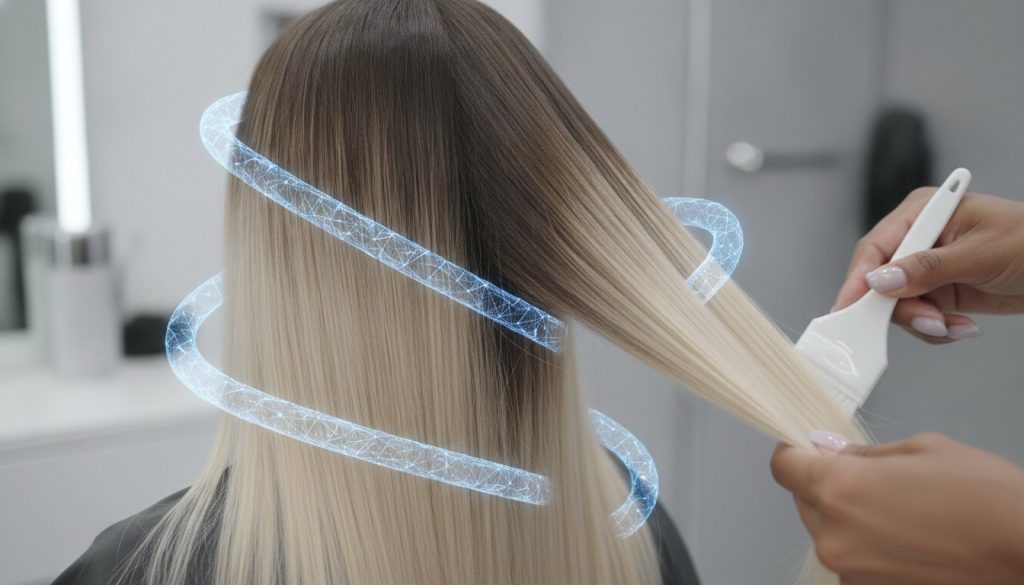
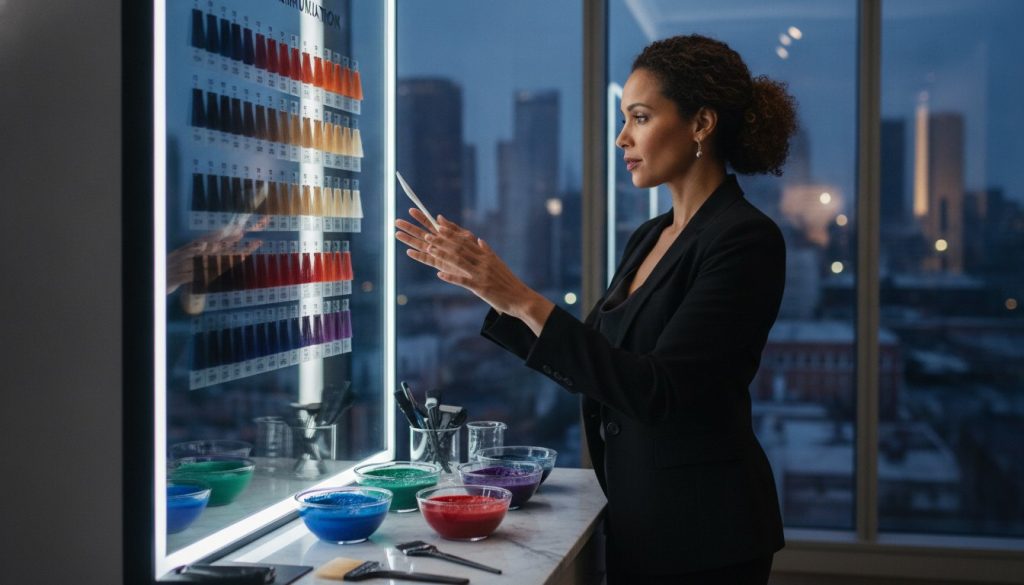
Mastering the color wheel is your greatest asset in a high-end salon. Don’t ignore your brunettes. While violet effectively neutralizes yellow tones in level 9 and 10 blondes, your level 6 and 7 clients require a blue base to cancel out stubborn orange. A professional gloss treatment is always superior to retail-grade color-depositing masks. It provides a multi-dimensional finish and structural integrity that home products lack. For the modern, fast-paced stylist, “Flash Toning” at the backbar is a game-changer. It offers a rapid, high-impact correction that fits perfectly into a busy 2026 salon schedule without sacrificing quality. Elevate your correction services by using Color Bar Professional Hair Color for predictable, high-performance results.
Advanced Toning Strategies for Stylists
Precision is everything. When correcting brassiness, selecting the right developer is critical to avoid “breaking the base.” Stick to 5 or 6 volume developers to ensure you are only depositing pigment without lifting the client’s natural hair. Use the “Zone Toning” method to address varying levels of warmth. Apply a stronger neutralizer to the mid-lengths where brassiness is often most concentrated, and a sheerer formula to the porous ends. This tailored approach prevents over-toning and keeps the color looking expensive and intentional. Acidic toners are your best friend here; they seal the cuticle and lock in those cool pigments for weeks of wear.
pH Balancing and Cuticle Closure
Alkaline hair is a magnet for immediate brassiness. If the cuticle remains open after a chemical service, those expensive cool molecules will simply slide out during the first wash. You must transition the hair back to its optimal pH level. Post-color acidic rinses are non-negotiable for “locking” the color molecules within the hair shaft. This step ensures the hair remains reflective and resistant to the oxidation process. For a deeper dive into the chemistry of elite results, consult The Elite Guide to Professional Hair Color Brands. Understanding the relationship between pH and pigment longevity is what separates the expert professional from the standard stylist. It’s the difference between a client who returns with a brassy mess and one who returns with a flawless, lived-in cool tone.
Keratin Smoothing and Color: Preventing the Yellow Shift
One of the most common concerns in high-end urban salons is whether a smoothing service will compromise a fresh, cool-toned blonde. It’s a valid fear. When evaluating what to do when a client’s color turns brassy, you must consider the impact of thermal tools on synthetic pigments. High heat, specifically the intense temperatures required for traditional smoothing, can oxidize artificial cool molecules and reveal those stubborn yellow undercoats. This shift isn’t just a surface issue; it’s a chemical reaction that occurs when the hair’s structural integrity isn’t properly shielded during the service.
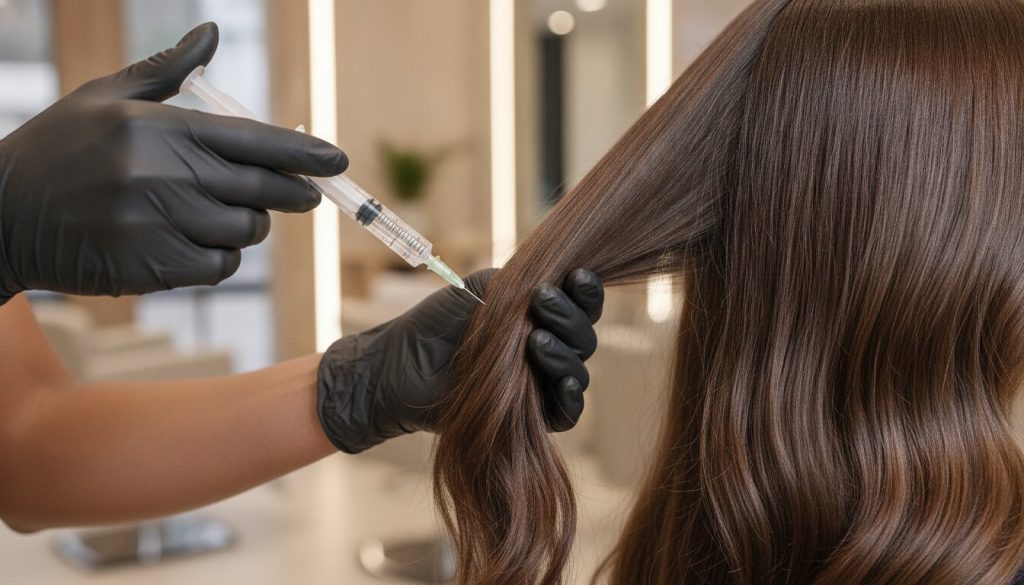
Using a sophisticated, formaldehyde-free system like the Silk Touch Keratin Treatment or Diamond Keratin Treatment changes the narrative. Instead of stripping color, these professional-grade formulas seal the cuticle with high-performance proteins. A correctly executed keratin service actually acts as a molecular shield. It creates a protective barrier that prevents environmental pollutants and hard water minerals from penetrating the hair shaft. This helps maintain that expensive, cool-toned finish longer than color alone would, providing a practical solution for clients living in high-paced metropolitan environments.
Timing the Service: Color Before or After Keratin?
The professional standard is clear: patience yields the most luxurious results. You should ideally wait at least two weeks between a Color Bar Professional service and a keratin application. This buffer allows the color molecules to fully stabilize within the cortex. If your schedule demands an immediate turnaround, you must adjust your color formula by going half a level cooler or darker to compensate for the slight lift that heat may cause. For a comprehensive breakdown of these protocols, explore The Ultimate Guide to Formaldehyde-Free Keratin Treatments in 2026. This timing ensures the hair remains resilient and the pigment stays locked in place.
Heat Management During the Smoothing Process
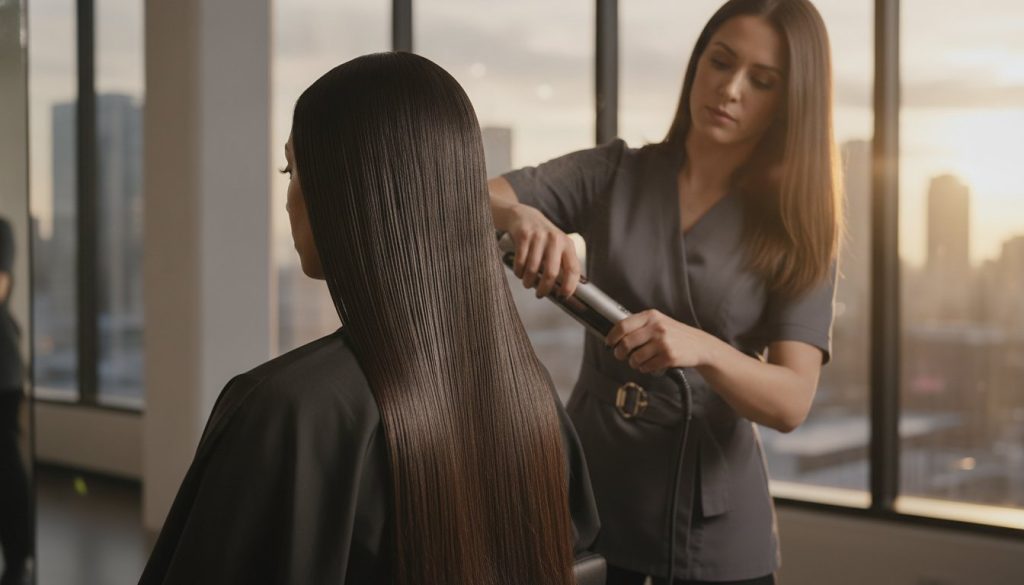
Precision temperature control is the difference between a flawless finish and a brassy disaster. When working with color-treated clients, you must adjust your Professional Flat Iron settings based on the hair’s level and integrity. Level 9 and 10 blondes rarely need the maximum heat setting; 380 to 410 degrees is often sufficient to bond the treatment without scorching the pigment. Applying a Keratin Infused Serum before ironing provides a vital thermal barrier for sensitized ends. Over-ironing leads to irreversible pigment distortion. By prioritizing heat management, you ensure that the smoothing process enhances the color’s luminosity rather than stripping its cool-toned soul. This proactive approach is the best answer for what to do when a client’s color turns brassy before the warmth even has a chance to emerge.
The Client’s Home Prescription: Preventing the Return of Brass
Your artistry shouldn’t vanish the moment a client steps out of your salon and into the humid city air. Educating your guests on what to do when a client’s color turns brassy between appointments is the only way to safeguard your professional reputation. The “Golden Rule” of color maintenance in 2026 is uncompromising: every product must be sulfate-free and sodium chloride-free. These harsh salts act like sandpaper on the hair shaft, stripping away cool-toned artificial pigments and exposing the raw, warm undercoats you worked so hard to neutralize.
Teach your clients that water temperature is a chemical variable. Hot water swells the cuticle, creating an easy exit for delicate ash and violet molecules. Recommend lukewarm rinses and a reduced wash frequency to preserve the hair’s structural integrity. Weekly “toning rituals” are also essential. Instead of a daily purple wash, suggest a high-performance, professional-grade violet or blue maintenance routine once a week. This prevents the “over-toned” muddy look while keeping warmth at bay. To ensure they have the right tools for the job, encourage them to shop the Silk Touch maintenance collection for elite-level protection.
Selecting the Right Cleansing System
Not all color-safe products are created equal. You must help your clients distinguish between “toning shampoos,” which are corrective and pigment-heavy, and “color-safe shampoos,” which are preventative and moisture-focused. For those who have invested in both color and smoothing services, the Silk Touch Shampoo is an absolute necessity. It maintains the pH balance required to keep the cuticle closed and the color locked in. For a deeper dive into managing various textures, consult The Professional Stylist’s 2026 Guide to Natural Hair Care. This distinction ensures your clients aren’t accidentally drying out their hair with excessive toning when they should be focused on preservation.
Environmental Protection Tactics
Metropolitan life presents unique challenges for hair color. UV rays are the primary driver of sun-induced oxidation, which is why daily styling products must contain high-performance UV filters. Advise your clients to treat their hair like their skin. A pre-swim ritual is also non-negotiable; applying a leave-in conditioner before entering a pool or the ocean creates a barrier against chlorine and salt water. Finally, consider the impact of their home environment. Hard water filters for showerheads can prevent copper and iron from distorting your work. When a guest asks what to do when a client’s color turns brassy, your answer should always include a comprehensive strategy for environmental defense. This proactive home prescription transforms a one-time service into a lasting, high-end lifestyle.
The Hair Bar NYC Professional Solution for Brassy Hair
Mastering the art of cool-toned longevity requires more than just technique; it demands a synergy between high-performance chemistry and a sophisticated maintenance ecosystem. Hair Bar NYC Professional offers a comprehensive response for stylists who refuse to compromise on quality. When you are deciding what to do when a client’s color turns brassy, the solution lies in a dual-action approach that corrects existing warmth while fortifying the hair’s structural integrity. Our professional-grade systems are designed to bridge the gap between the expert salon environment and the client’s home lifestyle, ensuring results remain flawless until the next appointment.
By integrating vegan, clean beauty formulas, Hair Bar NYC Professional addresses the growing consumer demand for plant-based and cruelty-free care without sacrificing metropolitan performance standards. These formulas avoid the harsh stripping agents found in mass-market products, allowing the hair to retain its natural moisture and reflective shine. This commitment to ingredient transparency aligns with the latest 2026 regulatory shifts, establishing you as a trustworthy expert in an increasingly discerning market. We invite elite stylists to join the Hair Bar NYC Professional network for exclusive access to the tools and educational resources needed to dominate the urban salon landscape.
Color Bar Professional: Precision in Neutralization
The Color Bar Professional line is engineered for the stylist who demands absolute predictability. Its technical highlights include a low-ammonia profile and an exceptionally high pigment load, allowing for deep saturation and precise neutralization of stubborn underlying pigments. For hair that’s been compromised by previous chemical services or environmental stress, the Silk Touch Keratin Intensive Treatment is a vital step. It works to repair color-damaged cuticles, smoothing the hair’s surface so that cool-toned pigments can reflect light with maximum clarity. To stay ahead of the latest industry shifts, explore the Ultimate Guide to Professional Hair Color for a deeper look at 2026’s most sophisticated trends and scientific breakthroughs.
Why Stylists Choose Hair Bar NYC Professional
Choosing Hair Bar NYC Professional means adopting a metropolitan standard of excellence that resonates with the chic, trend-conscious client. Our cruelty-free and formaldehyde-free commitments aren’t just marketing claims; they’re a professional standard of excellence that ensures the health of both the stylist and the guest. In a fast-paced urban setting, efficiency is key. Our systems deliver transformative results quickly, allowing you to maintain a high-paced schedule while upholding an uncompromising level of quality. When a guest asks what to do when a client’s color turns brassy, you can confidently provide a solution that is both aspirational and practical. Explore the Color Bar Professional Collection today and redefine what is possible in your salon.
Mastering the Cool-Toned Standard for 2026
Elevating your craft means moving beyond temporary fixes to embrace a comprehensive neutralization strategy. You’ve learned that successful color correction begins with a clean, demineralized canvas and ends with a closed, pH-balanced cuticle. By integrating high-performance smoothing treatments with precision toning, you transform a routine appointment into a premium lifestyle experience. Knowing what to do when a client’s color turns brassy is about more than just pigment; it’s about safeguarding the hair’s structural integrity against metropolitan environmental stressors.
Elite stylists in NYC and Florida trust Hair Bar NYC Professional to deliver uncompromising results in high-pressure environments. Our vegan and cruelty-free formulas ensure that every blonde remains luminous and every brunette stays rich without the threat of oxidative yellowing. Every formaldehyde-free smoothing system we offer is designed to protect both the stylist’s health and the client’s hair integrity. It’s time to set a new benchmark for excellence in your studio. Upgrade your salon backbar with Color Bar Professional and provide your guests with the sophisticated, long-lasting results they demand. Your journey toward becoming an industry authority starts with the right chemistry. Let’s redefine the standard of salon care together.
Frequently Asked Questions
Can I use purple shampoo on brown hair that has turned orange?
Purple shampoo is ineffective on orange-toned brown hair because it’s specifically designed to neutralize yellow pigments in blondes. For brunettes facing unwanted warmth, a blue-based toning system is the professional standard. Using the wrong pigment can lead to muddy, dull results rather than a crisp, cool finish. Always match your corrective pigment to the specific level of underlying warmth to maintain a high-end, sophisticated brunette result.
How long should I wait to wash my hair after a professional color correction?
You should wait at least 48 to 72 hours before washing your hair after a professional color correction. This window allows the hair cuticle to fully close and the new cool-toned pigments to stabilize within the cortex. Washing too early, especially with hot water, can prematurely strip away the delicate neutralizing molecules. Using a Silk Touch Shampoo during that first wash ensures the pH remains balanced and the color stays vibrant.
Why does my blonde hair turn brassy even when I use a sulfate-free shampoo?
Sulfate-free shampoo is only one piece of the maintenance puzzle. Blonde hair often turns brassy due to environmental oxidation from UV rays, high-heat styling, and mineral deposits from hard water. These factors degrade the artificial cool pigments, revealing the natural yellow undertones underneath. Even with the best cleansing routine, you need a comprehensive plan for what to do when a client’s color turns brassy, including thermal protection and mineral-removing treatments.
Does a keratin treatment make hair color fade faster?
A correctly applied keratin treatment doesn’t make color fade faster; it actually seals the hair shaft to protect the pigment. However, using excessive heat during the application can oxidize color molecules if the hair isn’t protected. Systems like the Silk Touch Keratin Treatment act as a structural shield against the elements. This barrier prevents the rapid leaching of color that typically occurs in porous, untreated hair, especially in high-paced urban environments.
What is the best professional toner for removing bright orange tones?
The best professional solution for bright orange tones is a blue-based ash toner, typically found in the Color Bar Professional line. Because blue is opposite orange on the color wheel, it provides the most effective neutralization for level 6 to 8 hair. Applying a violet toner to orange hair won’t solve the problem; it will likely just make the orange look more vibrant. Precision in pigment selection is what defines an expert stylist.
How often should a client come in for a gloss or toner refresh?
Clients should ideally return every four to six weeks for a gloss or toner refresh. Cool-toned molecules are the smallest and most fragile, meaning they naturally dissipate faster than warm ones. Regular maintenance ensures the hair remains reflective and sophisticated without ever reaching a state of obvious brassiness. This cadence allows you to adjust the formula based on the client’s current hair integrity and any seasonal environmental changes they’ve encountered.
Can hard water really change my hair color to brassy?
Hard water is a primary culprit behind sudden shifts in hair color. Minerals like copper, iron, and calcium attach to the hair’s protein, creating a yellowish or orangey film that distorts your professional results. This buildup is particularly noticeable on porous, lightened hair. Stylists must educate their guests on what to do when a client’s color turns brassy due to water quality, which often involves professional demineralizing treatments before any corrective toning occurs.
Is it possible to fix brassy hair without using more hair dye?
It is possible to significantly reduce brassiness without a full color service. Start by using a demineralizing treatment to remove mineral buildup that might be masking the true color. Following this with a professional-grade pigmented maintenance system, like a violet or blue conditioner, can neutralize warmth through physical deposit rather than chemical alteration. While not a permanent fix like a professional gloss, these methods effectively bridge the gap between major salon visits.