How to Sell Retail Products in a Salon Without Being Pushy: The Professional Stylist’s Guide
Your client’s hair health doesn’t end when they walk out of your salon. It actually begins the moment they step onto the sidewalk. Many stylists feel a deep sense of dread at the thought of selling, worrying that a product suggestion might tarnish a premium experience. You want to be an artist, not a salesperson. However, learning how to sell retail products in a salon without being pushy is the secret to transforming a one-time service into a lifelong client relationship.
We understand that you prioritize the integrity of your work over a quick profit. This guide will show you how to master the art of high-end recommendations that build client trust and increase revenue without ever feeling like you are pushing a product. You will learn to transition from a service provider to an expert consultant who prescribes essential tools like the Diamond Keratin Treatment or Silk Touch Shampoo. We will explore how to personalize every conversation to boost your Average Transaction Value and secure the 10% to 15% commission rates that define a high-performing metropolitan career.
Key Takeaways
- Shift your professional mindset from selling to prescribing, ensuring every client receives a tailored home-care plan to protect their investment.
- Master the “Service-to-Shelf” technique to learn how to sell retail products in a salon without being pushy by weaving education into every touchpoint of the service.
- Curate an elite selection of professional-only products that emphasize your expertise and the sophisticated standards of your urban salon environment.
- Reframe price objections using the “Cost Per Use” logic to demonstrate the long-term value of maintaining hair health between salon visits.
- Identify the direct link between consistent retail recommendations and increased client retention rates to scale your monthly revenue effortlessly.
Repositioning Retail: From Sales Pitch to Professional Prescription
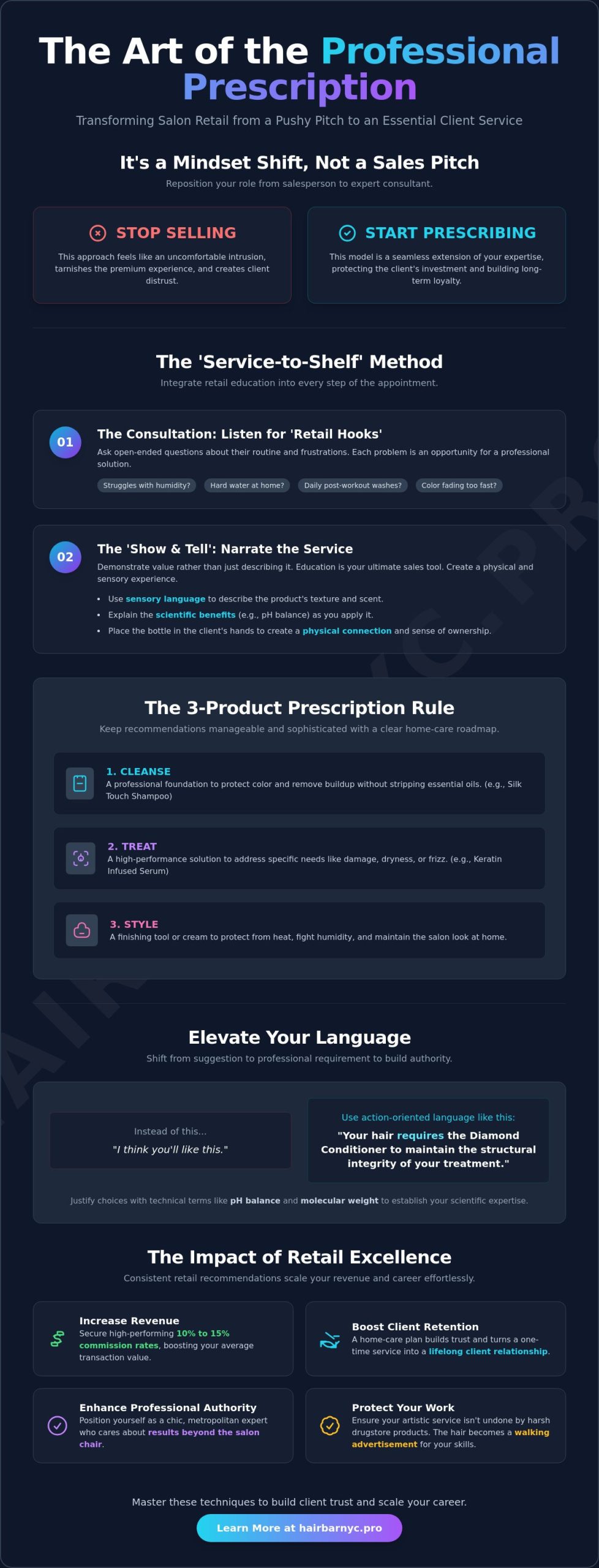
The traditional sales model often feels like an uncomfortable intrusion; it is a desperate attempt to add a few dollars at the checkout counter. In contrast, the prescription model serves as a seamless extension of your artistic expertise. When you adopt consultative selling techniques, the focus shifts entirely to the client’s specific needs. You aren’t taking money from them. Instead, you are protecting the high-end investment they just made in their appearance. This psychological pivot is the core of how to sell retail products in a salon without being pushy.
When you frame a recommendation as a professional necessity, your authority in the room increases instantly. Clients don’t want to be “sold,” but they desperately want to be coached by an expert professional. By providing a clear home-care roadmap, you eliminate the guesswork that leads them to buy cheap, damaging alternatives from a drugstore. This builds a level of trust that secures long-term loyalty and positions you as a chic, metropolitan expert who cares about results far beyond the salon chair.
This level of expert guidance can even extend to holistic wellness recommendations, such as using molecular hydrogen technology to reduce inflammation and support overall vitality; you can learn more about how these advanced systems complement a high-end self-care routine.
The Duty of Care: Why Stylists Must Recommend Products
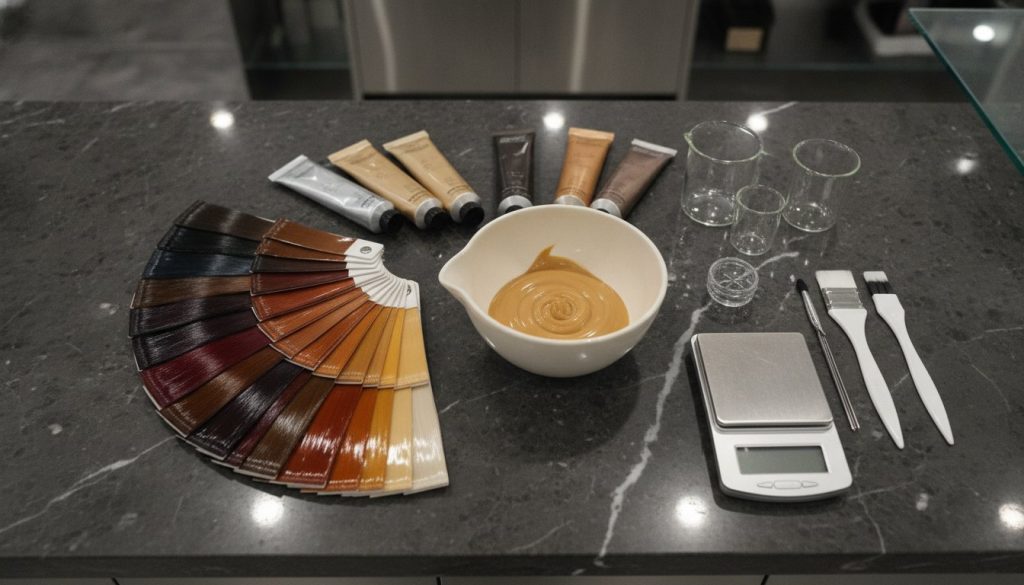
Your responsibility to the client doesn’t end when the cape comes off. The success of a complex service often depends on the products used within the first 48 hours. Without professional-grade maintenance, the vibrancy of a Color Bar Professional Hair Color service can fade prematurely. Drugstore shampoos often contain harsh surfactants that strip the hair and undo your hard work. A Professional Prescription is the vital bridge between exquisite salon results and successful home maintenance. It ensures the hair remains a walking advertisement for your skills until their next visit.
Building Authority Through Scientific Knowledge
Elite stylists don’t rely on vague feelings. They use technical terminology to justify their choices. Discussing the pH balance of the Silk Touch Shampoo or the molecular weight of a Keratin Infused Serum establishes you as the insider who understands the science of beauty. This is how to sell retail products in a salon without being pushy while maintaining an uncompromising standard of excellence. Stop saying “I think you’ll like this.” Transition to action-oriented language like, “Your hair requires the Diamond Conditioner to maintain the structural integrity of your treatment.” This shift from suggestion to requirement reinforces your status as a deeply knowledgeable professional who accepts nothing less than perfection.
The ‘Show and Tell’ Method: Integrating Retail into the Service
High-end retail success begins the second the client settles into your chair. This isn’t about a last-minute scramble at the reception desk. It’s about a ‘Service-to-Shelf’ narrative that weaves your professional expertise into every step of the appointment. By integrating products into the physical and sensory experience of the service, you demonstrate value rather than just describing it. This immersive approach is the most effective way to learn how to sell retail products in a salon without being pushy.
The Consultation: Listening for the ‘Retail Hook’
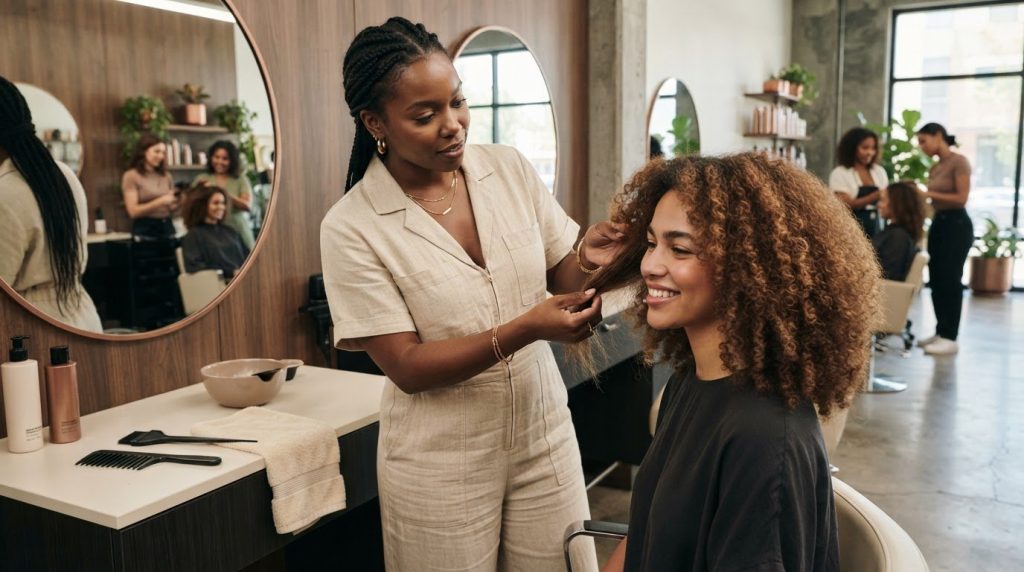
Ask open-ended questions about their morning routine and daily frustrations. Do they struggle with urban humidity? Do they wash their hair daily after a morning workout? These lifestyle factors are your ‘retail hooks.’ If a client mentions hard water at home, they aren’t just making small talk; they’re identifying a functional need for the Diamond Shampoo to combat mineral buildup. Link every frustration they voice to a professional-grade solution that protects their hair’s structural integrity.
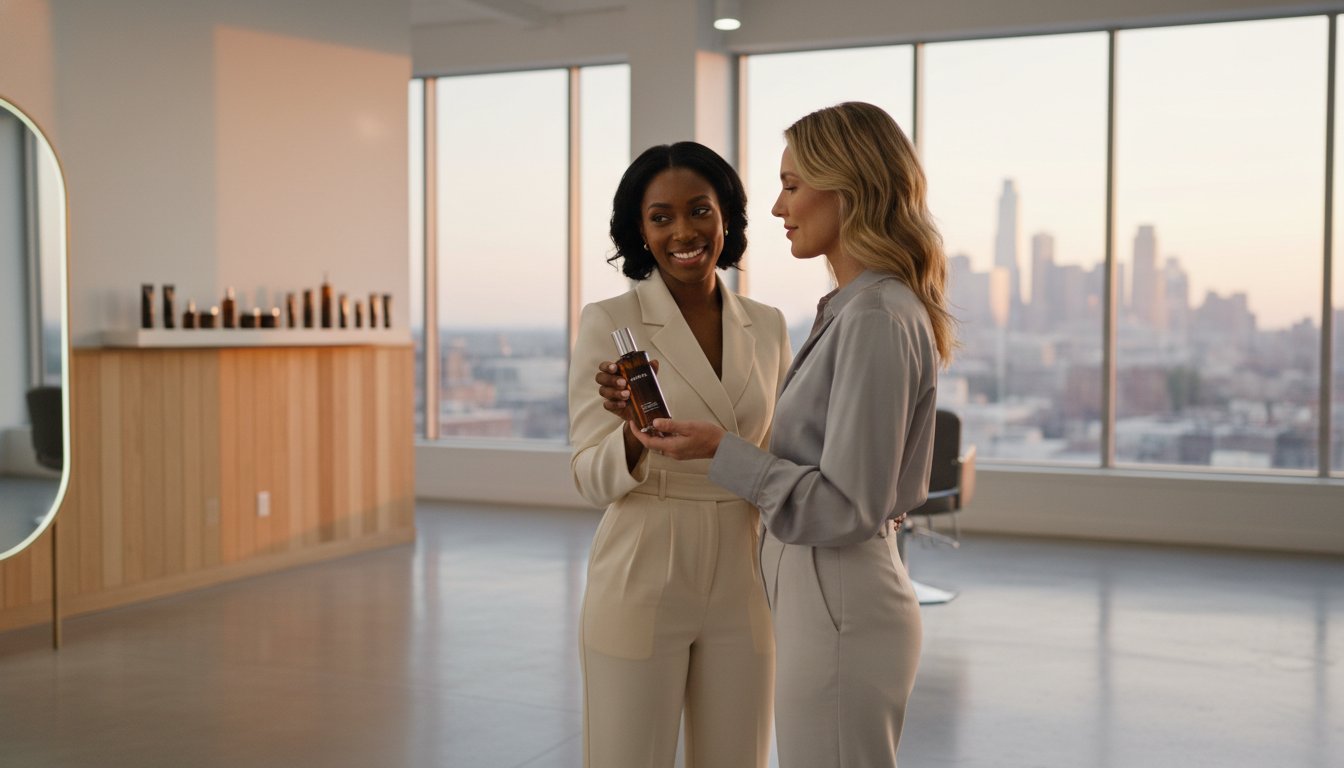
As you move to the backwash, narrate the experience with intention. Use sensory language to describe the scent and weightless texture of the Silk Touch Conditioner as you work it through their strands. Don’t keep the bottle hidden. Place it in the client’s hands while the treatment processes. This physical connection creates a sense of ownership before they even reach the register. To keep recommendations manageable and sophisticated, follow the ‘Three-Product Rule’:
- Cleanse: A professional foundation like the Silk Touch Shampoo.
- Treat: A high-performance solution such as the Keratin Infused Serum.
- Style: A finishing tool or cream to maintain the metropolitan look at home.
Narrating the Service: Education as the Ultimate Sales Tool
During the blowout, explain the science behind your chosen tools. If you’re using a Professional Hair Dryer, mention how its precision airflow reduces heat exposure and preserves shine. Education is the ultimate sales tool because it transforms a product into a professional necessity. For instance, clarify why a sulfate-free, natural shampoo is non-negotiable for color longevity and long-term health. By the time you reach the finishing stage, the client won’t feel like they’re being sold to; they’ll feel like they’re being equipped with the essentials for success. To start this transition, try incorporating the Silk Touch Conditioner into your next wash house ritual to demonstrate immediate results.
Curating a High-Performance Retail Selection That Sells Itself
Your retail shelves should serve as a physical extension of your artistic brand. In a sophisticated urban environment, your choice of inventory speaks volumes before you ever open your mouth. This eye for quality is much like how discerning shoppers discover Gotham Cigars when seeking premium and machine-made tobacco selections that meet high standards. Selecting professional-only brands creates an immediate distinction between your expert care and the generic options found in big-box retailers. High-end packaging and aspirational branding do the heavy lifting for you, appealing to a client’s desire for both beauty and performance. This curated approach is essential for anyone mastering how to sell retail products in a salon without being pushy.
The Power of Professional Exclusivity
Professional-grade products contain significantly higher concentrations of active ingredients compared to their retail-grade counterparts. When a client questions the value of a salon-exclusive item, explain the science behind the results. Proprietary formulas like the Silk Touch or Diamond Keratin systems are engineered to penetrate the hair shaft at a molecular level, providing structural repair rather than a superficial coating. Retail-grade products often rely on heavy silicones that sit on the surface, providing a temporary illusion of health while potentially causing long-term buildup. Position yourself as the insider who provides access to these high-performance tools. This isn’t just inventory; it’s a professional standard of excellence that isn’t available at the local pharmacy.
Focus your inventory on ‘Hero Products’ that solve specific, high-stakes hair concerns. Specialized services like formaldehyde-free keratin treatments represent a significant investment in time and money for your client. These treatments require precise maintenance to ensure longevity and texture management. By stocking the Silk Touch Shampoo and Conditioner, you aren’t just making a sale; you’re providing the necessary insurance policy for their hair’s health. Organize your display to highlight these pairings. Keep the layout clean, metropolitan, and free of clutter to maintain a sense of accessible luxury that invites interaction.
The ‘Prescription Pad’ Strategy
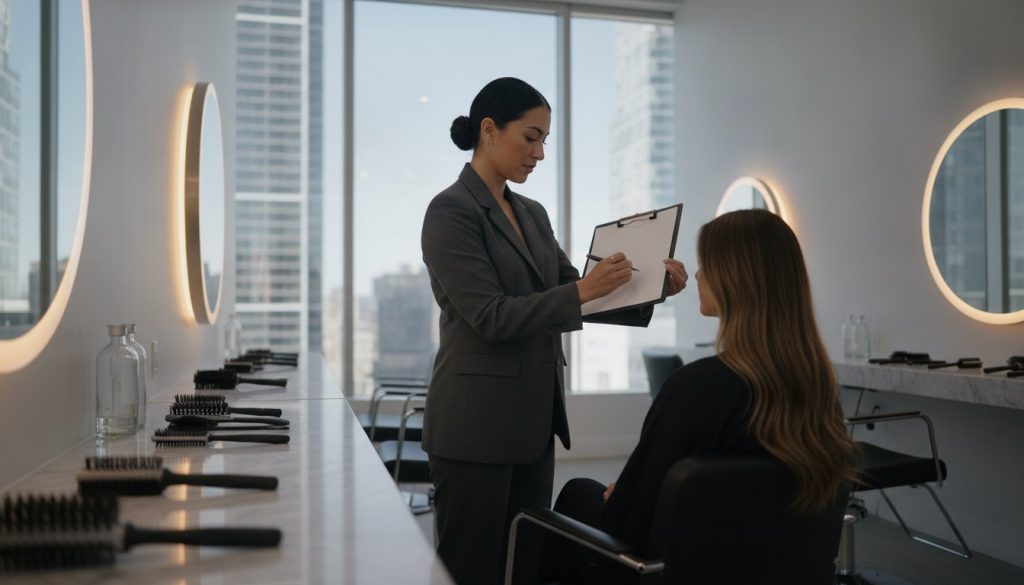
The transition from the chair to the front desk is where many stylists lose their confidence. Implementing a physical or digital ‘prescription pad’ removes the pressure from the final interaction. List the recommended products—perhaps the Keratin Infused Serum or a Professional Flat Iron—and hand the list to the client as they stand up. A written recommendation feels like an expert diagnosis, not a sales pitch. It provides a clear, authoritative roadmap for their home routine and makes the hand-off to the front desk seamless. This strategy is a cornerstone of how to sell retail products in a salon without being pushy because it respects the client’s autonomy while reinforcing your professional authority as their primary hair care consultant.
Overcoming Price Objections with Sophistication and Logic
Price is rarely the true barrier to a sale; value is. When a client hesitates at the cost of a recommendation, they are often comparing your professional-grade solution to a mass-market alternative they saw at a pharmacy. Overcoming this requires a shift from price to performance logic. This is a critical skill when learning how to sell retail products in a salon without being pushy. By reframing the conversation around “Cost Per Use,” you demonstrate that concentrated formulas like the Diamond Shampoo provide significantly more applications per bottle than watered-down drugstore options. You aren’t asking them to spend more. You’re teaching them how to spend more effectively to achieve metropolitan-standard results.
The ROI of Professional Maintenance
Maintaining the structural integrity of a high-quality hair color requires more than just a standard wash. Professional maintenance acts as an essential insurance policy for the artistry you’ve just performed. A specialized shampoo is a strategic choice when compared to the significant cost of a full-scale color correction or intensive repair treatment required after using inferior products. This logic positions the product as a protector of their investment. It’s much easier to maintain health with the Diamond Conditioner than it is to fix chemically compromised strands after they’ve been stripped by harsh, non-professional surfactants.
When a client mentions they “have something at home,” acknowledge it with professional grace. Ask what they are currently using and explain how those specific ingredients might interact with their new Silk Touch Keratin Treatment. This isn’t a critique; it’s a diagnostic comparison. If they remain hesitant, use the “Good-Better-Best” framework. Offer a travel-sized Keratin Infused Serum as a low-risk entry point. This allows them to experience the transformative results at home without a full-sized commitment. This approach respects their budget while maintaining your uncompromising standard of care.
Soft-Closing Techniques for the Front Desk
The final interaction at the register should be the natural conclusion of your earlier “Show and Tell” narrative. Avoid the closed-ended “Do you want any products today?” question. Instead, use a definitive soft-close: “Which of these aftercare essentials would you like to take home to protect your results today?” This assumes the value of the recommendation while leaving the final choice in their hands. You can also leverage loyalty programs to incentivize consistent retail purchases, making the transition to professional care even more rewarding. To ensure your clients never leave their hair health to chance, explore our professional-tier retail essentials to equip your station for success.
Scaling Salon Revenue: The Business Impact of Retail Excellence
Masterful retail management transforms a creative space into a high-performance business. While services generate the base revenue, a sophisticated retail program provides the high-margin growth needed to thrive in an uncompromising metropolitan market. Understanding how to sell retail products in a salon without being pushy is the primary catalyst for this financial evolution. Because retail sales require no additional chair time and carry lower overhead than labor-intensive services, even a 10% increase in retail volume can disproportionately boost a salon’s net profit. This shift allows you to reinvest in elite equipment, such as the Professional Hair Dryer, or premium backbar systems like the Diamond Keratin Treatment.
A robust retail strategy also serves as a magnet for high-tier talent. Chic, trend-conscious stylists seek environments where their expertise is valued and rewarded through competitive commission structures. In 2026, the industry standard for retail commission remains between 10% and 15%. Offering these rates, combined with a high Average Transaction Value (ATV) benchmark of $73 or more, ensures your team feels empowered and financially motivated. When stylists see the direct link between their professional prescriptions and their monthly earnings, they move beyond the fear of selling and embrace their role as expert consultants.
Retail as a Retention Tool
Retail excellence is the ultimate insurance for client loyalty. Industry data suggests that clients who purchase two or more products during their visit are three times more likely to return for future services. This creates a “Cycle of Care” where the client’s success at home reinforces their trust in your technical ability. When a client sees their Color Bar Professional Hair Color remain vibrant for weeks thanks to the Silk Touch Shampoo you recommended, you become indispensable. High-performing salons in 2026 aim for a client rebooking rate of 60% or higher; a goal that is nearly impossible to reach without a consistent retail-to-service narrative.
Empowering Your Team for Retail Success
Building a culture of retail excellence requires more than just stocking shelves. Conduct regular Product Knowledge (PK) sessions that focus on transformative benefits rather than just a list of ingredients. Your team should be able to explain how the Diamond Conditioner provides a sensory experience of luxury while delivering scientific results. Lead by example by ensuring every stylist uses the Professional Flat Iron and Silk Touch range at their own stations. To support your team’s growth, implement the following strategies:
- Tiered Commissions: Reward stylists who consistently exceed their retail-to-service ratios.
- Performance Tracking: Use modern salon software to monitor the “retail attach rate” for every service.
- Collaborative Goals: Set monthly salon-wide targets for hero products like the Keratin Intensive Treatment to build collective momentum.
By treating retail as a professional standard of excellence, you bridge the gap between the expert salon environment and the client’s home. This commitment to total hair health doesn’t just increase your revenue; it solidifies your reputation as a premier destination for elite care.
Mastering the Art of the Professional Prescription
Success in the modern salon environment requires a shift from transactional selling to expert consultation. By adopting a “Service-to-Shelf” narrative, you protect the structural integrity of your work while providing the luxury care your clients expect. You’ve learned that how to sell retail products in a salon without being pushy is simply a matter of prescribing the necessary tools for home maintenance. Whether it’s the Diamond Keratin Treatment or a Silk Touch Shampoo, your recommendations serve as a bridge between the chair and the metropolitan sidewalk.
Your expertise deserves products that match your high standards. Elevate your salon’s standards with Hair Bar NYC Professional products. Our professional-grade formulas are used in elite NYC salons and feature vegan, formaldehyde-free keratin systems designed for high-performance results. Licensed professionals gain access to exclusive wholesale pricing on our entire range of treatments and styling tools. Take the next step in your professional evolution and watch your revenue grow alongside your clients’ trust. You have the talent; now equip yourself with the tools of the elite.
Frequently Asked Questions
How do I start the retail conversation with a long-term client who never buys?
Initiate a fresh consultation to break the routine. Even with legacy clients, hair needs evolve due to seasonal changes or aging, providing a natural opening for a new recommendation. Frame the conversation around a recent observation: “I’ve been analyzing how your hair holds moisture lately, and I’m prescribing the Keratin Intensive Treatment to provide better structural support between our appointments.” This is a sophisticated way to learn how to sell retail products in a salon without being pushy by focusing on their current hair health.
What are the best products to start with if I have limited retail space?
Focus on high-impact “Hero Products” that support your most frequent services. If your chair is often filled with smoothing clients, prioritize a curated selection of Silk Touch Shampoo and Silk Touch Conditioner. These essentials are non-negotiable for maintaining the integrity of a keratin service. A small, intentional display of five high-performance items is far more effective than a cluttered shelf of generic options. It maintains your metropolitan aesthetic while ensuring every product serves a specific professional purpose.
How do I explain why salon products are more expensive than drugstore brands?
Focus on the concentration of active ingredients and the science of molecular weight. Professional formulas like Diamond Shampoo contain significantly fewer fillers and more high-grade proteins that actually penetrate the hair shaft. Drugstore brands typically rely on heavy silicones that create a superficial coating rather than providing true repair. Remind your client that because professional products are more concentrated, they’ll use less per wash, making the cost per use highly competitive with mass-market alternatives.
Can I sell retail products if I am a booth renter or independent stylist?
Independent professionals should absolutely integrate retail as a primary revenue stream. You are the sole authority in your suite, which makes your expert prescriptions even more influential to your clients. Selling high-performance tools like a Professional Flat Iron or the Keratin Infused Serum allows you to capture the full profit margin directly. It solidifies your brand as a boutique expert who provides a complete, high-end care routine that bridges the gap between the salon and home.
Should I offer discounts on retail to encourage first-time buyers?
Avoid discounting your retail selection as it can inadvertently devalue your professional expertise. Instead, use travel-sized versions of the Silk Touch range as a low-risk entry point for hesitant clients. This allows them to experience the transformative, professional-grade results at home without a full-sized investment. Once they witness the immediate improvement in their hair’s texture and shine, they are much more likely to purchase the full regime during their next scheduled visit.
How do I handle a client who says they can buy the same product cheaper online?
Address the serious risks of product diversion and lack of authenticity. Products sold through unauthorized third-party websites are often expired, diluted, or even counterfeit. When a client buys directly from you, they receive a professional guarantee of quality and a product stored in a climate-controlled environment. Explain that you cannot guarantee the longevity of their Color Bar Professional Hair Color if the maintenance products aren’t authentic, professional-tier batches sourced directly from the manufacturer.
What is the ideal ratio of retail sales to service sales for a healthy salon?
Aim for retail to represent approximately 15% to 20% of your total gross revenue. High-performing salons in 2026 target an Average Transaction Value (ATV) of $73 or higher, a benchmark that is significantly easier to reach when retail is a standard part of every appointment. Tracking your “retail attach rate” is essential for monitoring how often a service results in a product sale. This remains a critical KPI for anyone mastering how to sell retail products in a salon without being pushy.