Can Keratin Treatments Cause Hair Loss? A Professional Stylist’s Deep Dive
The fear that your quest for glass-like shine might lead to permanent thinning is a conversation we have daily in the salon chair. You’ve likely seen the headlines or noticed a few extra strands in your brush after a smoothing session, leading you to wonder: can keratin treatments cause hair loss? This skepticism is your best defense in an industry where marketing often masks the technical reality of hair health.
We understand the anxiety of choosing between manageable texture and the density of your hair. This deep dive uncovers the scientific truth behind smoothing services, shifting the focus from the keratin protein itself to the application methods and ingredients that actually pose a risk. You’ll discover the critical difference between follicle shedding and mechanical breakage, ensuring you can protect your hair’s integrity while achieving an elite finish.
We’ll also look at the current regulatory landscape, including the latest 2026 updates on formaldehyde-releasing chemicals, and provide a stylist’s criteria for selecting professional-grade, safer formulas. By the end, you’ll have a clear roadmap for maintaining a sophisticated, frizz-free look without ever compromising the health of your scalp or the strength of your strands.
Key Takeaways
- Distinguish between the natural keratin protein and harsh chemical additives to answer the critical question: can keratin treatments cause hair loss?
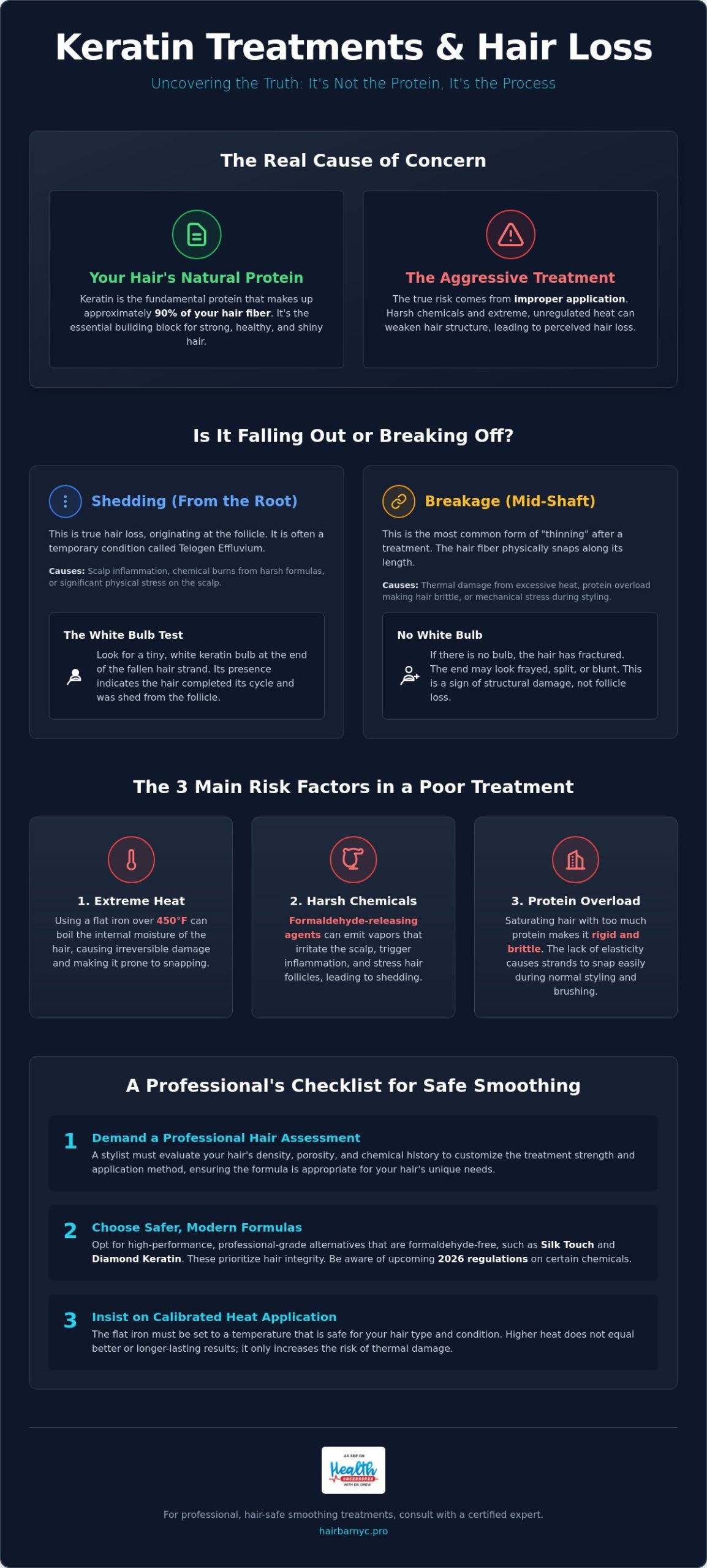
- Identify how extreme thermal styling over 450°F and certain chemical vapors can compromise the hair’s internal structure or trigger scalp inflammation.
- Utilize the “white bulb” test to accurately determine if your hair is shedding naturally from the follicle or fracturing mid-shaft due to mechanical stress.
- Learn the importance of a professional hair health assessment to customize treatment strength based on your unique hair density and chemical history.
- Discover high-performance, professional-grade alternatives like Silk Touch and Diamond Keratin that prioritize structural integrity and long-term hair health.
Can Keratin Treatments Cause Hair Loss? Separating Fact from Friction
Keratin is not a foreign chemical or a toxic additive. It’s the fundamental structural protein that makes up about 90% of your hair fiber. In our high-end urban salon environment, we often hear the anxious question: can keratin treatments cause hair loss? It’s a valid concern when you see more hair than usual in your brush. However, the protein itself isn’t the enemy. True hair loss occurs at the scalp level, where the follicle is either damaged or forced into a resting phase. While direct loss from the root is statistically rare, it can happen if a sub-par formula causes significant scalp irritation. Most perceived thinning is actually severe mechanical breakage occurring along the hair shaft. The difference between a transformative, high-performance experience and a damaging one rests entirely on the formula’s quality and the stylist’s technical precision.
The “Keratin Paradox”: Why a Protein Treatment Could Lead to Thinning
Protein is essential, but balance is the hallmark of elite care. Protein overload occurs when the hair becomes saturated with more keratin than it can safely absorb, leading to a stiff, brittle texture that lacks elasticity. This rigidity makes the hair prone to snapping during routine styling or even while sleeping. When the cuticle is improperly sealed or scorched by an uncalibrated iron, it can no longer protect the cortex. It’s vital to recognize that the treatment is a sophisticated delivery system. The liquid formula acts as a carrier for the protein. If that carrier contains aggressive solvents, the hair’s internal bonds can weaken rather than strengthen.
Is the Loss Permanent or Temporary?
If you notice an increase in shedding, you might be experiencing Telogen Effluvium. This is a temporary condition where the hair growth cycle is disrupted by a physical or chemical stressor, such as a scalp burn from an aggressive Brazilian hair straightening process. If you’re asking yourself, can keratin treatments cause hair loss, the answer starts with identifying the type of shedding you’re seeing. The good news is that follicle damage is rarely permanent in these cases. Once the inflammatory trigger is removed and a professional-grade recovery routine is established, the hair typically returns to its natural growth cycle within a few months. Normal shedding involves losing roughly 50 to 100 strands a day. Anything beyond that, or hair falling out in clumps, requires immediate attention. Identifying whether you see a tiny white bulb at the end of the strand is the first step in determining if the issue is at the root or the shaft.
The Science of Smoothing: Why Formulation and Heat Matter
Professional smoothing systems utilize a chemical cross-linking process where aldehydes or acids create new bonds between keratin proteins to temporarily realign the hair’s structure. This sophisticated chemistry requires a delicate balance to achieve an elite finish. When clients ask, can keratin treatments cause hair loss, the answer often lies in the invisible vapors or the specific temperature of the tools used during the service. While the protein itself is beneficial, the delivery system and the execution can either fortify the strand or lead to its demise.
Formaldehyde vs. Formaldehyde-Free: The Scalp Health Connection
Traditional formulas often rely on formaldehyde derivatives that release pungent vapors during the heat-sealing phase. These chemicals can trigger contact dermatitis, a form of scalp inflammation that stresses the follicles and can lead to temporary shedding. Transitioning to a formaldehyde-free keratin treatment ensures the scalp remains calm and productive. Vegan keratin treatments offer an even gentler profile, mimicking the hair’s natural protein without the aggressive chemical footprint that can compromise the follicle environment.
Thermal Damage: The Silent Culprit of Post-Keratin Thinning
High-performance results shouldn’t come at the cost of structural integrity. Many stylists mistakenly believe that higher heat yields longer-lasting results, but using a flat iron at 450°F or above can literally “cook” the hair’s internal moisture. This results in hair breakage from high heat, which mimics the appearance of thinning. If moisture is still present in the shaft during ironing, it can cause bubble hair syndrome. This condition creates microscopic voids in the hair fiber, leading to immediate snapping that feels like loss but is actually mechanical failure.
We also see the “heavy hair” effect frequently in the salon. A successful treatment deeply hydrates the hair, making it feel heavier and smoother. Because the strands no longer have the friction of frizz to hold them together, they hang closer to the scalp. This change in volume and weight can create the illusion of thinning, even when the density remains unchanged. For those with fine hair, choosing a lighter, sophisticated formula like the Silk Touch Keratin Treatment ensures you get the high-end shine without the unnecessary weight that can stress delicate roots.
Shedding vs. Breakage: Identifying the Root Cause of Post-Treatment Hair Loss
Seeing a cluster of hair in the shower drain after a salon visit can trigger immediate panic. When clients ask, can keratin treatments cause hair loss, the answer usually reveals itself through a simple diagnostic check. Most of the time, what looks like thinning is actually a loss of structural integrity along the shaft. While true hair loss involves the follicle releasing the strand prematurely, breakage is a mechanical failure. A high-performance smoothing service should leave hair supple, not brittle. If your hair feels glass-like or overly rigid, it has lost its natural elasticity. This “too straight” phenomenon means the hair can no longer bend or stretch under pressure, leading to clean snaps that mimic the appearance of thinning.
The Visual Diagnostic: How to Tell What You’re Losing
To understand what’s happening to your hair, you must inspect the lost strands under a bright light. This is the first step in elite hair care diagnostics. Follow these steps to identify the source of the issue:
- The White Bulb Test: Look at the end of the hair strand that came from your scalp. If you see a tiny, solid white bulb, the hair has shed naturally from the root. This is often a sign of Telogen Effluvium, as discussed in previous sections.
- Length and Shape: Compare the lost strand to your total hair length. If you find short, jagged pieces of varying lengths, you’re experiencing mid-shaft fractures.
- End Texture: Tapered, pointed ends indicate a hair that has completed its growth cycle. Blunt, frayed, or “exploded” ends are clear markers of mechanical breakage.
Identifying these markers allows you to take action before the damage progresses. If you’re seeing blunt breaks, your hair is likely suffering from the “protein overload” we mentioned earlier, requiring a shift in your maintenance routine to restore flexibility.
When to See a Professional vs. Changing Your Routine
Not every hair concern requires a medical intervention, but certain red flags demand immediate professional attention. If you notice persistent scalp redness, intense itching, or visible bald patches, these are signs of a chemical reaction or follicle stress. In these cases, consult your stylist or a dermatologist immediately. However, if your scalp feels healthy but your ends look sparse, the solution often lies in your home care routine. Using professional-grade maintenance tools like the Silk Touch Shampoo and Conditioner can stop breakage by rebalancing the hair’s moisture levels. Before your next service, have an honest conversation with your stylist about your shedding patterns. A true expert will adjust the “strength” of the formula or the heat of the Professional Flat Iron to ensure your results are both sophisticated and safe.
Professional Safeguards: How to Prevent Damage Before You Sit in the Chair
Excellence in hair care is never accidental. It’s the result of a calibrated strategy between you and your stylist. While many individuals search for answers to “can keratin treatments cause hair loss,” the most proactive approach is to focus on prevention through a rigorous pre-treatment assessment. A high-end salon environment prioritizes the structural integrity of your hair over a one-size-fits-all application. Your stylist should evaluate your hair density, porosity, and chemical history to determine the precise “strength” of the formula required. Using an overly aggressive system on delicate, fine hair is a primary reason for the mechanical breakage that many mistake for actual loss.
Chemical layering is another critical factor in maintaining a lush, healthy mane. If you’ve recently undergone a dramatic color shift, your strands may be more vulnerable to thermal stress. We recommend reviewing The Elite Guide to Professional Hair Color Brands to understand how different chemical processes interact. Combining high-lift blonding with a heavy-handed keratin application can compromise the hair’s cortex, leading to the thinning effects you’re trying to avoid.
The Consultation: Questions Your Stylist Must Answer
Don’t be afraid to lead the conversation during your appointment. An expert professional welcomes a discerning client who understands the value of elite care. Before the first product is applied, ensure you’ve covered these essential points:
- Formula Transparency: Ask about the specific brand being used and its formaldehyde status, especially given the shifting 2026 regulations.
- Thermal Calibration: Request a lower heat setting on the Professional Flat Iron if your hair is fine or previously lightened. A temperature of 380°F to 410°F is often sufficient for smoothing without “cooking” the fiber.
- Texture Expertise: Verify that your stylist has extensive experience with your specific hair texture, whether it’s tight coils or pin-straight but fragile.
Post-Treatment Protocols to Minimize Shedding
The first 72 hours after your service are the most critical for long-term success. We enforce a strict “No-Tension” rule during this window. Avoid tight ponytails, clips, or even tucking your hair behind your ears, as the keratin is still settling into its final structure. Stressing the hair while it’s in this semi-pliable state can lead to snapping at the point of pressure. Switch immediately to professional-grade, sulfate-free maintenance systems like the Silk Touch Shampoo and Conditioner. These formulas are designed to cleanse without stripping the protective keratin layer. When detangling, always start from the ends and work your way up using a wide-tooth comb or a specialized brush to minimize mechanical stress on the follicles. To ensure your hair remains in peak condition, shop our professional-tier maintenance collections today.
The Silk Touch Standard: Clean, Professional-Grade Smoothing Without Compromise
Choosing the right formula is the final, most impactful step in ensuring your smoothing service remains a luxury rather than a liability. While the industry frequently debates the question, can keratin treatments cause hair loss, the answer usually points toward outdated, harsh chemical carriers rather than the protein itself. At the elite level of care, we’ve moved beyond “standard” solutions to focus on bio-mimetic ingredients that respect the scalp’s delicate ecosystem. Transitioning to professional-grade, clean formulations allows you to achieve that coveted metropolitan shine while actively preserving your hair density.
For those with varied textures, understanding how these treatments interact with your specific needs is essential. We recommend consulting Hair Care Products for Natural Hair: The Professional Stylist’s 2026 Guide to see how professional-tier systems integrate with diverse hair histories. Whether you are managing tight curls or fine, straight strands, the goal is always structural integrity without compromise.
Why Silk Touch is the Stylist’s Choice for Safety
The Silk Touch Keratin Treatment represents a paradigm shift in smoothing technology. This high-performance, vegan alternative replaces aggressive aldehydes with a sophisticated blend of botanical ingredients. By utilizing Intelligent Bonding technology, it repairs the hair’s internal structure while simultaneously sealing the cuticle. This process eliminates the scalp-irritating fumes that often lead to the inflammatory shedding discussed in previous sections. It’s a chic, efficient solution for the discerning client who demands high-end results without the risk of follicle stress.
If your hair has been weakened by previous chemical services or environmental damage, the Diamond Keratin Treatment offers an additional layer of protection. This formula is specifically engineered to add structural integrity back into the strand, reinforcing the cortex to prevent the mid-shaft breakage that many mistake for loss. It’s about building a foundation of health that supports a long-term aesthetic of excellence.
Your Maintenance Routine: Protecting Your Investment
The transformation doesn’t end when you leave the salon. Maintaining that professional standard at home requires a synergistic approach to care. Daily maintenance with the Silk Touch Shampoo is non-negotiable for preserving the treatment’s longevity. This sulfate-free formula cleanses with technical precision, ensuring the keratin bonds remain intact. Follow this with the Silk Touch Conditioner to balance the hair’s pH and restore the lipid barrier, which is vital for preventing the brittleness that leads to snapping.
For an added layer of defense against metropolitan pollutants and thermal stress, apply the Keratin Infused Serum before any home styling. This serum provides a lightweight thermal barrier, protecting your strands from the high temperatures of your blow-dryer or flat iron. By prioritizing these professional-grade formulations, you ensure that you’re not just asking “can keratin treatments cause hair loss,” but actively preventing it. Invest in the health of your hair today to enjoy the confidence of a thick, radiant, and perfectly smoothed mane for years to come.
Mastering the Art of Resilient Shine
Achieving a high-performance, glass-like finish doesn’t require a compromise on your hair’s density. We’ve established that while the question can keratin treatments cause hair loss is a valid concern, the solution lies in technical precision and clean chemistry. By distinguishing between mechanical breakage and true follicle shedding, you can navigate your next salon visit with the authority of an insider. True beauty is found in the balance of strength and silkiness, ensuring your style remains as healthy as it is striking.
It’s time to demand a higher standard for your hair care routine. Our professional-tier systems are the preferred choice for elite stylists in top-tier salons who refuse to settle for anything less than perfection. These formaldehyde-free and vegan formulations are meticulously designed for maximum smoothing with zero follicle stress. Experience the Silk Touch difference; shop our professional-grade, formaldehyde-free keratin systems today.
Embrace the sophisticated, frizz-free life you deserve, backed by the science of health and the luxury of professional care. Your journey to resilient, radiant hair starts with the right choices today.
While you focus on achieving the perfect look for your hair, remember that holistic wellness includes every part of your body; for those seeking specialized care for their feet and ankles, you can check out Local Foot Doc.
Frequently Asked Questions
Is it normal to see more hair shedding after a keratin treatment?
It is common to perceive an increase in shedding, but this is often an illusion caused by the “heavy hair” effect. Because the treatment eliminates the friction of frizz, strands that have already naturally shed from the follicle slide out more easily rather than getting caught in your texture. If you notice more than the standard 100 strands daily, it likely indicates mechanical breakage rather than actual follicle loss.
Can a keratin treatment damage my hair follicles permanently?
Permanent follicle damage is exceptionally rare in a professional salon environment. It typically only occurs if an aggressive, low-quality formula causes a severe chemical burn or intense contact dermatitis on the scalp. Most issues, such as temporary thinning, are disruptions to the growth cycle that resolve once the inflammatory trigger is removed and you transition to a gentle, pH-balanced maintenance routine.
How can I fix hair loss caused by a bad keratin treatment?
Recovery starts with soothing the scalp and restoring the hair’s natural elasticity. Cease all high-heat styling immediately and switch to a restorative system like the Keratin Intensive Treatment to rebuild the shaft’s integrity. If the issue is mid-shaft breakage, focus on moisture-rich conditioners to soften brittle strands. For scalp-level thinning, consult an expert professional to ensure the follicle environment is free of chemical residue.
Are formaldehyde-free keratin treatments safer for thinning hair?
Formaldehyde-free options are significantly safer for those with thinning hair because they eliminate the harsh vapors that trigger scalp inflammation. Using a botanical-based formula like the Silk Touch Keratin Treatment ensures the follicle environment remains calm and productive. These systems provide high-performance smoothing results without the aggressive chemical footprint that can exacerbate existing density concerns or cause the scalp stress often associated with shedding.
How often can I get a keratin treatment without causing breakage?
We recommend waiting at least 12 to 16 weeks between full services to prevent protein overload. Repeatedly saturating the hair with keratin can make the strands too rigid, leading to snapping during routine styling. Your stylist should focus the application on new growth during touch-up appointments. This strategic approach maintains your sophisticated look while protecting the older, more porous ends from excessive mechanical stress.
Does the heat from the flat iron cause the most hair loss?
Excessive heat is the primary driver of mechanical breakage, which many clients mistake for hair loss. When a flat iron exceeds 450°F, it can scorch the hair’s internal moisture, leading to “bubble hair” and immediate snapping. While this does not kill the follicle, it drastically reduces the appearance of hair density. Using a Professional Flat Iron with calibrated temperature settings is essential for an elite, damage-free finish.
Can I use a keratin treatment if I already have fine or thinning hair?
You can absolutely enjoy the benefits of smoothing if you have fine hair, provided the service is technically customized. An expert stylist will use a lighter formula and lower heat settings to prevent compromising your delicate strands. This is a common worry when asking can keratin treatments cause hair loss, but the right approach actually improves manageability and reduces the daily styling friction that leads to further thinning.