Master the Math: Calculating Profit Margin on Keratin Treatments in 2026

In the high-stakes environment of a Manhattan salon, a stylist’s chair that doesn’t generate at least a 20% net margin is simply wasted real estate. You already recognize that keratin treatments are the ultimate tool for hair transformation, but failing to master calculating profit margin on keratin treatments means your meticulous labor often disappears into overhead costs. It’s a common struggle when high product costs and inconsistent pricing for long or dense hair eat away at your hard-earned revenue. You didn’t become an elite stylist to feel burnt out by services that aren’t financially rewarding.
We’re here to change that dynamic. This guide provides the exact professional-grade formula you need to track costs, set premium prices, and maximize your salon’s profitability as we head into 2026. You’ll discover how to implement a clear pricing structure that guarantees your expertise is properly valued while maintaining a healthy 20% net margin. We’ll explore advanced inventory management and the specific steps to ensure every Silk Touch application becomes a high-performance engine for your business growth.
Key Takeaways
- Master the financial anatomy of high-ticket services by accurately calculating profit margin on keratin treatments to ensure every appointment is a “gold mine.”
- Discover the precise method for measuring product consumption per ounce, allowing you to optimize your use of premium systems like Silk Touch.
- Avoid the “hourly rate trap” by learning how to factor in salon overhead and labor to protect your most valuable asset—your professional time.
- Implement value-based pricing and tiered models that shift the focus from labor hours to the transformative, elite results your clients crave.
- Maximize your salon’s ROI by leveraging professional-grade systems that naturally drive high-margin retail sales for long-term hair health.
The Financial Anatomy of a High-Ticket Keratin Service
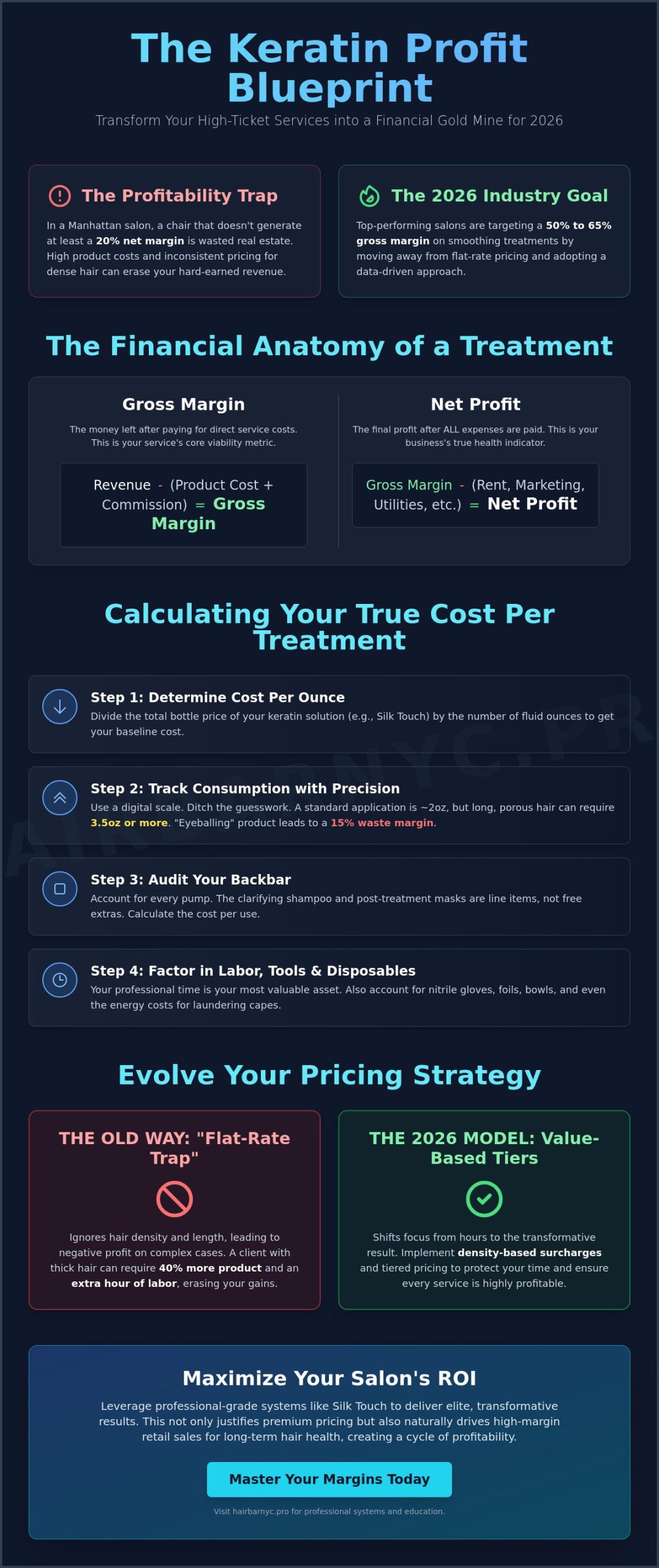
Elevating your salon revenue in 2026 requires more than just technical talent; it demands surgical precision with your numbers. The professional smoothing industry has shifted toward a more data-driven model where intuition is replaced by analytics. Understanding the mechanics of calculating profit margin on keratin treatments is the first step toward achieving true financial independence in the beauty industry. In the high-stakes environment of a Manhattan salon, the fundamental concept of a profit margin serves as the primary health indicator for every chair in the building.
Keratin is often called a “Gold Mine” service because it bridges the gap between luxury and necessity. While a standard haircut might keep a client tidy, a professional-grade smoothing system transforms their daily lifestyle. This high-value result justifies a premium entry price. For 2026, industry benchmarks indicate that top-performing salons aim for a gross margin between 50% and 65% on smoothing treatments. Achieving these numbers requires a strict departure from “Flat-Rate” pricing models. If you ignore hair density, you risk a negative profit on complex cases. A client with thick, porous hair may require 40% more product and an extra hour of labor, which can quickly erase your gains if your pricing is stagnant.
Gross Margin vs. Net Profit in the Salon
You must distinguish between these two metrics to keep your business solvent. Gross margin is what you retain after paying for the direct product costs and the stylist’s commission. It’s the most important metric for evaluating if a specific service is worth your time. Net profit is the final amount remaining after you pay the “invisible” bills like rent, marketing, and utilities. Profit leaks often occur in the smoothing workflow through over-pouring product or inefficient heat-tool transitions. Every gram of wasted keratin-infused formula directly erodes your bottom line.
The High-Value Positioning of Keratin
Keratin services command a significantly higher hourly rate than traditional color or cuts. While a haircut is a maintenance task, a Silk Touch or professional keratin system is a revolutionary transformation. Profit margin is the percentage of revenue remaining after all direct and indirect costs are deducted. By positioning these treatments as an elite lifestyle upgrade, you can maintain 60% margins even as overhead costs rise. This NYC-style efficiency ensures your salon isn’t just busy, but consistently profitable.
- 2026 Target: 50–65% Gross Margin.
- Primary Leak: Product waste due to lack of precision weighing.
- Pricing Strategy: Density-based surcharges to protect labor time.
Step-by-Step: Calculating Your True Cost Per Treatment
Precision is the hallmark of a top-tier Manhattan salon. To master calculating profit margin on keratin treatments, you’ve got to look beyond the service price. It starts with the raw data of your inventory and the discipline of your application. When you fail to account for the literal drops of product leaving your bowl, you’re essentially handing over your profits to the drain. In 2026, the industry standard for high-efficiency salons involves a four-step audit of every chemical service.
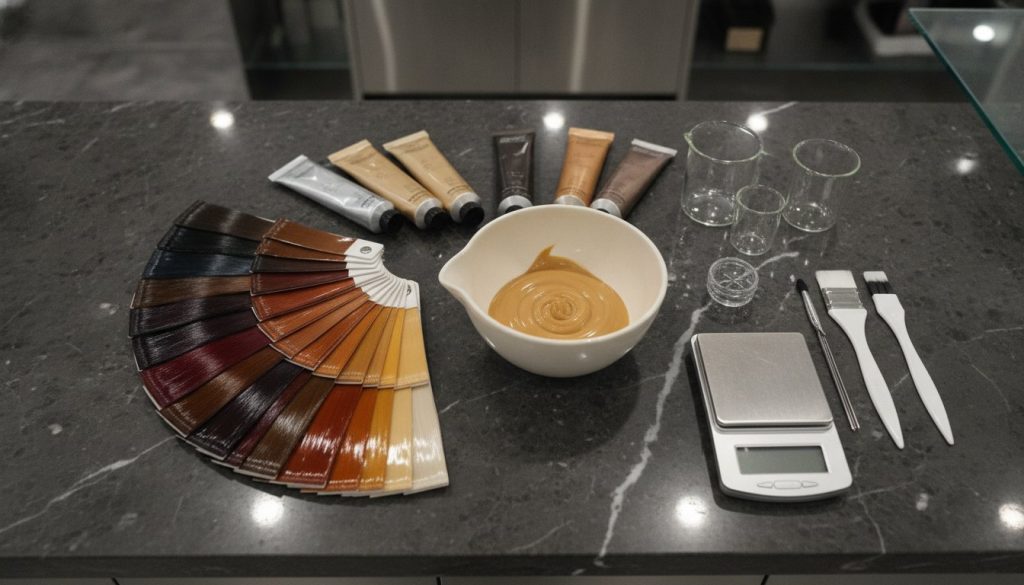
- Step 1: Determine the exact cost per ounce of your primary solution. Whether you’re utilizing the Silk Touch or Diamond systems, divide the total bottle price by the fluid ounces to find your baseline.
- Step 2: Track consumption by hair density and length. A standard 2-ounce application for medium-length hair is the benchmark, but long, porous hair often demands 3.5 ounces or more.
- Step 3: Audit your backbar. The clarifying shampoo used to prep the cuticle and the post-treatment mask are line items, not “free” extras.
- Step 4: Tally the disposables. Nitrile gloves, foil, mixing bowls, and the energy costs for laundering salon capes impact your bottom line.
Measuring Product Consumption for Accuracy
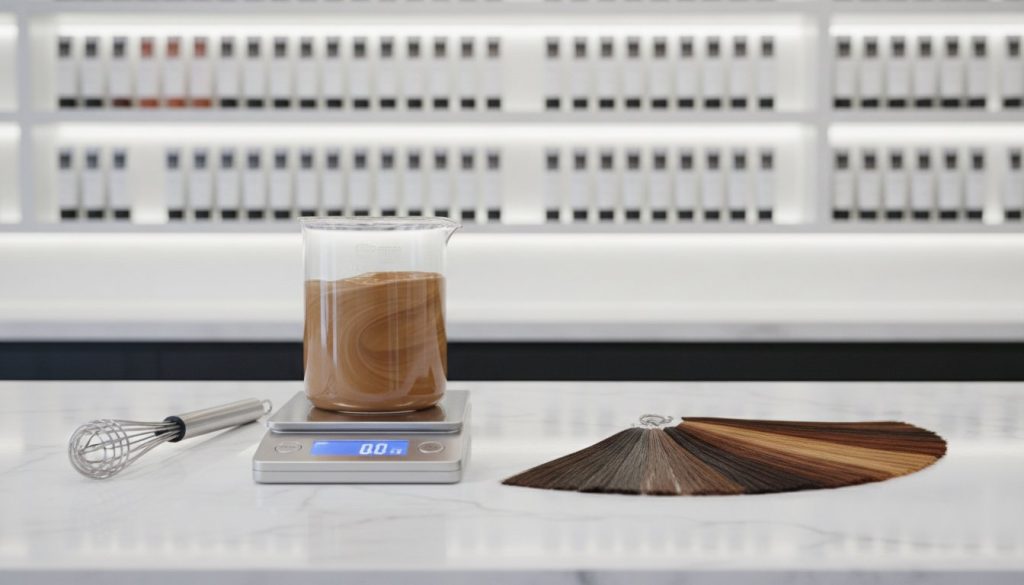
Ditch the guesswork. Use a digital scale to track exactly how many grams of Silk Touch Keratin you use for every client. Professional stylists in 2026 are finding that “eyeballing” product leads to a 15% waste margin. You should also calculate the cost per pump for maintenance shampoos. If a liter bottle delivers 250 pumps, knowing that cost ensures your prep phase stays profitable. Standardizing these amounts prevents margin erosion and ensures consistent results across your entire styling team.
Accounting for Professional Backbar Essentials
The financial impact of using premium natural hair care products during the prep and finish phases is significant. High-quality consumables actually save money; they reduce the need for costly re-treatments by ensuring the hair is perfectly primed. Create a “Service Kit” cost template for every smoothing appointment. This template should include the cost of the keratin, 0.5 ounces of clarifying shampoo, and the finishing serum. This level of detail is how you perfect calculating profit margin on keratin treatments without sacrificing the luxury experience Hair Bar NYC is known for.
Ready to elevate your salon’s efficiency? You can explore our professional systems to see how elite formulations drive better business results.
Beyond the Bottle: Factoring in Labor, Overhead, and Tools
Many salon owners fall into the trap of looking only at the cost of the keratin formula. This oversight ruins your math. When calculating profit margin on keratin treatments, you must account for the three hours of specialized labor required for a flawless finish. In elite Manhattan salons, time is the most expensive inventory. If your chair is occupied for 180 minutes, that space must generate a specific revenue threshold to cover fixed costs like rent, utilities, and liability insurance. Ignoring these variables means you aren’t just losing time; you’re losing money on every booking.
You also need to calculate the cost of acquisition. If your digital marketing spend in 2025 averaged $1,200 monthly to secure 30 new clients, your acquisition cost is $40 per person. Add the 15 minutes spent on a pre-service consultation. These minutes add up. By the time the client sits in the chair, you’ve already invested significant capital into the relationship. Precision in calculating profit margin on keratin treatments requires tracking every dollar spent before the first drop of product touches the hair.
The Reality of Stylist Labor Costs
Calculating a fair hourly wage means looking beyond a base salary. You’re paying for expertise. A keratin specialist with a 2026 Master Certification commands a higher premium than a junior stylist because they guarantee results. Keratin treatments require a higher labor-to-revenue ratio than quick styling services. Unlike a 45-minute haircut, a smoothing treatment demands intense, manual focus for the entire duration. To find your true cost, use this breakdown:
- Identify the stylist’s hourly rate plus payroll taxes and benefits.
- Multiply that rate by the 3-hour average service time.
- Add a 15% “Expertise Premium” for certified smoothing technicians.
Why Quality Tools Protect Your Bottom Line
Don’t compromise on your hardware. High-performance flat irons and dryers are the backbone of a profitable salon. Professional-grade irons maintain a consistent temperature, which ensures the keratin seals perfectly on the first pass. Cheap retail alternatives fluctuate in heat. This leads to uneven results and costly, unpaid re-dos that kill your margins. Professional tools are a capital investment that reduces per-service labor time by up to 20%. When you shave 30 minutes off a 3-hour appointment, you open up space for an additional blow-dry service, directly increasing your daily revenue. Invest in tools that mirror the Hair Bar NYC standard of excellence to keep your workflow fast and your results vibrant.
Pricing Strategies to Maximize Your Salon’s Profit Margin
Elite salon owners understand that pricing is a psychological strategy, not just a math problem. You aren’t merely selling a chemical application; you’re selling hours of saved time and restored confidence. When calculating profit margin on keratin treatments, you must shift your perspective from hourly labor to value-based results. A client isn’t paying for two hours in your chair. They’re paying for three to five months of frizz-free, manageable hair that resists the most humid New York summers.
To protect your bottom line, implement these high-performance strategies:
- Value-Based Positioning: Price the service based on the transformation. A “Silk Touch” finish that eliminates a daily 30-minute blow-dry routine has a high perceived value that justifies a premium ticket.
- Strategic Bundling: Increase your average ticket by pairing smoothing services with professional hair color. This creates a “Total Transformation” package. Always include mandatory retail aftercare in the initial price to guarantee results and boost your retail margins simultaneously.
- The Clean Beauty Premium: Modern clients are increasingly health-conscious. Industry data from 2024 indicates that 72% of luxury salon clients prefer non-toxic alternatives. You can comfortably charge 15% to 20% more for formulas that are vegan and cruelty-free.
The Formaldehyde-Free Pricing Advantage
Positioning non-toxic treatments as a luxury health choice is a powerful move for your brand. By removing harsh chemicals, you’re marketing safety for both the stylist and the client. This justifies higher rates because you’re investing in superior, botanical-infused technology. Market these as “Wellness Smoothing” sessions. Clients will pay more for the peace of mind that their lustrous results don’t come at the cost of their long-term health.
Implementing a Length and Density Surcharge
Nothing kills a profit margin faster than a client with waist-length, high-density hair paying a “flat fee.” Calculating profit margin on keratin treatments effectively requires a transparent surcharge structure. Always use “Starting At” pricing in your marketing. This protects your margins during the consultation when you realize a guest requires double the standard product amount. Use a tiered structure to keep your business profitable regardless of hair type.
Standard Tiered Pricing Structure:
- Short Hair (Above Chin): Base Rate
- Medium Hair (Shoulder Length): Base Rate + 15%
- Long or Extra Thick Hair: Base Rate + 30% + $25 Product Surcharge
Transform your service menu into a profit engine by choosing professional-grade keratin systems that deliver the elite NYC standard your clients crave.
Scaling Your Revenue with Silk Touch and Professional Systems
Scaling a salon’s profitability in 2026 requires more than just talent; it demands strategic systems that prioritize efficiency and high-performance products. Silk Touch Keratin provides a superior ROI because it streamlines the technical process, allowing your stylists to maximize their hourly output. Generic brands often involve cumbersome steps that eat into your schedule. By choosing professional-grade systems from Hair Bar NYC Pro, you ensure that every ounce of product and every minute of labor contributes directly to your bottom line. Precision is a vital factor when calculating profit margin on keratin treatments to ensure your business remains competitive in a luxury market.
Maximizing ROI with the Silk Touch System
The Silk Touch System is engineered for the fast-paced Manhattan environment where time is the most valuable currency. This formula reduces the traditional application process by approximately 25% because it requires fewer steps than standard smoothing treatments. Shorter chair times mean your stylists can accommodate more clients per shift without sacrificing the quality of the results. High-performance ingredients ensure that hair remains lustrous and frizz-free for 12 to 20 weeks. This reliability drives client retention rates to 85% or higher, creating a predictable cycle of recurring revenue every 3 to 5 months. Leveraging our NYC heritage allows your salon to command premium pricing, reflecting an authoritative and sophisticated brand image.
The Power of Mandatory Retail Maintenance
Don’t leave your aftercare revenue to chance. The most successful salons build the “First Set” of maintenance products directly into the service price. This strategy guarantees the longevity of the treatment while instantly boosting your ticket average. The math of retail is simple and powerful. Selling one professional-grade shampoo and conditioner set can increase your total service profit by 10% or more with zero additional labor time. To encourage total hair transformations, provide your clients with a comprehensive hair color guide that details how keratin-infused care protects their chemical investments. This holistic approach positions you as an expert stylist rather than just a service provider.
To maintain peak performance, implement these professional habits:
- Monthly Stat Tracking: Conduct a review of your margins every 30 days to identify which stylists are the most efficient with product usage.
- Inventory Control: Source exclusively from Hair Bar NYC Pro to maintain consistent wholesale costs and avoid the price fluctuations of third-party vendors.
- Education Benchmarks: Ensure all staff members are certified in the Silk Touch application to minimize product waste.
Consistency is the hallmark of an elite salon. When you’re calculating profit margin on keratin treatments at the end of every quarter, the difference between a good year and a great year often lies in the quality of your professional partnerships. By utilizing the Hair Bar NYC Pro system, you’re not just buying a bottle; you’re investing in a proven revenue model that bridges the gap between the salon chair and the home bathroom.
Transform Your Revenue Strategy for 2026
Success in the high-stakes NYC salon market requires more than just styling talent; it demands a rigorous approach to your bottom line. By mastering the nuances of calculating profit margin on keratin treatments, you transition from a service provider to a savvy business leader. You’ve learned to account for every milliliter of product and every minute of labor, ensuring your overhead doesn’t erode your hard-earned gains. Data from the Professional Beauty Association suggests that high-ticket services will drive a significant portion of salon revenue growth through 2026. This makes your choice of professional systems more critical than ever.
Don’t settle for mediocre margins when you can offer the gold standard in hair care. Silk Touch Professional Keratin Systems provide the elite, formaldehyde-free, and vegan formulas that Manhattan’s top stylists demand. These cruelty-free solutions deliver the clean beauty results your clients crave while streamlining your application process for maximum efficiency. It’s time to align your craft with a brand that understands the intersection of luxury and profitability.
Elevate your salon’s profitability with Silk Touch Professional Keratin Systems and redefine what’s possible for your business. Your journey to a more prosperous and sustainable salon starts with the right tools and a commitment to excellence.
Frequently Asked Questions
What is a good profit margin for a keratin treatment?
A healthy gross profit margin for a professional keratin service typically ranges between 70% and 80%. This percentage allows you to cover your high-quality product costs and stylist labor while maintaining a sustainable bottom line. High-end Manhattan salons often aim for the upper end of this bracket to account for premium rent and luxury guest amenities.
How much product should I use for a standard keratin service?
You should use approximately 1.5 to 2 ounces of solution for a standard shoulder-length treatment. Using more than this often leads to unnecessary smoke during the flat-ironing process and wastes expensive inventory. Precise measurement is the hallmark of a professional stylist who values both results and resource management.
Should I charge more for long or thick hair?
Yes, you should implement a surcharge for hair that passes the 16-inch mark or possesses exceptional density. Long or thick hair can require 50% more product and add 45 to 60 minutes to your chair time. Clear communication about these additional fees ensures your expertise is compensated fairly while maintaining your salon’s professional standards.
How do I factor in the cost of my professional flat iron?
Divide the total cost of your professional iron by its expected lifespan of 500 services to find the per-use equipment cost. If your titanium iron costs $250, you’re looking at a $0.50 expense per client. This micro-calculation is a vital step when calculating profit margin on keratin treatments to ensure your overhead doesn’t eat into your earnings.
Is it more profitable to offer formaldehyde-free keratin?
Formaldehyde-free treatments are often more profitable because they command a 15% to 20% price premium in the current market. Modern clients prioritize botanical extracts and gentle chemistry, making them willing to pay more for a safer experience. While the initial product cost might be higher, the increased client retention and higher service price point boost your overall revenue.
How often should I review my keratin service pricing?
Review your service menu every 6 months to stay ahead of shipping fluctuations and inflation. Industry reports from 2024 indicate that raw material costs for premium hair care can shift by 5% within a single season. Regular audits allow you to adjust your rates incrementally rather than shocking your loyal clientele with a massive price hike later.
Can I include the cost of aftercare in the service price?
Bundling a sulfate-free shampoo and conditioner into the service price is a brilliant way to guarantee long-lasting results. This strategy typically adds $40 to your total ticket price while providing you a 30% margin on the retail items. It positions you as an expert who cares about the hair’s health long after the client leaves the salon chair.
What is the biggest hidden cost in keratin treatments?
Labor time during the meticulous blow-dry and flat-ironing stages represents your largest hidden expense. These phases consume 75% of the total service window and require intense focus from the stylist. Accurately accounting for these minutes is the only way to succeed when calculating profit margin on keratin treatments in a competitive metropolitan market.