Professional Hair Color for Grey Coverage: The 2026 Stylist’s Guide to Flawless Results
Achieving 100% grey coverage isn’t just a standard salon service; it’s a high-stakes chemical negotiation between a stylist and the most resistant fiber on the human head. You’ve likely faced the frustration of translucent roots that “spit out” color or the disappointment of a client leaving with hair that feels more like coarse wire than silk. In an era where 2026 standards demand both high performance and clean chemistry, finding the perfect professional hair color for grey coverage requires moving beyond simple pigment deposit into the realm of precise structural restoration.
We understand that your reputation depends on results that are opaque, dimensional, and enduring. This guide promises to help you master the technical science and artistic formulation needed to transform stubborn greys into a canvas of sophisticated, metropolitan shine. We’ll preview the essential role of high-pigment loads, the necessity of post-color treatments like Silk Touch Keratin to soften wiry textures, and the latest techniques in grey blending that ensure a natural, high-fashion finish. Prepare to elevate your color bar to an elite standard of excellence that keeps your clients’ hair healthy, hydrated, and flawlessly toned.
Key Takeaways
- Decode the biological structure of grey hair to effectively bypass the compact cuticle and air-filled medulla during the coloring process.
- Master the precise calibration of developer and pigment load to guarantee 100% professional hair color for grey coverage on even the most resistant roots.
- Shift your formulation strategy from simply hiding greys to enhancing skin tones with dimensional, rejuvenating shades that avoid a flat or sallow finish.
- Leverage the synergy of keratin-based care to transform coarse, wiry textures into the soft, manageable hair your high-end clients expect.
- Upgrade your salon’s performance by utilizing high-pigment, clean-beauty systems designed for metropolitan standards of excellence.
The Biology of Grey: Why Professional Pigment is Non-Negotiable
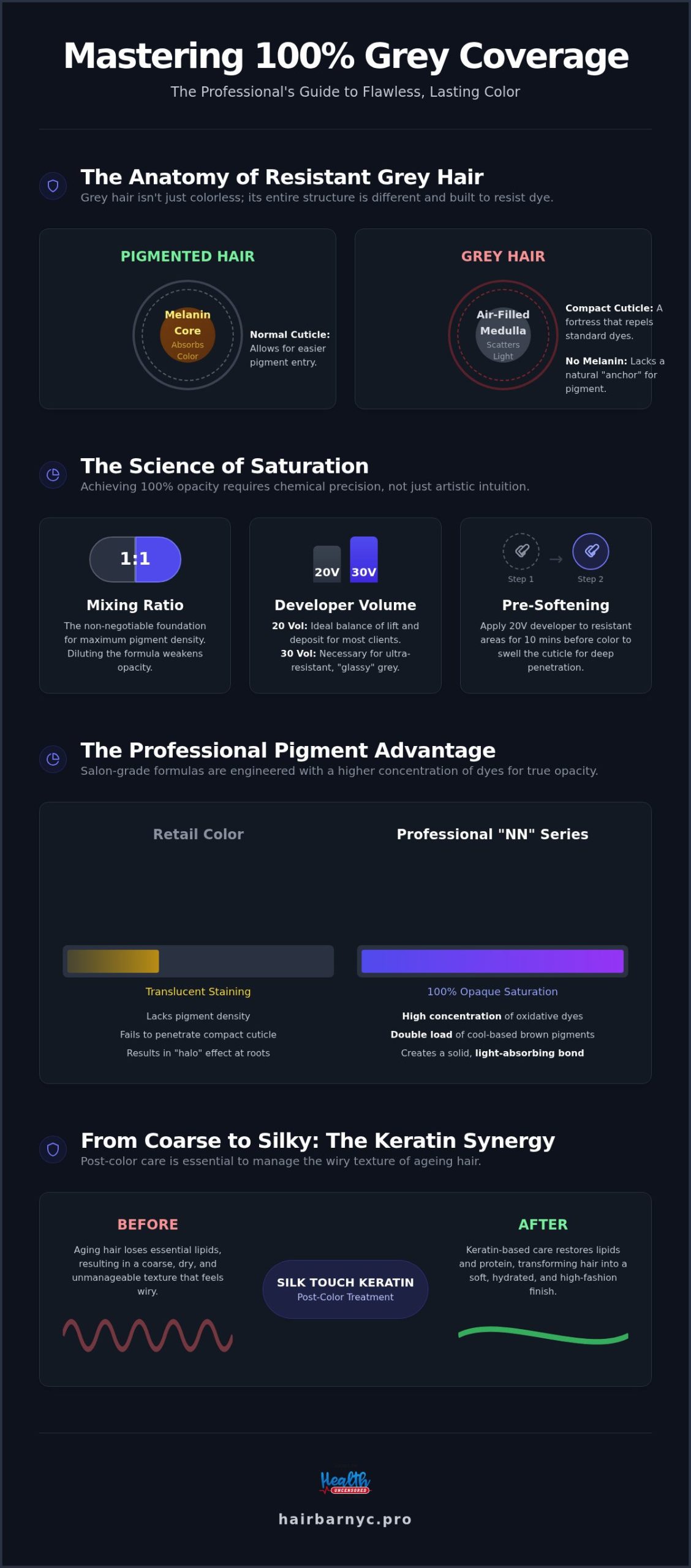
Grey hair is a biological paradox. It isn’t simply hair that has lost its shade; it’s a structural overhaul of the hair shaft itself. While standard hair relies on a core of melanin to provide depth and tone, grey strands are defined by the total absence of these pigments. This void is often replaced by a thickened, air-filled medulla that scatters light, giving the hair its characteristic silver or white appearance. For a stylist, this means you aren’t just adding color; you’re filling a hollow, translucent tube that lacks the natural “anchor” of melanin.
The challenge intensifies at the surface. The cuticle of a grey strand is significantly more compact and tightly packed than pigmented hair. This architectural rigidity acts as a fortress, repelling standard dyes. Retail products often fall into the “translucency trap” because they lack the alkaline precision needed to swell this stubborn cuticle. They might stain the surface, but they fail to provide the opaque, deep-seated saturation required for a flawless finish. To achieve metropolitan results, you must use formulas designed to force pigment into this reinforced structure without shattering the hair’s integrity.
Melanin Loss and Porosity
In the world of color theory, “white” hair has zero pigment, while “grey” is often an optical illusion created by a salt-and-pepper mix of white and naturally pigmented strands. As hair ages, it undergoes a significant loss of essential lipids and sebum. This depletion leaves the surface feeling dry and exceptionally resistant to moisture. Resistant grey is defined as hair with a tightly closed cuticle and a lack of natural internal moisture that requires a specialized alkaline shift to allow for pigment entry and stabilization.
The Professional Pigment Load Advantage
Elite professional hair color brands solve the resistance problem by engineering a much higher concentration of oxidative dyes than anything found on a retail shelf. Understanding the chemistry of hair color is vital for stylists because grey hair requires these dense pigments to create a permanent, light-absorbing bond. Without this density, the color looks “muddy” or artificial under salon lights.
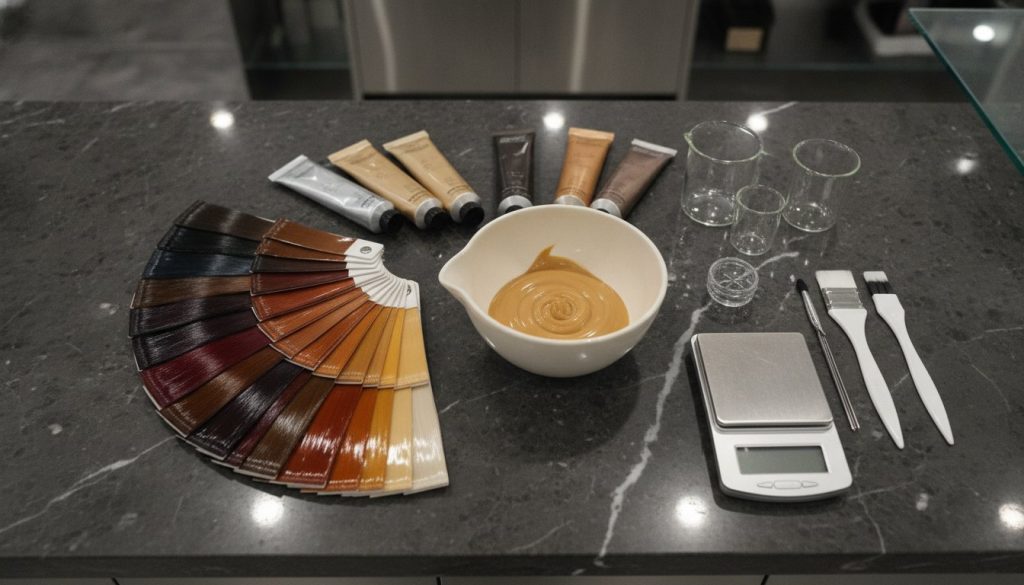
The secret weapon for 100% saturation is the “Double Natural” (NN) series. These formulas contain a double load of cool-based brown pigments that provide a solid, opaque foundation. When you use a high-performance system like Color Bar Professional, you’re working with a low-ammonia environment that respects the scalp while delivering intense saturation. This creates a sensory experience that is as luxurious as it is effective. Ultimately, the only way to secure reliable professional hair color for grey coverage is to utilize these high-density, salon-grade tools that treat the hair as a complex biological canvas rather than a simple surface.
Technical Precision: Mastering Pigment Load for Resistant Grey Coverage
Mastering the application of professional hair color for grey coverage requires a shift from artistic intuition to chemical precision. While The Biology of Grey explains the internal loss of pigment, the stylist’s challenge is the external barrier. The developer isn’t just a catalyst; it’s the key that unlocks the tightly bound cuticle of a grey strand. Without the correct volume and concentration, even the highest quality pigment will simply sit on the surface, leading to the dreaded “halo” effect where roots appear translucent within days.
The standard 1:1 mixing ratio is the non-negotiable foundation for maximum opacity. Diluting your formula with too much developer reduces the pigment density, making it impossible to achieve a solid, opaque result. For most clients, 20 Volume developer provides the ideal balance of lift and deposit. However, for ultra-resistant “glassy” grey, 30 Volume is often necessary to force the cuticle open. If you’re facing a particularly stubborn hairline, the pre-softening technique is your best defense. Apply 20 Volume developer directly to the resistant areas for ten minutes before applying your color. This preps the hair by swelling the cuticle, ensuring the subsequent pigment load can penetrate the core of the fiber.
The Developer Dilemma
Choosing the wrong strength often results in “hot roots,” where the regrowth appears brighter or warmer than the mid-lengths. 10 Volume developer generally lacks the alkaline power to shift the resistant grey cuticle, while anything over 30 Volume can cause excessive lift of the natural remaining pigment. Timing is equally critical. Grey coverage isn’t a fast-track service. It requires a full 45-minute processing cycle to allow the oxidative dyes to fully develop and stabilize within the hair shaft. Cutting the time short is the primary cause of rapid fading and poor saturation.
Formulating for 100% Opacity
To maintain a high-end, metropolitan aesthetic, you must blend the Natural (N) or Double Natural (NN) series with your desired fashion shades. A common mistake is using only ash tones to combat warmth, which can leave ageing hair looking flat, “inky,” or sallow against the skin. For brunettes, adding a touch of gold or copper to your formula provides the necessary reflection to keep the color looking vibrant and expensive. Using a high-performance system like Color Bar Professional Hair Color ensures that your pigment load is dense enough to cover while maintaining the hair’s natural luster. For a deeper dive into modern application methods, consult The Ultimate Guide to Professional Hair Color to refine your salon’s technical repertoire.
The Art of Formulation: Choosing Shades that Rejuvenate and Brighten
Covering grey isn’t just about total opacity; it’s about restoring vitality to a client’s overall aesthetic. While the technical goal is 100% saturation, the artistic goal is to create a look that feels expensive and intentional. Selecting the right professional hair color for grey coverage requires a nuanced understanding of how light interacts with both the hair fiber and the skin. A flat, monochromatic application often results in a “wig-like” appearance that lacks the movement found in natural, youthful hair. You want the color to look alive, not just applied.
Avoid the common trap of over-using ash tones. While cool pigments are excellent for neutralizing unwanted brassiness, they can make maturing skin look sallow or exhausted. Instead, lean into neutral-warm palettes. These shades reflect light more efficiently, creating that sought-after metropolitan glow that brightens the complexion. By incorporating gold, beige, or soft chocolate undertones, you provide a luminous frame for the face that feels modern and chic. This approach moves the conversation from “hiding” a problem to “enhancing” a lifestyle.
Blonde Blending vs. Opaque Coverage
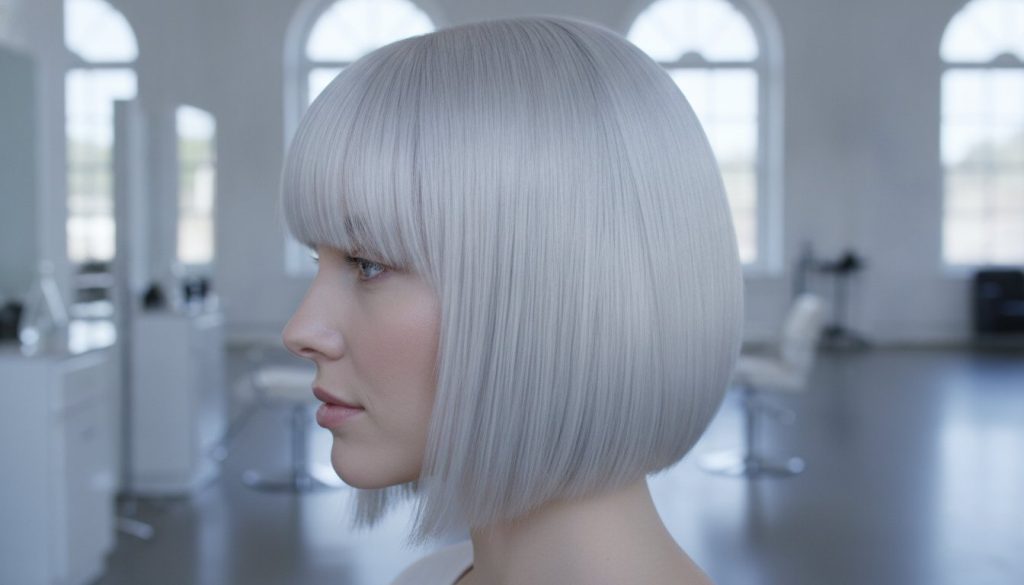
Stylists must decide whether the client needs a full permanent tint or a more diffused approach. High-impact highlights are often the superior choice for clients with 50% grey or less. This “Grey Blending” technique allows for a softer regrowth line, making it a low-maintenance luxury for busy professionals who can’t make it to the salon every three weeks. For those transitioning toward a natural silver-fox look, using a demi-permanent gloss to tone the remaining grey can provide a polished finish without the commitment of a hard line of demarcation.
Skin Tone and Color Theory
Identifying skin undertones is the first step in successful formulation. Look at the flecks in the iris or the jewelry that best complements the client to determine if they are cool, warm, or neutral. Understanding The biology of human hair greying provides a scientific basis for why we must adjust our tonal choices as the hair’s natural pigment disappears. When choosing a professional hair color for grey coverage, recommend shades like Champagne or Soft Copper to add warmth back into the palette. Follow the “Half-Level” rule: always choose a shade slightly lighter than the natural base to ensure the result looks soft and sophisticated rather than harsh and heavy against the skin.
The Keratin Synergy: Managing Texture and Coarseness in Ageing Hair
The most frequent complaint among clients seeking professional hair color for grey coverage isn’t actually the shade itself; it’s the tactile experience of the hair. Grey strands are notoriously wiry and coarse, often described as feeling like straw. This textural shift occurs because ageing hair loses its natural lipid barrier, leaving the cuticle rough and prone to tangling. To deliver a truly elite result, a stylist must address both the pigment and the structural integrity of the fiber to ensure the hair feels as expensive as it looks.
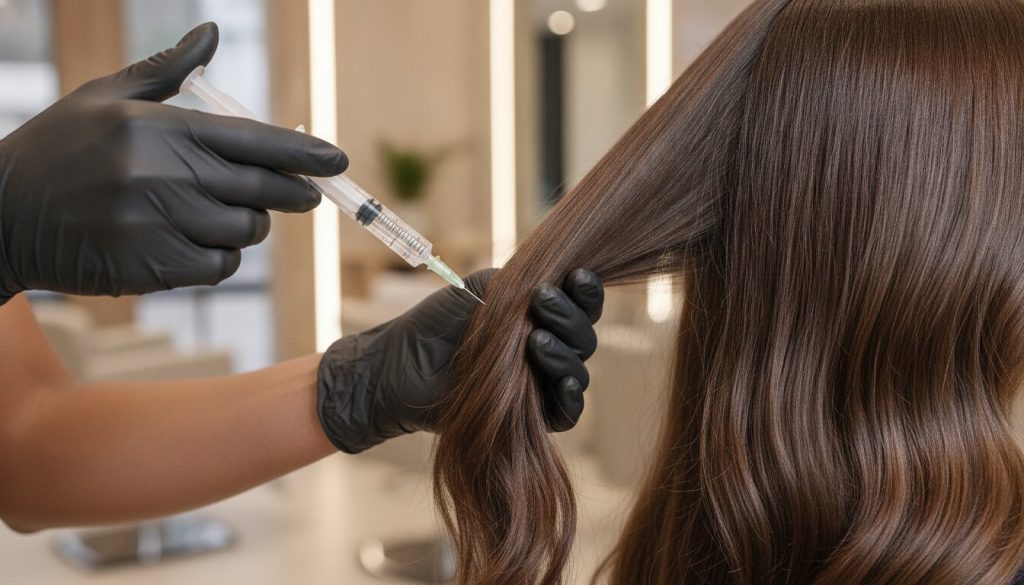
Modern formaldehyde-free keratin treatments are the essential bridge between coloring and finishing, aligning with the 2026 industry shift toward safer, high-performance salon environments. These vegan systems, a hallmark of the Hair Bar NYC Professional standard, replenish lost lipids and smooth the compact, resistant cuticle mentioned in our technical analysis. By following the “Color-First, Keratin-Second” rule, you lock in the oxidative dyes while simultaneously creating a protective shield that mirrors a metropolitan shine. This synergy ensures that the hair doesn’t just look younger because of the color, but feels rejuvenated because of the restored texture.
The Silk Touch Advantage
The Silk Touch Keratin Treatment is specifically engineered to create a “glass” finish on processed hair. By sealing the cuticle immediately after the pigment has stabilized, you prevent the premature fading that often plagues the hairline. For the best results, stylists should advise a two-week waiting period between a permanent color service and a full smoothing treatment. This allows the professional hair color for grey coverage to fully oxidize within the hair shaft before the keratin system is heat-sealed over the surface for maximum durability.
Maintenance for Ageing Hair
Consistency at home is what separates a standard service from an elite experience. Using sulfate-free, natural shampoos like Silk Touch Shampoo is critical for preserving the depth of the color. Without these specialized formulas, harsh surfactants will quickly strip both the keratin and the pigment. Hair Bar NYC Professional recommends a Single Process Color maintenance every three to five weeks to keep roots pristine. Between salon visits, a three-step routine of cleansing with Silk Touch Shampoo, hydrating with Silk Touch Conditioner, and treating weekly with Keratin Intensive Treatment provides a constant youth boost to the hair.
Experience the transformative power of elite smoothing by booking a Silk Touch Keratin Treatment to complement your next color service.
The Professional Advantage: Elite Grey Coverage with Hair Bar NYC Professional
Choosing the right professional hair color for grey coverage is the difference between a satisfied client and a loyal advocate. In an industry where precision is the only currency that matters, Color Bar Professional stands as the elite choice for stylists who refuse to gamble with their results. This system is engineered for the high-pressure environment of the modern salon, offering 100% reliability on even the most stubborn, glassy regrowth. You aren’t just applying a tint; you’re deploying a high-pigment solution designed to meet the uncompromising standards of metropolitan hair care.
Clean beauty is no longer a niche preference; it’s a 2026 professional mandate. As regulatory bodies like the FDA increase oversight on cosmetic safety, Hair Bar NYC Professional leads the way with vegan and cruelty-free formulas that deliver high-performance results without harsh, unnecessary chemicals. By utilizing a low-ammonia base, you provide a comfortable, sensory experience for the client while achieving deep-seated saturation. This commitment to structural integrity means the hair retains its natural elasticity and shine long after the service is complete. You’re giving your clients the luxury of choice: uncompromising coverage and ethical formulation in a single bottle.
Precision Tools for Precision Color
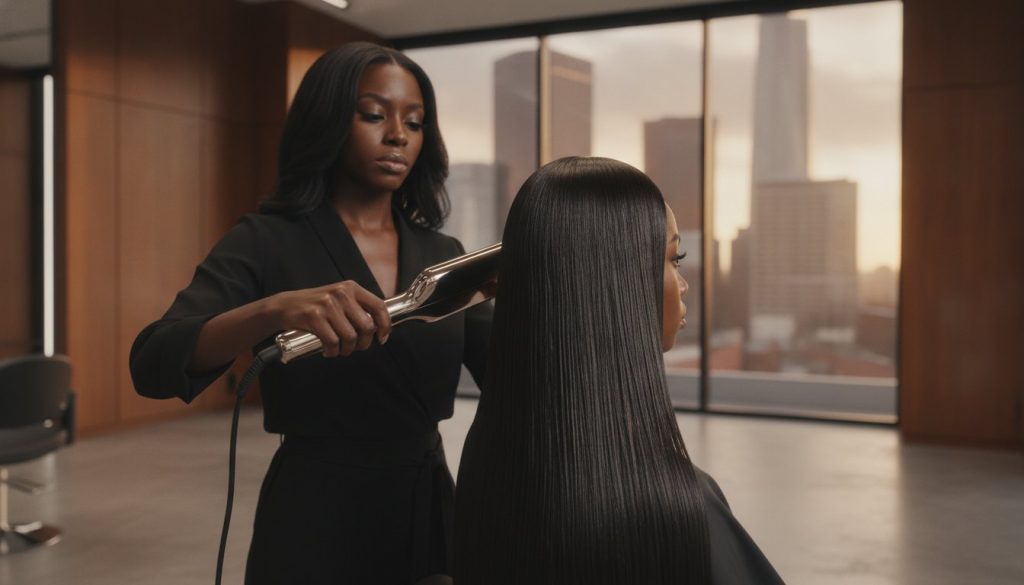
The Hair Bar NYC Professional ecosystem extends far beyond the mixing bowl. To maintain the “glass” finish achieved with Silk Touch treatments and high-density pigments, the finishing tools must be of an equal caliber. Utilizing a Professional Hair Dryer and Professional Flat Iron ensures that heat is distributed with surgical accuracy, sealing the cuticle without scorching the delicate newly-deposited color. High-heat styling always demands a layer of defense; the Keratin Infused Serum acts as an essential thermal shield, preserving the lipid barrier we worked so hard to restore. We’ve entered an era where the professional standard is the new retail benchmark, and your clients expect the same tools in your hands that they use for their metropolitan maintenance at home.
Final CTA and Brand Promise
Experience the transformative power of salon-grade chemistry that respects the biology of the hair. We invite you to move beyond basic coverage and embrace a system built for the future of professional styling. Grey hair isn’t a problem to be solved; it’s a canvas for luxury, waiting for the right pigment and the right hands to bring it back to life. Elevate your craft and your results with the tools used by the industry’s best.
Shop the Hair Bar NYC Professional Color Bar Collection and redefine what’s possible for your clients today.
Master the Future of Elite Grey Coverage
The transition from standard tinting to elite rejuvenation requires a deep understanding of both pigment chemistry and hair biology. You’ve learned that professional hair color for grey coverage isn’t just about hiding silver; it’s about restoring a youthful, light-reflecting glow through technical precision. By combining high-density oxidative dyes with the smoothing power of Silk Touch Keratin, you ensure that every client leaves with hair that feels as soft as it looks vibrant. This holistic approach sets a new benchmark for salon excellence in 2026.
Our formulas are trusted by elite stylists in NYC and Florida for their 100% opaque results and vegan, formaldehyde-free ingredients. Don’t settle for translucent roots or coarse textures when you can offer a premium metropolitan experience. Discover the Color Bar Professional Difference at Hair Bar NYC Professional and elevate your craft today. Your clients trust you for results that are both flawless and healthy; it’s time to give them the best. Let’s make every color service a transformative luxury.
Frequently Asked Questions
What is the best professional hair color for 100% grey coverage?
Color Bar Professional Hair Color is the definitive choice for 100% coverage because it’s engineered with a dense pigment load. Its Double Natural (NN) series provides the opaque foundation necessary to fill the air-filled medulla of grey strands. Elite stylists in NYC and Florida salons rely on this system for its reliability and metropolitan shine.
How do I deal with resistant grey hair that won’t take color?
Resistant grey requires a more aggressive alkaline shift to open the compact cuticle. Use the pre-softening technique by applying 20 Volume developer to the hairline for ten minutes before the color service. Alternatively, increasing your developer to 30 Volume can provide the extra lift needed to force pigment into glassy, stubborn fibers.
Can I use semi-permanent color to cover 100% grey?
Semi-permanent color cannot achieve 100% grey coverage because it lacks the oxidative power to penetrate the hair’s core. These formulas only stain the surface, leading to translucent results that fade quickly. For total opacity, you must use a permanent professional hair color for grey coverage that utilizes developer to lock pigment inside the shaft.
Does grey hair need a different developer than pigmented hair?
Grey hair typically requires a 20 Volume developer to successfully swell the cuticle for pigment deposit. While 10 Volume works for standard color, it often fails to bypass the resistance of ageing hair. In cases of extreme resistance, a 30 Volume developer provides the necessary strength to ensure a solid, long-lasting result.
How often should I touch up my grey roots?
Maintain your results with a root touch-up every 3 to 5 weeks to prevent a harsh line of demarcation. This frequency ensures that the regrowth remains manageable and the color looks consistently fresh. Regular maintenance also helps avoid the “banding” that occurs when roots grow too long before the next service.
Will a keratin treatment help my grey hair look less wiry after coloring?
A Silk Touch Keratin Treatment is the best solution for softening the wiry, straw-like texture common in grey hair. These treatments replenish the lost lipid barrier, smoothing the cuticle and adding a glass-like finish. By sealing the hair post-color, you also help lock in the pigment and extend the life of your professional hair color for grey coverage.
Why does my grey coverage always turn out too dark or ‘inky’?
Inky results usually happen when the formula lacks warm tones or is applied at a level that is too dark for the client’s skin. Ageing hair absorbs cool pigments more readily, which can lead to a flat, muddy appearance. Always follow the “Half-Level” rule by choosing a shade slightly lighter than the natural base and adding gold or copper to reflect light.
Is there a vegan professional hair color that covers grey effectively?
Color Bar Professional offers a high-performance vegan and cruelty-free formula that doesn’t compromise on saturation. You can achieve 100% coverage without harsh chemicals, aligning with the 2026 trend toward clean, ethical beauty. This system proves that you don’t need animal-derived ingredients to get elite, salon-grade results on resistant grey hair.