Collaborating With Local Businesses to Promote Your Salon

A salon partnership is only as valuable as the audience and experience it brings to both businesses. Collaborating with local businesses to promote your salon can introduce your services to potential clients, but a mismatched partner or one-sided offer may do little for either brand.
Be selective. The strongest collaborations connect businesses with compatible customers and values, then give each audience a clear reason to participate. A thoughtful cross-promotion, shared event, or bundled offer can feel useful rather than like another sales pitch, especially when both partners contribute fairly.
This guide explains how to assess potential partners, choose a promotion both businesses can confidently share, and track whether it leads to meaningful inquiries or bookings. You’ll also learn what to agree on before launch, how to make the offer easy to understand, and how to use the results to decide whether to refine, repeat, or end the partnership. With a clear plan, salon owners can support client discovery while strengthening the experience they offer existing guests.
Key Takeaways
- Choose partners by audience fit, shared values, and reputation, not just convenience.
- Make sure the collaboration offers useful, balanced exposure for both businesses.
- Consider co-created educational content, referral introductions, shared events, or approved social posts.
- Before launch, agree in writing on the goal, responsibilities, messaging, channels, timing, and approval process.
- Review inquiries and bookings, record what worked, and use those lessons to improve future collaborations.
Why collaborating with local businesses can help promote your salon
A trusted introduction can make your salon easier to discover. Collaborating with local businesses to promote your salon connects you with people who already value related services, while giving your partner relevant exposure to your audience. The opportunity comes from relevance and reciprocity, not simply from sharing more promotional content.
A salon-business collaboration is a shared promotion in which compatible businesses contribute value to each other’s audiences and agree on a common goal. A partner’s recommendation may help a potential client discover your salon while considering a related service. For example, a salon and a wedding planner might share useful information with people preparing for an event. That introduction can support discovery, but it doesn’t guarantee referrals or bookings.
Think of partnerships as one part of your salon’s promotional mix, alongside your own marketing and the experience clients receive in the chair. A collaboration can extend your reach, but it can’t replace consistent service, clear communication, or a strong independent presence. The goal is to complement your ongoing efforts, not rely on someone else’s audience to carry them.
What makes a salon partnership different from a standard promotion?
A partnership is reciprocal. Each business contributes something relevant, such as access to an audience, professional expertise, useful content, or an experience for shared customers. Simply reposting another business’s advertisement is a one-way placement, not necessarily a collaboration. Before publishing, agree on the purpose, each partner’s role, and permission to use names, images, or other marketing materials. Audience relevance matters more than the number of posts.
Which salon goals can a partnership support?
Choose one primary goal before approaching a potential partner. A campaign intended to encourage bookings needs a clear next step for interested clients. An educational event may prioritize attendance and engagement, while a shared community initiative may focus on visibility over time. Partnerships can also support referrals or give existing clients a reason to reconnect. A specific goal helps you choose the right format and judge whether the effort was worthwhile.
Keep the exchange aligned with your salon’s standards. The right partner should complement your services and share an approach to client care that you’re comfortable being associated with. When both businesses contribute something useful, the promotion feels like a considered recommendation rather than an ad placed in front of an unrelated audience.
How to choose local businesses that fit your salon’s audience
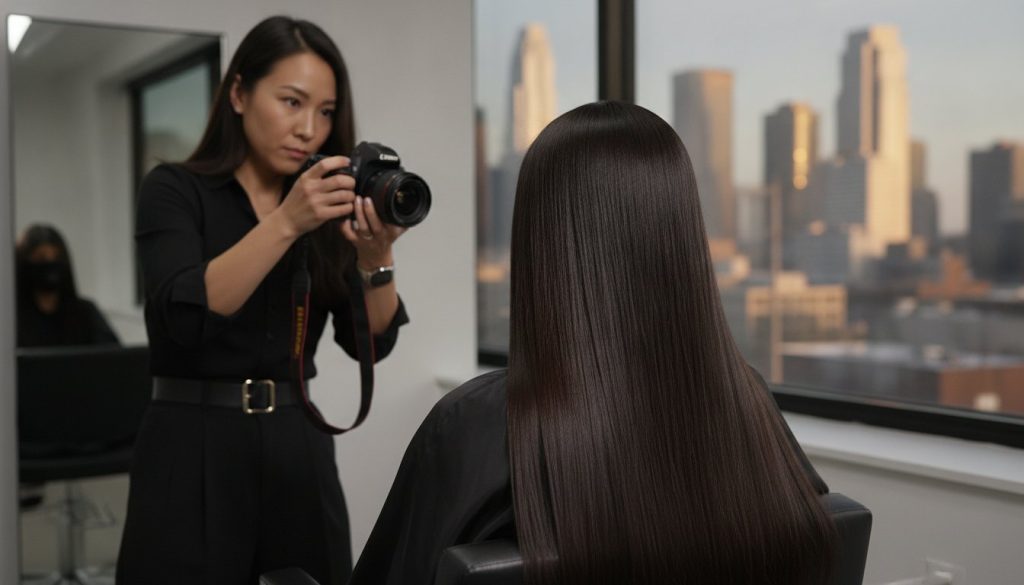
A strong partner isn’t simply another business willing to share a post. Look for overlap in customer needs, service standards, and communication style. A photographer, clothing boutique, or event professional could be worth considering if your clients already seek those services. Treat these categories as starting points, not guaranteed sources of referrals.
How can a salon identify businesses with overlapping customers?
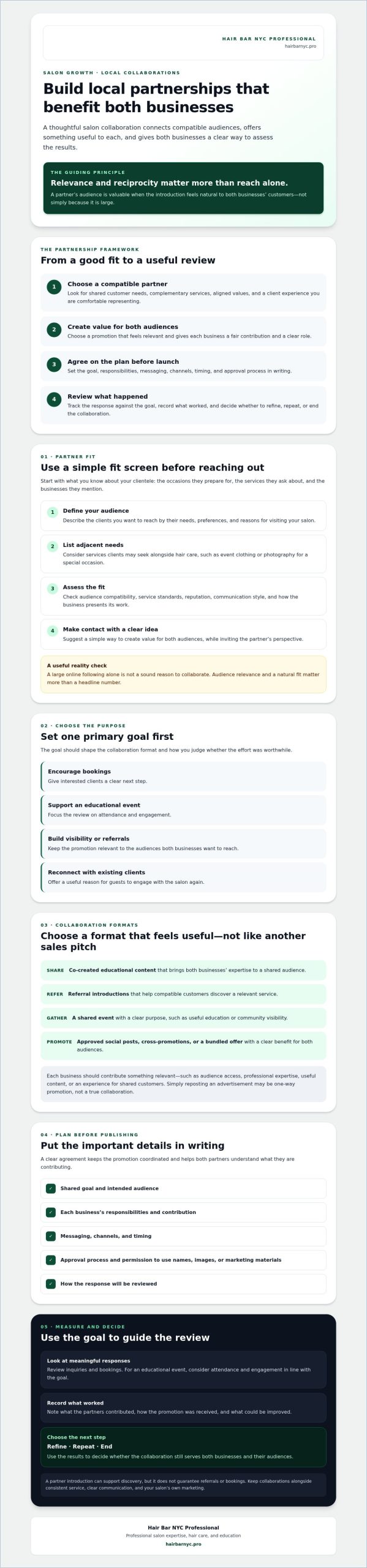
Start with what you know about your clientele: the occasions they prepare for, the services they ask about, and the businesses or professionals they mention. Then use this four-step screen before reaching out:
- Define your audience. Describe the clients you want to reach by their needs, preferences, and reasons for visiting your salon.
- List adjacent needs. Note services or experiences clients may seek alongside hair care, such as photography for a special occasion or clothing for an event.
- Assess the fit. Check whether a potential partner serves a compatible audience and offers an experience that complements your salon’s standards.
- Make contact with a clear idea. Suggest a simple way to create value for both audiences, while inviting the partner’s perspective.
A large online following alone isn’t a sound reason to collaborate. Audience relevance matters more than a headline number, especially if the promotion doesn’t feel natural to either business’s customers.
What should salon owners check before reaching out?
Review publicly available information before proposing a shared promotion. Look at the partner’s website, social channels, public messaging, and customer feedback. Consider whether the service quality and customer experience appear consistent with your salon’s approach. Notice how the business answers questions and presents its work. This research won’t tell you everything, but it can help you prepare useful questions for an initial conversation.
A suitable partner serves a compatible audience, communicates with care, maintains a consistent customer experience, and can contribute something useful without compromising either business’s standards.
Check professional boundaries, too. Agree on what each business can offer, which materials it may share, and how each partner will be represented. Be specific about contributions, such as writing an educational post, introducing interested clients, or providing space for an event. Don’t promise audience reach, referrals, or bookings you can’t verify. Clear expectations make the proposal more credible and give both partners a fair basis for deciding whether to proceed.
As you refine the client experience your salon brings to a collaboration, explore professional hair-care products and education from Hair Bar NYC Professional.
Salon collaboration ideas that give both businesses real value
Choose a format that gives clients something useful and is manageable for both partners to deliver. A polished event may suit a salon with staff time to host, while a co-created post may be more practical when schedules are tight. Match the activity to the campaign goal, available channels, and each business’s capacity before committing.
- Co-created educational content: Answer a shared client question through a short video, article, or social post. A stylist and photographer, for example, could offer complementary tips for preparing for a portrait session. Credit each contributor and keep advice within their expertise.
- Referral introductions: A personal introduction or referral card can help interested clients find a relevant business. First agree on how referrals will be made, what information can be shared, and what the client should do next.
- Shared events: Host a workshop or client appreciation event where each partner contributes useful knowledge or an experience. Attendees gain more than a sales pitch, and both businesses have a clear role in the program.
- Mutually approved social posts: Share campaign content through each business’s channels, with accurate descriptions, approved visuals, and clear attribution. This can extend visibility without requiring a larger event.
Agree on all offer details before promoting them. Confirm who can participate, what each business will provide, any stated conditions, and how clients take the next step. Don’t imply discounts, included services, availability, or other terms that both partners haven’t approved. Clear details protect the client experience and reduce confusion during booking or at an event.
Which joint promotions work well for salon audiences?
Choose an activity that answers a real client question or adds value to an occasion your audience cares about. Educational content works well for shareable advice; a shared event gives partners space to demonstrate their expertise; and referrals create a direct introduction when a client is already looking for a complementary service. In every format, each partner should make a visible, meaningful contribution.
How can partners share content without making it feel like an ad?
Lead with a practical question or a clear reason the businesses are working together. Describe each partner accurately, use visuals both have approved, and credit contributors openly. Keep both brands’ voices recognizable, then offer one simple next step, such as reading the full guide or checking event details. This makes the collaboration useful first and promotional second.
Before choosing a format, compare the campaign goal with the time and channels each partner can realistically contribute. A modest, well-executed post may be more valuable than an event that strains salon staffing. For a salon partnership to work, a fair exchange and a clear client benefit matter more than campaign size.
How to plan, launch, and measure a salon partnership
Turn a promising idea into a manageable campaign by agreeing on the details before either business publishes or invites clients. A simple written plan helps both teams deliver a consistent message, handle inquiries confidently, and assess whether the collaboration deserves another round.
What should partners agree on before a campaign goes live?
Use a shared launch sequence to keep the work focused:
- Set one primary objective. Decide whether the campaign is intended to generate inquiries, encourage referrals, attract event attendees, or build awareness.
- Define the audience and message. Clarify who the promotion is for, what it offers, and why the partnership is relevant to them.
- Assign responsibilities. Record who creates content, supplies approved visuals, publishes each post, responds to questions, and follows up with interested clients.
- Choose channels and timing. Select platforms or communication methods both partners can realistically support, then agree when campaign materials will be reviewed and shared.
- Confirm the next step and referral process. Tell clients where to direct questions or how to act on the offer. Let staff know how to recognize a referral and where to send related inquiries.
- Set a review date. Choose a time to compare observations and discuss next steps without assuming a particular result.
Put the agreed details in writing, including each partner’s contribution and the approval process for copy, images, and offer terms. This gives both businesses a chance to correct errors before launch and helps prevent a promotion from implying conditions or benefits that haven’t been confirmed.
How can a salon tell whether the collaboration is worth continuing?
Measure against the objective you set, not a vague sense that the campaign “seemed successful.” If the goal was inquiries, record relevant questions and how people heard about the salon. For referrals, ask staff to note partner mentions. For an event, track attendance. For social content, review engagement on the campaign posts. These indicators show what happened, but don’t guarantee future bookings.
Measurement should reflect the campaign’s chosen goal, because the right indicator for event attendance won’t necessarily show whether a referral campaign generated inquiries.
At the review, compare observations with the original objective and ask both teams what felt useful, manageable, or confusing. Continue if the collaboration served its purpose and fits each partner’s capacity. Adjust the format or message if the audience response was limited, or pause if the effort no longer makes sense for either business. Salon operators strengthening their client experience alongside partnership outreach can explore professional hair-care products and education from Hair Bar NYC Professional.
How to build lasting local business relationships that promote your salon
A successful promotion can open the door to an ongoing relationship, but consistency and consideration are what keep it worthwhile. After collaborating with local businesses to promote your salon, close the loop thoughtfully: thank your partner, share relevant observations, and make space for an honest conversation about what should happen next.
How should salon owners follow up after a joint promotion?
Send a brief thank-you and share the feedback or observations you agreed to review. Ask whether the division of work and customer handoff felt clear for both teams. If there’s a natural next step, suggest one specific adjustment, such as simplifying the message or choosing a format that better suits staff schedules. Make clear that another campaign is optional, not an assumed commitment.
Keep a simple record while the details are fresh. Save the final, approved campaign copy and visuals, note which channels were used, and document useful feedback from clients and staff. Record lessons rather than making broad claims about success. This gives you a practical reference if you revisit the idea and helps you avoid rebuilding campaign materials from scratch.
Trust builds over time. A partner’s recommendation reflects on both businesses, so the salon experience that follows should support the confidence behind that introduction. Clear consultations, realistic expectations, attentive service, and considerate follow-up help referred clients receive the same professional care as other guests. The partnership may create awareness, but your salon’s own standards shape whether a new client wants to return.
When should a salon continue, revise, or end a partnership?
Continue when the audience remains a good fit, communication is reliable, and the workload feels reasonable for both partners. Revise the format if the relationship still serves clients but the message, timing, or handoff needs work. End respectfully if expectations diverge or the collaboration no longer benefits either audience. A clear, gracious close protects goodwill and leaves both businesses free to focus on their priorities.
Over time, these decisions can turn a one-off promotion into a considered approach to business relationships. Keep notes on what felt useful, retain approved materials, and shape future plans around each partner’s capacity rather than repeating a campaign by habit.
For salon professionals looking to support a consistent client experience, explore Hair Bar NYC Professional’s professional hair-care resources and education.
Build partnerships with purpose
Effective salon collaborations begin with audience fit, a fair exchange, and a clear objective. Choose a partner whose customers have related needs, then agree on a promotion that gives both audiences a useful reason to engage. Before launch, confirm responsibilities and messaging, and measure results against the goal you set.
Collaborating with local businesses to promote your salon can support discovery, referrals, or stronger client relationships, but the partnership should complement the quality of your salon’s own service and marketing. Follow up thoughtfully, keep useful campaign materials, and refine or end the relationship based on what works for both businesses.
Hair Bar NYC Professional serves licensed professionals and salon owners with professional hair-care products, treatments, and education. Explore professional hair-care solutions for salon professionals to support your work behind the chair. With a considered approach to partnerships and a consistent client experience, you can build relationships that strengthen your salon’s presence over time.
Frequently Asked Questions
How can a salon find local businesses to collaborate with?
Start with your existing clients: note which occasions they prepare for, which complementary services they mention, and what needs arise alongside hair care. Then identify businesses serving a similar audience and review their public websites, social channels, and customer feedback. When collaborating with local businesses to promote your salon, prioritize audience relevance and shared service standards over follower counts or broad visibility.
What businesses can a hair salon partner with?
A salon might explore a partnership with photographers, clothing boutiques, wedding planners, makeup artists, or other event professionals. These are possibilities, not guaranteed referral sources. Consider whether your clients genuinely use those services and whether the businesses’ customer experience and communication style align with your salon. A complementary partner should bring a useful perspective or experience, not just another audience to advertise to.
How can two local businesses promote each other?
Partners can introduce each other to clients, publish mutually approved social posts, create educational content, or host a shared event. Decide what each business will contribute and give the audience one clear next step, such as contacting the relevant business or checking event details. Agree on descriptions, visuals, and offer terms before sharing them, so the promotion is accurate and useful to both audiences.
What should a salon include in a partnership proposal?
Keep the proposal concise and specific. State the intended audience, one primary goal, the collaboration idea, and why it could benefit both businesses’ clients. Outline each partner’s contributions, channels, timing, content approval process, and customer next step. Include how you’ll recognize inquiries or referrals and when you’ll review the effort. Avoid promising bookings, reach, or results that neither partner can confirm in advance.
How can a salon measure whether a business collaboration worked?
Choose indicators that match the campaign goal. Track referral mentions or relevant inquiries for a referral effort, attendance for an event, and engagement on the specific posts used for a social campaign. Compare what you observe with the objective you agreed on, then ask both teams what was clear or difficult. These signals help guide whether to continue or adjust, but they don’t guarantee future bookings.
Can a small salon collaborate with local businesses without a large marketing budget?
Yes. A small salon can use existing channels and choose a simple format, such as an approved social post, a newsletter mention, educational content created together, or a referral introduction. Keep the scope realistic for both teams’ time and resources. Agree on responsibilities and the audience benefit before launch. A modest collaboration can be worthwhile when each business contributes fairly and the promotion serves a genuine client need.
How often should a salon collaborate with the same business?
There’s no fixed schedule. Review each campaign before planning another, considering audience response, partner communication, staff workload, and whether the activity still benefits both businesses. If the relationship remains relevant and manageable, discuss a next promotion with a fresh purpose. If the message or execution needs work, revise it first. Keep collaboration optional, and pause when priorities or client needs no longer align.