Choosing the Right Developer for Full Gray Coverage: The Professional Stylist’s Guide for 2026
Flawless color transformation is a high-stakes chemical negotiation where the wrong move leads to translucent results or the dreaded glow of hot roots. Many stylists reach for higher volumes out of habit, but achieving 100% opacity requires a more calculated approach to cuticle penetration. When you’re choosing the right developer for full gray coverage, you aren’t just mixing a formula; you’re engineering a professional standard of excellence that reflects an elite salon environment.
It’s frustrating when a beautiful application fades after one wash or leaves resistant strands looking untouched. You want consistent, saturated results that maintain structural integrity across every hair texture. This guide empowers you to master developer selection, ensuring you achieve opaque coverage and vibrant health in every chair. We’ll break down the technical nuances of volume selection and why the 20-volume standard remains the essential tool for colorists who demand uncompromising quality in 2026.
Key Takeaways
- Identify why silver strands are structurally resistant and how to penetrate the tightly packed cuticle layer effectively.
- Master the 20-volume professional standard when choosing the right developer for full gray coverage to achieve perfect pigment activation without damage.
- Learn the chemical advantages of stabilized hydrogen peroxide in professional formulas compared to unpredictable retail alternatives.
- Perfect your mixing ratios and “cross-check” application techniques to ensure no translucent patches or hot roots remain.
- Build long-term client loyalty by mastering post-color care strategies that maintain 100% opaque results until the next touch-up.
The Science of Resistance: Why Gray Hair Rejects Color
Gray hair is not merely a change in hue; it is a fundamental structural evolution of the hair fiber. While many clients view their silver strands as a simple loss of pigment, professional stylists recognize this as a shift in the hair’s biological blueprint. These strands often emerge with a coarser, more resilient texture that defies standard application methods. This resistance is a physical barrier, a structural challenge that demands a sophisticated understanding of hair chemistry to overcome. When you are choosing the right developer for full gray coverage, you are essentially selecting the key to unlock a reinforced door.
The primary culprit behind this defiance is the absence of melanin. Natural pigment does more than provide color; it contributes to the internal density and flexibility of the hair. Without melanin, the hair’s cortex can become somewhat hollow, changing how light reflects and how chemicals interact with the inner fiber. This lack of internal substance often coincides with a significant reduction in natural oil production from the sebaceous glands. The result is a “wirey” texture that lacks the lipid coating necessary for easy product absorption, making the hair feel dry and unyielding to the touch.
The Anatomy of an Unpigmented Strand
As the hair follicle ages, the biological machinery slows down, leading to several key anatomical changes:
- Reduced Sebum Production: Aging follicles produce fewer natural oils, leaving the hair’s surface rough and hydrophobic.
- Medulla Irregularity: The medulla, or the innermost core of the hair, often becomes more prominent or irregularly “hollow” in gray strands, which affects the way color sits within the hair.
- Increased Keratinization: The hair can become more heavily keratinized, leading to a stiffer strand that resists bending and saturation.
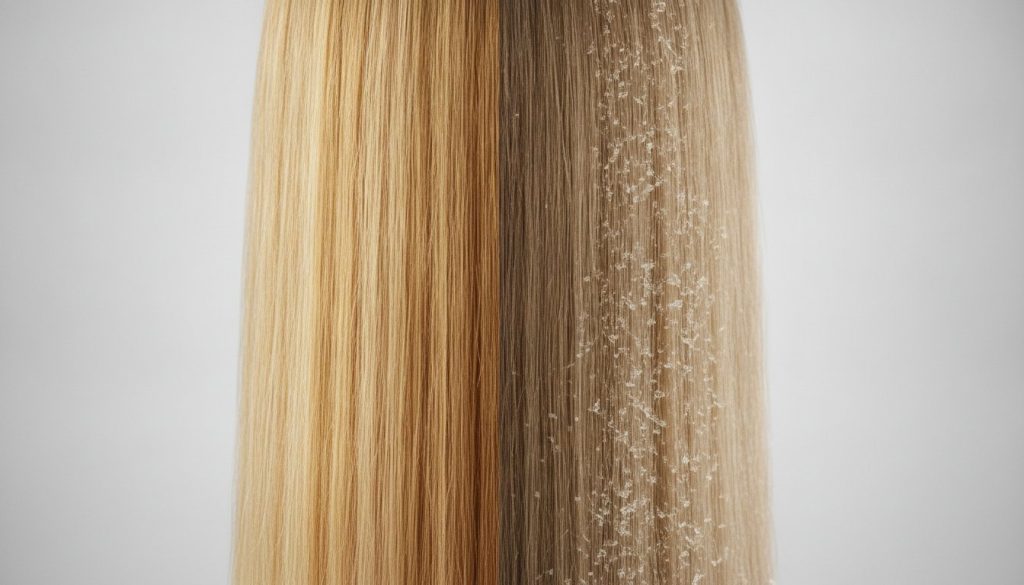
The glassy cuticle effect occurs when the outer scales of the hair lay so flat and tight that they create a reflective, impenetrable barrier against liquid pigment.
Porosity vs. Resistance
Distinguishing between porosity and resistance is critical for a flawless result. Damaged hair typically exhibits high porosity, where the cuticle is blown open and absorbs color too quickly, often resulting in muddy or overly dark ends. Conversely, gray hair usually presents low porosity. The scales are tightly packed and “hard,” preventing the color molecules from entering the cortex. Understanding The Science of Hair Color is essential here, as it highlights how the alkaline agent in your formula must work in tandem with the developer to swell this stubborn cuticle layer.
Traditional color theory fails if you don’t account for this cuticle hardness. Mastering the art of choosing the right developer for full gray coverage requires you to prioritize the “opening” phase of the chemical process. For the most difficult cases, where the hair feels almost metallic in its resistance, pre-softening with a dedicated treatment or a precise application of developer alone can prepare the canvas. This professional intervention ensures that once the color is applied, the pigments find a welcoming environment rather than a closed gate.
Developer Volumes Decoded: Why 20 Vol is the Professional Standard
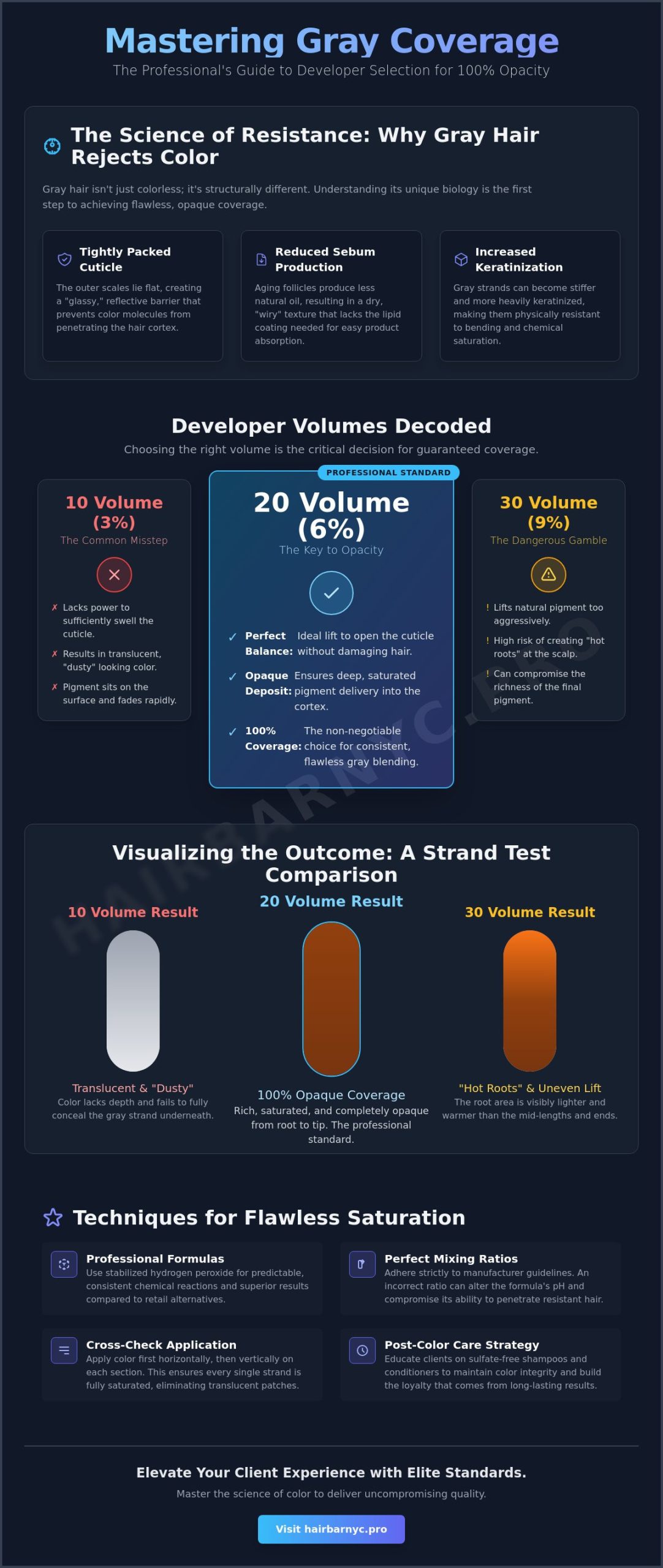
Developer is the engine of the color process. It performs two simultaneous, critical tasks: it swells the hair shaft to lift the cuticle and releases oxygen to activate the dye precursors. When you’re choosing the right developer for full gray coverage, 20 volume (6% hydrogen peroxide) is the non-negotiable standard. It offers the precise amount of energy required to bypass the stubborn cuticle layer we explored in the previous section without compromising the richness of the pigment deposit. It’s the essential balance between opening the door and filling the room.
Using 10 volume is a common misstep for those seeking 100% opacity. While 10 volume is excellent for demi-permanent work or refreshing ends, it lacks the alkaline strength to penetrate the structural differences in gray hair. Without that essential swelling of the hair shaft, color pigments simply sit on the surface. This leads to results that look “dusty” or wash away after a single shampoo, leaving your client with translucent strands that fail to meet a professional standard.
On the other end of the spectrum, 30 volume is often mistakenly used to “force” color into resistant strands. This is a dangerous gamble. High-volume developers lift the hair’s natural pigment too aggressively, which often results in “hot roots.” This occurs when the regrowth appears significantly brighter or warmer than the rest of the hair. Because 30 volume works so rapidly, it can also cause the color molecules to expand before they’ve deeply settled into the cortex, leaving the coverage looking sheer rather than opaque.
Comparing 10, 20, and 30 Volume Developers
- 10 Vol: Best for deposit only or gray blending. It won’t provide the saturation needed for total, opaque coverage on resistant hair.
- 20 Vol: The “sweet spot” for 100% coverage. It provides the perfect window of time for pigments to anchor deep within the hair fiber.
- 30 Vol: Generally reserved for high-lift blonding. In a gray coverage context, it sacrifices depth and longevity for unnecessary speed.
The Peroxide Percentage and Processing Time
Patience is as important as the chemistry itself. A 20-volume developer requires a full 35 to 45 minutes to complete its chemical cycle. The first 20 minutes are largely dedicated to opening the cuticle, while the remaining time is when the pigment truly develops and stabilizes within the cortex. If you rinse too early, you’re essentially interrupting the chemical “handshake” between the developer and the hair. For stylists who demand elite results, using a high-performance system like Color Bar Professional Hair Color ensures that these processing times yield predictable, luxurious results every time. Choosing the right developer for full gray coverage isn’t just about the mix; it’s about respecting the time the chemistry needs to work.
Professional-Grade Formulas vs. Retail Alternatives
Achieving a high-end finish requires more than just picking the correct volume; it requires a formula that remains stable throughout the entire oxidation process. When you’re choosing the right developer for full gray coverage, the quality of the hydrogen peroxide is paramount. Professional developers utilize stabilized hydrogen peroxide, which ensures a controlled, steady release of oxygen. This stability prevents the chemical reaction from becoming too volatile, protecting the hair’s internal structure while the pigments anchor into the cortex.
Retail “box dye” developers often lack these sophisticated stabilizers. To compensate for unpredictable storage conditions and varying hair types, they frequently utilize higher, unstable volumes that can lead to significant cuticle damage. These mass-market options often skip the essential buffering agents that regulate pH levels. Without these buffers, the hair’s pH can spike too rapidly, blowing the cuticle open aggressively and leaving the hair feeling parched and brittle. Understanding the science of gray hair reveals that these strands are already prone to dryness due to reduced sebum production, making the protective role of professional buffers even more critical.
The Chemistry of Color Bar Professional Hair Color
Precision is the hallmark of an expert stylist. Using a system like Color Bar Professional Hair Color allows for a level of chemical synergy that retail products cannot replicate. These professional developers are specifically calibrated to work with high-density pigments, ensuring that the developer’s strength perfectly matches the dye’s requirements for 100% opacity. This chemical harmony is a core component of the Elite Guide to Professional Hair Color Brands, which emphasizes how luxury performance is built on foundational science. When the developer and color molecules are designed as a pair, the result is a sophisticated, multidimensional finish that maintains the hair’s natural luster.
Consistency and Viscosity in Application
The physical texture of your mixture dictates the success of your saturation. Professional-tier developers feature a rich, creamy viscosity designed to “stay put” exactly where you apply it. This is essential for choosing the right developer for full gray coverage, as resistant strands require a heavy, even deposit of product to ensure every “glassy” cuticle is addressed. A runny, thin developer leads to patchy results and translucent coverage.
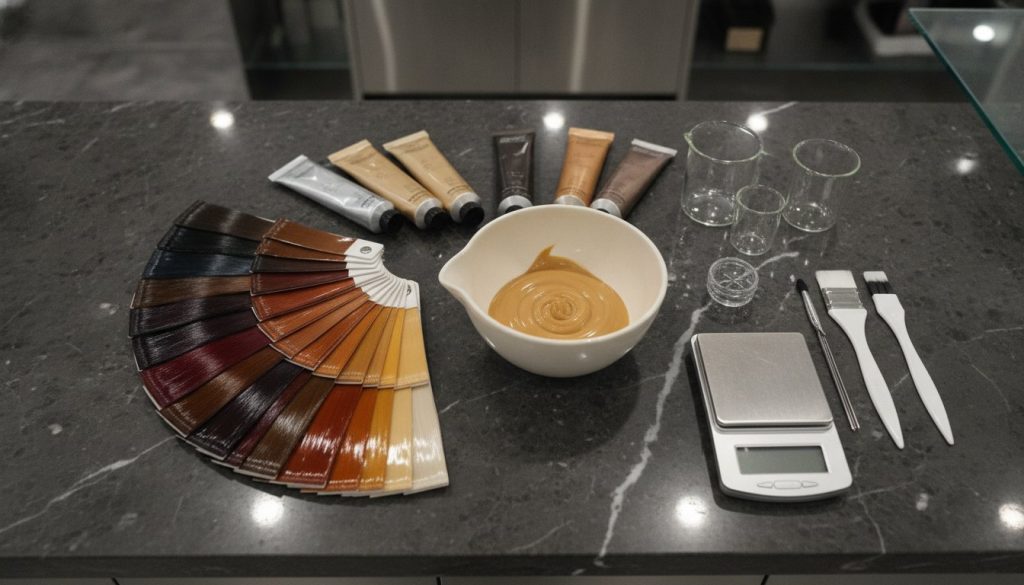
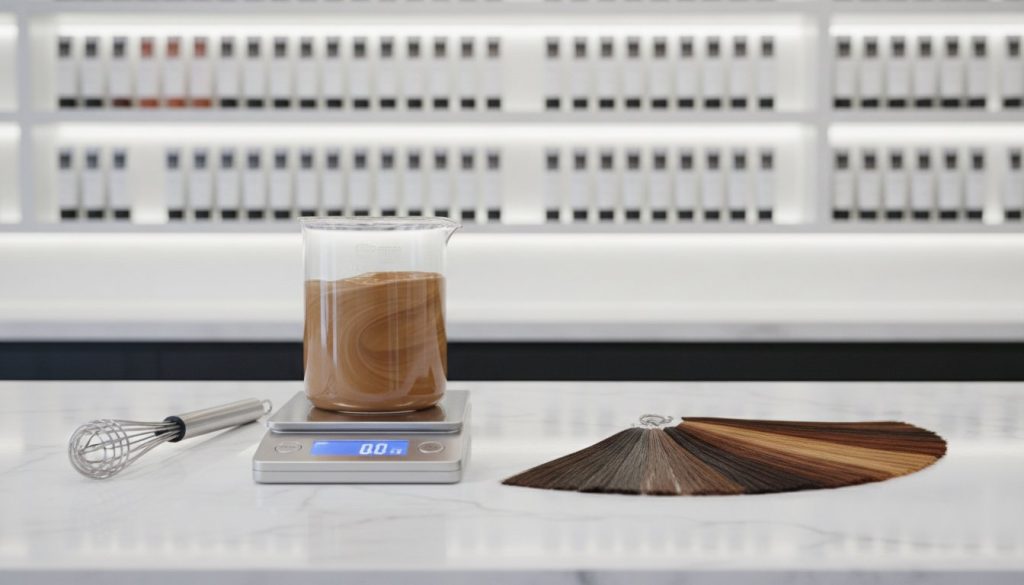
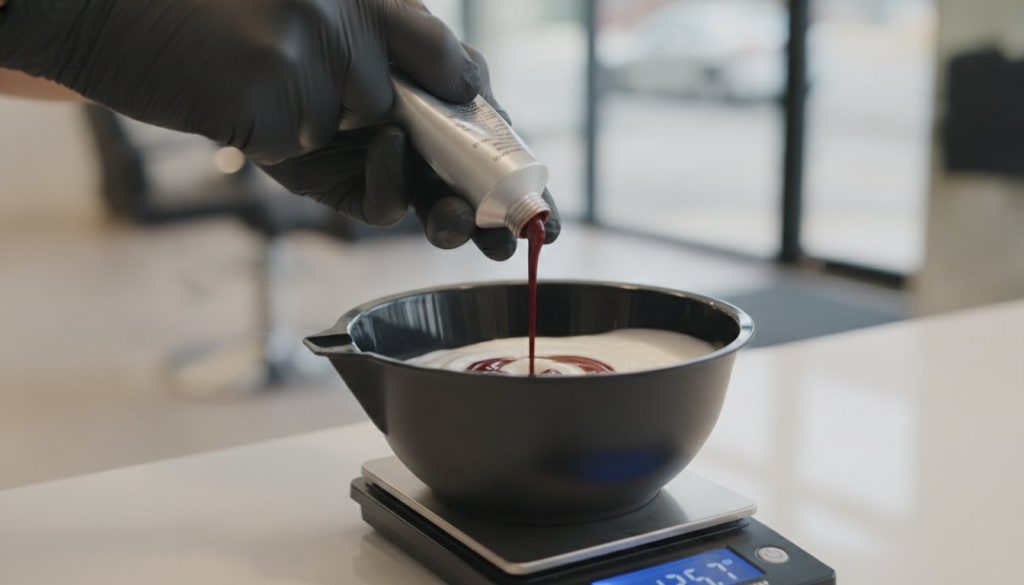
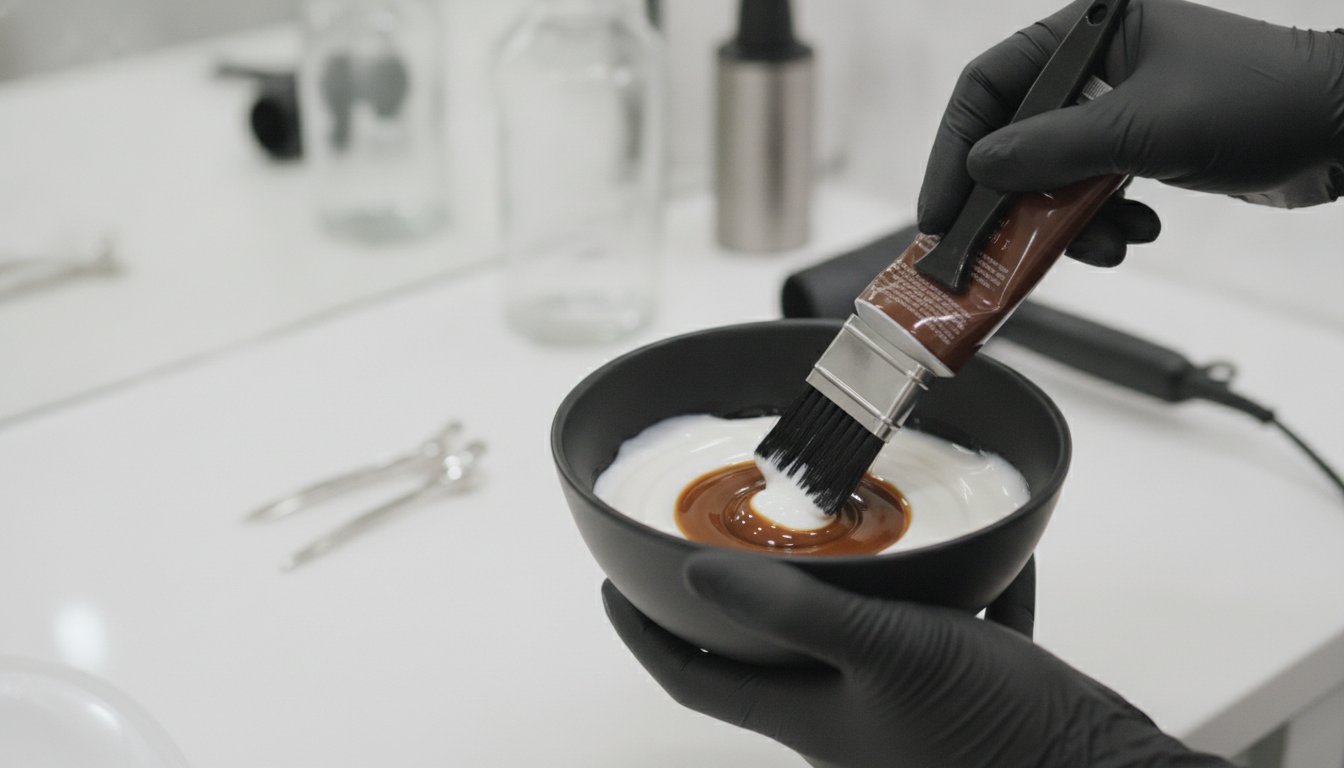
Accuracy starts at the station. Utilizing a professional Mixing Bowl and Brush Set ensures you achieve the perfect 1:1 or 1:1.5 ratio required for resistant hair. This professional-grade accuracy, combined with the conditioning agents found in high-end developers, results in the “Silk Touch” feel that clients expect from an elite urban salon. The final result isn’t just about color; it’s about a visible transformation in the hair’s health and shine.
Master Techniques for Flawless Gray Saturation
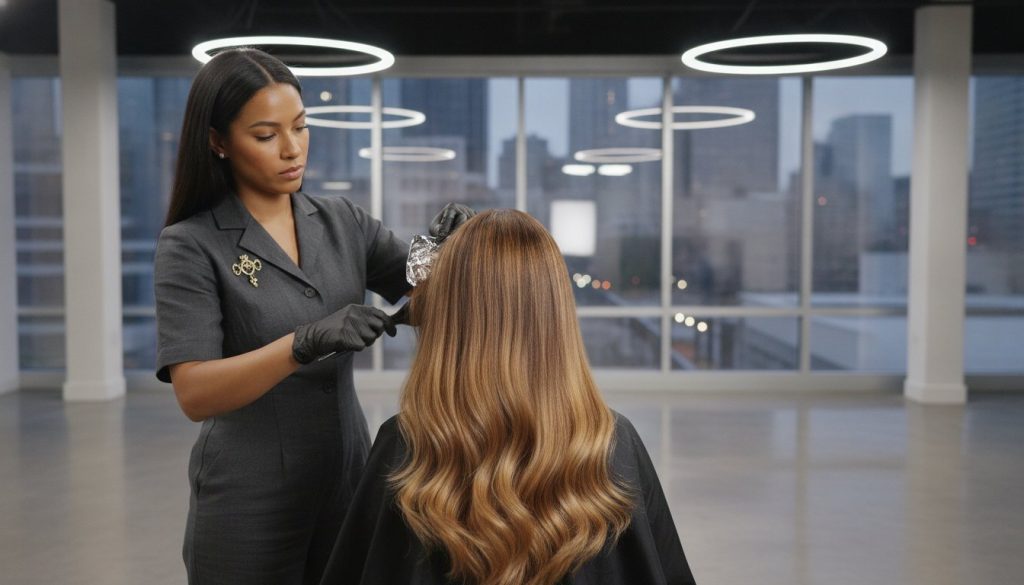
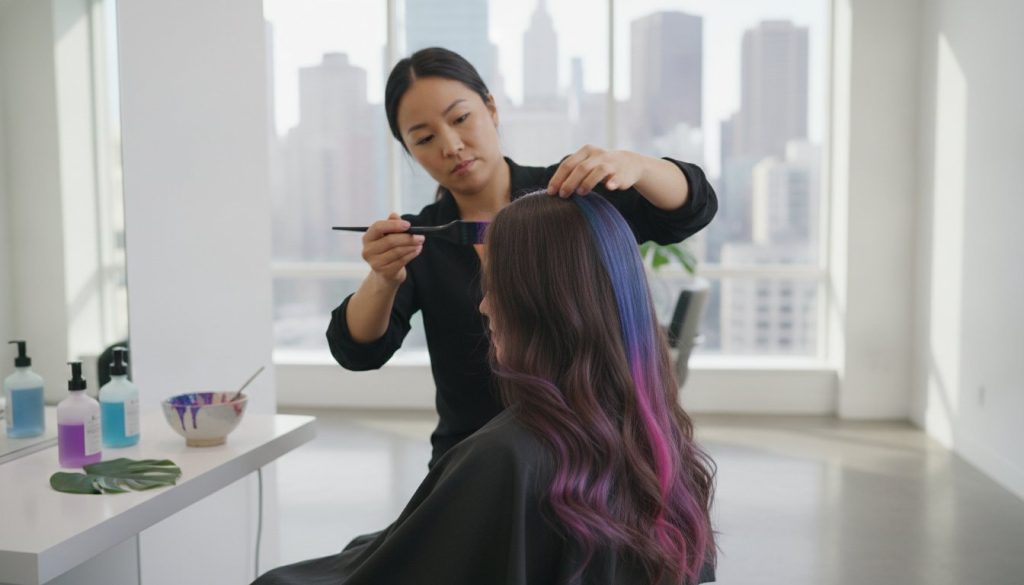
Precision in application is the bridge between a sophisticated formula and a transformative result. Even after choosing the right developer for full gray coverage, poor saturation can undermine your chemical strategy. Professional stylists know that resistant strands require a heavy, deliberate deposit of color. Use tight, 1/8-inch sections to ensure every “glassy” fiber is completely enveloped. Employ the cross-check method by reapplying color in horizontal sections after your initial vertical application. This guarantees that no translucent patches remain hidden in high-density areas.
Mixing ratios are your primary lever for controlling pigment density. While a 1:1.5 ratio offers a fluid consistency ideal for blending, facing 100% resistance often requires a 1:1 ratio. This “power mix” increases the concentration of dye molecules, providing the necessary substance to fill a hollow cortex. Don’t overlook the role of the environment; ambient salon temperature should remain consistent. If the salon is particularly cool, the chemical reaction may stall, leading to under-processed results that lack the expected depth and longevity.
The Step-by-Step Opaque Coverage Protocol
Follow this technical framework to ensure consistent, professional-grade results with every client:
- Step 1: Analyze the Canvas. Determine if you’re working with 25%, 50%, or 100% gray. This dictates how much “Natural” or “N” series base you must add to your fashion shades.
- Step 2: Formula Foundation. Always include at least 50% of an “N” series base for clients with more than 50% gray to ensure the result isn’t sheer.
- Step 3: Weigh for Accuracy. Use a professional scale to maintain exact ratios. Guesswork is the enemy of the expert colorist.
- Step 4: Strategic Application. Start at the most resistant areas, typically the hairline or the crown. These sections need the longest processing time to achieve full penetration.
Troubleshooting Common Gray Coverage Fails
Hot roots occur when the scalp’s natural heat accelerates the developer too quickly, or when you’ve chosen a volume that’s too high for the base. To fix this, drop down half a level for the first half-inch of growth. If the hairline looks translucent, it’s often due to under-application or “creeping” where the product is wiped away during the service. Ensure you use a dedicated Mixing Bowl and Brush Set to pack the color onto these fine, stubborn hairs. For clients with 100% white hair that refuses to take pigment, try pre-pigmenting. Apply the color cream alone to the resistant areas for ten minutes before applying your final formula mixed with developer. This pre-softens the cuticle and introduces a base layer of pigment to ensure a rich, opaque finish.
Elevating the Client Experience with Hair Bar NYC Standards
The technical mastery of choosing the right developer for full gray coverage sets the stage, but the true mark of an expert is how that color persists in the weeks following the appointment. Gray hair requires an ongoing commitment to hydration and pigment retention. By positioning root maintenance as a luxury ritual rather than a chore, you elevate the entire client experience. This transition transforms a standard service into a bespoke beauty routine that mirrors the high standards of an elite urban setting. It’s about maintaining that “just-colored” saturation until the next visit.
Preventing “silver-peeking” or premature fading is a matter of both chemistry and discipline. Once the cuticle has been successfully opened and filled with pigment, it must be sealed and protected from environmental stressors. We recommend a strict post-color regimen that avoids harsh detergents, which can strip the hard-won opacity from resistant strands. This is where professional-grade home care becomes an essential extension of the salon service.
Post-Color Maintenance and Shine
To lock in the depth achieved during the service, clients should utilize sulfate-free care like our Silk Touch Shampoo and Silk Touch Conditioner. These formulas are designed to cleanse without disrupting the delicate balance of the freshly colored hair shaft. For an added layer of protection, applying a Keratin Infused Serum helps seal the cuticle and adds a reflective shine that camouflages the wiry texture often associated with silver hair. Regular deep conditioning with a Keratin Intensive Treatment keeps the hair manageable and soft, ensuring the client feels the difference in hair health long after they leave the chair.
The Hair Bar NYC Professional Advantage
Our commitment to excellence extends beyond the mixing bowl. We invite you to explore the Color Bar Professional Hair Color line, a system engineered to meet the uncompromising standards of our NYC and Florida locations. By choosing the right developer for full gray coverage within our professional suite, you ensure that every application delivers the 100% opaque, high-performance results that define our brand. We bridge the gap between scientific precision and accessible luxury, offering tools that are as chic as they are effective.
Experience the difference of metropolitan-grade beauty in your own routine. Shop Professional Hair Color and Developers to master the art of the perfect finish and achieve professional-grade results every time.
Mastering the Standard of Professional Opacity
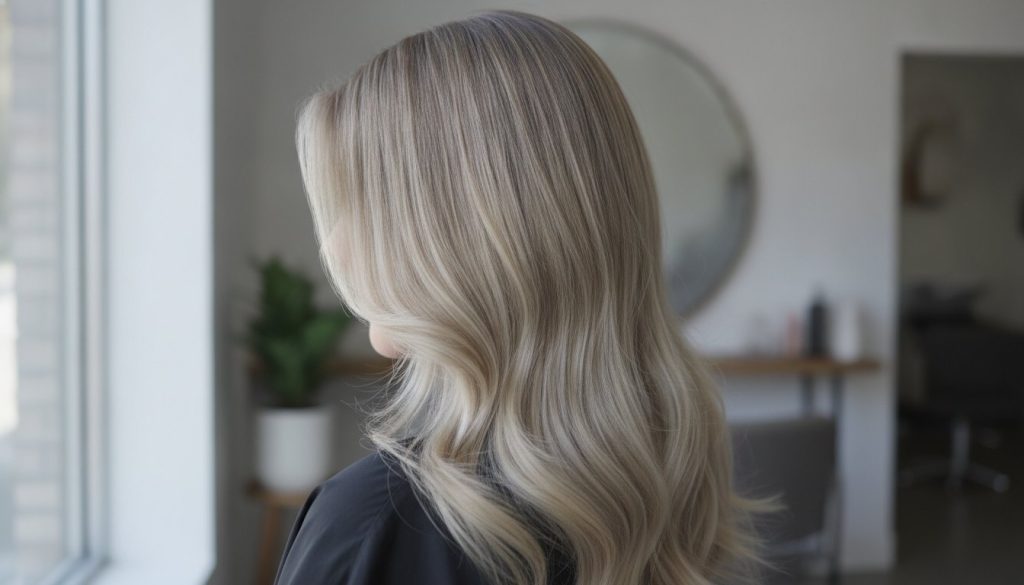
Achieving total coverage is a sophisticated blend of chemical precision and technical finesse. You’ve learned that the 20-volume standard is essential for bypassing a resistant cuticle without sacrificing the depth of the pigment. By prioritizing stabilized formulas and meticulous saturation techniques, you move beyond translucent results to create a rich, high-end finish that lasts. Mastering the nuances of choosing the right developer for full gray coverage is what separates the expert colorist from the amateur in a competitive, high-stakes market.
It’s time to bring these metropolitan standards to your station and transform every service into a luxury experience. Elevate your salon results with Color Bar Professional Hair Color. Trusted by elite stylists across NYC and Florida, our system utilizes stabilized professional developers for 100% opaque results every time. Our formaldehyde-free and vegan-friendly formulas ensure that you never have to compromise between high performance and hair health. Step into the future of color with confidence, knowing you have the tools to deliver uncompromising quality. Your clients deserve the professional standard of excellence that only a dedicated, expert-tier system can provide.
Frequently Asked Questions
Can I use 30 volume developer for gray coverage if the hair is very thick?
Using 30 volume for thick gray hair is a technical mistake that often results in “hot roots” and sheer, translucent coverage. While it seems like more power would help, it actually lifts the natural pigment too quickly and fails to deposit enough depth. Stick to the 20-volume standard to ensure a balanced, professional result that maintains hair integrity.
Why does my gray coverage look translucent or “see-through” after processing?
Translucent results occur when the color pigments fail to anchor deeply within the hair’s cortex. This is usually caused by choosing a developer with insufficient strength, such as 10 volume, or rinsing the hair before the full 45-minute processing cycle is complete. Ensure your formula includes enough “Natural” series base to provide the necessary opacity for resistant strands.
What is the best mixing ratio for 100% gray hair?
A 1:1 mixing ratio is the professional standard for addressing 100% gray hair effectively. This equal part of color and developer creates a high-density pigment concentration that fills the hollow core of silver strands. When you’re choosing the right developer for full gray coverage, this ratio ensures maximum saturation on even the most stubborn, wirey textures.
How long should I let permanent color process for full gray coverage?
Permanent color requires a minimum of 35 to 45 minutes to achieve a flawless, opaque finish. The first half of the processing time is dedicated to opening the cuticle, while the second half allows the oxidative pigments to expand and stabilize. Rinsing early is the most common cause of premature fading and “silver-peeking” through the hair.
Do I need to use a “Natural” series shade every time I cover grays?
Yes, incorporating a “Natural” or “N” series shade is essential whenever you’re working with more than 25% gray. Fashion shades alone lack the foundational brown and gold pigments required to replicate natural hair depth. For clients with over 50% gray, your formula should consist of at least half “Natural” series to guarantee 100% opacity.
Can I achieve full gray coverage with a semi-permanent or demi-permanent dye?
Semi-permanent and demi-permanent dyes are designed for gray blending, not total, opaque coverage. These formulas lack the alkaline strength to fully penetrate the “glassy” cuticle layer of resistant hair. To achieve a professional result, you must use a permanent line like Color Bar Professional Hair Color paired with a 20-volume developer.
What is the “pre-softening” technique for resistant gray hair?
Pre-softening is a professional intervention used to “prime” the hair by applying 20-volume developer directly to resistant sections for 10 minutes before coloring. This process begins the swelling of the cuticle, making it more receptive to the subsequent color application. It’s an elite technique for ensuring success on hair that typically rejects pigment. When choosing the right developer for full gray coverage, pre-softening can be the difference between failure and a flawless finish.
How do I prevent “hot roots” when coloring gray hair on a dark base?
Prevent hot roots by avoiding high-volume developers and respecting the natural heat generated by the scalp. Always opt for 20 volume rather than 30 for the root area to maintain control over the lift. You can also formulate the root mixture half a level darker than the mid-lengths to ensure a seamless, sophisticated transition across the entire head.