Advanced Color Correction Techniques for Stylists: The Master Guide to Structural Restoration
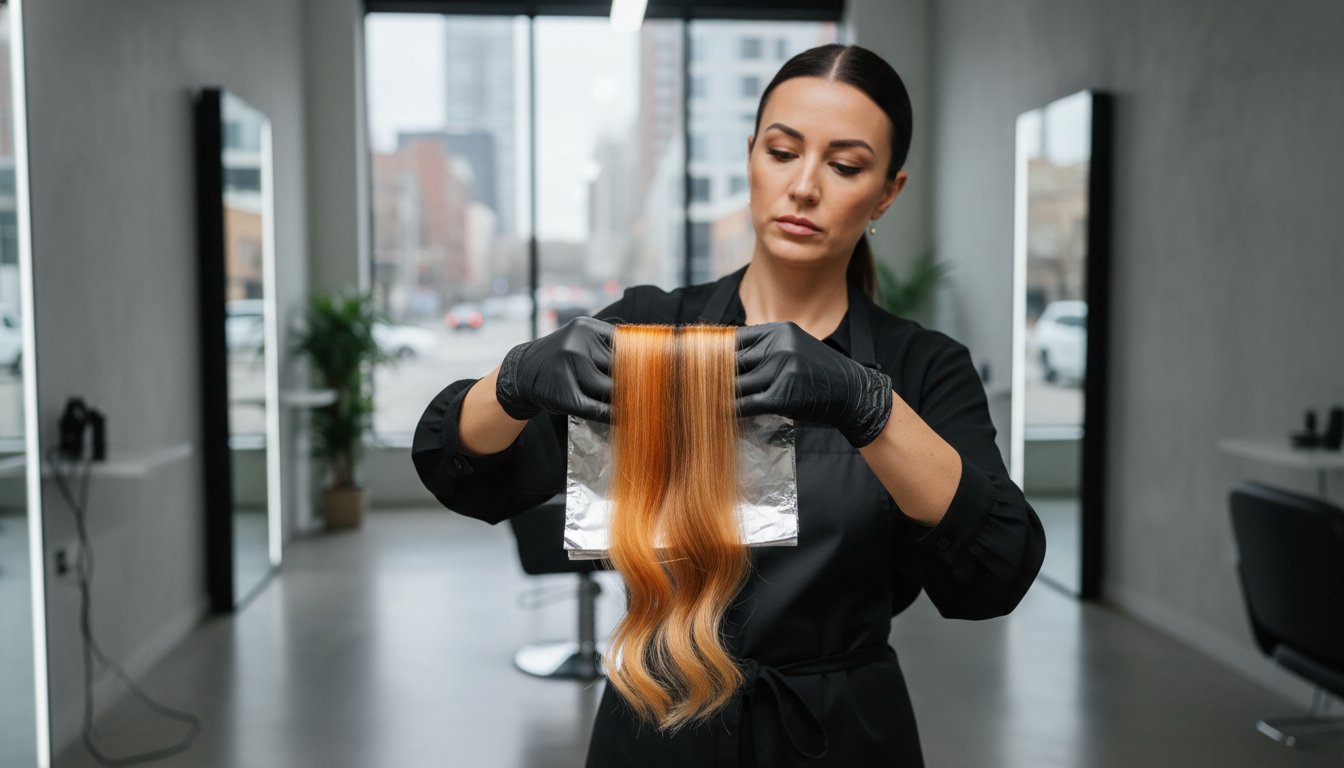
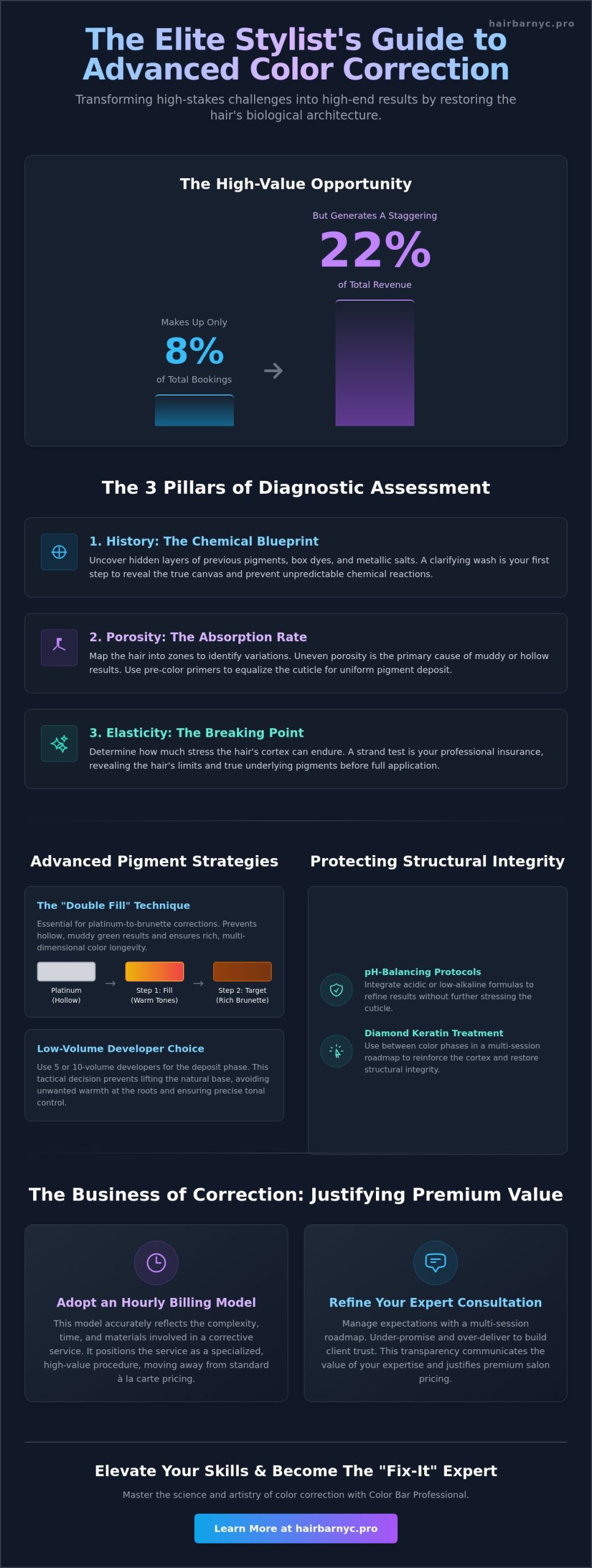
True color correction is a restoration of the hair’s biological architecture, not just a pigment adjustment. In the elite urban salon environment, mastering advanced color correction techniques for stylists is the definitive line between a standard service and a high-end transformation. Data from 2026 shows that while color corrections make up only 8% of bookings in major markets like Houston, they generate a staggering 22% of total revenue. This shift reflects a discerning clientele willing to invest in expertise that prioritizes hair health as much as the final aesthetic.
We understand the anxiety that comes with managing multi-session expectations or neutralizing stubborn, uneven undertones without risking further chemical damage. It’s a high-stakes challenge that requires both scientific precision and artistic intuition. This master guide will show you how to achieve predictable, flawless results while restoring structural integrity. We’ll detail how to pair our Color Bar Professional Hair Color with restorative tools like the Diamond Keratin Treatment to build your reputation as an elite “fix-it” expert. You’ll gain the tactical knowledge to integrate smoothing treatments into your color workflow, ensuring every client leaves with hair that feels as luxurious as it looks.
Key Takeaways
- Identify the three pillars of diagnostic assessment—history, porosity, and elasticity—to treat correction as a precise chemical intervention rather than a standard color service.
- Master advanced color correction techniques for stylists, such as the “Double Fill” strategy, to create stable pigment foundations for flawless, multi-dimensional results.
- Protect the hair’s structural integrity by integrating pH-balancing protocols and the Diamond Keratin Treatment to reinforce the cortex during intense color shifts.
- Apply surgical precision to complex scenarios like horizontal banding and over-processing to achieve uniform lift without compromising fragile mid-lengths and ends.
- Adopt an hourly billing model and a refined expert consultation process to communicate the value of your specialized skills and justify premium salon pricing.
Mastering the Diagnostic Phase: Beyond Simple Color Theory
Color correction isn’t a routine appointment; it’s a high-stakes chemical intervention. When you apply hair coloring techniques in a corrective capacity, you’re essentially re-engineering the hair’s biological blueprint. Advanced color correction techniques for stylists require a fundamental shift in mindset. You’re no longer just a colorist; you’re a chemical strategist tasked with restoring structural integrity while achieving visual perfection.
Success in this elite tier of service rests on three non-negotiable pillars: history, porosity, and elasticity. History reveals the hidden layers of previous pigments that can sabotage your formula. Porosity dictates how the hair will absorb and hold new color. Elasticity tells you how much more stress the cortex can endure before structural failure. Elite stylists adopt a standard of under-promising and over-delivering. It’s better to manage a client’s expectations for a three-session journey than to over-process the hair in a single afternoon. This level of transparency builds the kind of trust that defines an expert professional.
The strand test serves as your professional insurance policy. It’s the only way to see exactly how the hair reacts to lighteners or removers before committing to a full-head application. A successful strand test reveals the true underlying pigments and the hair’s breaking point, protecting both the client’s hair and your reputation from unpredictable chemical reactions.
The Physics of Porosity and Pigment Retention
Uneven porosity is the primary culprit behind the “muddy” or “hollow” results that many stylists fear. High-porosity ends often absorb pigment too quickly and appear dark or dull, while low-porosity roots resist color altogether. Map the hair into zones from roots to ends to identify these variations. Use a pre-color primer or a light application of our Silk Touch Conditioner to equalize the cuticle. This step creates a uniform surface, ensuring your Color Bar Professional Hair Color deposits evenly across every inch of the hair shaft.
Mapping the Chemical History: The Stylist’s Blueprint
Hidden metallic salts or cumulative box dye buildup create unpredictable, often exothermic, reactions during a correction. Start by “cleaning” the canvas. Use a clarifying wash with our Silk Touch Shampoo to strip away surface minerals and product buildup before your diagnostic begins. If the hair shows significant structural damage, create a multi-session roadmap for the client. This strategy prioritizes long-term hair health; integrating the Diamond Keratin Treatment between color phases reinforces the cortex and prepares the hair for the next level of transformation.
Advanced Neutralization and Pigment Filling Strategies
Achieving a seamless transition from a compromised shade to a high-end result requires more than a simple overlay. It demands an intricate understanding of pigment foundations. When mastering color correction, the most frequent error is neglecting the hair’s internal architecture. One layer of pigment is rarely enough to create lasting depth. Advanced color correction techniques for stylists focus on building a multi-layered foundation that mimics the natural complexity of virgin hair.
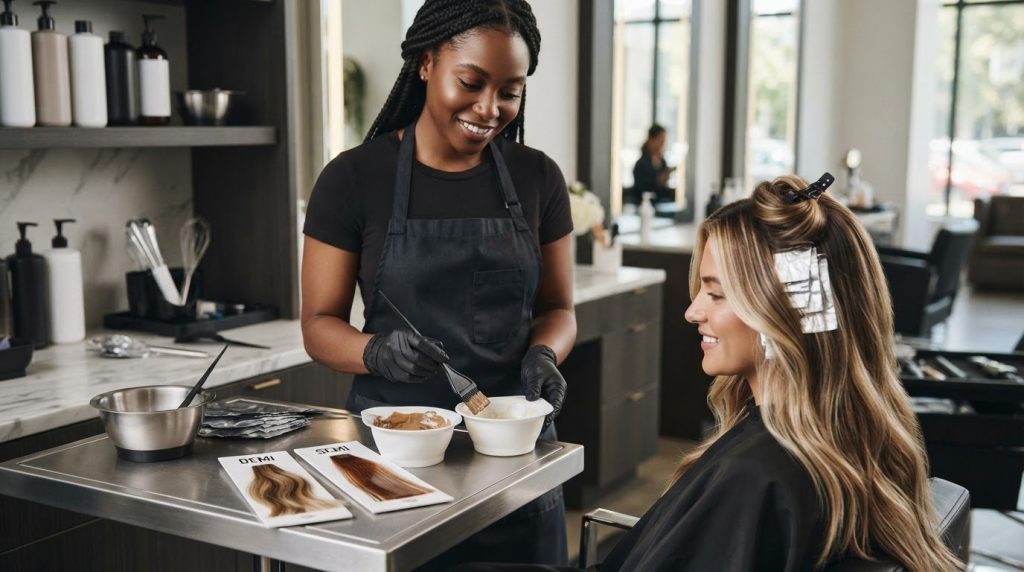
The choice of developer volume is your first tactical decision. To minimize the oxidation of the client’s natural base, elite stylists often opt for 5 or 10-volume developers during the deposit phase. This prevents the “lifting” of the natural hair, which can lead to unwanted warmth at the roots. Integrating a demi-permanent formula from our Color Bar Professional Hair Color line provides essential “tonal insurance.” These acidic or low-alkaline formulas allow you to refine the final result without further stressing the cuticle, ensuring the hair retains its metropolitan luster.
The Art of the Double Fill for Platinum-to-Brunette Corrections
Transitioning from platinum to a rich brunette without a proper fill results in a “hollow” or translucent appearance that quickly fades to a muddy green. The Double Fill technique is the professional standard for ensuring longevity. Step one involves replacing the missing warm undertones—gold, orange, or red—depending on the desired final level. This creates a “bridge” for the target shade. Step two is the application of the final target color. By layering these pigments, you ensure the hair has the necessary internal “grip” to hold the depth and prevent premature fading.
Neutralizing Stubborn Undertones with Precision
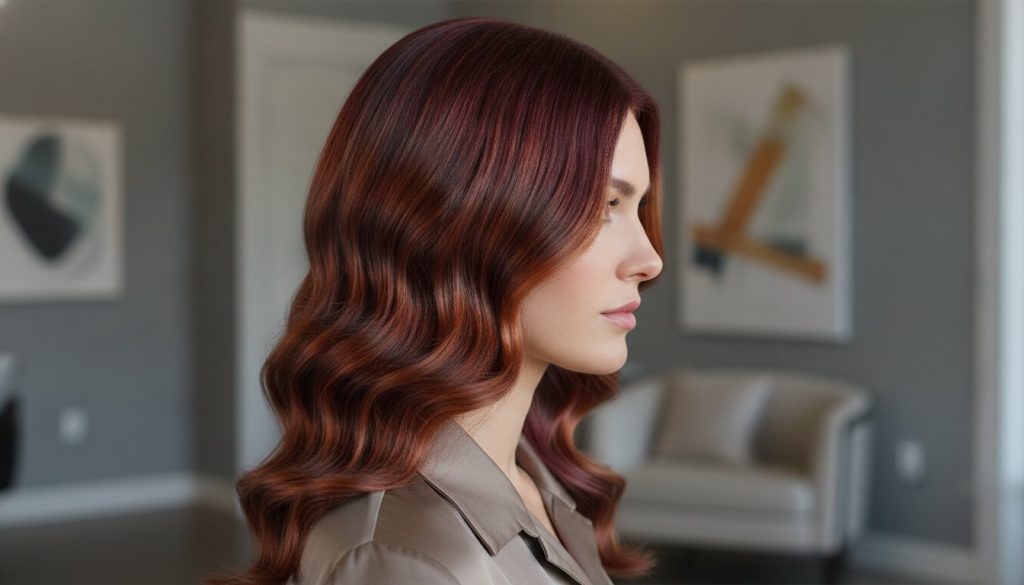
Correcting “Swamp Green” or “Hot Orange” requires a surgical application of the color wheel. You must decide whether to neutralize the tone or lean into it to create a more sophisticated, multi-dimensional result. Neutralizing is about chromatic balance, while enhancing allows you to use existing warmth to add vibrancy to a rich copper or warm chocolate. The Law of Color in corrective chemistry states that any two complementary colors placed opposite each other on the color wheel will neutralize one another when combined. This principle allows you to counter-act unwanted pigments rather than simply trying to cover them, which often leads to heavy, over-saturated results. Mastering these advanced color correction techniques for stylists transforms a potential disaster into a signature high-end service.
Structural Integrity: Protecting the Canvas with Advanced Chemistry
A masterful color correction is only as good as the hair’s underlying structural integrity. When you’re managing complex chemical shifts, you aren’t just changing pigment; you’re manipulating the very architecture of the hair fiber. Advanced color correction techniques for stylists require a deep respect for the hair’s biological limits. Pushing past these limits leads to irreparable damage, making it essential to identify the “point of no return.” If a wet elasticity test shows the hair stretching and failing to snap back, or if the texture feels mushy, the chemical service must stop immediately. At this stage, restoration becomes the priority over further lightening.
Protecting the canvas involves a strategic approach to pH balancing. This is perhaps the most overlooked step in professional color correction. Every high-lift application or alkaline color service forces the cuticle open, leaving the cortex vulnerable. To prevent post-salon fading and maintain a high-end finish, you must effectively close the cuticle. Utilizing sulfate-free, professional-grade maintenance like our Silk Touch Shampoo and Silk Touch Conditioner ensures the hair remains resilient long after the client leaves your chair. These formulas provide the gentle care necessary to preserve the multi-dimensional results you’ve worked so hard to achieve.
Integrating Keratin Technology into the Correction Workflow
Stabilizing compromised hair is a requirement for elite results. Integrating Silk Touch Keratin into your workflow allows you to reinforce the hair’s cortex during and after high-stakes services. This vegan keratin technology works to replenish lost proteins, essentially reinforcing the hair’s disulfide bonds while you simultaneously shift the tone. A post-color keratin treatment acts as a final seal. It locks in the new pigment and provides a sensory experience of luxury that your clients will associate with your professional standard of excellence.
The pH Scale: The Stylist’s Secret Weapon
Understanding the shift from alkaline to acidic environments is your secret weapon in corrective work. While alkaline color is necessary to open the cuticle for deposit, acidic toners are essential for finishing, especially on over-processed ends. These acidic formulas smooth the cuticle without further oxidation, creating that signature metropolitan shine. The choice of professional hair color brands significantly impacts long-term hair health. By selecting high-performance systems like our Color Bar Professional Hair Color, you ensure that every advanced color correction technique for stylists is backed by chemistry that prioritizes structural restoration alongside flawless aesthetic results.
Solving High-Complexity Scenarios: Banding and Over-Processing
High-complexity scenarios like horizontal banding and “hot roots” test even the most seasoned experts. These errors usually occur when previous applications overlap or when the heat from the scalp causes regrowth to lift faster than the mid-shaft. To resolve these issues, elite stylists employ advanced color correction techniques for stylists that prioritize surgical precision over broad application. Eradicating hot roots requires a targeted formula with a lower developer volume at the base. This ensures it doesn’t bleed into the already processed lengths. This level of control is what transforms a color disaster into a dimensional masterpiece.
The debate between a “bleach wash” and a professional color remover depends entirely on the hair’s chemical history. A bleach wash is ideal for a gentle, overall shift in tone. However, it lacks the target-specific power needed for deep bands of old artificial pigment. In contrast, a color remover targets oxidative dyes without affecting the natural melanin. For stylists in an upscale urban setting, the goal is always to achieve the maximum result with the minimum chemical stress. Consistency is key. Integrating the Diamond Keratin Treatment into these high-stakes services provides the structural support needed to navigate these transitions safely.
Eradicating Color Banding with Precision Lightening
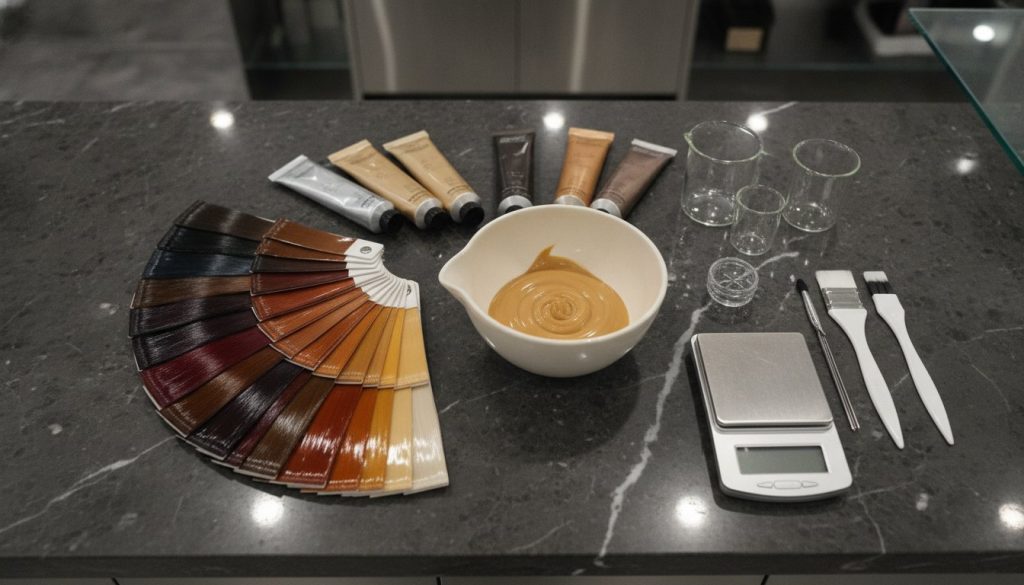
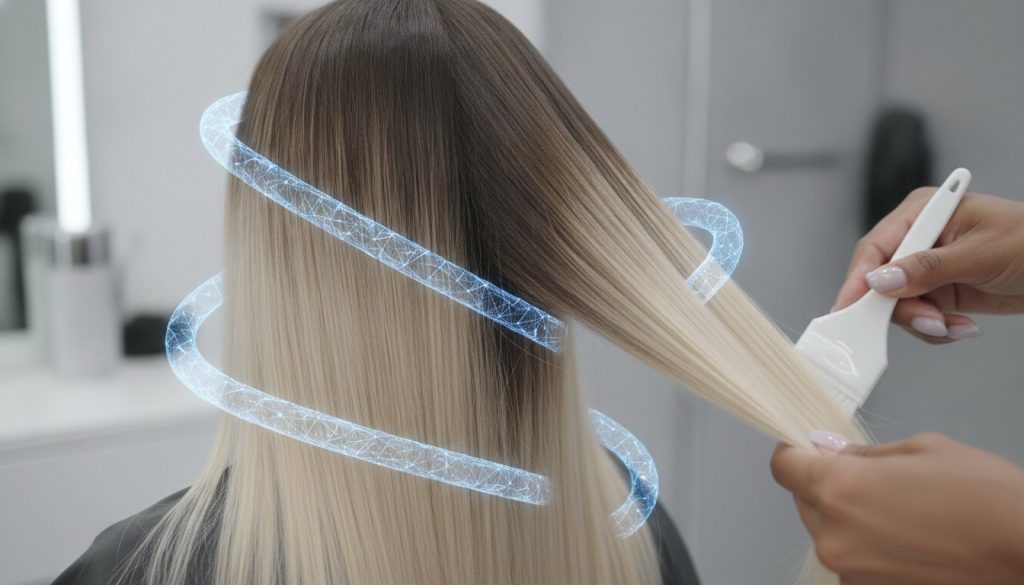
Removing stubborn horizontal bands requires an isolated, surgical application. You must apply your lightener only to the darker bands, meticulously avoiding any overlap on previously lightened sections. Overlapping leads to the over-processing and breakage that clients fear most. Use a precise Mixing Bowl and Brush Set to ensure the formula remains stable throughout the application. Once the bands are lifted, use root shadowing to blend any remaining transitions. This technique creates a soft, natural gradient that masks imperfections and extends the time between appointments.
The Multi-Session Roadmap for Extreme Transformations
A transition from jet black to platinum is a journey, not a single appointment. Professional excellence demands that you explain this timeline clearly to your client. Scheduling interim sessions allows the hair’s internal structure to recover before the next chemical push. During these breaks, the use of natural hair care products is essential to maintain moisture and lipid balance. We recommend a Keratin Intensive Treatment between sessions to build hair strength and ensure the canvas is ready for the final dimensional result. Elevate your corrective results with the Color Bar Professional Hair Color collection.
The Business of Correction: Consultation and Premium Pricing
Mastering the technical side of advanced color correction techniques for stylists is only half the battle. To thrive in an elite metropolitan market, you must also master the business of these high-stakes services. In 2026, data from major urban hubs like Houston shows that while color corrections account for roughly 8% of total bookings, they drive a massive 22% of salon revenue. This disproportionate value exists because correction is a specialist skill. It shouldn’t be priced as a standard service. Transitioning to an hourly billing model—with rates typically ranging from $90 to $180 per hour—is the most honest and profitable approach. This model accounts for the unpredictable nature of chemical restoration and ensures your expertise is compensated fairly.
Establishing a clear maintenance plan is the final step in the corrective journey. A client who invests $500 to $1,200 in a complex restoration needs to know how to protect that investment. By providing a curated regimen of Silk Touch Shampoo and Silk Touch Conditioner, you ensure the hair remains vibrant and structurally sound. This professional guidance turns a one-time “correction client” into a loyal, high-spending salon hair color regular who trusts your technical authority above all others.
The Expert Consultation: Setting the Stage for Success
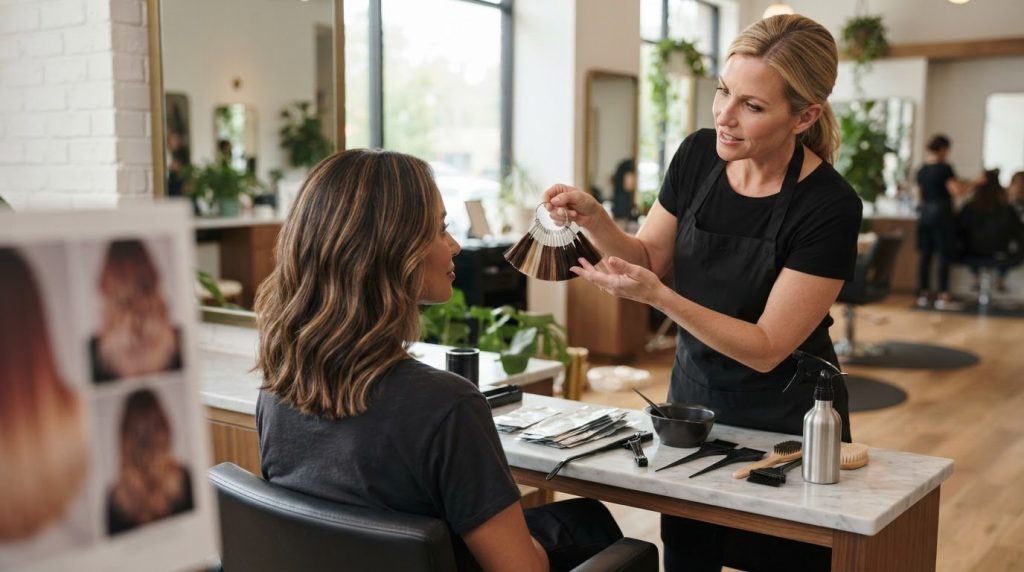
The consultation is your opportunity to establish a professional standard of excellence. Use digital portfolios to align on a realistic target goal, emphasizing that structural integrity dictates the pace of change. The “Financial Disclosure” must happen before the first bowl is mixed. Discussing the total estimated cost and the potential for multiple sessions prevents mid-service friction. When a client demands an immediate “Black to Blonde” transformation, lead with authority. Explain the chemical risks and the necessity of a multi-session roadmap. This transparency doesn’t lose clients; it builds the elite reputation of a “fix-it” expert who refuses to compromise on quality.
Pricing for Profitability in an Urban Market
Corrective work consumes more than just time; it requires a significant volume of premium product. Your specialist pricing should reflect the cost of high-performance tools like our Color Bar Professional Hair Color and structural additives. Consider creating “Correction Packages” that bundle the service with essential home care. A package might include:
- A dedicated four-hour corrective block.
- A post-service Diamond Keratin Treatment to seal the cuticle.
- Full-sized Silk Touch maintenance products for at-home care.
- A Keratin Infused Serum for daily lipid replenishment.
This approach simplifies the financial conversation and reinforces the idea that you’re providing a comprehensive solution rather than a simple pigment change. By utilizing advanced color correction techniques for stylists as the foundation of your business model, you position yourself as an uncompromising leader in the world of elite hair care.
Redefining Your Professional Standard in Color Correction
Mastering the high-stakes world of chemical restoration requires a unique blend of scientific rigor and metropolitan chic. You’ve learned how to navigate the diagnostic phase with precision, prioritizing hair health through pH balancing and the seamless integration of vegan keratin technology. These advanced color correction techniques for stylists transform unpredictable disasters into flawless, multi-dimensional masterpieces that command premium hourly pricing. By shifting your focus from simple pigment adjustments to total structural restoration, you elevate the entire salon experience.
Adopting surgical application methods for complex banding and a strategic “Double Fill” approach ensures results that are both durable and visually stunning. Elite stylists across the nation trust our expert-developed, formaldehyde-free formulas to deliver consistent excellence in the most demanding urban salon environments. It’s time to solidify your reputation as the definitive “fix-it” expert who never compromises on quality or hair integrity. You have the technical blueprint to master every transformation with absolute confidence.
Elevate your salon’s results with Color Bar Professional Hair Color and step into the world of elite care today. Your journey toward becoming a master of high-end chemical restoration begins with the right tools and a commitment to professional excellence.
Frequently Asked Questions
What is the difference between a color refresh and a full color correction?
A color refresh is a simple tonal adjustment or gloss used to revive existing color, whereas a color correction is a complex chemical intervention to fix significant imbalances or errors. Corrections often involve multiple technical steps, such as removing old artificial pigment or filling hollow hair fibers. While a refresh is a standard service, a correction is a high-stakes procedure that requires advanced chemical strategy and is typically billed by the hour.
Can I perform a keratin treatment on the same day as a color correction?
Yes, performing a Silk Touch Keratin Treatment on the same day as a color correction is a professional standard for sealing the cuticle and locking in new pigment. After the intense chemical shifts involved in a correction, the hair’s pH is often imbalanced and the cuticle is left open. A post-color keratin service reinforces the hair’s disulfide bonds and adds a layer of structural protection, ensuring your multi-dimensional results remain vibrant.
How do I fix hair that has turned green from chlorine or old pigment?
Fixing green undertones requires the application of a warm, red-based pigment to neutralize the cool tones according to the Law of Color. If the green is caused by chlorine minerals, start with a clarifying wash using Silk Touch Shampoo to remove surface buildup. Follow this with a targeted “Double Fill” using our Color Bar Professional Hair Color to replace the missing warm foundations before you apply the final target shade.
What is the best way to remove permanent black hair dye safely?
The safest way to remove permanent black dye is through a controlled, multi-session roadmap that utilizes professional color removers or low-volume decolorizers. Avoid high-heat or aggressive bleaching, as these can lead to catastrophic structural failure. Advanced color correction techniques for stylists prioritize the hair’s integrity; it’s better to achieve a rich chocolate in the first session than to risk the cortex for an immediate blonde result.
Why does hair color fade so quickly after a corrective service?
Color fades quickly after a correction because the hair’s cuticle is often compromised and highly porous, which makes it difficult for the hair to hold pigment. If you skip the filling phase or fail to balance the hair’s pH after the service, the color will wash away prematurely. Using sulfate-free maintenance like Silk Touch Conditioner and finishing with a Keratin Infused Serum helps seal the hair and extend the life of your high-end results.
How do I handle a client whose hair is too damaged for further correction?
When hair reaches the “point of no return,” you must stop all chemical services and pivot immediately to a restoration plan. Explain the risks of structural failure with professional authority and transition the client to a Keratin Intensive Treatment regimen. This builds trust and positions you as an expert professional who values hair health over a quick sale, eventually preparing the canvas for a safe correction in the future.
What volume developer is safest for corrective work on porous hair?
A 5-volume or 10-volume developer is the safest choice for corrective work on porous hair to ensure a gentle deposit without further oxidation. High-volume developers can cause over-processed ends to become mushy or snap during the application. By using a low-volume developer with our Color Bar Professional Hair Color, you maintain control over the lift and ensure the pigment saturates the hair shaft evenly for a sophisticated finish.
Is it necessary to use a bond builder in every corrective color formula?
While not every formula strictly requires a separate additive, integrating advanced color correction techniques for stylists often involves using color systems with built-in structural support. Our professional color line is designed to respect the hair’s architecture during pigment shifts. For extremely compromised hair, supplementing the service with a Diamond Keratin Treatment provides the essential protein reinforcement needed to prevent breakage and maintain an uncompromising standard of quality.